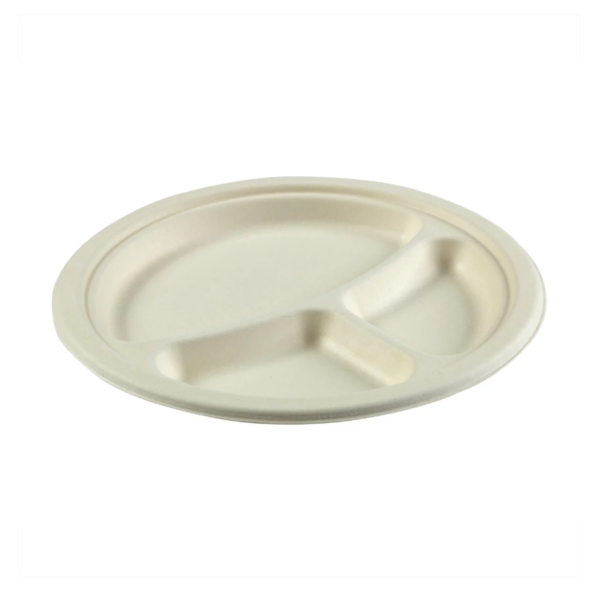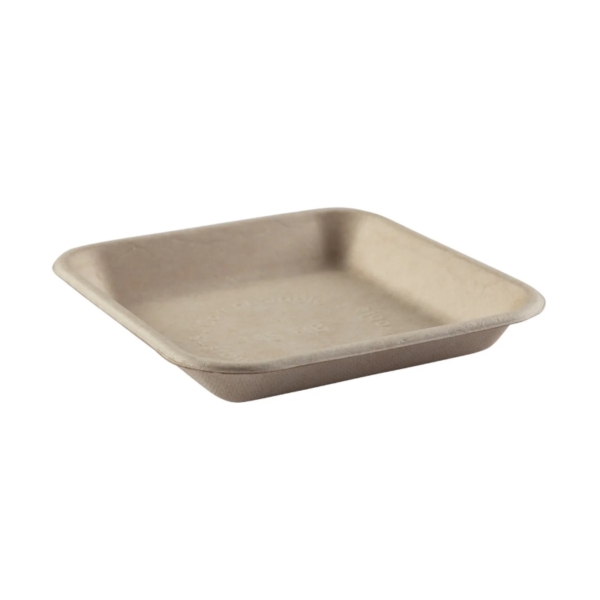
Bagasse plates are disposable molded fiber plates made from sugarcane bagasse. They are widely used by restaurants, catering companies, and foodservice distributors because they provide excellent rigidity for hot and cold food while supporting OEM customization and large-scale wholesale supply
| Question | Short Answer |
| Material | Sugarcane Bagasse |
| Microwave Safe | Available for qualified product specifications; confirm time and temperature limits before use |
| Compostable | Available for certified product lines under specified composting conditions |
| OEM | Yes |
| PFAS Free | Available with supporting test reports for applicable products |
| MOQ | Typically 50,000 pieces per size; stock-item and project conditions may vary |
| Item | Information |
| Product Name | Bagasse Plates |
| Material | Sugarcane Bagasse Fiber |
| Product Type | Molded Fiber Disposable Plates |
| Typical Sizes | 5″, 6″, 7″, 8″,8.78″, 9 inch bagasse plate, 10 inch bagasse plates, 12″ |
| Applications | Restaurants, Cafés, Catering, Hotels, Food Trucks, Schools, Offices, Events |
| Food Types | Main Courses, Desserts, Salads, Snacks, BBQ, Fast Food, Buffet Meals |
| Product Structure | Single-Layer Molded Fiber Construction |
| Surface Options | Natural White, Natural Brown |
| Customization | OEM & ODM Available |
| Branding | Private Label & Custom Packaging |
| Compatible Products | Bagasse Bowls, Bagasse Food Containers, Cutlery, Cup Lids |
| Supply Type | Manufacturer & Supply Chain Partner |
| Export Markets | North America, Europe, Australia, Middle East, Asia |
Bagasse Plates are molded fiber disposable tableware manufactured from renewable sugarcane bagasse, a natural plant fiber obtained after sugar extraction. Through advanced molded pulp technology, this agricultural by-product is transformed into durable, lightweight, and professional foodservice products suitable for a wide variety of commercial dining applications.
Compared with conventional disposable tableware, sugarcane bagasse plates combine excellent structural performance with an attractive natural appearance. Their rigid construction supports hot and cold foods while providing reliable performance in restaurants, cafés, catering companies, hotels, food courts, takeaway operations, supermarkets, and institutional foodservice. Available in multiple sizes and configurations, including bagasse dinner plates, bagasse serving plates, bagasse round plate, and bagasse square plates, they offer flexible solutions for different menu presentations and operational requirements.
DAILYECO supplies both self-manufactured and supply-chain-supported Bagasse Plates solutions, offering OEM manufacturing, private-label development, customized packaging, and global export services for professional B2B customers. Whether you are sourcing bagasse plates wholesale for foodservice distribution or developing a retail packaging brand, we provide dependable manufacturing capability, consistent product quality, and responsive customer support to help strengthen your product portfolio and long-term market competitiveness.
Bagasse Plates are disposable foodservice plates manufactured from sugarcane bagasse, the fibrous material remaining after sugarcane juice has been extracted. Unlike conventional disposable plates made from petroleum-based plastics or foam, sugarcane bagasse plates are produced using molded fiber technology, transforming renewable agricultural residue into durable, high-performance tableware suitable for commercial foodservice applications.
The manufacturing process begins with carefully selected sugarcane bagasse fibers, which are cleaned, refined into pulp, and molded under high temperature and pressure to create finished plates with excellent structural integrity. Depending on customer requirements and market preferences, Bagasse Plates are available in natural white or natural brown finishes and can be produced in a wide range of sizes and shapes, including bagasse round plate, bagasse square plates, compartment plates, and serving plates. This flexibility enables distributors and foodservice businesses to select products that match different dining occasions and menu requirements.
Because molded fiber construction provides excellent rigidity, bagasse disposable plates are capable of serving a variety of foods, from light snacks and desserts to full-course meals. Their smooth surface, consistent dimensions, and professional appearance make them suitable for restaurants, cafés, hotels, catering companies, food trucks, supermarkets, and takeaway businesses. At the same time, the natural texture of sugarcane fiber helps create a premium presentation that aligns with the growing demand for modern, sustainable food packaging.
Today, Bagasse Plates are widely used for dine-in service, takeaway meals, catering events, corporate dining, school cafeterias, hotel buffets, outdoor festivals, and food delivery operations. Their combination of reliable performance, broad application versatility, and OEM customization capability has made them one of the fastest-growing categories in molded fiber tableware for international B2B markets.
For distributors, wholesalers, importers, and food packaging brands seeking to expand their product portfolios, Bagasse Plates offer a practical and scalable solution. With options for OEM production, private-label packaging, customized dimensions, and bulk wholesale supply, they provide commercial buyers with a dependable product category capable of serving multiple industries while supporting long-term business growth.
| Feature | Performance | Explanation |
| Molded Fiber Construction | Excellent | Manufactured from high-quality sugarcane bagasse pulp with a strong one-piece molded structure |
| Structural Strength | Excellent | Designed to support a wide variety of hot and cold foods without bending under normal serving conditions |
| Food Contact Safety | Food Grade | Produced using food-contact compliant raw materials suitable for commercial foodservice |
| Oil & Grease Resistance | Excellent | Helps prevent oil penetration during everyday meal service, up to 95°C, 30 minutes |
| Water Resistance | Excellent | Performs reliably with sauces, soups, and moist foods for typical serving durations |
| Heat Resistance | Excellent | Suitable for qualified microwave-reheating applications, subject to product-specific time and temperature limits |
| Cold Food Performance | Excellent | Maintains stability for salads, desserts, fruits, and chilled dishes |
| Freezer Compatibility | Available | Selected SKUs may be suitable for chilled or frozen-food applications down to −20°C, subject to product-specific verification |
| Custom Branding | Available | OEM product development, customized packaging, and private-label solutions available |
| Product Variety | Excellent | Available as bagasse round plate, bagasse square plates, compartment plates, and serving plates in multiple sizes |
| Sustainability Options | Available | Manufactured from renewable sugarcane fiber with options that support customers’ sustainable packaging programs |
| PFAS free | Excellent | Supporting third-party test reports are available for applicable SKUs |
| Load-Bearing Capacity | Excellent | Performance values vary by SKU, plate dimensions, product weight, food type, and testing conditions. Product-specific test reports and technical data are available upon request. |
| Compostable | Excellent | Available for certified product lines under specified composting conditions |
The primary advantage of Bagasse Plates is their ability to combine reliable foodservice performance, attractive presentation, and manufacturing flexibility within a single disposable tableware solution. Unlike conventional disposable plates that often prioritize only cost or appearance, bagasse disposable plates are engineered to provide balanced performance across a wide range of commercial applications.
The molded fiber construction creates a rigid and durable plate capable of supporting everything from light snacks and desserts to complete meals. Whether used for restaurant dining, takeaway service, buffet catering, or outdoor events, Bagasse Plates maintain their shape during normal foodservice operations, helping improve the customer dining experience while reducing the risk of product deformation.
Another important feature is product versatility. DAILYECO manufactures a complete portfolio including bagasse dinner plates, bagasse serving plates, 9 inch bagasse plate, 10 inch bagasse plates, compartment plates, and customized molded fiber products. This broad product range enables distributors, wholesalers, and food packaging brands to source multiple specifications from a single manufacturing partner, simplifying procurement and improving inventory management.
Customization is equally important for today’s international buyers. In addition to standard export products, DAILYECO supports OEM manufacturing, private-label packaging, customized carton printing, barcode integration, and retail-ready packaging solutions. These services allow customers to develop differentiated product lines while maintaining consistent product quality and supply reliability.
For commercial buyers, selecting the right supplier involves more than evaluating individual product specifications. Manufacturing capability, quality consistency, production capacity, export experience, and responsive customer support all contribute to long-term purchasing success. By combining advanced molded fiber production with flexible OEM services, DAILYECO helps customers build stable supply chains and competitive product portfolios for global markets.
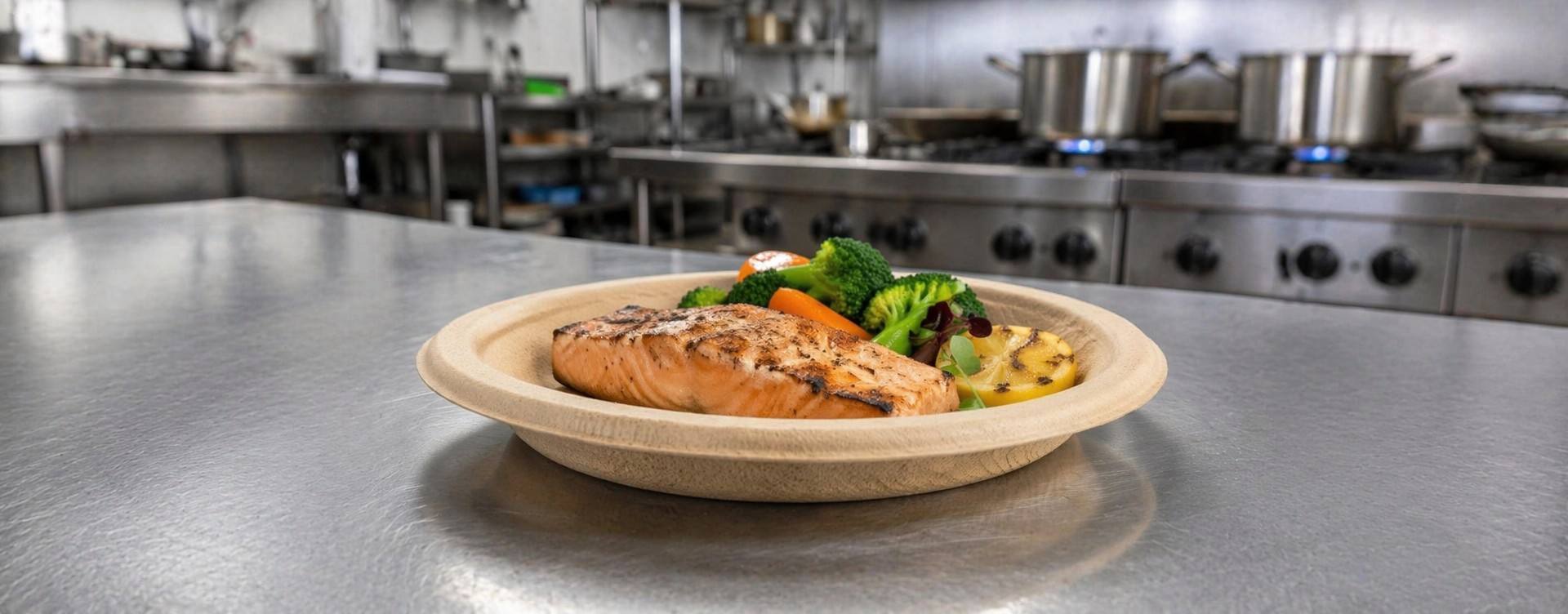
The global foodservice industry is undergoing a significant transformation as restaurants, catering companies, food delivery platforms, and retail food brands continue to seek practical and efficient disposable tableware solutions. As consumer expectations evolve and food packaging requirements become more diverse, Bagasse Plates have become one of the fastest-growing product categories in the molded fiber tableware industry.
Commercial buyers increasingly require disposable plates that not only perform well during food service but also provide a professional appearance suitable for modern dining environments. Sugarcane bagasse plates meet these expectations by combining reliable structural performance, attractive natural aesthetics, and versatile product designs. Whether serving freshly prepared meals, takeaway food, buffet dishes, or event catering, Bagasse Plates offer a dependable solution for a wide variety of foodservice operations.
Another important factor driving market growth is the continuous expansion of takeaway dining and food delivery services. Restaurants and quick-service brands require disposable tableware capable of maintaining food presentation while supporting efficient packaging and transportation. Available in multiple sizes such as 9 inch bagasse plate, 10 inch bagasse plates, compartment plates, and serving plates, these products enable food businesses to select the most suitable solution for different menu offerings while simplifying inventory management.
Product presentation has also become an increasingly important purchasing consideration. For restaurants, cafés, hotels, and catering companies, disposable tableware is no longer viewed as merely a functional serving accessory. Instead, it has become an extension of the dining experience and an important element of brand presentation. The clean molded finish and natural texture of bagasse disposable plates help create a premium food presentation that complements both casual dining and upscale hospitality environments.
At the same time, manufacturers have continued to improve molded fiber production technology. Modern manufacturing equipment provides better dimensional consistency, smoother surface quality, improved production efficiency, and more reliable product performance than earlier generations of molded pulp tableware. These technological improvements allow professional manufacturers such as DAILYECO to supply bagasse plates wholesale in large quantities while maintaining consistent quality standards for international customers.
Another reason for the growing popularity of Bagasse Plates is the increasing demand for customized packaging solutions. Importers, distributors, wholesalers, and private-label brands often require products that reflect their own corporate identity. Through OEM manufacturing services, customers can customize product specifications, retail packaging, carton artwork, and private branding, enabling them to develop differentiated product portfolios while maintaining a consistent market image.
For global distributors and food packaging suppliers, Bagasse Plates represent an attractive product category with broad commercial potential. They are suitable for restaurants, cafés, hotels, schools, hospitals, supermarkets, catering companies, food delivery businesses, corporate dining facilities, and event organizers. This wide application range creates stable purchasing demand across multiple industries and geographical markets, making Bagasse Plates an important product line for businesses seeking long-term growth opportunities.
As the international food packaging industry continues to evolve, professional buyers are placing greater emphasis on supplier capability rather than simply comparing product prices. Manufacturers with stable production capacity, comprehensive product portfolios, flexible OEM services, and reliable export experience are increasingly becoming preferred long-term partners. By combining advanced molded fiber manufacturing with responsive customer support and consistent product quality, DAILYECO helps customers strengthen their supply chains while meeting the changing requirements of today’s global foodservice market.
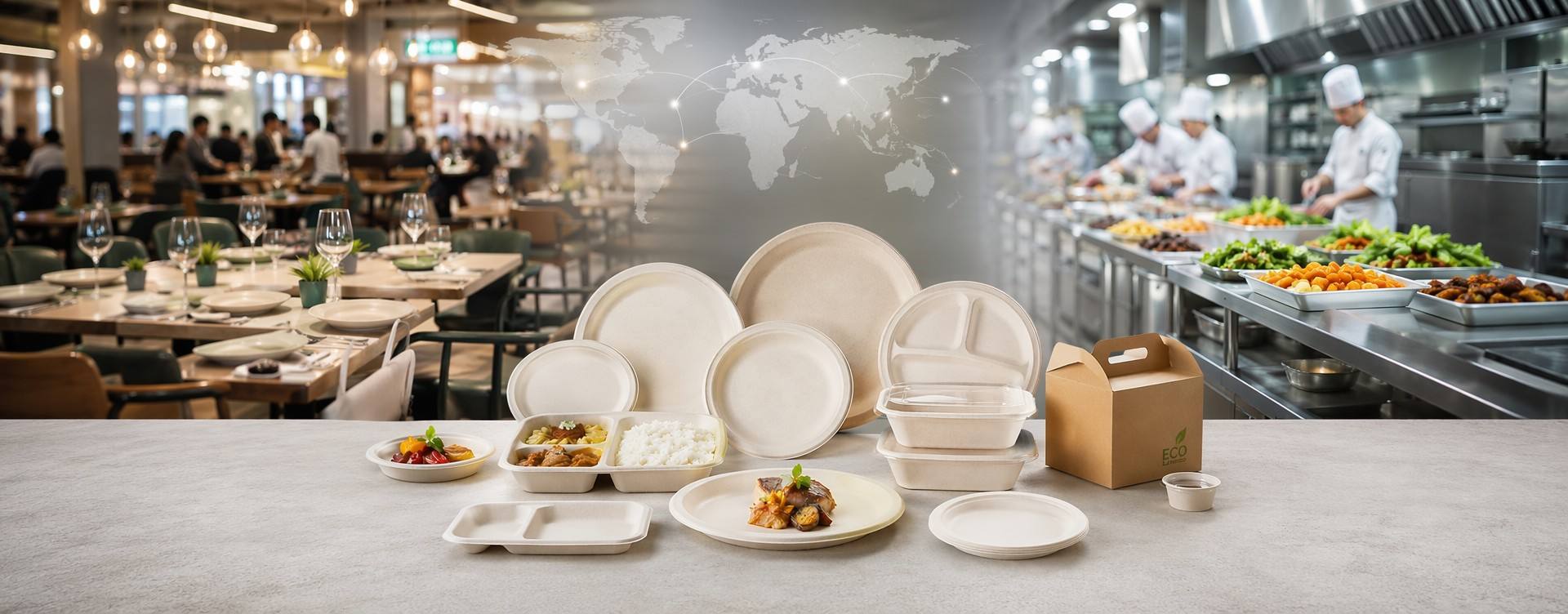
The global food packaging industry continues to evolve as changing consumer lifestyles, expanding takeaway dining, and the rapid growth of food delivery services reshape purchasing priorities across the foodservice sector. As demand for convenient meal solutions increases, disposable tableware has become an essential component of restaurant operations, catering services, hospitality businesses, and retail food packaging. Within this rapidly growing market, Bagasse Plates have become one of the most important product categories, offering distributors and food packaging brands a versatile solution suitable for a wide range of commercial applications.
For manufacturers, importers, wholesalers, and brand owners, understanding current industry trends is essential when developing long-term sourcing strategies. Purchasing decisions today are influenced not only by product performance, but also by manufacturing capability, supply stability, customization flexibility, and the ability to respond quickly to changing market demands. These factors have made Bagasse Plates an increasingly attractive product category for companies seeking to expand their sustainable disposable tableware portfolios.
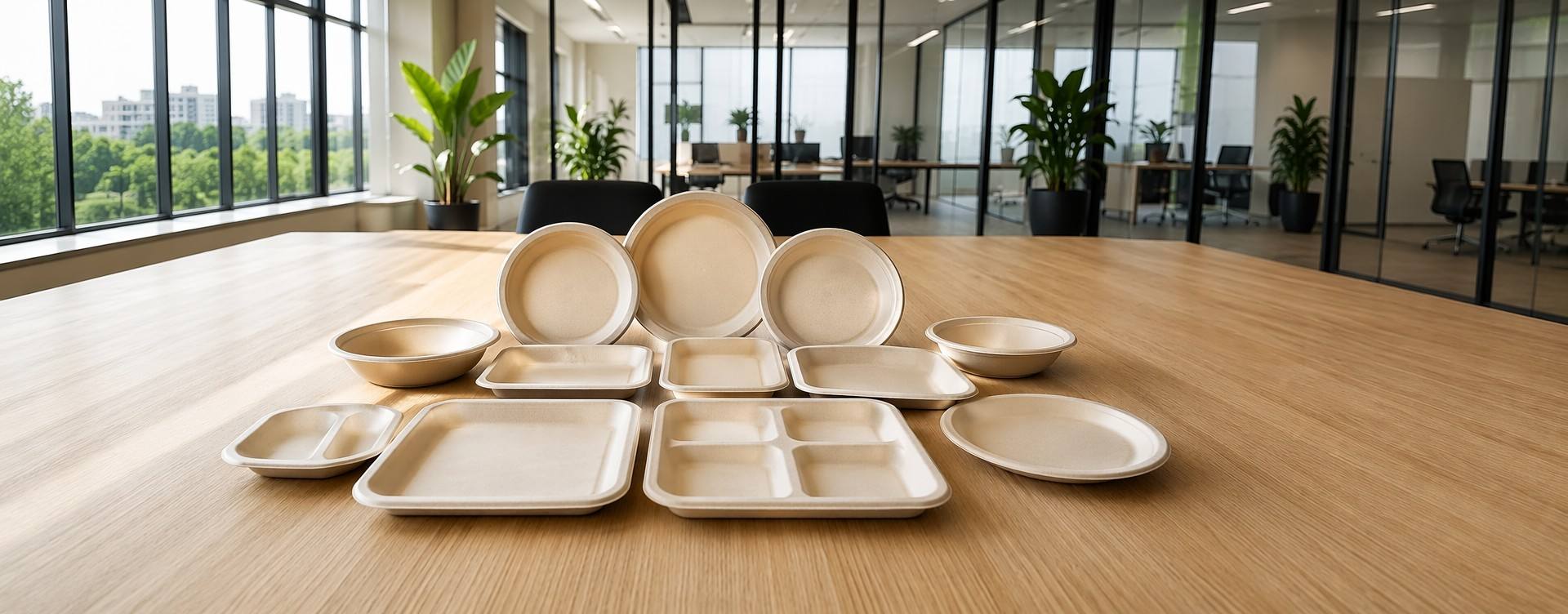
Disposable tableware remains one of the largest product segments within the global foodservice packaging industry. Every day, millions of meals are served through restaurants, cafés, hotels, food courts, schools, hospitals, catering companies, supermarkets, convenience stores, and takeaway businesses. As these industries continue to expand, the demand for reliable disposable serving products also continues to grow.
At the same time, customer expectations have changed significantly. Disposable plates are no longer viewed simply as serving accessories. Instead, they have become part of the overall dining experience, influencing food presentation, operational efficiency, and brand perception. For this reason, Bagasse Plates have become a preferred choice for businesses seeking disposable tableware that combines professional appearance with dependable commercial performance.
The continuous development of molded fiber manufacturing technology has further accelerated market growth. Improved production efficiency, consistent product dimensions, and broader product specifications now enable manufacturers to supply bagasse plates wholesale in large quantities while maintaining stable quality across international markets.
The expansion of takeaway dining and online food delivery platforms has significantly increased the demand for reliable disposable tableware. Restaurants require products capable of maintaining food presentation during transportation while remaining practical for fast-paced service environments. Bagasse Plates are now widely used by quick-service restaurants, cafés, ghost kitchens, and takeaway operators because they are available in multiple sizes suitable for different meal types.
Commercial buyers increasingly prefer suppliers capable of offering complete product portfolios rather than a limited number of individual items. Manufacturers now produce bagasse dinner plates, bagasse serving plates, bagasse round plate, bagasse square plates, and compartment meal plates to satisfy the diverse needs of restaurants, hotels, schools, catering companies, and institutional foodservice providers. This broader product selection enables distributors to serve multiple customer segments through one reliable supply chain.
Brand owners and retailers are placing greater emphasis on customized packaging and private-label products. Rather than purchasing generic disposable tableware, many businesses now develop exclusive product lines featuring customized carton artwork, retail packaging, and branding elements. OEM manufacturing has therefore become an important purchasing consideration for professional buyers looking to strengthen their market positioning while maintaining consistent product quality.
As international trade continues to develop, buyers expect manufacturers to provide reliable production capacity, standardized quality control, and efficient delivery schedules. Investments in automated molded fiber equipment, precision tooling, and modern production management have enabled experienced manufacturers to improve product consistency while supporting large-volume export orders. Stable manufacturing capability has become one of the most important competitive advantages for professional bagasse plates manufacturer partners.
Region | Typical Market Focus |
North America | Product consistency, foodservice performance, wholesale supply, private-label development |
Europe | Sustainable food packaging, product quality, regulatory compliance, premium presentation |
Australia & New Zealand | Hospitality applications, takeaway dining, premium molded fiber tableware |
Middle East | Hotel, catering, restaurant, and banquet foodservice solutions |
Asia | Manufacturing efficiency, competitive pricing, OEM production, rapid delivery |
Understanding regional purchasing priorities helps distributors and importers select products that better match local customer expectations while improving inventory planning and long-term sales performance. Although purchasing preferences differ between regions, demand for reliable Bagasse Plates continues to expand across global foodservice markets.
Today’s purchasing decisions are no longer based solely on unit price. Professional buyers increasingly evaluate suppliers according to their ability to provide:
For distributors and wholesalers, working with a manufacturer capable of supplying a complete range of Bagasse Plates alongside bowls, trays, food containers, and other molded fiber tableware can significantly simplify procurement while improving inventory efficiency. Rather than managing multiple suppliers, businesses can consolidate purchasing through one experienced manufacturing partner, reducing operational complexity and creating greater consistency across their product portfolio.
As global demand for high-quality disposable food packaging continues to grow, businesses that combine dependable products with strategic sourcing decisions will be better positioned to strengthen customer relationships, improve operational efficiency, and achieve sustainable long-term growth within the international foodservice industry.
Selecting the right disposable tableware material is an important decision for distributors, importers, restaurant chains, catering companies, and food packaging brands. While many disposable plate materials are available on the global market, each offers different characteristics in terms of appearance, durability, foodservice performance, customization flexibility, and commercial applications.
Rather than focusing on a single specification, professional buyers typically evaluate the complete purchasing value of a product. Factors such as manufacturing consistency, product range, supply stability, OEM capability, packaging options, and long-term supplier support all contribute to making the right procurement decision.
Bagasse Plates have become one of the most widely selected molded fiber tableware products because they combine excellent product performance with flexible commercial applications. Available in multiple sizes, shapes, and packaging configurations, they are suitable for restaurants, cafés, hotels, catering companies, supermarkets, food delivery businesses, institutional dining, and retail distribution.
However, different markets may have different purchasing priorities. Understanding the characteristics of each material helps buyers select products that better match customer expectations and business strategies.
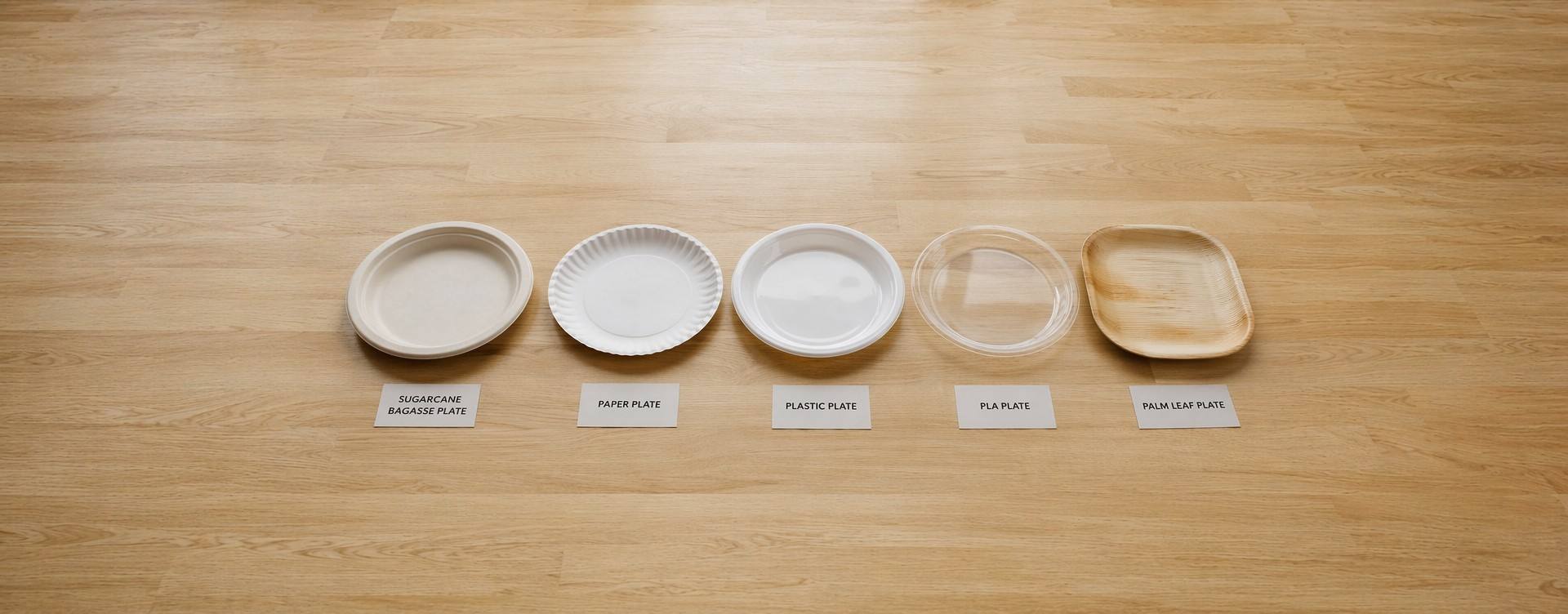
Material | Main Advantages | Typical Applications | Recommended Buyers |
Bagasse Plates | Durable molded fiber construction, professional appearance, multiple sizes, OEM customization | Restaurants, catering, hotels, takeaway, supermarkets | Importers, distributors, food packaging brands |
Paper Plates | Lightweight and economical for light meals | Parties, bakeries, snack shops | Retailers, event suppliers |
Plastic Plates | Strong and suitable for reusable or heavy-duty applications | Catering, outdoor events | Hospitality and event organizers |
PLA Plates | Plant-based material with premium appearance | Cafés, premium takeaway brands | Eco-focused retailers and specialty foodservice suppliers |
Palm Leaf Plates | Natural texture and unique handcrafted appearance | Weddings, premium catering, outdoor dining | Boutique hospitality businesses and event planners |
No single material is suitable for every business model. For example, retailers may focus on attractive consumer packaging, while foodservice distributors often prioritize product consistency, supply stability, and broad product availability. Restaurant chains typically require standardized product specifications across multiple locations, whereas catering companies may prefer larger serving formats capable of supporting banquet and buffet operations.
Because Bagasse Plates are manufactured using molded fiber technology, they provide a balanced combination of durability, product consistency, and flexible design options. Standard products include bagasse round plate, bagasse square plates, bagasse dinner plates, compartment plates, and serving plates, allowing buyers to build complete product portfolios from one manufacturing partner.
Market | Recommended Product Focus |
Restaurant Chains | Standardized Bagasse Plates in multiple sizes for consistent daily operations |
Catering Companies | Large bagasse serving plates and compartment plates for banquet and buffet service |
Supermarkets & Retail | Retail-ready packaging with private-label branding and barcode integration |
Food Delivery | Durable bagasse disposable plates suitable for takeaway meals and delivery applications |
Hospitality & Hotels | Premium bagasse dinner plates with consistent finish and elegant presentation |
Importers & Wholesalers | Complete product portfolio, OEM capability, flexible packaging, and stable supply capacity |
Selecting the right material is only one part of a successful purchasing strategy. Equally important is choosing a manufacturing partner capable of delivering consistent quality, flexible customization, and reliable production support. By working with an experienced bagasse plates manufacturer, buyers can simplify procurement, improve inventory management, and establish a stable supply chain capable of supporting long-term business growth.

Whether you are serving restaurants, catering companies, hotels, food delivery platforms, supermarkets, or retail stores, selecting the appropriate Bagasse Plates is essential for improving operational efficiency and meeting different food presentation requirements. As a professional bagasse plates manufacturer, DAILYECO offers a complete range of molded fiber plates designed to support diverse commercial applications while simplifying procurement for distributors, wholesalers, and importers.
Rather than supplying only a few standard products, DAILYECO provides a comprehensive portfolio of bagasse disposable plates in multiple sizes, shapes, and configurations. This enables customers to source an entire product range from a single manufacturing partner, improving product consistency, reducing purchasing complexity, and creating a more competitive product portfolio.
Our catalog includes bagasse round plate, bagasse square plates, bagasse dinner plates, compartment plates, serving plates, and customized molded fiber solutions. Every product is manufactured using high-quality sugarcane fiber pulp and undergoes strict quality inspection to ensure consistent dimensions, smooth surface finish, and dependable foodservice performance.
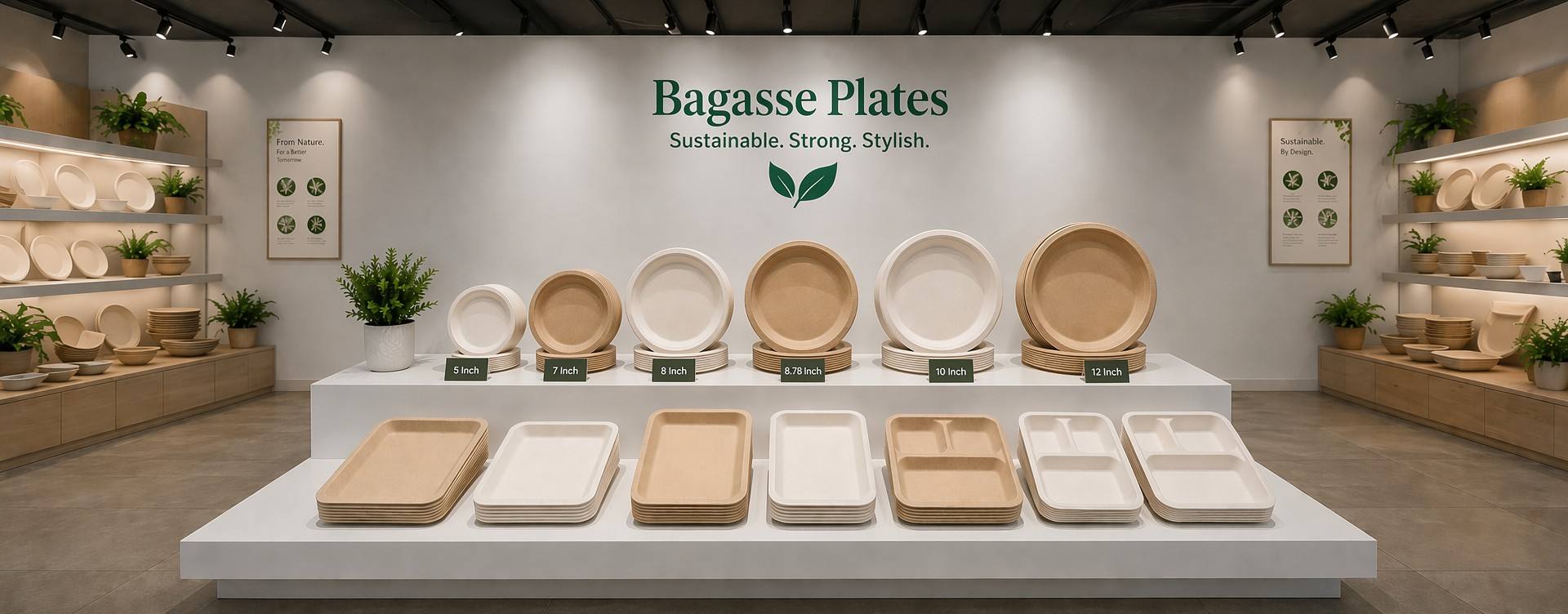
| Pictures | Name | Size | Weight | Pcs/bag | Bag/CTN | Pcs/CTN | Length | Width | Height |
| 6“ Lace Plate | Ø155*12.5 | 7 | 125 | 8 | 1000 | 32 | 27 | 32 |
| 5” Plate | Ø127*15.16 | 5.5 | 125 | 8 | 1000 | 26.5 | 27 | 26.5 |
| 7” Lace Plate | Ø182*15 | 8 | 125 | 8 | 1000 | 36 | 29.5 | 36 |
| 8“ Lace Plate | Ø210*15 | 11 | 125 | 8 | 1000 | 32 | 24 | 46 |
| 6” Plate | Ø155*12.5 | 6 | 125 | 8 | 1000 | 32 | 27 | 32 |
| 7” Plate | Ø175*15.8 | 8 | 125 | 8 | 1000 | 36 | 29.5 | 36 |
| 8″Plate | Ø205*16 | 11 | 125 | 8 | 1000 | 42 | 26 | 42.5 |
| 8.78″Plate | Ø22.23*18.95 | 12 | 125 | 4 | 500 | 32 | 23.3 | 45.6 |
| 9” Plate | Ø225*19.6 | 15 | 125 | 4 | 500 | 32 | 23.5 | 46 |
| PET Lid for 9” Plate | Ø230*53 | 19 | 50 | 4 | 200 | 55.5 | 47.5 | 47 |
| 9” Large Plate | Ø230*22 | 16 | 125 | 4 | 500 | 47 | 32 | 24 |
| 9″ Deep Plate | Ø225*36 | 19 | 125 | 4 | 500 | 46 | 18.5 | 46 |
| 9” 2 Compartment Plate | Ø225*19.6 | 15 | 125 | 4 | 500 | 46 | 32 | 23.5 |
| 9” 3 Compartment Plate | Ø225*19.6 | 15 | 125 | 4 | 500 | 46.5 | 32 | 23.5 |
| 9″ 3 Compartment Plate (Big) | Ø235*20.4 | 18 | 125 | 4 | 500 | 49 | 34 | 24.5 |
| 10” Plate | Ø258*20.5 | 20 | 125 | 4 | 500 | 53 | 34 | 27 |
| 10″ Deep Plate | Ø258.6*28 | 24 | 125 | 4 | 500 | 53 | 19.5 | 53 |
| 10” 3 Compartment Plate | Ø258*25.5 | 21 | 125 | 4 | 500 | 52.5 | 18 | 52.5 |
| Square Edge Oval Plate | 230*160*20 | 13 | 125 | 4 | 500 | 47 | 37 | 33 |
| Small Oval Plate | 264*200*18 | 17 | 125 | 4 | 500 | 36 | 27.5 | 41 |
| Large Oval Plate | 317.5*254*24.5 | 28 | 125 | 4 | 500 | 34 | 32.5 | 53 |
| 12″ Pizza Box | 320*17 | 34 | 50 | 4 | 200 | 55 | 34 | 34 |
| 12″ Pizza Box PET Lid | 350*330*50 | 42 | 50 | 4 | 200 | 66 | 45.5 | 67 |
| Pictures | Name | Size | Weight | Pcs/bag | Bag/CTN | Pcs/CTN | Length | Width | Height |
| 6” Square Plate | 160*160*15 | 13 | 50 | 10 | 500 | 34 | 28 | 17 |
| 8” Square Plate | 200*200*15 | 17 | 50 | 10 | 500 | 56 | 21 | 21 |
| 10” Square Plate | 260*260*15 | 30 | 50 | 10 | 500 | 57 | 27 | 27 |
| 10” Rec Plate | 260*130*20 | 17 | 50 | 10 | 500 | 30.5 | 27 | 28 |
| 10 Square Plate | 260*260*30 | 35.5 | 100 | 2 | 200 | 34 | 27 | 27 |
Every product category is developed to satisfy different foodservice requirements. Smaller plates are ideal for desserts, pastries, fruits, and appetizers, while larger bagasse dinner plates are designed for complete meals. Compartment plates help separate food items, making them suitable for schools, hospitals, airline catering, and corporate cafeterias. Serving plates are widely used for buffets, banquet events, and shared dining occasions.
DAILYECO understands that many customers require more than standard products. As an experienced OEM manufacturer, we provide flexible customization services that allow distributors and brand owners to develop products tailored to their market needs.
Our customization capabilities include:
Packaging optimization for wholesale and retail markets
These services help customers establish differentiated product portfolios while maintaining consistent product quality and reliable supply.
Choosing the correct plate size helps improve both food presentation and operational efficiency. Different meal types require different product specifications, and selecting appropriate sizes can reduce unnecessary inventory while meeting customer expectations.
| Plate Size | Recommended Food Applications |
| 6″ | Cakes, pastries, desserts, snacks, bread |
| 5″ | Fruits, nuts, appetizers, cookies, sauce portions |
| 7″ | Salads, sandwiches, breakfast items |
| 8″ | Lunch meals, pasta, rice dishes |
| 8.78″ | Full dinner plates, heavy meals, BBQ food, main courses |
| 9 inch bagasse plate | Standard restaurant meals, takeaway lunches |
| 10 inch bagasse plates | Main courses, buffet service, family meals |
| 12″ | Large sharing platters, catering events, banquet service |
Professional buyers often select multiple specifications rather than relying on a single size. By offering a complete range of Bagasse Plates, distributors can better serve restaurants, hotels, catering companies, supermarkets, and foodservice wholesalers while improving inventory flexibility and increasing sales opportunities.
A complete product portfolio is often more valuable than a single best-selling item. Buyers who source multiple Bagasse Plates specifications from one manufacturer can streamline procurement, maintain consistent quality across product lines, and respond more effectively to different customer requirements. For wholesalers and importers, partnering with a manufacturer that supports OEM development, flexible packaging, and stable production capacity creates long-term commercial advantages beyond product pricing alone.
The versatility of Bagasse Plates makes them suitable for a wide variety of commercial foodservice environments. From quick-service restaurants and cafés to hotels, catering companies, supermarkets, institutional dining facilities, and food delivery platforms, molded fiber plates have become an essential part of modern disposable tableware solutions.
For distributors and wholesalers, offering multiple Bagasse Plates specifications allows them to serve different customer groups through a single product category. Restaurants require reliable dinner plates for everyday service, catering companies often need large serving plates and compartment plates, while retailers prefer attractive consumer packaging suitable for supermarket shelves. This wide application range creates stable demand across numerous industries and geographical markets.
Below are some of the most common commercial applications for Bagasse Plates.
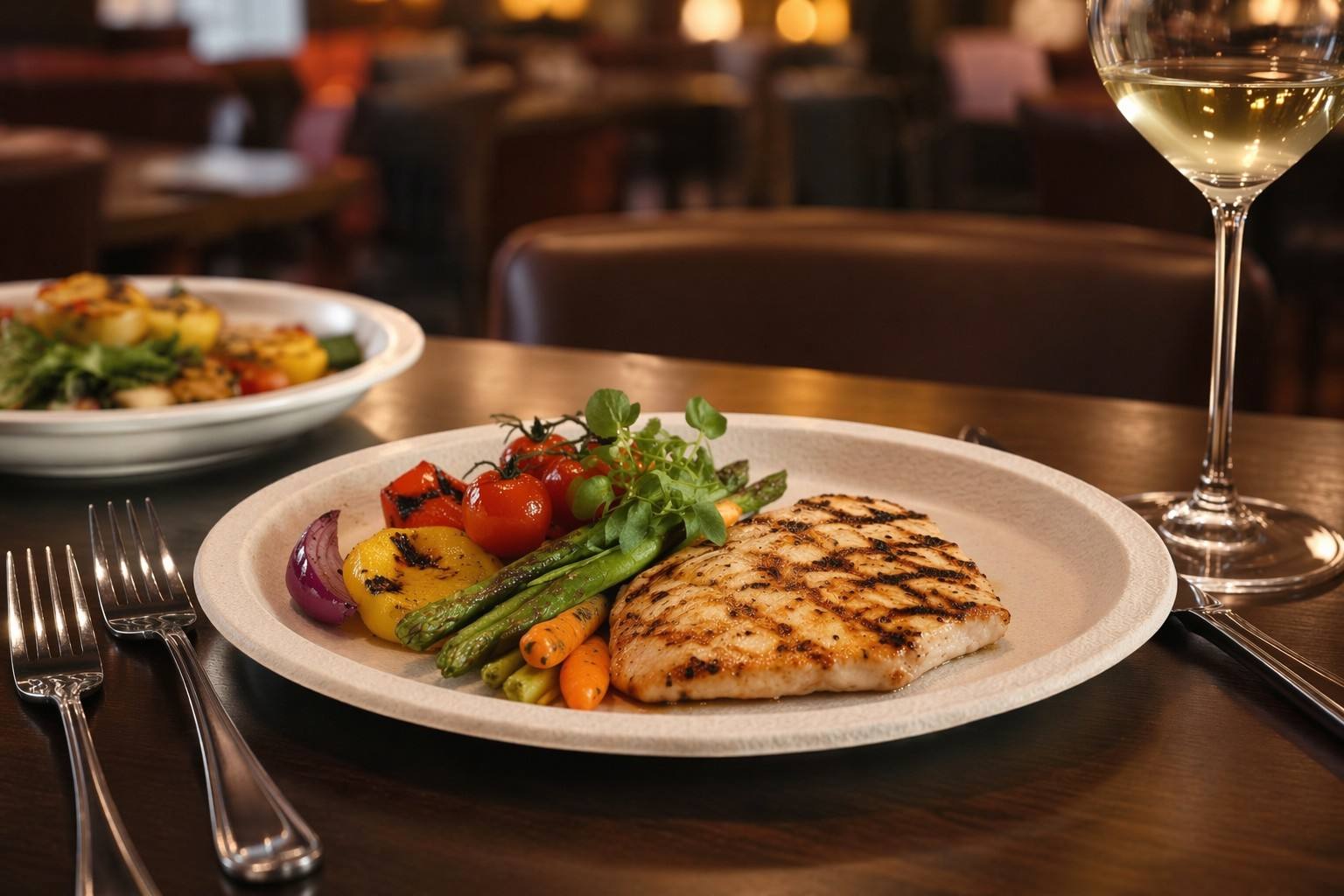
Restaurants require disposable tableware that combines attractive presentation with dependable performance during daily operations. Bagasse dinner plates are widely used for serving main courses, pasta, grilled dishes, salads, rice meals, and combination plates. Their smooth molded finish complements food presentation while helping restaurants maintain consistent serving standards.
Professional catering companies require disposable tableware capable of handling large-scale events while maintaining an attractive appearance. Bagasse serving plates and larger molded fiber plates are suitable for weddings, conferences, exhibitions, outdoor events, and banquet dining. Their availability in multiple sizes allows catering operators to match different menu styles and serving formats.

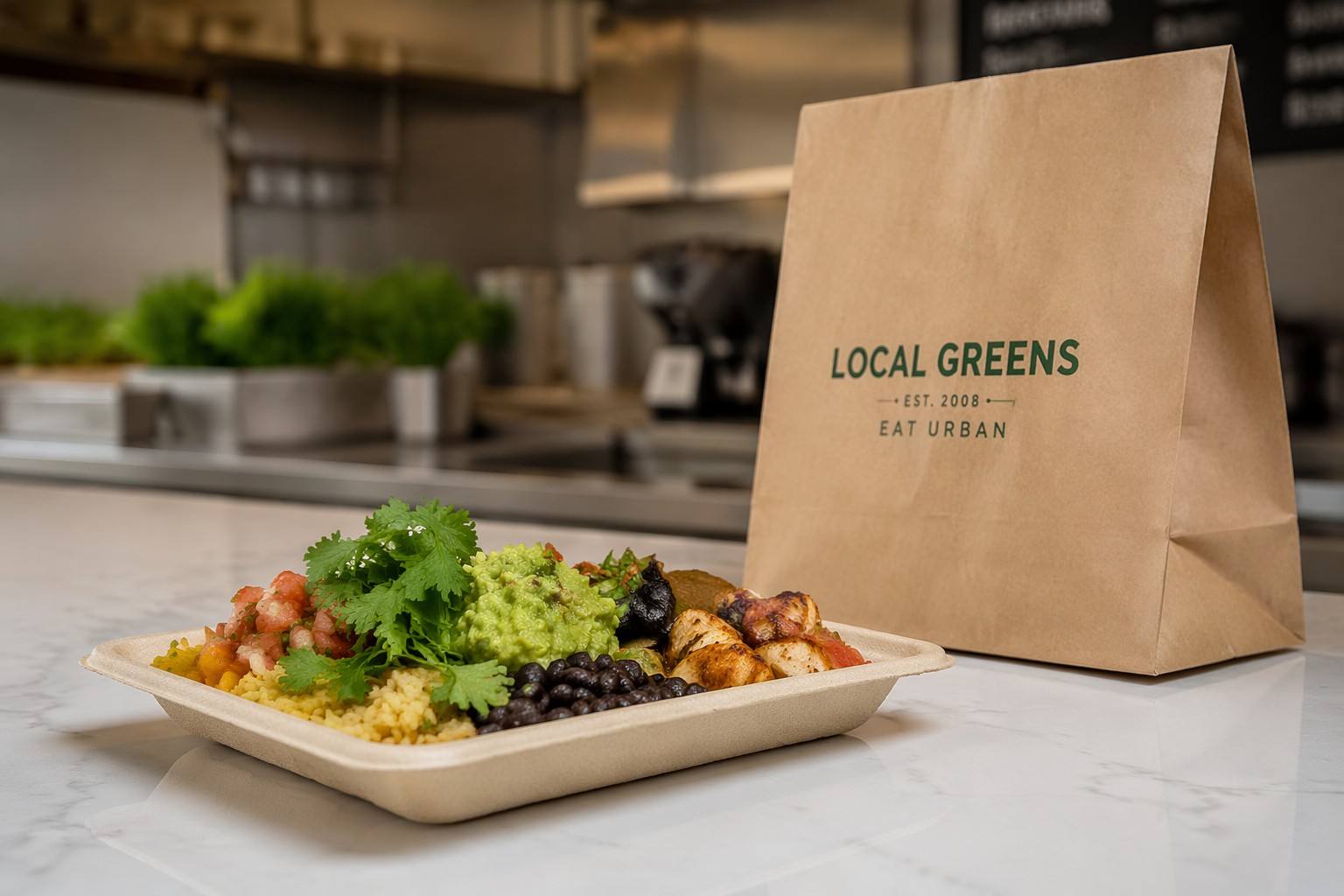
Hotels often require disposable tableware for room service, buffet stations, conferences, outdoor functions, and special events. Premium bagasse square plates provide a clean and contemporary appearance that complements hotel dining environments while supporting efficient foodservice operations.
Takeaway restaurants and food delivery businesses require disposable plates that are suitable for transporting prepared meals. Bagasse disposable plates are commonly used for takeaway lunches, combination meals, snack boxes, and ready-to-eat food service. Multiple product sizes help restaurants standardize packaging while improving operational efficiency.
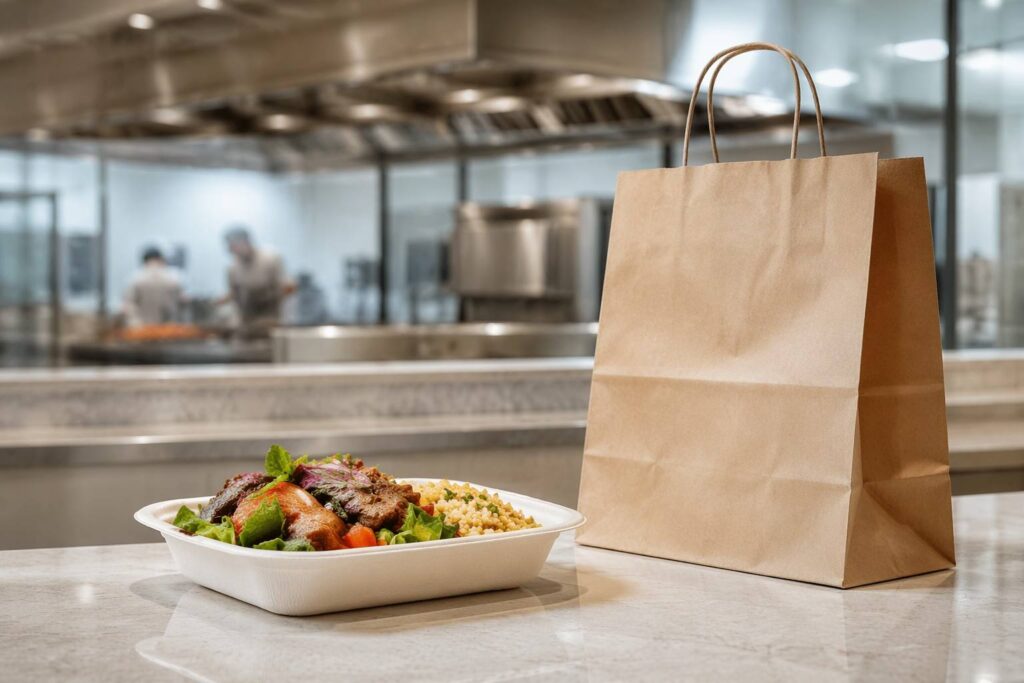
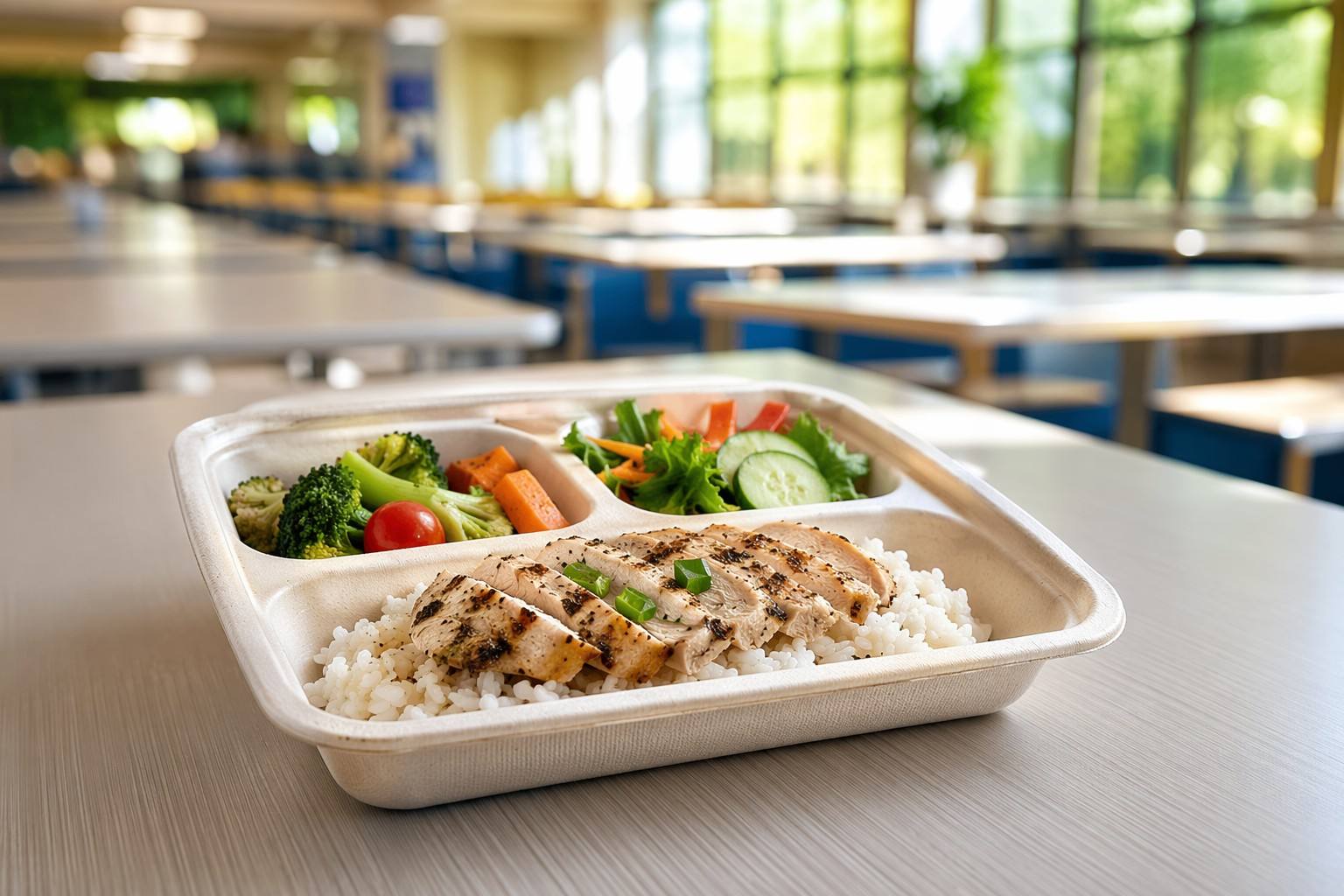
Educational institutions, hospitals, corporate cafeterias, and government dining facilities frequently use compartment Bagasse Plates to separate different food items. Standardized dimensions and practical designs make these products suitable for high-volume meal service while simplifying food presentation.
Retail brands increasingly include Bagasse Plates within their sustainable disposable tableware collections. Through OEM manufacturing and private-label packaging, products can be customized with retail artwork, barcode labels, and branded cartons suitable for supermarkets, department stores, and online marketplaces.
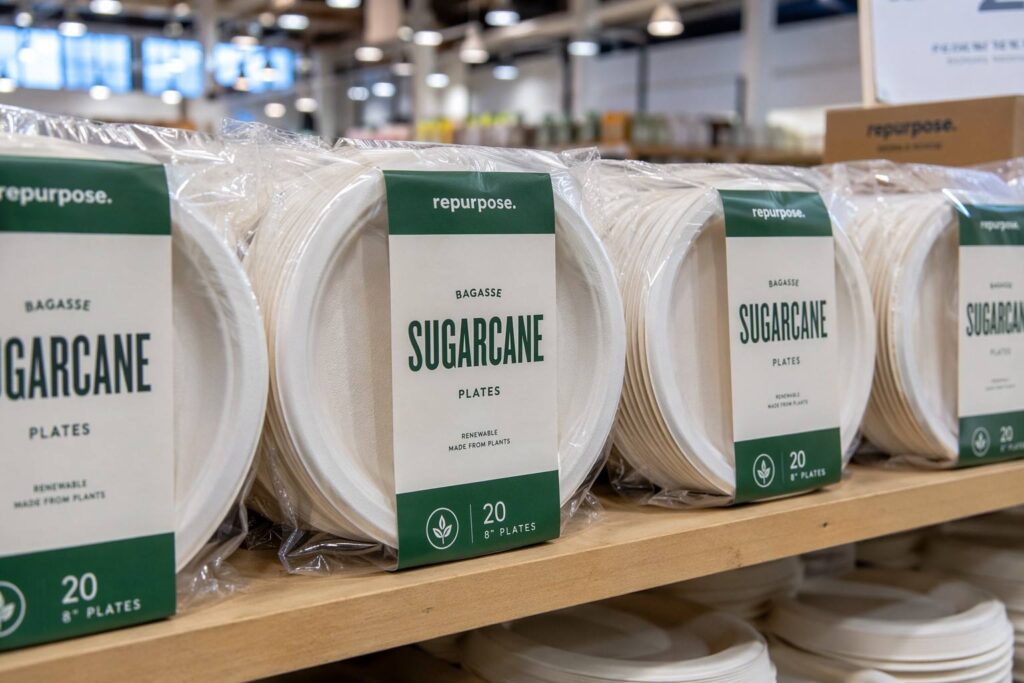

Outdoor festivals, community events, food fairs, sporting venues, and family gatherings require disposable tableware that is practical, lightweight, and available in multiple serving sizes. Bagasse round plate and larger serving plates are frequently selected for these occasions because they can accommodate a wide range of menu options while maintaining a professional appearance.
For wholesalers, distributors, and importers, Bagasse Plates represent one of the most versatile product categories within molded fiber tableware. By offering complete product ranges—including 9 inch bagasse plate, 10 inch bagasse plates, serving plates, compartment plates, and customized products—businesses can meet the purchasing requirements of restaurants, catering companies, retailers, and hospitality customers through one reliable supplier.
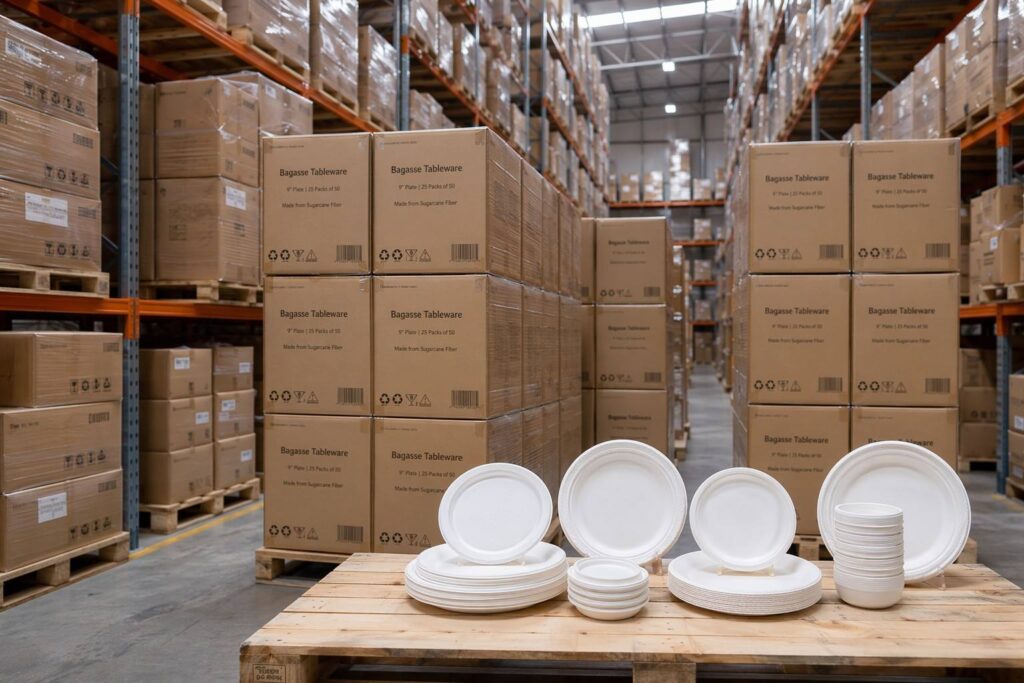
One of the greatest commercial advantages of Bagasse Plates is their ability to serve multiple industries with the same product family. Instead of stocking separate disposable tableware solutions for each customer segment, distributors can build a comprehensive portfolio of molded fiber plates that supports restaurants, catering companies, retailers, institutions, hotels, and takeaway businesses. This simplifies inventory management, improves purchasing efficiency, and creates greater long-term sales opportunities.
Choosing the right disposable plate is not simply a matter of selecting the lowest-priced product. Professional buyers generally evaluate material characteristics, product consistency, manufacturing quality, application suitability, customization capability, and long-term supply stability before making purchasing decisions. While several disposable plate materials are available in today’s global market, each offers unique advantages depending on the intended application and customer requirements.
For distributors, wholesalers, and food packaging brands, understanding the strengths and limitations of different materials helps build a more competitive product portfolio while providing customers with solutions that better match their business needs. The following comparisons illustrate how Bagasse Plates perform alongside other commonly used disposable tableware materials.
| Comparison Item | Bagasse Plates | Paper Plates |
| Material | Molded sugarcane fiber | Paperboard |
| Structure | Thick molded construction | Thin laminated paper |
| Strength | Excellent | Moderate |
| Suitable for Heavy Meals | Excellent | Limited |
| Oil Resistance | Excellent | Moderate |
| Moisture Resistance | Excellent | Moderate |
| Product Range | Extensive | Standard |
| OEM Customization | Excellent | Excellent |
| Recommended Applications | Restaurants, catering, takeaway, hospitality | Parties, bakeries, snacks |
Both materials are widely used within the disposable tableware industry, but they serve different commercial purposes. Paper plates are generally selected for lightweight foods such as cakes, pastries, sandwiches, and snacks. Bagasse Plates, however, are better suited for restaurants and foodservice businesses serving complete meals, grilled dishes, pasta, rice, and buffet items that require greater structural strength.
| Comparison Item | Bagasse Plates | Plastic Plates |
| Appearance | Natural molded finish | Smooth plastic surface |
| Weight | Lightweight | Lightweight |
| Structural Performance | Excellent | Excellent |
| Hot Food Applications | Excellent | Good |
| Cold Food Applications | Excellent | Excellent |
| Customization | Excellent | Excellent |
| Product Portfolio | Wide range of sizes and shapes | Wide range of sizes and shapes |
| Typical Buyers | Restaurants, wholesalers, importers | Catering, hospitality, retail |
| Biodegradability | Made primarily from renewable sugarcane fiber. Certified compostable options are available for applicable product lines and composting conditions. | Poor, non-biodegradable, takes hundreds of years to decompose, produces persistent microplastics |
Plastic plates remain common in many markets due to their durability and broad product availability. However, many restaurants and food packaging brands are increasingly expanding their molded fiber product portfolios by introducing Bagasse Plates alongside traditional plastic products, allowing them to serve customers seeking alternative disposable tableware options.
| Comparison Item | Bagasse Plates | PLA Plates |
| Manufacturing Process | Molded fiber pulp forming | Thermoforming |
| Surface Finish | Natural texture | Smooth glossy finish |
| Product Appearance | Premium natural look | Modern transparent appearance |
| Available Shapes | Round, square, compartment, serving | Mostly round and flat |
| OEM Options | Extensive | Extensive |
| Main Applications | Foodservice, catering, restaurants | Cafés, premium takeaway, retail |
Both materials are popular among premium food packaging brands. Bagasse Plates offer a more natural molded fiber appearance suitable for restaurants and catering companies, while PLA products are often selected for specialty cafés, cold food presentation, and retail packaging.
| Comparison Item | Bagasse Plates | Palm Leaf Plates |
| Manufacturing | Molded fiber production | Natural leaf pressing |
| Product Consistency | Excellent | Natural variation |
| Surface Texture | Smooth molded finish | Unique natural grain |
| Size Consistency | Excellent | Moderate |
| OEM Production | Available | Limited |
| Typical Applications | Daily foodservice | Premium events, weddings, boutique hospitality |
Palm leaf plates provide a distinctive handcrafted appearance that is popular for weddings and boutique catering events. Bagasse Plates, by contrast, are designed for high-volume commercial foodservice, offering greater consistency, scalable manufacturing, and a wider range of product specifications.
| Comparison Item | Bagasse Plates | Foam Plates |
| Product Appearance | Premium molded fiber | Standard foam finish |
| Structural Strength | Excellent | Good |
| Food Presentation | Professional | Basic |
| Product Portfolio | Comprehensive | Standard |
| OEM Packaging | Available | Available |
| Suitable Markets | Restaurants, catering, hospitality, retail | Casual dining, takeaway |
Foam plates have traditionally been used in fast-food and takeaway operations because of their light weight and cost efficiency. However, many foodservice operators now prefer Bagasse Plates for their premium appearance, broad product selection, and ability to enhance food presentation across a variety of commercial dining environments.
There is no single disposable plate material that is ideal for every business. Purchasing decisions should be based on the target market, menu type, customer expectations, product positioning, and supply chain strategy.
For retailers, consumer packaging and attractive shelf presentation may be the highest priorities. Restaurants generally focus on product consistency and dependable foodservice performance. Catering companies often require larger serving formats, while wholesalers and importers usually prefer suppliers capable of providing a complete product portfolio with flexible OEM services and stable production capacity.
Because Bagasse Plates combine multiple product sizes, attractive molded fiber construction, reliable manufacturing quality, and broad commercial applications, they have become one of the most versatile disposable tableware categories available to today’s international foodservice industry.
Professional buyers rarely compare products based on price alone. Long-term purchasing success depends on selecting a manufacturing partner capable of delivering consistent product quality, comprehensive product categories, reliable export experience, flexible customization services, and responsive customer support. By sourcing Bagasse Plates from an experienced manufacturer such as DAILYECO, distributors, wholesalers, and food packaging brands can strengthen their product portfolios while building a more efficient and dependable supply chain for future growth.
Bagasse Plates are primarily purchased by commercial businesses rather than individual consumers. Different customer groups have different purchasing priorities, ranging from product quality and supply stability to customization capability, inventory management, and long-term manufacturing partnerships.
Understanding who your customers are—and what matters most to them—allows manufacturers to provide more effective solutions, improve customer satisfaction, and establish lasting business relationships across different industries.

Importers are one of the largest buyer groups for Bagasse Plates, typically purchasing in full-container quantities for resale within their domestic markets. They generally focus on manufacturing consistency, competitive pricing, reliable production schedules, export documentation, and efficient international logistics. Many importers also require suppliers capable of offering a complete range of molded fiber tableware rather than a single product category.
Packaging distributors supply disposable food packaging products to restaurants, cafés, catering companies, supermarkets, and foodservice operators. Their inventories usually include multiple sizes of Bagasse Plates, bowls, food containers, trays, and cutlery to satisfy different customer requirements.
For distributors, maintaining product availability, stable inventory levels, and fast replenishment is essential for supporting daily customer orders and strengthening long-term business relationships.
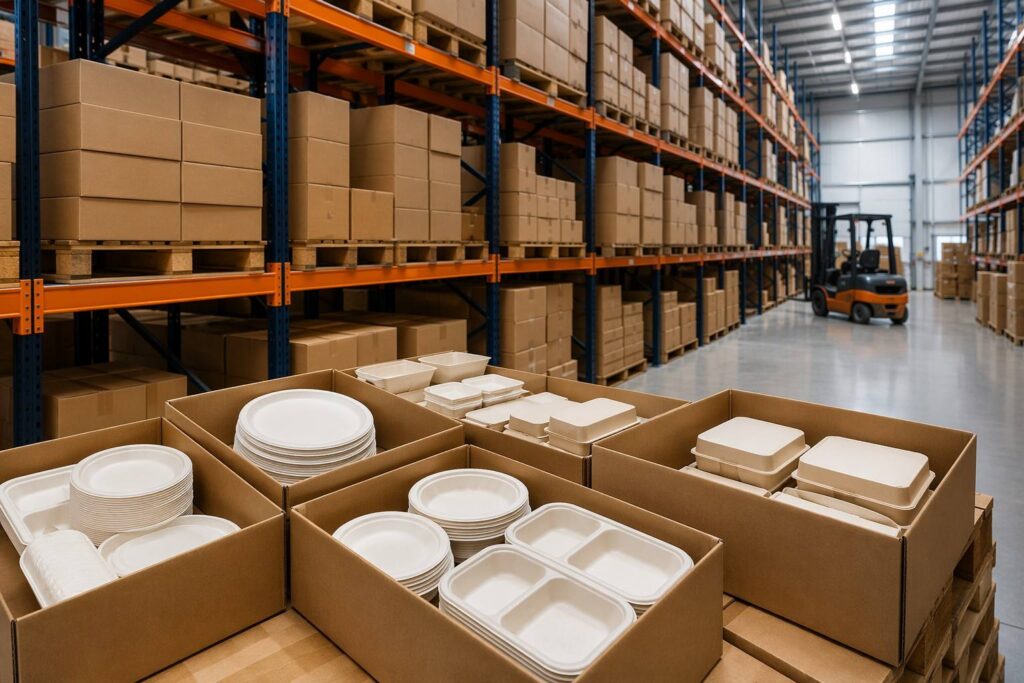

Restaurant groups and quick-service restaurant chains usually purchase Bagasse Plates through centralized procurement departments responsible for maintaining consistent packaging standards across all locations.
These buyers often evaluate suppliers based on production capacity, standardized product specifications, delivery reliability, and long-term supply capability rather than simply comparing unit prices. Consistency across different plate sizes is particularly important for restaurants operating multiple branches.
For food packaging brands, Bagasse Plates represent more than disposable tableware—they are an important part of the customer dining experience and overall brand identity.
Brand owners typically require premium product appearance, customized packaging, consistent manufacturing quality, and reliable OEM support to ensure their products reflect a professional and recognizable market image.


Private-label packaging companies work closely with manufacturers to develop Bagasse Plates under their own brands. They usually require customized molds, private-label packaging, retail-ready artwork, and confidential OEM manufacturing.
Reliable production quality, flexible customization, and stable supply are key factors influencing long-term cooperation.
Foodservice supply companies provide complete packaging solutions for restaurants, hotels, cafés, schools, hospitals, corporate cafeterias, catering companies, and institutional dining facilities.
Rather than purchasing only one specification, these buyers usually require a comprehensive portfolio including bagasse round plate, bagasse square plates, bagasse dinner plates, compartment plates, serving plates, bowls, trays, and food containers.
A supplier capable of providing complete molded fiber tableware solutions helps simplify procurement while improving inventory efficiency.
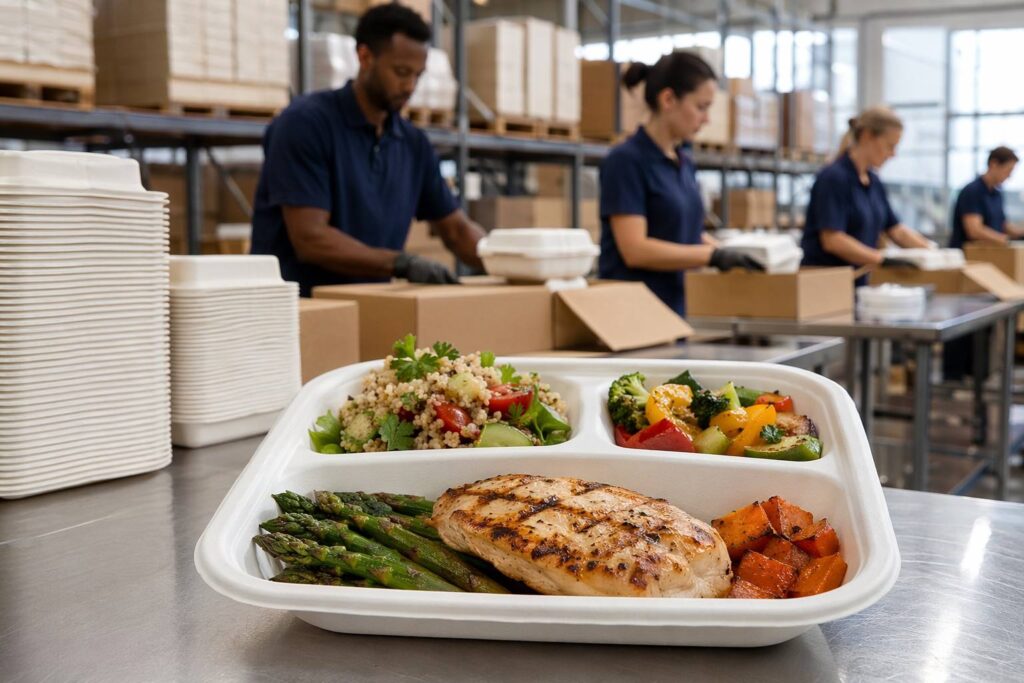

Hospitality procurement companies purchase disposable tableware for hotel groups, resorts, conference centers, banquet operations, and catering businesses.
These organizations typically prioritize product quality, elegant food presentation, dependable supply, and consistent product specifications across multiple hospitality locations.
Many e-commerce packaging brands develop customized disposable tableware collections for online marketplaces and retail platforms. These businesses often require flexible OEM support, attractive consumer packaging, private-label branding, and efficient production schedules to support new product launches.
Manufacturers capable of offering customized packaging together with stable production and responsive communication are generally preferred by rapidly growing online brands.

The following guide helps buyers determine whether Bagasse Plates are suitable for different commercial foodservice applications. Selecting the appropriate plate specification according to your serving environment helps improve operational efficiency, food presentation, and customer satisfaction while simplifying inventory management.
Application | Recommended |
Restaurant Dining | ✓ |
Takeaway Meals | ✓ |
Food Delivery | ✓ |
Buffet Service | ✓ |
Catering Events | ✓ |
Hotel Dining | ✓ |
School & University Cafeterias | ✓ |
Hospital Foodservice | ✓ |
Corporate Dining | ✓ |
Supermarket Ready Meals | ✓ |
Outdoor Events & Festivals | ✓ |
Airline Catering | ✓ |
Party & Event Catering | ✓ |
Retail Food Packaging | ✓ |
Long-Term Food Storage | ✗ |
Industrial Food Processing | ✗ |
Bagasse Plates are specifically designed for commercial foodservice and disposable meal service. They are suitable for serving hot meals, cold dishes, desserts, snacks, salads, bakery products, and takeaway food in restaurants, cafés, hotels, catering companies, schools, hospitals, corporate cafeterias, and event venues.
Available in multiple specifications—including bagasse dinner plates, bagasse serving plates, bagasse round plate, bagasse square plates, and compartment plates—these products enable businesses to standardize food presentation while improving operational efficiency across different dining scenarios.
For applications requiring long-term food preservation, vacuum packaging, industrial processing, or extended warehouse storage after filling, specialized food packaging solutions should be considered. Bagasse Plates are intended for food serving rather than long-term food storage or industrial packaging.
Purchasing Bagasse Plates for wholesale distribution, foodservice supply, retail programs, or private-label projects requires more than selecting a plate size from a catalog. Buyers should confirm product specifications, order quantities, packaging formats, documentation requirements, sample procedures, production schedules, and shipping arrangements before approving a bulk order.
The following questions address the commercial and operational issues that procurement managers should clarify with a potential supplier.
An accurate quotation should be based on a clearly defined product and purchasing requirement. Buyers should provide as much of the following information as possible:
Required Information | Why It Matters |
Product size and shape | Identifies the correct mold and product specification |
Product weight or required strength | Affects performance and unit cost |
Plate type | Round, square, oval, deep, or compartment plate |
Order quantity | Determines pricing and production planning |
Packaging format | Influences labor, carton size, and shipping cost |
Target market | Helps identify documentation and labeling requirements |
Private-label requirements | Determines artwork, printing, and packaging development |
Delivery destination | Required for freight and trade-term calculations |
Required delivery date | Helps assess production feasibility |
Certification or test-document requirements | Ensures documents are prepared before production |
A request such as “Please quote a 9-inch bagasse plate” is usually insufficient for an accurate supplier comparison. Two products with the same diameter may differ in weight, depth, rigidity, carton quantity, and packaging method.
The minimum order quantity depends on whether the buyer selects a standard item, a stock-supported product, customized packaging, or a newly developed specification.
Order Type | Typical MOQ Consideration |
Standard product with standard export packaging | Usually the most flexible option |
Standard product with private-label packaging | MOQ depends on packaging and printing requirements |
Mixed-size container order | May be possible if minimum quantities are met for each SKU |
Custom plate specification | Subject to production feasibility and mold availability |
New mold development | Requires project-based volume evaluation |
Stock-supported item | Lower quantities may be available depending on inventory |
For many standard products, DAILYECO’s common reference MOQ is approximately 50,000 pieces per size, but actual requirements vary by SKU, packaging format, inventory status, and order structure.
Buyers should request a product-specific MOQ rather than assuming that one MOQ applies to the entire Bagasse Plates range.
Yes, mixed-SKU container loading may be available, provided that each selected product meets the minimum production or packing quantity.
Mixed loading is often suitable for distributors introducing a new product range because it allows them to test several specifications without purchasing a full container of every size.
However, buyers should consider:
Procurement Recommendation
A focused first order containing three to five core specifications is usually more manageable than introducing a large number of low-volume sizes.
Container loading quantity depends on the product size, nesting efficiency, number of pieces per carton, carton dimensions, pallet requirements, and whether different SKUs are mixed.
A small round plate can achieve a much higher loading quantity than a deep plate, compartment plate, or large serving platter.
The supplier should provide a product-specific loading calculation containing:
Loading Data | Recommended Confirmation |
Pieces per bag | Confirm |
Bags per carton | Confirm |
Pieces per carton | Confirm |
Carton dimensions | Confirm |
Carton gross and net weight | Confirm |
Estimated cartons per container | Confirm |
Estimated total pieces | Confirm |
Palletized or floor-loaded | Confirm |
Buyers should compare both unit price and landed cost per piece. A low-priced plate with inefficient carton packaging may produce a higher total procurement cost after freight is included.
Before placing a purchase order, buyers should approve a complete specification sheet.
Specification | Details to Confirm |
External dimensions | Diameter, length, width, and height |
Product weight | Target weight and acceptable tolerance |
Plate depth | Especially important for sauces and full meals |
Material | Sugarcane bagasse fiber and applicable additives |
Color | Natural white or natural brown |
Compartment structure | Number, shape, and capacity of compartments |
Packing quantity | Pieces per bag and pieces per carton |
Carton dimensions | Required for warehousing and freight planning |
Performance requirements | Heat, oil, moisture, freezer, and load conditions |
Applicable documentation | Food-contact, PFAS, or compostability-related documents |
The approved specification sheet should become the reference document for sample approval, mass production, inspection, and future repeat orders.
Yes. Samples can be arranged for product evaluation before a bulk order is confirmed.
Buyers should evaluate samples for:
For custom projects, the sample process may include:
Existing sample → Specification confirmation → Packaging proof → Pre-production sample → Mass production
Sample approval should be documented clearly. A buyer should not rely only on photographs when food performance, fit, appearance, or structural strength is commercially important.
Required documents depend on the destination market, customer approval procedure, product specification, and claims that will appear on the packaging.
Typical documents may include:
Document Type | Typical Purpose |
Product specification sheet | Confirms technical and packing details |
Material declaration | Identifies the primary product material |
Food-contact test report | Supports applicable food-contact requirements |
PFAS test report | Supports PFAS-related claims for applicable products |
Compostability certificate | Supports certified compostable product claims where available |
Factory audit documents | Supports supplier qualification |
Quality management records | Supports internal purchasing approval |
Packing list and carton information | Supports logistics planning |
Country-of-origin and export documents | Supports customs clearance |
Certification availability varies by product category. Detailed certification information should be verified through DAILYECO’s dedicated Compliance and Certification Center before claims are included on packaging or marketing materials.
Lead time depends on product availability, order quantity, production scheduling, packaging requirements, artwork approval, and whether new tooling is required.
Project Type | Lead-Time Consideration |
Standard product with standard packaging | Usually the shortest production cycle |
Standard product with custom cartons | Begins after artwork approval |
Private-label retail packaging | Requires design and proof confirmation |
New mold development | Includes engineering and sample approval |
Peak-season order | Should be booked earlier |
Mixed-SKU container | Depends on the longest-lead-time item |
For customized production, a common reference lead time is approximately 30–45 days after order confirmation and artwork approval, but the final schedule should always be confirmed for the specific project.
Private-label projects should follow a controlled artwork approval process.
Recommended workflow:
Packaging Requirement
↓
Artwork Preparation
↓
Text and Regulatory Review
↓
Barcode Confirmation
↓
Digital Proof Approval
↓
Printed Sample or Color Proof
↓
Mass Production
Buyers should verify:
Composability, biodegradability, PFAS-free, and other environmental claims should not be added to packaging until the applicable product evidence has been confirmed.
A purchase order should define the quality requirements that will be used during production and shipment inspection.
Recommended inspection points include:
Inspection Area | Example Requirement |
Dimensions | Within approved tolerance |
Weight | Within approved product range |
Appearance | No severe deformation, contamination, or major molding defects |
Plate stability | Sits properly on a flat surface |
Nesting and separation | Plates separate without excessive sticking |
Strength | Suitable for the approved serving application |
Packing quantity | Matches approved packing specification |
Carton condition | Suitable for export transportation |
Labels and artwork | Match approved version |
Shipment quantity | Matches purchase order |
For large or customized orders, buyers may also request pre-shipment inspection or third-party inspection.
Payment and trade terms depend on the customer relationship, order value, destination, production requirements, and credit assessment.
Common trade arrangements may include:
The quotation should clearly identify:
Buyers should avoid comparing quotations based only on the unit price when the trade terms, packaging, or payment conditions are different.
Repeat orders should reference the previously approved product and packaging version.
Before confirming a reorder, buyers should verify:
A controlled reorder process helps prevent unintentional specification changes and improves long-term consistency.
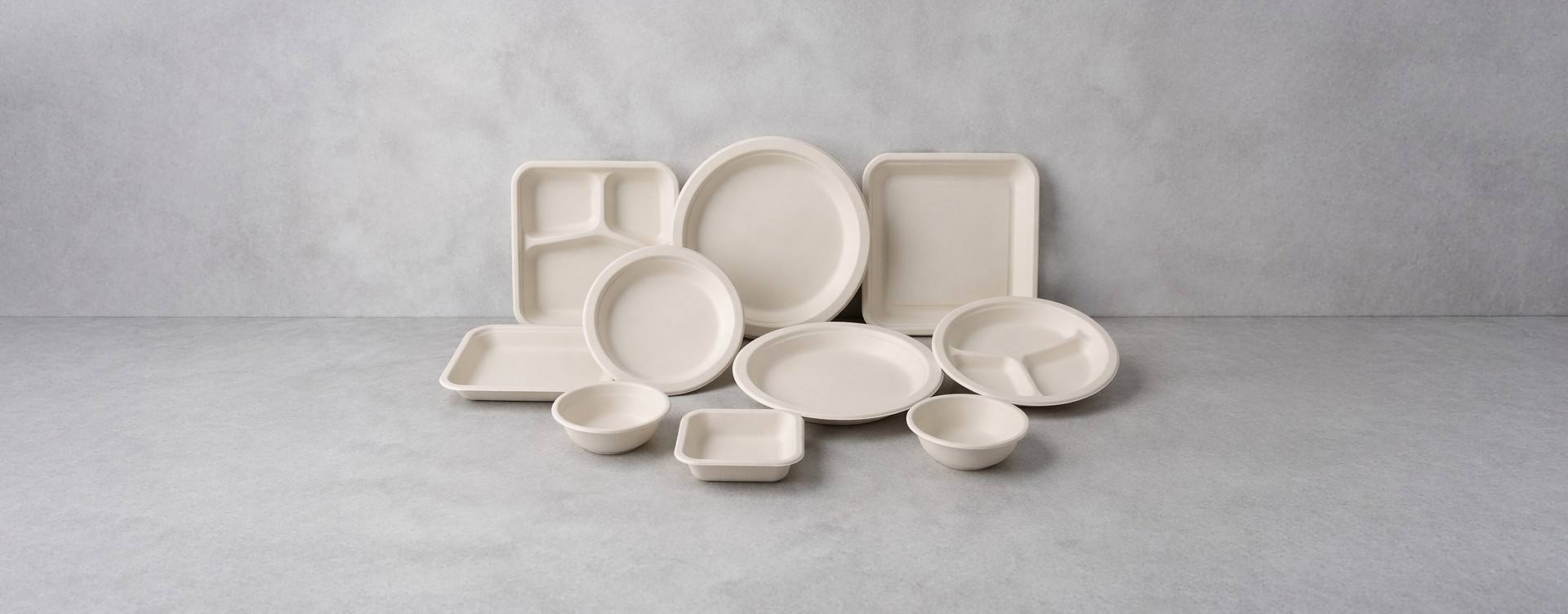
Although Bagasse Plates are widely used across restaurants, catering businesses, hotels, takeaway operations, and commercial foodservice environments, they may not be the ideal solution for every application.
Understanding product limitations helps buyers select the most suitable packaging solution according to their specific operational requirements, customer expectations, and market positioning.
For projects where the lowest possible unit cost is the primary purchasing objective, alternative disposable plate materials may sometimes provide a more economical option.
However, buyers should also consider additional factors beyond initial purchase price, including product performance, customer experience, food presentation, and brand positioning.
While lower-cost options may reduce short-term expenses, Bagasse Plates often provide greater commercial value through improved appearance, stronger product performance, and wider application possibilities.
Bagasse Plates are designed for food serving and short-term foodservice applications rather than extended food storage.
For products requiring long shelf-life after filling, frozen storage, vacuum packaging, or controlled-atmosphere preservation, specialized food packaging systems should be considered.
The main purpose of bagasse disposable plates is to provide reliable serving performance in restaurants, catering environments, takeaway operations, and event-based foodservice.
For businesses that require customers to visually see the entire food product before purchase, transparent materials such as PET or PLA containers may be more suitable.
Bagasse Plates provide a premium natural appearance rather than a transparent display format, making them ideal for prepared meals, restaurant service, catering, and plated food presentation.
Bagasse Plates are developed specifically for commercial foodservice and disposable tableware applications.
They are not designed for:
For these environments, specialized industrial materials should be evaluated.
Although DAILYECO provides OEM customization and customized molded fiber solutions, certain highly complex shapes or extremely specialized designs may require additional mold development, engineering evaluation, and production testing.
For standard commercial applications, Bagasse Plates provide a broad selection of proven sizes and designs suitable for most foodservice requirements.
Some premium food retail environments may prioritize complete product visibility, especially for fresh desserts, bakery displays, or refrigerated ready-to-eat foods.
In these situations, transparent packaging materials may better support product presentation goals.
However, for restaurants, catering companies, hotels, and takeaway businesses seeking professional food presentation with reliable performance, Bagasse Plates remain one of the most widely selected disposable tableware solutions.
Understanding the intended application before purchasing helps buyers balance:
Selecting the correct disposable tableware solution ensures businesses achieve the best balance between operational requirements and customer satisfaction.
Producing high-quality Bagasse Plates requires advanced molded fiber manufacturing technology, precise production control, and strict quality management procedures.
The manufacturing process transforms renewable sugarcane bagasse fibers into durable foodservice tableware through multiple controlled production stages. Each step plays an important role in determining the final product’s strength, appearance, consistency, and commercial performance.
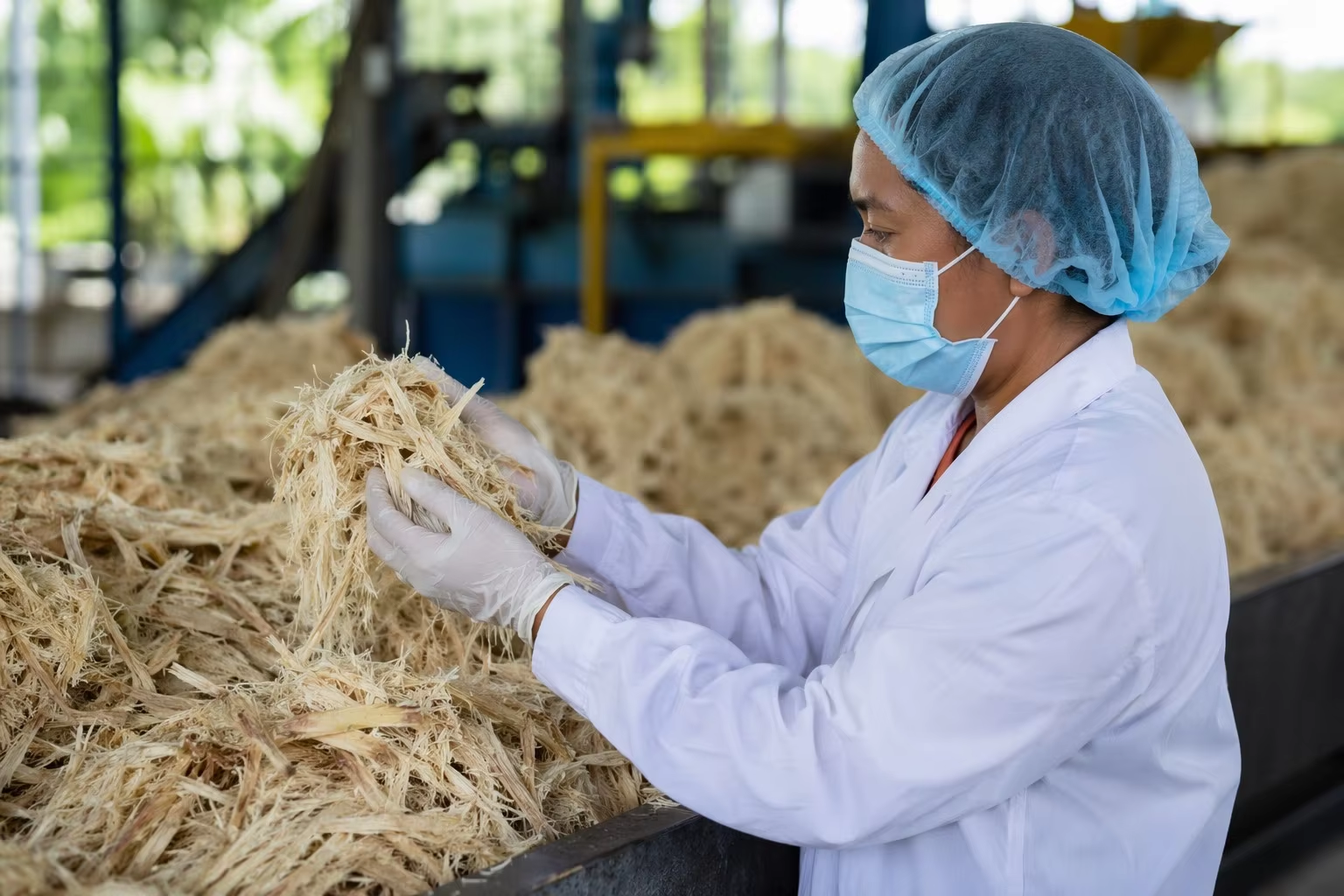
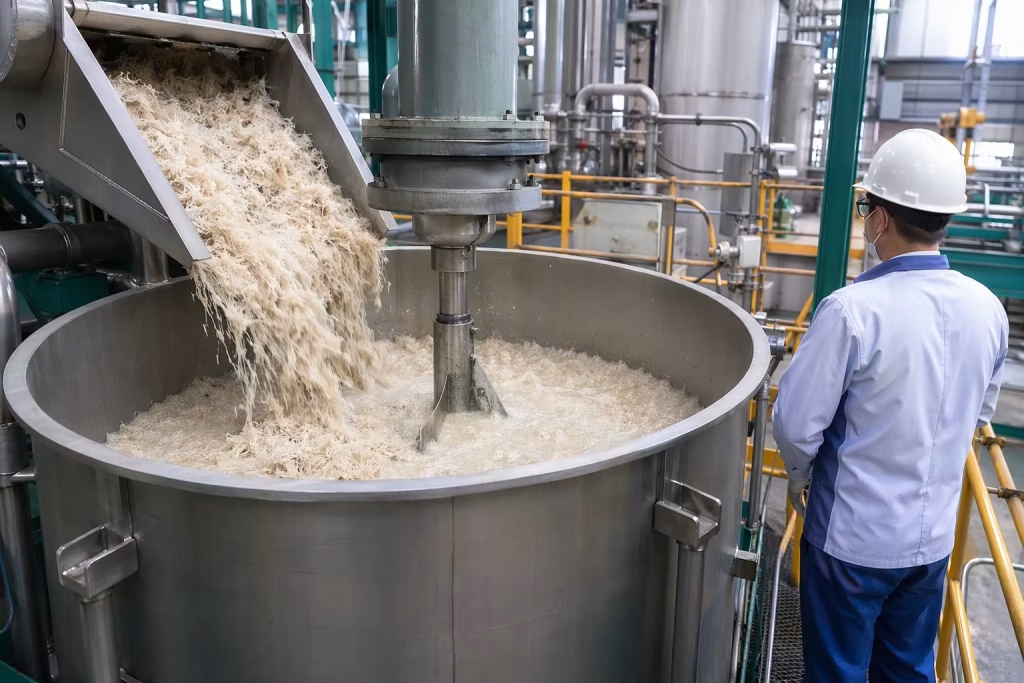
Sugarcane bagasse fibers are carefully selected and processed before entering the molding production line.
The raw material undergoes cleaning, refining, and pulp preparation to ensure suitable fiber quality, consistency, and food-contact safety.
High-quality raw materials directly influence the final performance of Bagasse Plates, including strength, surface quality, and overall product appearance.
Prepared sugarcane fibers are converted into a uniform pulp mixture through specialized pulping equipment.
During this stage, fiber concentration, consistency, and processing parameters are carefully controlled to create suitable material characteristics for molded fiber production.
A stable pulp formulation helps ensure consistent thickness, strength, and appearance across different batches of bagasse disposable plates.
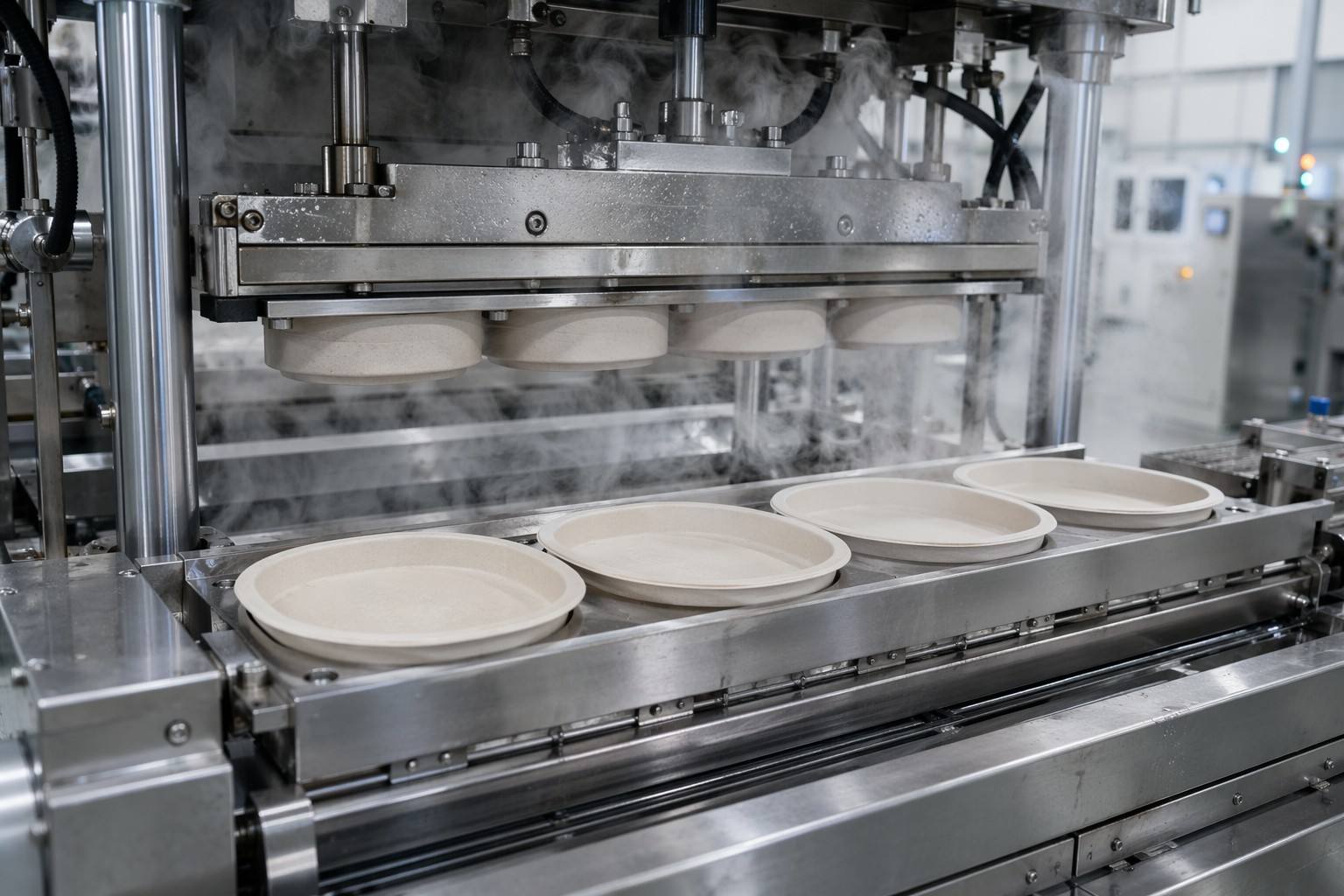
The prepared pulp is transferred into precision molds and shaped under controlled temperature and pressure.
This molding process creates the final structure of products such as:
Advanced molding technology ensures accurate dimensions, smooth surfaces, and reliable structural performance.
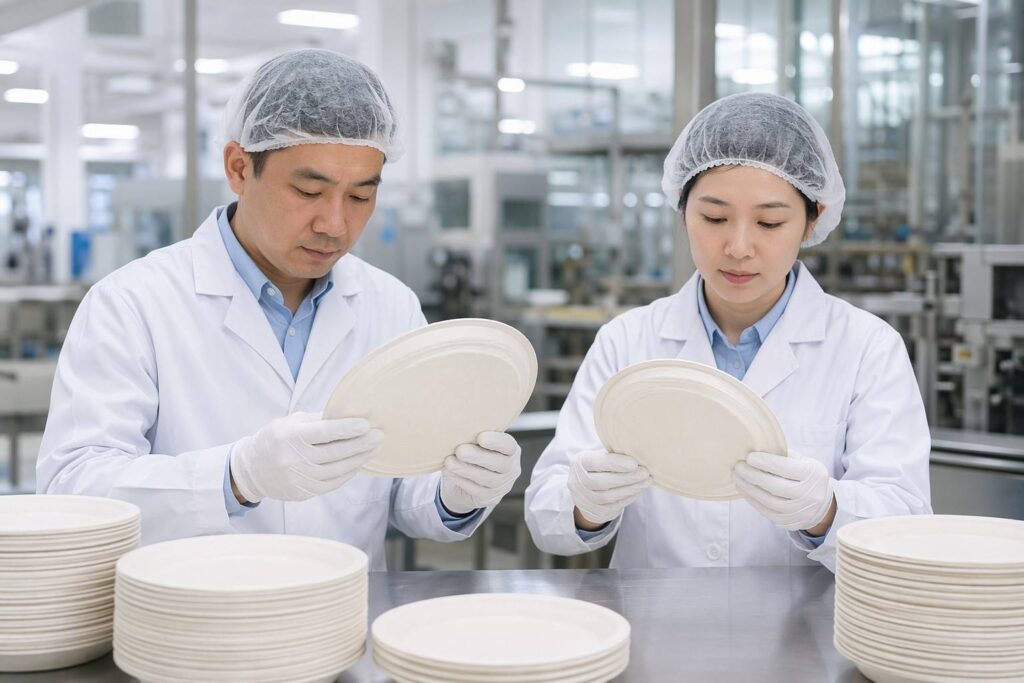
Every production batch undergoes strict quality inspection before packaging.
Typical quality checks include:
Quality control ensures that large-volume orders of Bagasse Plates maintain consistent performance throughout international shipments.
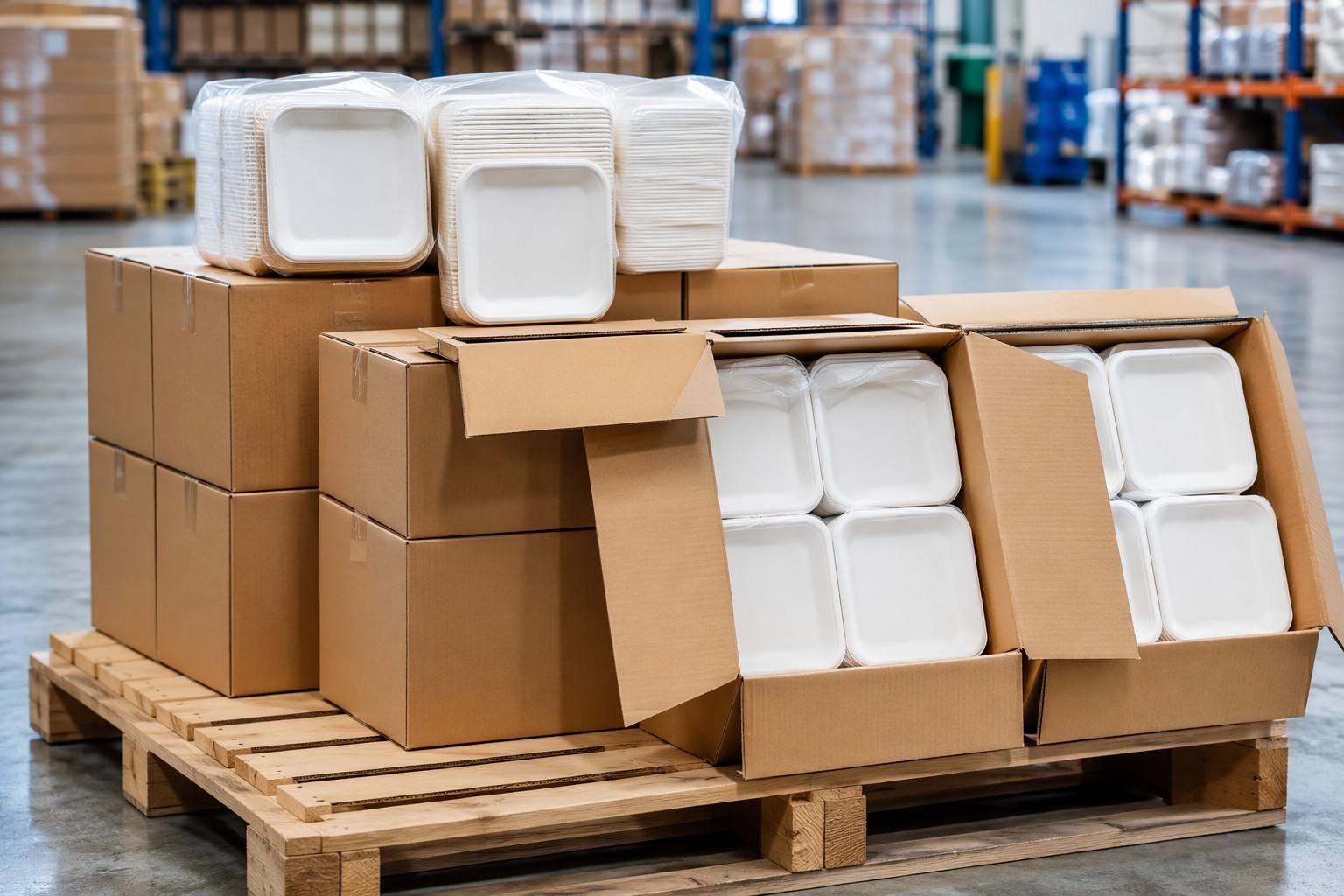
After final inspection, finished Bagasse Plates are counted, packed into export cartons, palletized when required, and prepared for international shipment.
Packaging solutions can be customized according to customer requirements, including:
Efficient packaging design helps optimize container loading, reduce transportation costs, and improve supply chain efficiency.
Selecting the right bagasse plates manufacturer is just as important as selecting the right product. A reliable manufacturing partner does more than provide disposable tableware. The right supplier helps buyers improve supply chain stability, reduce procurement risks, maintain consistent product quality, and develop long-term business opportunities in competitive global markets.
For importers, wholesalers, distributors, restaurant groups, and private-label brands, supplier evaluation should include manufacturing capability, quality management, customization support, export experience, and communication efficiency.
When choosing a manufacturing partner for Bagasse Plates, buyers should carefully evaluate the following factors.
Choose a manufacturer with proven experience in producing molded fiber tableware for international markets.
Experienced manufacturers usually have a deeper understanding of product development, production control, export requirements, and customer expectations. They are better equipped to manage large-volume orders while maintaining consistent product quality across different specifications.
Important considerations include:
A manufacturer with extensive experience in Bagasse Plates production can provide more reliable solutions for distributors, wholesalers, and foodservice businesses.
Evaluate whether the supplier has sufficient production capacity to support both current purchasing requirements and future business growth.
Stable manufacturing capacity helps prevent supply interruptions, especially during peak seasons when demand for disposable tableware increases.
Important factors include:
A reliable bagasse plates manufacturer should have the infrastructure required to support consistent international supply while maintaining product quality.
Professional manufacturers should implement standardized quality control systems throughout the entire production process.
Quality management should cover every stage, from raw material preparation to final export packaging.
Typical inspections include:
Shipment quality checks
A documented quality management system helps ensure that every shipment of Bagasse Plates meets customer expectations and maintains consistent performance across different production batches.
Many buyers today require more than standard disposable plates. Customized packaging and differentiated product solutions have become increasingly important for brands, retailers, and distributors.
Evaluate whether the manufacturer can support:
Strong customization capability allows Bagasse Plates to become not only a functional foodservice product but also an effective tool for brand development and market differentiation.
International food packaging markets often have different regulatory requirements. Before placing an order, buyers should confirm whether the supplier can provide appropriate documentation and compliance support.
Important considerations include:
A manufacturer familiar with international export requirements can help customers reduce project delays and improve market entry efficiency.
Manufacturers with extensive export experience are generally more familiar with international logistics, packaging standards, and customer communication requirements.
Important evaluation points include:
For global buyers sourcing bagasse disposable plates, export experience is an important factor in ensuring smooth cooperation from production to final delivery.
A professional supplier should provide technical recommendations rather than simply process purchase orders.
Technical support may include:
For example, a professional manufacturer can recommend whether customers should select a 9 inch bagasse plate, 10 inch bagasse plates, compartment plates, or larger serving plates based on their target applications.
Technical guidance helps buyers reduce unnecessary costs and select products that better match their market requirements.
Reliable communication is essential throughout every stage of cooperation.
A professional supplier should provide:
Strong customer service improves project efficiency and helps build stable long-term partnerships between manufacturers and buyers.
For international buyers, communication capability is often just as important as production capability. A supplier that understands customer requirements and responds efficiently can significantly improve the overall purchasing experience.
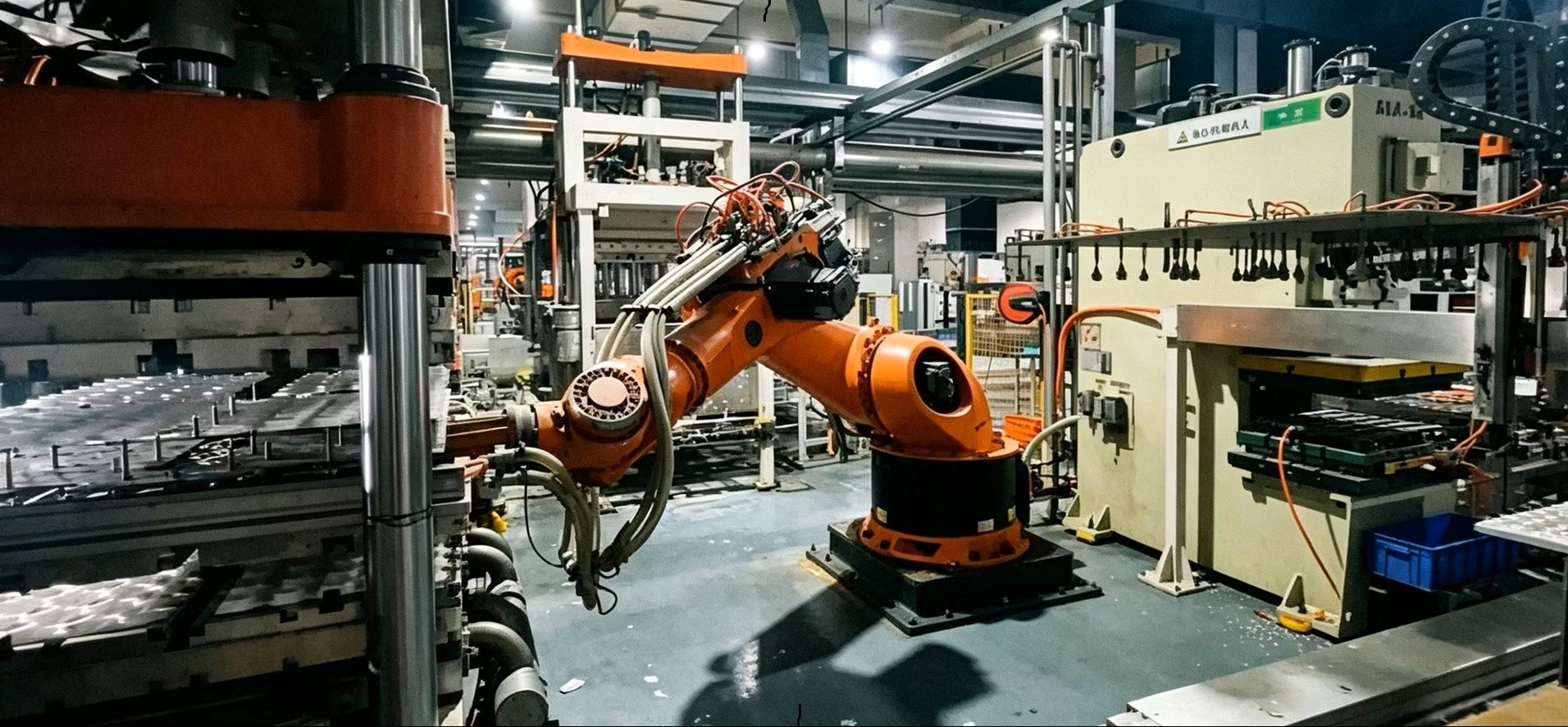
DAILYECO provides integrated sustainable food packaging solutions for importers, distributors, foodservice suppliers, restaurant groups, hospitality companies, and global packaging brands.
As an experienced Bagasse Plates Manufacturer, DAILYECO focuses on delivering stable product quality, flexible customization capability, efficient production management, and reliable international supply solutions for customers seeking long-term cooperation.
From standard Bagasse Disposable Plates to customized OEM projects, we support businesses that require dependable molded fiber tableware solutions for restaurants, catering operations, supermarkets, food delivery platforms, and institutional foodservice markets.
DAILYECO Manufacturing Facility | Description |
Employees | More than 1,000 employees |
Production Capability | More than 200 40HQ containers per monthly |
Production Lines | Advanced molding production lines and automated equipment, 950kg production capacity for one machine daily |
Product Range | Bagasse Plates, bowls, trays, containers, and customized molded fiber products |
Plate Sizes | 5″ to 12″ standard sizes available |
Product Types | Bagasse Dinner Plates, compartment plates, serving plates, round plates, square plates |
Manufacturing Technology | Sugarcane bagasse pulp molding technology |
Product safety | 95 °C PFAS free |
OEM | Logo, packaging, carton customization |
ODM | Product structure, size, packaging optimization |
Technical Support | Available |
Production MOQ | Common MOQ 50,000 pcs per size, special based on product specification, customization requirements, and order volume, common items ready goods also available |
Typical Lead Time | Approximately 30–45 days for customized production orders |
DAILYECO’s manufacturing capability allows customers to develop complete sustainable tableware product portfolios from a single reliable partner. Whether buyers require standard 9 inch bagasse plate, 10 inch bagasse plates, customized serving plates, or large-volume wholesale supply, DAILYECO provides professional production support throughout the entire project lifecycle.
DAILYECO supports customers with documentation according to destination market requirements.
Support may include:
DAILYECO supports multiple food-contact, composability and quality certifications. Certification availability varies by product category. Detailed certification documents can be found in our Certification Center.
Looking for food-contact test reports, composability certifications, PFAS test results, factory audit documentation, or responsible sourcing records?
DAILYECO supports comprehensive customization throughout the entire product development process.
Customization services include:
For brands and distributors seeking differentiated products, customized Bagasse Plates provide an opportunity to strengthen market positioning while maintaining reliable manufacturing quality.
From product design to final packaging, DAILYECO helps customers transform their ideas into commercially successful sustainable tableware solutions.
DAILYECO products are exported to customers across North America, Europe, Australia, the Middle East, Asia, South America, and other international markets.
With extensive global supply chain experience, DAILYECO helps customers simplify sourcing, reduce procurement risks, and maintain stable long-term supply.
Our export experience includes:
For importers, wholesalers, and foodservice distributors, working with an experienced Bagasse Plates Manufacturer helps create a more reliable and efficient purchasing process.
DAILYECO’s experienced international sales team provides professional support throughout the entire project lifecycle.
Support includes:
A professional communication process helps buyers reduce project delays, improve purchasing efficiency, and achieve smoother cooperation from initial inquiry to final delivery.
As global food packaging requirements continue to evolve, DAILYECO continuously develops new molded fiber products, improved manufacturing processes, and customized packaging solutions.
Our product development focuses on:
By continuously improving production capability and product solutions, DAILYECO helps customers respond to changing market demands and build stronger competitive advantages.
Customer Background
A European catering group wanted to replace multiple disposable tableware suppliers with a reliable partner for consistent Bagasse Plates supply.
Challenge
Different suppliers caused inconsistent product quality, packaging standards, and inventory management difficulties.
DAILYECO Solution
DAILYECO optimized the customer’s product portfolio by providing standardized Bagasse Dinner Plates, compartment plates, and customized packaging solutions.
Results
The customer improved supply stability, reduced SKU complexity, and created a more consistent sustainable foodservice solution.
Key Takeaways
A reliable Bagasse Plates Manufacturer can help buyers improve efficiency beyond simply reducing unit costs.
Customer Background
A foodservice distributor wanted to expand its sustainable packaging range for restaurants, hotels, and catering customers.
Challenge
Managing multiple suppliers increased purchasing complexity and warehouse pressure.
DAILYECO Solution
DAILYECO provided a complete molded fiber product range, including Bagasse Plates, bowls, trays, and food containers.
Results
The distributor simplified sourcing, expanded product offerings, and improved customer service capability.
Key Takeaways
A complete sustainable packaging portfolio creates stronger advantages for distributors.
Customer Background
A private-label packaging brand required customized Sugarcane Bagasse Plates for retail markets.
Challenge
The project involved customized specifications, packaging design, and production planning.
DAILYECO Solution
DAILYECO provided OEM support, product recommendations, packaging optimization, and customized production.
Results
The customer successfully launched a differentiated sustainable tableware product line.
Key Takeaways
Early technical communication helps reduce production risks and improves project efficiency.
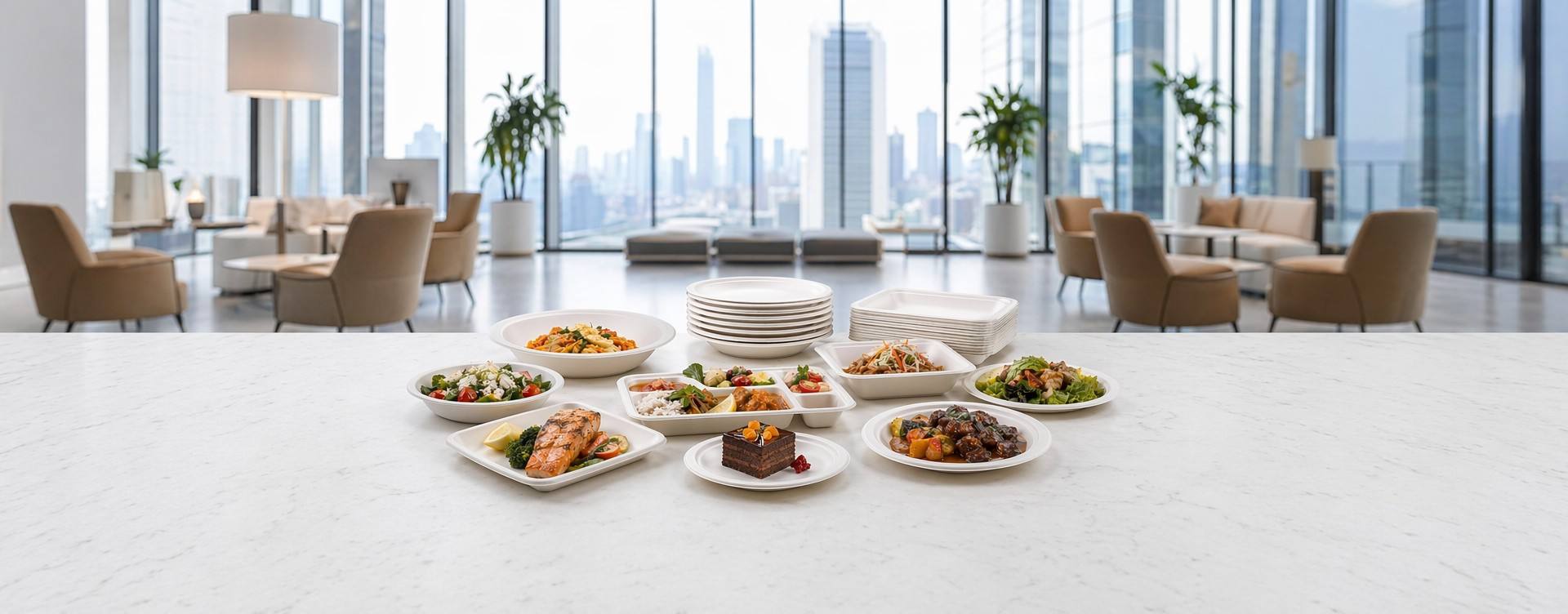
The following answers address common informational and search questions about Bagasse Plates, their material, food performance, microwave suitability, composability, recyclability, and disposal.
Bagasse Plates are made primarily from sugarcane bagasse, the fibrous material that remains after juice is extracted from sugarcane.
The fiber is cleaned, converted into pulp, molded into plate shapes, dried, and hot-pressed to create disposable molded-fiber tableware. Product formulation and additives may vary by manufacturer and product specification.
Yes. The terms bagasse plates, sugarcane plates, and sugarcane bagasse plates generally describe the same product category.
“Bagasse” refers specifically to the fibrous residue from sugarcane processing, while “sugarcane plates” is a more consumer-friendly description of the material source.
Many Bagasse Plates are suitable for short-term microwave reheating, but microwave performance depends on the specific product, food type, heating duration, and temperature.
Buyers and users should follow the product-specific instructions provided by the manufacturer. Products should not be assumed to have unlimited microwave suitability.
Yes. Suitable Bagasse Plates can be used for freshly prepared meals, rice, pasta, grilled food, fried food, burgers, barbecue, and other hot dishes during normal foodservice periods.
Performance varies according to plate size, weight, design, food temperature, and serving duration. Product-specific testing is recommended for demanding applications.
Bagasse plates are suitable for salads, fruit, desserts, bakery products, snacks, chilled meals, and many refrigerated foodservice applications.
Selected products may also be suitable for freezer conditions, but the applicable temperature range and storage duration should be confirmed for the specific SKU.
High-quality Bagasse Plates generally provide good resistance to oil and grease during normal meal service.
Their performance depends on the product formulation, plate weight, food temperature, oil content, and contact duration. Very hot, highly oily, or long-duration applications should be tested before commercial use.
Bagasse plates can hold moist foods, sauces, and meals containing moderate amounts of liquid for typical serving periods.
However, they are serving plates rather than sealed liquid containers. They are not intended for soup transportation, extended liquid storage, or applications requiring a leakproof closure.
Certified product lines may be suitable for composting under the conditions specified by the applicable certification.
Actual composting outcomes depend on:
Buyers should confirm the certification status of the exact product rather than assuming that every molded-fiber plate carries the same certification.
Sugarcane fiber is a plant-based material that can biodegrade under suitable biological conditions.
However, the rate and completeness of biodegradation depend on the finished product formulation, environmental conditions, moisture, temperature, microorganisms, and waste-management system.
“Biodegradable” should not be used as an unrestricted marketing claim without supporting evidence and appropriate market context.
Some products may qualify for home-composting programs when supported by applicable certification, but industrially compostable and home-compostable are not interchangeable claims.
Home composting generally operates at lower and less controlled temperatures than industrial composting. Buyers should verify whether the specific product has a valid home-composability certification before making this claim.
Technical recyclability does not guarantee that a product will be accepted by a local recycling system.
Used Bagasse Plates may be contaminated by food, oil, or moisture, which can prevent acceptance in conventional paper-recycling streams. Local waste-management rules should determine whether the plate should be recycled, composted, or disposed of through another approved route.
Some bagasse plates are manufactured without conventional plastic lamination, but product formulations can vary.
Buyers seeking plastic-free products should request a material declaration for the applicable SKU and confirm whether any coatings, additives, lids, liners, or accessories contain plastic-based materials.
PFAS-free options are available for applicable product lines and may be supported by third-party test reports.
Buyers should verify:
A supplier-level statement should not automatically be treated as evidence that every product in the catalog has been tested.
Bagasse plates intended for foodservice should be manufactured using food-contact-appropriate raw materials and should meet the applicable requirements of the destination market.
Food-contact compliance is product- and market-specific. Buyers should request relevant reports or declarations for the exact product and intended country of sale.
Properly manufactured Bagasse Plates should not impart an unacceptable taste or odor to food during normal use.
A mild natural fiber appearance or material odor may be noticeable in some products, particularly when first opened. Buyers should evaluate samples and confirm sensory requirements before approving a large order.
Bagasse plates should not automatically be considered oven-safe.
Oven suitability depends on the product formulation, temperature, heating duration, and manufacturer instructions. Unless a product has been specifically tested and approved for oven use, it should not be used in conventional ovens.
Bagasse plates are designed primarily as single-use foodservice products.
Although a plate may remain intact after one use, it is not generally designed or validated for repeated washing, sanitization, or reuse. Reuse may affect hygiene and structural performance.
There is no universal decomposition time that applies to every product and environment.
Decomposition depends on:
Any decomposition-time claim should be linked to the relevant test standard or certification conditions.
The most appropriate disposal route depends on local infrastructure and the condition of the used plate.
Local Option | Recommended Action |
Certified organics collection accepts the product | Place it in the approved organics stream |
Local compost facility does not accept foodservice ware | Follow local general-waste instructions |
Recycling program specifically accepts molded fiber foodware | Follow the recycler’s preparation requirements |
No suitable recovery system exists | Dispose of it according to local municipal rules |
Users should not place a product in composting or recycling streams based only on its appearance. Local acceptance rules remain decisive.
Bagasse and plastic plates serve different commercial requirements.
Bagasse Plates are generally preferred by businesses seeking renewable fiber materials, a natural presentation, and eligible compostability options. Plastic plates may provide greater transparency, long-term moisture resistance, or lower initial cost in certain markets.
The better choice depends on food performance, local regulations, waste infrastructure, brand positioning, and total procurement requirements.
Sourcing Bagasse Plates is more than comparing product prices or selecting a supplier. Successful procurement decisions require buyers to balance product performance, material quality, food-contact compliance, customization requirements, supply stability, and total purchasing costs.
Based on DAILYECO’s experience supporting importers, distributors, foodservice suppliers, retailers, and private-label brands worldwide, the following professional insights highlight common sourcing mistakes and practical solutions to help buyers make better purchasing decisions.
Why It Matters
A quotation for Bagasse Plates does not always represent the same product.
Differences in raw material quality, product thickness, weight, molding technology, packaging method, and quality standards can significantly affect final performance and cost.
A lower-priced product may have thinner construction, weaker strength, inconsistent dimensions, or reduced customer acceptance.
DAILYECO Expert Advice
Always request complete product specifications before comparing quotations from different suppliers.
A professional comparison should include:
Best Practice
Evaluate the overall value of the product rather than selecting the lowest unit price.
The best supplier provides the right balance between:
Why It Matters
Different foodservice applications require different plate sizes and structures.
For example:
Selecting the wrong size can increase inventory complexity and reduce operational efficiency.
DAILYECO Expert Advice
Choose plate specifications according to actual food applications rather than selecting products only based on market popularity.
Best Practice
Before ordering, evaluate:
For many businesses, a combination of standard sizes such as 9 inch bagasse plate and 10 inch bagasse plates can cover most daily foodservice requirements.
Why It Matters
Although appearance is important for food presentation, the internal fiber quality determines product performance.
Poor-quality raw materials may affect:
A visually attractive plate that performs poorly may create complaints during actual use.
DAILYECO Expert Advice
Evaluate both appearance and technical performance.
Important factors include:
Best Practice
Request samples before mass production and test the product under real foodservice conditions.
Why It Matters
A supplier’s ability to deliver stable quality depends heavily on manufacturing capability.
Insufficient production capacity may lead to:
DAILYECO Expert Advice
Evaluate the supplier as a manufacturer rather than only a trading company.
Best Practice
Review:
A professional Bagasse Plates Manufacturer should be able to support both current orders and future business growth.
Why It Matters
Packaging directly affects:
Poor packaging design may increase logistics expenses even when product pricing appears competitive.
DAILYECO Expert Advice
Consider packaging as part of the total purchasing solution.
Best Practice
Evaluate:
Optimized packaging helps reduce total procurement costs.
Why It Matters
Many buyers create unnecessary complexity by stocking too many sizes and designs.
Excessive SKUs can increase:
DAILYECO Expert Advice
Build a practical product portfolio based on your customers’ main requirements.
Best Practice
Many successful distributors operate efficiently with a focused selection of:
A simplified product portfolio often improves purchasing efficiency.
Why It Matters
For retailers, private-label brands, and distributors, packaging is part of brand communication.
A manufacturer without customization capability may limit market differentiation.
DAILYECO Expert Advice
Choose a supplier that can support long-term product development.
Best Practice
Evaluate whether the manufacturer can provide:
Strong OEM capability allows businesses to create unique sustainable packaging products.
Why It Matters
Different markets have different requirements regarding sustainable packaging, food contact safety, and environmental claims.
Ignoring compliance requirements may create:
DAILYECO Expert Advice
Confirm compliance requirements before production begins.
Best Practice
Prepare:
Early preparation reduces project risks.
Why It Matters
The lowest purchase price does not always create the lowest overall cost.
Total procurement cost also includes:
DAILYECO Expert Advice
Evaluate suppliers based on Total Cost of Ownership (TCO).
Best Practice
Consider:
A reliable supplier often creates greater savings over time.
Why It Matters
Successful packaging programs require more than product delivery.
As businesses grow, they need:
DAILYECO Expert Advice
Treat your manufacturer as a strategic partner rather than only a product supplier.
Best Practice
Evaluate suppliers based on:
The most successful Bagasse Plates sourcing projects are built on informed purchasing decisions rather than simply selecting the lowest quotation.
By carefully evaluating specifications, manufacturing capability, compliance requirements, customization options, and long-term cooperation potential, buyers can reduce procurement risks and build stronger sustainable packaging programs.
At DAILYECO, we believe our responsibility extends beyond manufacturing. Our goal is to help customers make better packaging decisions through professional guidance, reliable production, and long-term partnership.

Lillian Guo
Food Packaging Compliance Manager
10+ Years of Experience
Specialized in:
Looking for a reliable Bagasse Plates Manufacturer?
Share your required plate sizes, order quantity, packaging format, destination market, and documentation needs. Our team will recommend suitable products and prepare a project-specific quotation.