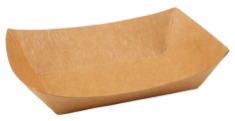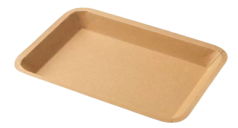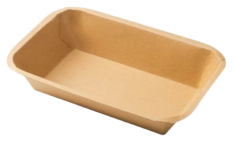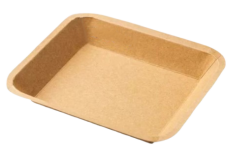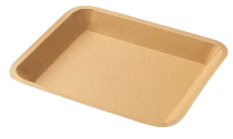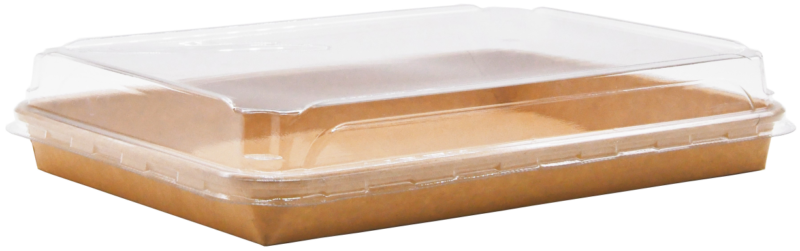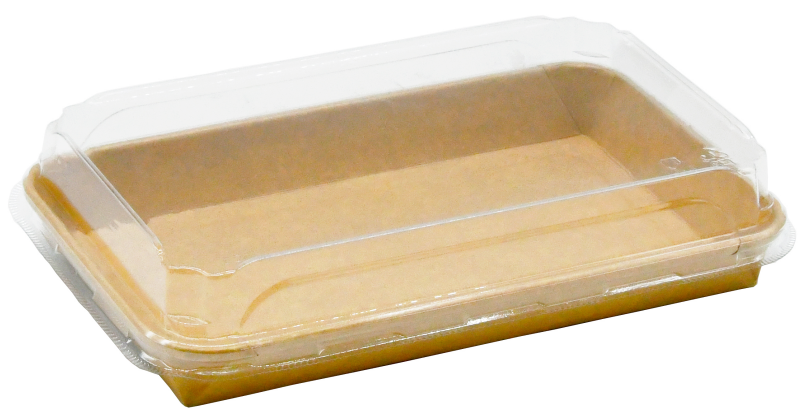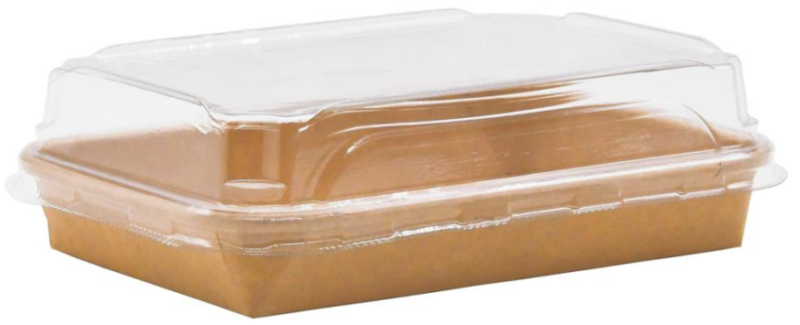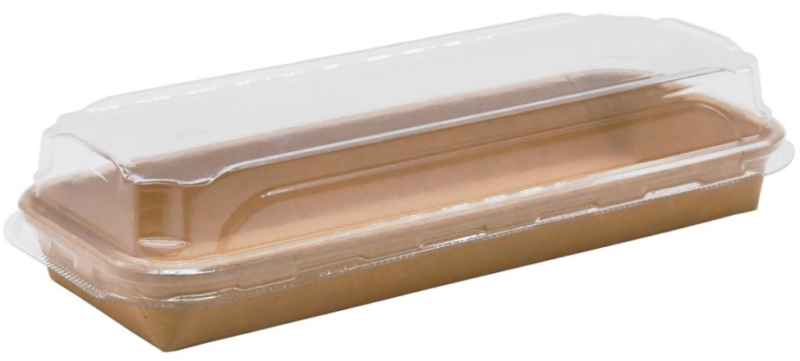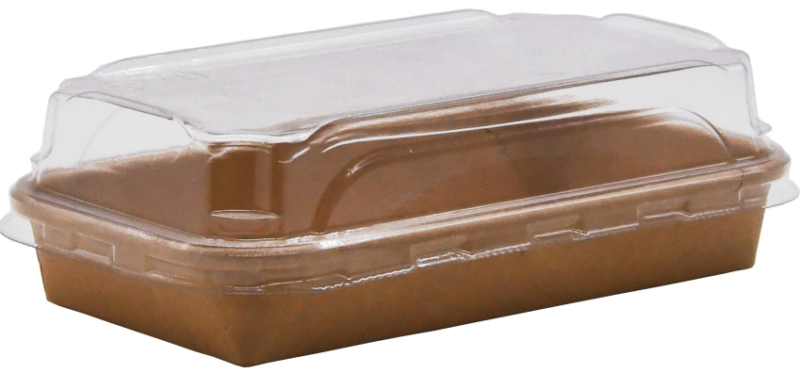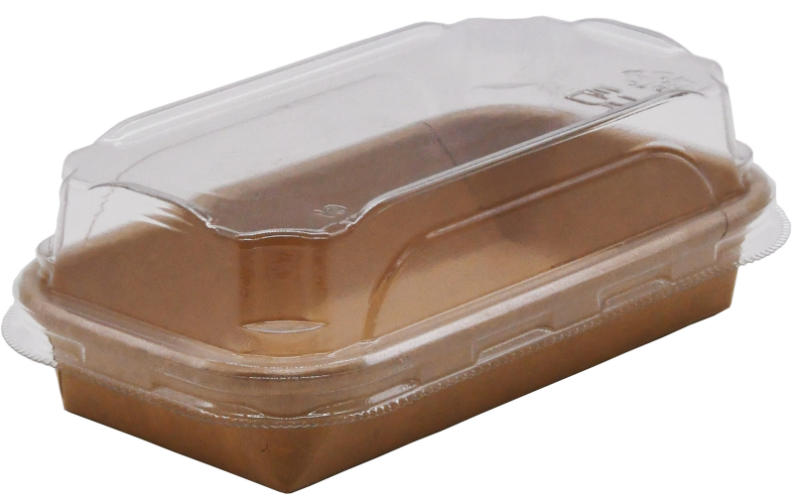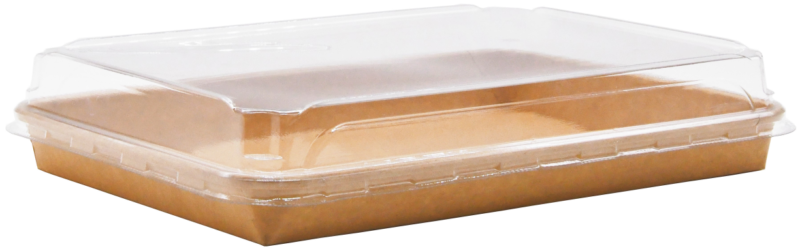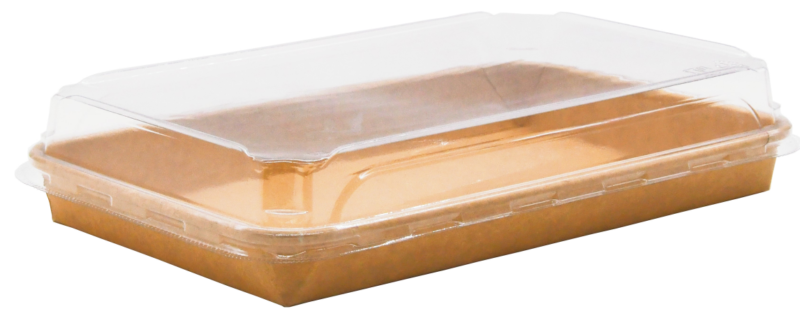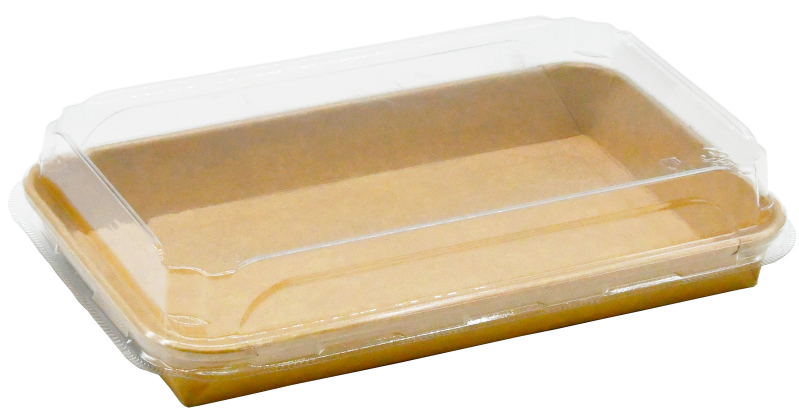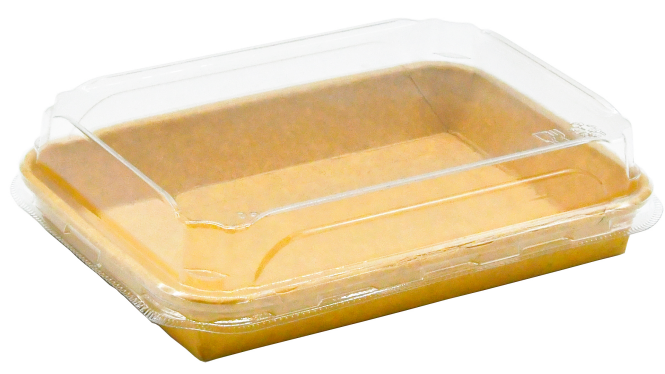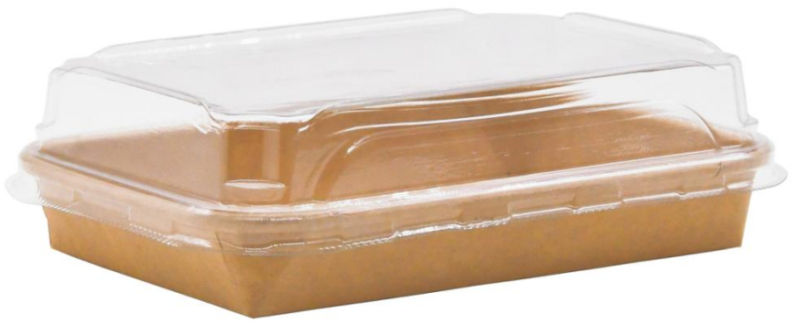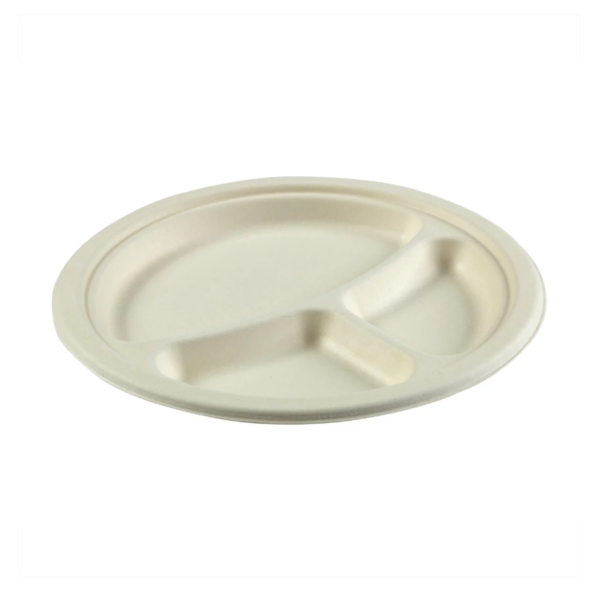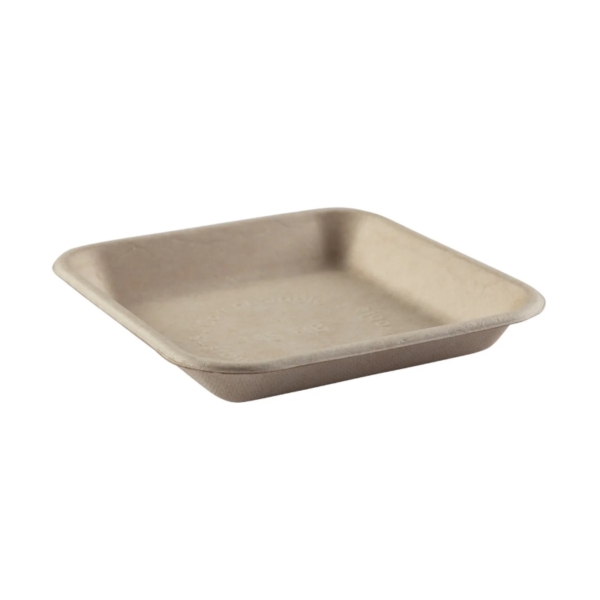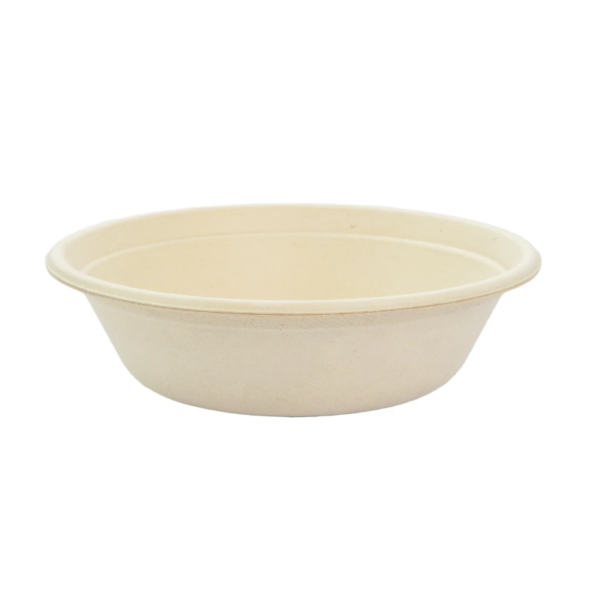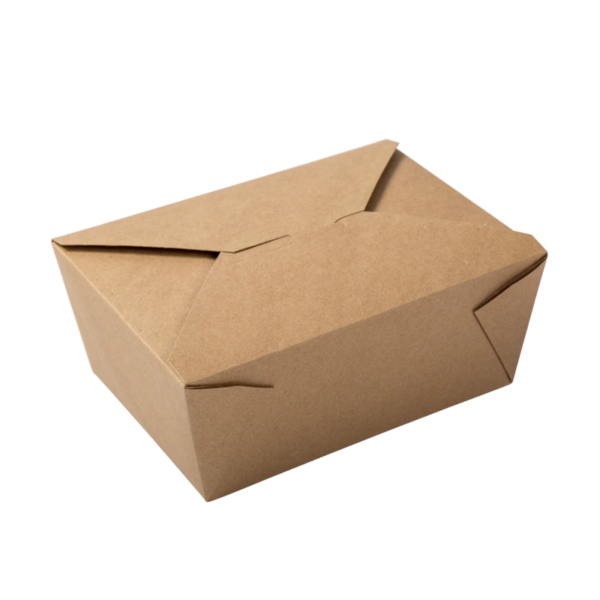
Item | Information |
Product Name | Paper Food Tray |
Primary Materials | 230 gsm, 260 gsm, 280 gsm, or 300 gsm kraft paperboard with 18 gsm PE lining for tray bases; PET for compatible lids |
Product Type | Converted paperboard foodservice tray |
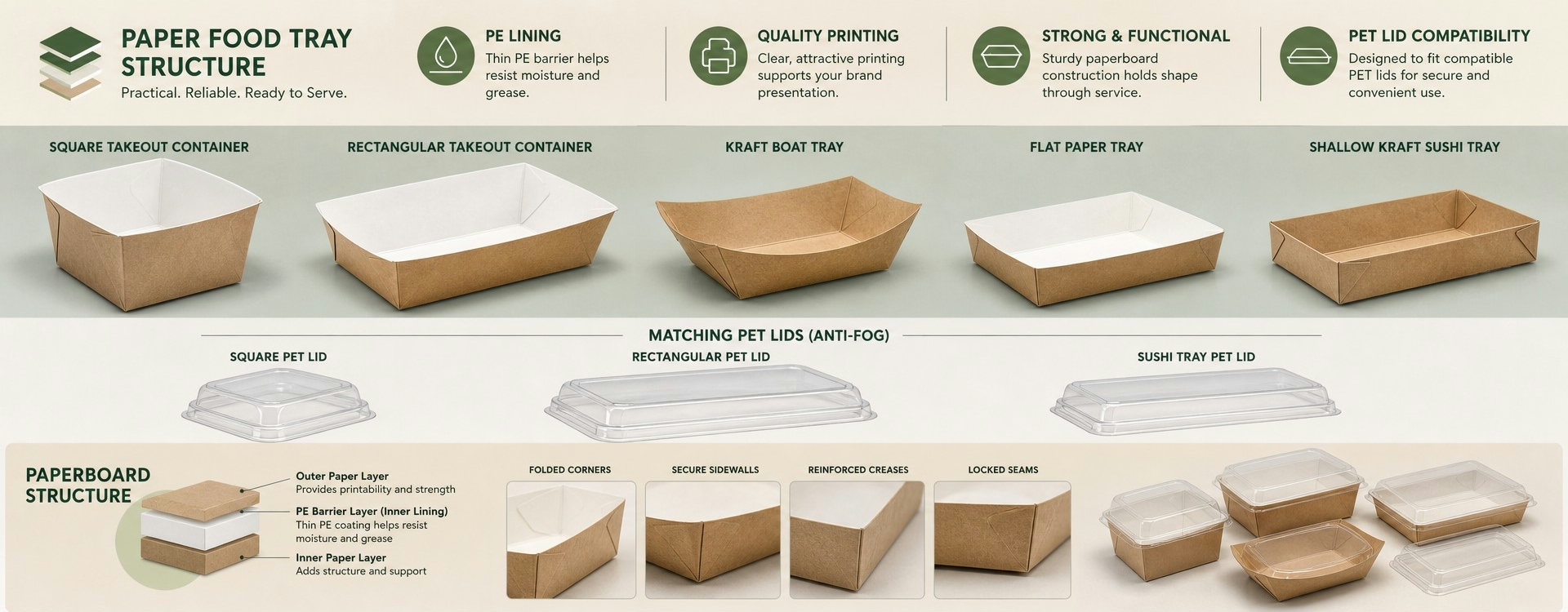
Common Formats | Square and rectangular PE-lined takeout containers, kraft paper boat trays, flat plate and tray formats, paper sushi trays, and compatible PET lids |
Applications | Restaurants, takeaway, delivery, catering, concessions, bakery, retail, hospitality, and institutional dining |
Food Types | Prepared meals, snacks, fries, street food, bakery, desserts, sushi, chilled foods, fruit, catering food, and application-qualified foods |
Barrier Options | 18 gsm PE lining on the listed paper tray bases; any alternative barrier must be confirmed for the exact SKU and application |
Customization | Dimensions, depth, sidewalls, compartments, paperboard, barrier, printing, lids, labels, packs, and cartons |
Printing | Plain kraft, white, stock print, or custom print subject to food-contact design and project feasibility |
Compatible Components | Square and rectangular PET takeout-container lids and anti-fog PET sushi-tray lids in matched catalog sizes |
Supply Type | Manufacturer supply, OEM/ODM, wholesale, private label, and export orders |
Export Markets | North America, Europe, Australia, Middle East, Asia, and global foodservice markets |
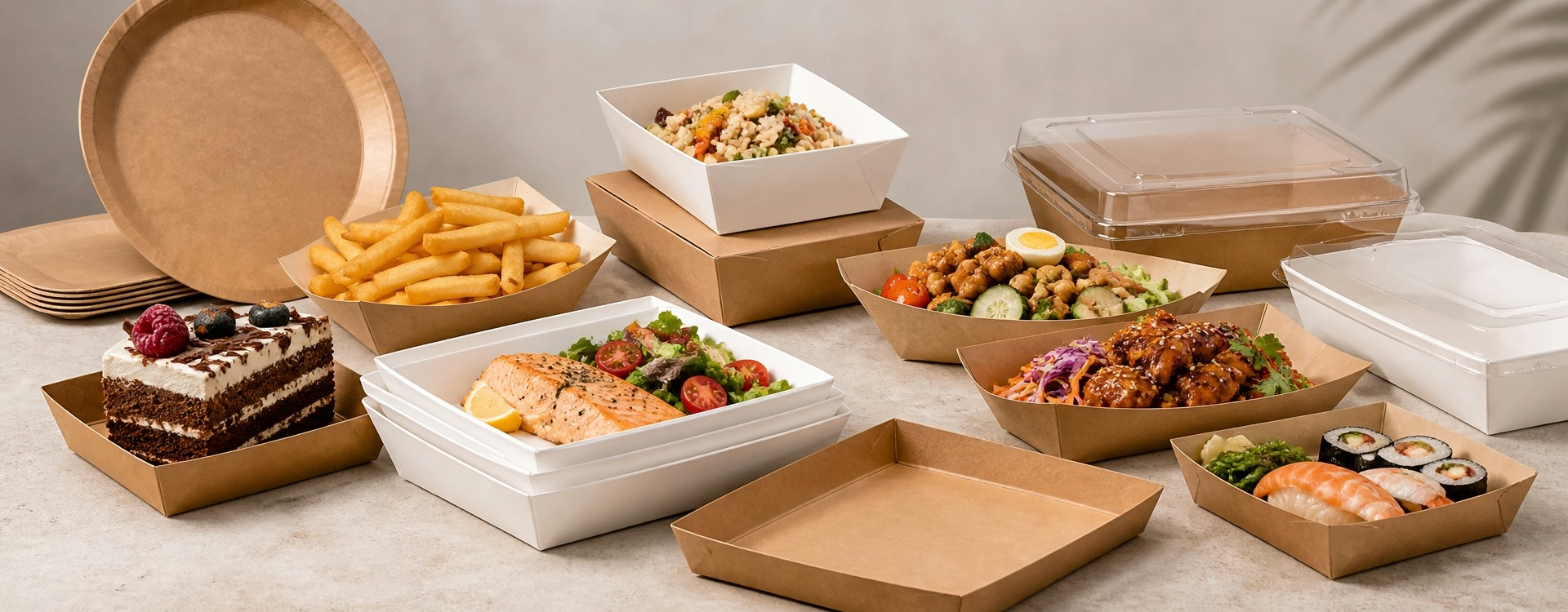
Paper food tray products are converted paperboard formats developed for serving, presenting, carrying, or displaying food in restaurants, takeaway, delivery, catering, concessions, retail, and institutional foodservice.
Depending on the SKU, a paper food tray may use kraft or white paperboard, corrugated board, a food-contact barrier, printed surfaces, folded sidewalls, or a compatible lid. Performance must be confirmed for the exact material, food, temperature, oil or moisture level, holding time, and transport cycle.
A paper food tray is a shallow foodservice package made primarily from converted paperboard. Depending on the approved structure, it may be die cut, creased, folded, glued, nested, corrugated, pressed, or supplied with a separate lid, sleeve, liner, or overbox.
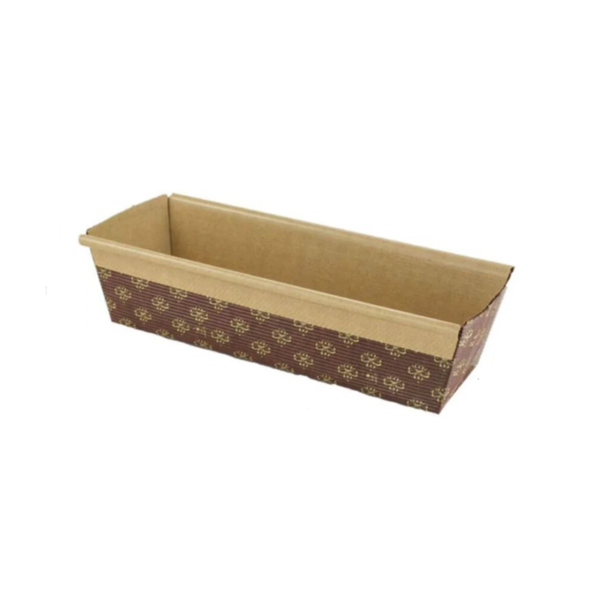
The current product catalog includes PE-lined square and rectangular takeout food containers, kraft paper boat trays, kraft paper flat plate and tray formats, paper kraft sushi trays, and compatible PET lids. These products are not interchangeable: paperboard grade, PE lining, dimensions, geometry, lid pairing, and intended use determine performance.
A typical converting and approval workflow includes:
For professional buyers, paper trays for food can provide practical advantages:
As a professional Paper Food Tray manufacturer, DAILYECO supports standard and custom projects for foodservice distributors, restaurant groups, caterers, retail brands, wholesalers, importers, and private-label packaging companies.
Paper food tray performance is created by the complete specification rather than the word “paper.” Buyers should evaluate board construction, usable dimensions, stiffness, barrier, seams, printing, food contact, stacking, packing, and the conditions under which the tray will be filled, held, transported, or heated.
Feature | Performance | Explanation |
Paperboard Construction | Food-Grade Paperboard Construction | Manufactured from quality food-grade paperboard using die-cutting, creasing, folding, and forming technology. |
Structural Strength | Stable Folded Structure for Food Service | Strong folded construction suitable for serving a wide range of foods. |
Heat Resistance | SKU-Specific Hot-Food and Microwave Compatibility | Selected paper food tray SKUs may be suitable for qualified microwave-heating applications, subject to product-specific time and temperature limits. |
Cold Food Performance | Suitable for Chilled Food Service | Maintains stability when serving salads, desserts, fruits, and chilled dishes. |
Freezer Compatibility | Selected SKUs Suitable Down to −20°C | Selected SKUs may be suitable for chilled or frozen-food applications down to −20°C, subject to product-specific verification. |
Oil & Grease Resistance | Resists Oil Penetration Up to 95°C for 30 Minutes from paper | Helps prevent oil penetration during everyday meal service |
Moisture Resistance | Short-Term Moisture Resistance for Foodservice | Maintains structural integrity during normal foodservice use. |
Food Contact Safety | Food-Contact-Compliant Material System | Produced using food-contact-compliant paperboard, coatings, inks, and adhesives. |
Product Consistency | Uniform Dimensions and Reliable Batch Quality | Uniform dimensions, stable folding structures, and reliable quality for commercial applications. |
OEM Customization | Custom Sizes, Printing, and Packaging Available | Custom sizes, die-lines, paperboard options, printing, branding, and packaging solutions are available. |
Product Portfolio | Multiple Sizes, Materials, and Paper Tray Formats | Available in PE-lined takeout food containers, kraft paper boat trays, flat plate and tray formats, paper kraft sushi trays, and compatible PET lids. |
Commercial Applications | Suitable for Foodservice, Takeaway, and Retail | Suitable for restaurants, catering, concessions, food trucks, takeaway, retail, and event foodservice. |
Sustainability Options | Paper-Based Packaging Material Options | Manufactured from paper-based materials, with material and coating options that can support customers’ sustainable packaging programs. |
Demand is growing as foodservice companies reassess disposable packaging in response to plastic-waste concerns, sustainability goals, and changing market expectations.
Paper food tray packaging combines familiar paper-based presentation with efficient printing, nesting, portion organization, and category flexibility. Its suitability still depends on the selected paperboard, coating or lamination, food-contact system, and verified service conditions.
Food packaging procurement is increasingly shaped by sustainability, performance, regulatory requirements, and supply reliability.
As restaurants, catering companies, food brands, and foodservice distributors continue to expand their takeaway and delivery operations, packaging is becoming more than a basic food container. It has become an important part of brand positioning, customer experience, and sustainability strategy.
For manufacturers, distributors, and brand owners, understanding these market changes helps create more effective packaging strategies and make better sourcing decisions.
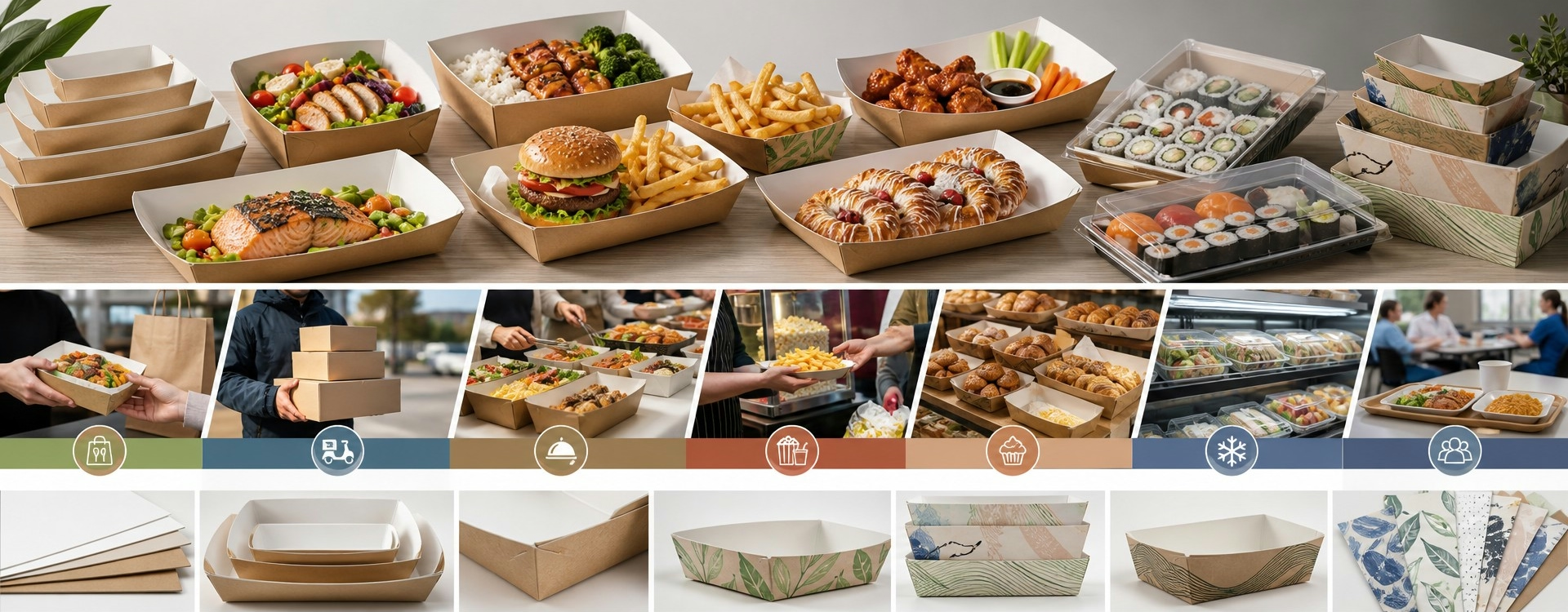
Growth in takeaway, delivery, catering, and ready-to-eat food is increasing demand for packaging that combines reliable handling with renewable material options.
At the same time, businesses and consumers are paying increasing attention to the environmental impact of disposable packaging. Traditional plastic trays, although widely used due to their durability and low cost, are facing growing pressure from sustainability expectations and regulatory changes.
Paperboard formats offer strong printability and broad structural choice, but buyers must distinguish an uncoated kraft tray from a polycoated paper food tray, corrugated food boat, baking tray, or lid-compatible retail system.
Growth of Sustainable Food Packaging
Foodservice buyers increasingly consider renewable material sources, environmental positioning, and compliance requirements alongside purchasing cost.
Expansion of Takeaway and Food Delivery Applications
Takeaway and delivery growth creates demand for trays that maintain structure during transport across hot meals, prepared dishes, snacks, and ready-to-eat food.
Sustainability Is Becoming a Purchasing Requirement
Many buyers now evaluate packaging suppliers based on a combination of product performance, material sourcing, documentation support, and long-term sustainability capabilities.
Customized Packaging Supports Brand Development
Custom sizes, compartments, structures, and packaging help food businesses align practical requirements with brand presentation.
Customized paper food tray products allow companies to specify dimensions, board color, caliper, barrier, die line, print area, lid interface, pack count, labels, and cartons according to the food and distribution cycle.
Custom structures and packaging formats can strengthen brand consistency while meeting the operational needs of restaurants, caterers, and food brands.
Different regions prioritize different aspects of sustainable food packaging according to local regulations, consumer expectations, and business requirements.
Region | Recommended Verification Focus |
North America | Food-contact requirements, labeling, material declarations, and local recovery conditions |
Europe | Applicable food-contact rules, packaging requirements, environmental claims, and destination-country systems |
Australia & New Zealand | Food-contact documentation, labeling, and local collection requirements |
Middle East | Destination-market food-contact documents, labeling, climate and transport conditions |
Asia | Market-specific food-contact, labeling, packing, and supply requirements |
Understanding regional priorities helps buyers select paper food tray structures, documentation, and claim language that match local food-contact, labeling, packaging, and waste-management requirements.
Professional buyers increasingly evaluate suppliers based on:
As the food packaging industry continues to evolve, successful sourcing depends on selecting products and suppliers that can support both current operational requirements and future market development.
Choose the material that best matches the food, operating environment, customer expectations, compliance needs, and long-term supply plan.
Choose Paper Food Tray Products If You:
Choose Plastic Food Trays If You:
Choose Molded Fiber Food Trays If You:
Choose PLA Food Trays If You:
Choose Aluminum Food Trays If You:
DAILYECO supplies PE-lined takeout food containers, kraft paper boat trays, kraft paper flat plate and tray formats, paper kraft sushi trays, square and rectangular PET takeout lids, anti-fog PET sushi tray lids, and custom paper food packaging.
Product selection begins with the food, portion, temperature, oil and moisture level, holding time, service channel, required lid, and packing plan. Final dimensions, paperboard, PE lining, lid pairing, printing, packing, MOQ, and availability are confirmed on the selected SKU specification. The current portfolio covers disposable paper trays for food across takeaway, events, catering, chilled retail display, and grab-and-go service, but each description must be connected to an approved product rather than treated as a universal format.
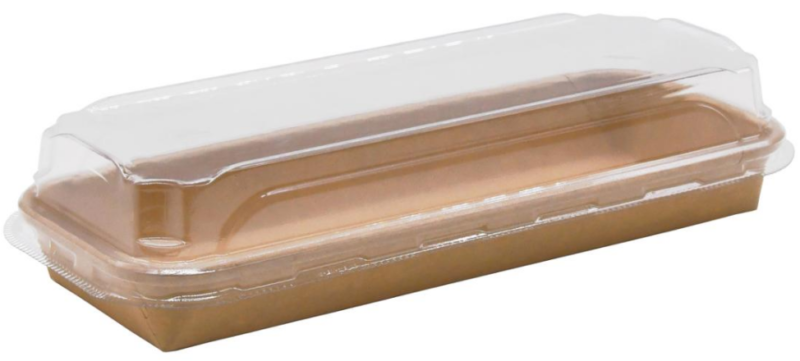
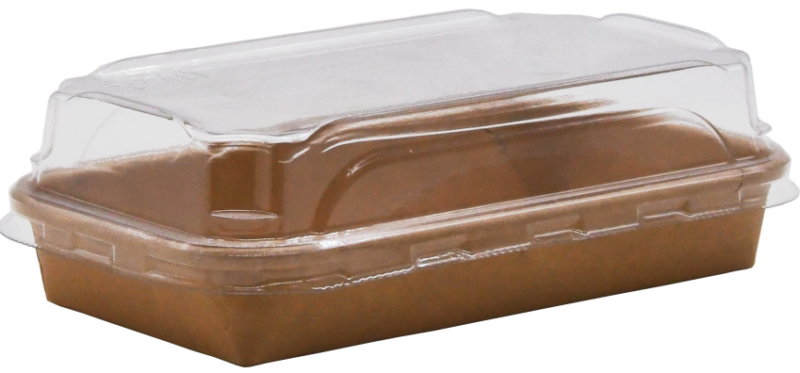
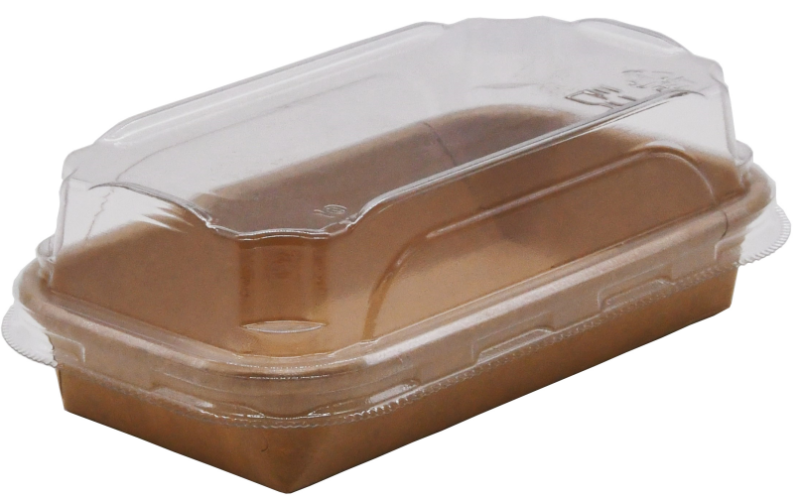
Pictures | Product | Size | Material / Weight | Packing | CTN Size | CBM |
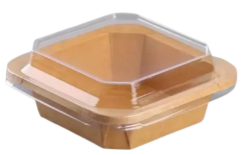
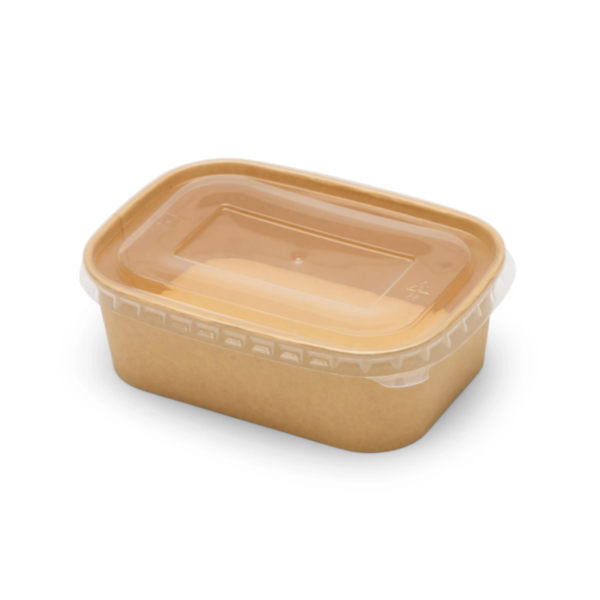
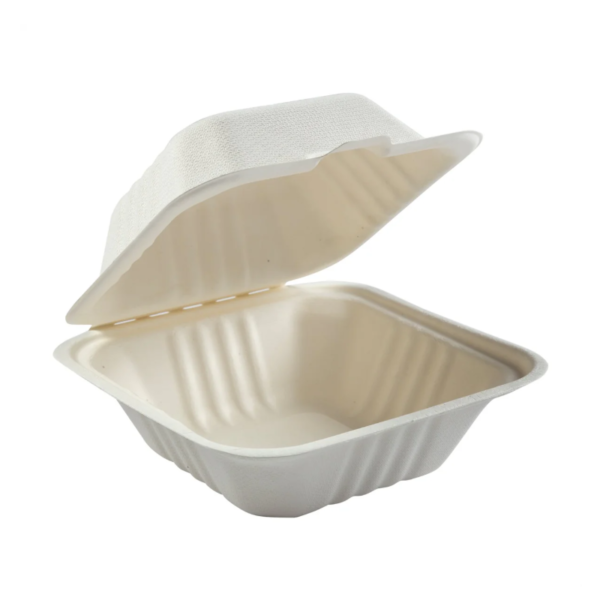
| 10oz/300ml Takeout Food Container With PE Lined | 107 × 107 × 36 mm | 280 gsm Kraft Paper + 18 gsm PE | 50 pcs/bag; 6 bags/CTN; 300 pcs/CTN | 41 × 28 × 32 cm | 0.037 m³ |
| 33oz/400ml Takeout Food Container With PE Lined | 123 × 123 × 36 mm | 300 gsm Kraft Paper + 18 gsm PE | 50 pcs/bag; 6 bags/CTN; 300 pcs/CTN | 45.5 × 31 × 31 cm | 0.044 m³ |
| 17oz/500ml Takeout Food Container With PE Lined | 123 × 123 × 45 mm | 300 gsm Kraft Paper + 18 gsm PE | 50 pcs/bag; 6 bags/CTN; 300 pcs/CTN | 45.5 × 31 × 31 cm | 0.044 m³ |
| 22oz/650ml Takeout Food Container With PE Lined | 134 × 134 × 47 mm | 300 gsm Kraft Paper + 18 gsm PE | 50 pcs/bag; 6 bags/CTN; 300 pcs/CTN | 48.5 × 33 × 34.5 cm | 0.055 m³ |
| 26oz/750ml Takeout Food Container With PE Lined | 134 × 134 × 55 mm | 300 gsm Kraft Paper + 18 gsm PE | 50 pcs/bag; 6 bags/CTN; 300 pcs/CTN | 48.5 × 33 × 36 cm | 0.058 m³ |
| 34oz/1000ml Takeout Food Container With PE Lined | 160 × 160 × 50 mm | 300 gsm Kraft Paper + 18 gsm PE | 50 pcs/bag; 6 bags/CTN; 300 pcs/CTN | 56 × 38 × 35 cm | 0.074 m³ |
| 40oz/1200ml Takeout Food Container With PE Lined | 160 × 160 × 62 mm | 300 gsm Kraft Paper + 18 gsm PE | 50 pcs/bag; 6 bags/CTN; 300 pcs/CTN | 56 × 38 × 39 cm | 0.083 m³ |
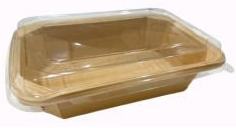
| 40oz/1200ml Takeout Food Container With PE Lined | 200 × 137 × 52 mm | 300 gsm Kraft Paper + 18 gsm PE | 50 pcs/bag; 6 bags/CTN; 300 pcs/CTN | 50 × 46 × 31 cm | 0.071 m³ |
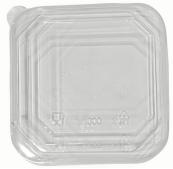
| Square PET Takeout Food Container Lid for 300ml | 107 × 107 mm | 6.5 g | 50 pcs/bag; 6 bags/CTN; 300 pcs/CTN | 39.5 × 30 × 28 cm | 0.033 m³ |
| Square PET Takeout Food Container Lid for 400ml/500ml | 123 × 123 mm | 9.5 g | 50 pcs/bag; 6 bags/CTN; 300 pcs/CTN | 46 × 28 × 31.5 cm | 0.041 m³ |
| Square PET Takeout Food Container Lid for 650ml/750ml | 134 × 134 mm | 10 g | 50 pcs/bag; 6 bags/CTN; 300 pcs/CTN | 48 × 25 × 32 cm | 0.038 m³ |
| Square PET Takeout Food Container Lid for 1000ml/1200ml | 160 × 160 mm | 14 g | 50 pcs/bag; 6 bags/CTN; 300 pcs/CTN | 55.5 × 24 × 38 cm | 0.051 m³ |
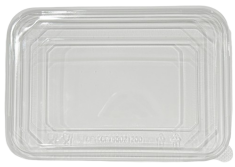
| Rectangle PET Takeout Food Container Lid for 1200ml | 200 × 137 mm | 16 g | 50 pcs/bag; 6 bags/CTN; 300 pcs/CTN | 46 × 21 × 39 cm | 0.038 m³ |
| Kraft Paper Boat Tray With PE Lined | 125 × 90 × 19 mm | 230 gsm Kraft Paper + 18 gsm PE | 250 pcs/bag; 4 bags/CTN; 1000 pcs/CTN | 25 × 19 × 37 cm | 0.018 m³ |
| Kraft Paper Boat Tray With PE Lined | 145 × 100 × 23 mm | 230 gsm Kraft Paper + 18 gsm PE | 250 pcs/bag; 4 bags/CTN; 1000 pcs/CTN | 30 × 21 × 37 cm | 0.023 m³ |
| Kraft Paper Boat Tray With PE Lined | 165 × 120 × 25 mm | 230 gsm Kraft Paper + 18 gsm PE | 250 pcs/bag; 4 bags/CTN; 1000 pcs/CTN | 34 × 25 × 39 cm | 0.033 m³ |
| Kraft Paper Boat Tray With PE Lined | 182 × 122 × 30 mm | 260 gsm Kraft Paper + 18 gsm PE | 125 pcs/bag; 4 bags/CTN; 500 pcs/CTN | 27 × 19 × 40 cm | 0.021 m³ |
| Kraft Paper Boat Tray With PE Lined | 227 × 153 × 35 mm | 260 gsm Kraft Paper + 18 gsm PE | 125 pcs/bag; 4 bags/CTN; 500 pcs/CTN | 34.5 × 23 × 40 cm | 0.032 m³ |
| Kraft Paper Boat Tray With PE Lined | 255 × 178 × 50 mm | 260 gsm Kraft Paper + 18 gsm PE | 125 pcs/bag; 4 bags/CTN; 500 pcs/CTN | 35.5 × 25.5 × 52.5 cm | 0.048 m³ |
| Kraft Paper Flat Plate and Tray With PE Lined | 250 × 175 × 23 mm | 300 gsm Kraft Paper + 18 gsm PE | 150 pcs/bag; 4 bags/CTN; 600 pcs/CTN | 52 × 36 × 22 cm | 0.041 m³ |
| Kraft Paper Flat Plate and Tray With PE Lined | 205 × 167 × 23 mm | 300 gsm Kraft Paper + 18 gsm PE | 150 pcs/bag; 4 bags/CTN; 600 pcs/CTN | 44 × 34 × 22 cm | 0.033 m³ |
| Kraft Paper Flat Plate and Tray With PE Lined | 210 × 140 × 44 mm | 300 gsm Kraft Paper + 18 gsm PE | 150 pcs/bag; 4 bags/CTN; 600 pcs/CTN | 44 × 30 × 33 cm | 0.044 m³ |
| Kraft Paper Flat Plate and Tray With PE Lined | 175 × 148 × 25 mm | 300 gsm Kraft Paper + 18 gsm PE | 150 pcs/bag; 4 bags/CTN; 600 pcs/CTN | 37 × 31 × 25 cm | 0.029 m³ |
| Kraft Paper Flat Plate and Tray With PE Lined | 170 × 120 × 16 mm | 300 gsm Kraft Paper + 18 gsm PE | 150 pcs/bag; 4 bags/CTN; 600 pcs/CTN | 37 × 27 × 20 cm | 0.020 m³ |
| Paper Kraft Sushi Tray With PE Lined | Top: 251 × 178 mm; Bottom: 231 × 158 mm; Height: 24 mm | 300 gsm Kraft Paper + 18 gsm PE | 100 pcs/bag; 2 bags/CTN; 200 pcs/CTN | 49 × 28 × 38.5 cm | 0.053 m³ |
| Paper Kraft Sushi Tray With PE Lined | Top: 237 × 148 mm; Bottom: 217 × 128 mm; Height: 24 mm | 300 gsm Kraft Paper + 18 gsm PE | 100 pcs/bag; 4 bags/CTN; 400 pcs/CTN | 65 × 26 × 47.5 cm | 0.080 m³ |
| Paper Kraft Sushi Tray With PE Lined | Top: 217 × 134 mm; Bottom: 197 × 114 mm; Height: 24 mm | 300 gsm Kraft Paper + 18 gsm PE | 100 pcs/bag; 4 bags/CTN; 400 pcs/CTN | 50 × 31 × 46.5 cm | 0.072 m³ |
| Paper Kraft Sushi Tray With PE Lined | Top: 180 × 125 mm; Bottom: 160 × 105 mm; Height: 24 mm | 300 gsm Kraft Paper + 18 gsm PE | 150 pcs/bag; 4 bags/CTN; 600 pcs/CTN | 48 × 38.5 × 40 cm | 0.074 m³ |
| Paper Kraft Sushi Tray With PE Lined | Top: 161 × 111 mm; Bottom: 141 × 91 mm; Height: 24 mm | 300 gsm Kraft Paper + 18 gsm PE | 150 pcs/bag; 4 bags/CTN; 600 pcs/CTN | 48 × 36 × 36.5 cm | 0.063 m³ |
| Paper Kraft Sushi Tray With PE Lined | Top: 217 × 87 mm; Bottom: 197 × 67 mm; Height: 24 mm | 300 gsm Kraft Paper + 18 gsm PE | 150 pcs/bag; 4 bags/CTN; 600 pcs/CTN | 48 × 29 × 45.5 cm | 0.063 m³ |
| Paper Kraft Sushi Tray With PE Lined | Top: 156 × 87 mm; Bottom: 136 × 67 mm; Height: 24 mm | 300 gsm Kraft Paper + 18 gsm PE | 100 pcs/bag; 8 bags/CTN; 800 pcs/CTN | 47.5 × 33.5 × 39 cm | 0.062 m³ |
| Paper Kraft Sushi Tray With PE Lined | Top: 135 × 75 mm; Bottom: 115 × 55 mm; Height: 24 mm | 300 gsm Kraft Paper + 18 gsm PE | 100 pcs/bag; 8 bags/CTN; 800 pcs/CTN | 49 × 29 × 33.5 cm | 0.048 m³ |
| Anti-Fog PET Sushi Tray Lid | Top: 251 × 178 mm; Height: 32 mm | PET | 100 pcs/bag; 2 bags/CTN; 200 pcs/CTN | 53 × 28 × 38.5 cm | 0.057 m³ |
| Anti-Fog PET Sushi Tray Lid | Top: 237 × 148 mm; Height: 32 mm | PET | 100 pcs/bag; 4 bags/CTN; 400 pcs/CTN | 64 × 29 × 50 cm | 0.093 m³ |
| Anti-Fog PET Sushi Tray Lid | Top: 217 × 134 mm; Height: 32 mm | PET | 100 pcs/bag; 4 bags/CTN; 400 pcs/CTN | 59 × 38 × 47.5 cm | 0.106 m³ |
| Anti-Fog PET Sushi Tray Lid | Top: 180 × 125 mm; Height: 32 mm | PET | 150 pcs/bag; 4 bags/CTN; 600 pcs/CTN | 55 × 32 × 58.5 cm | 0.103 m³ |
| Anti-Fog PET Sushi Tray Lid | Top: 161 × 111 mm; Height: 32 mm | PET | 150 pcs/bag; 4 bags/CTN; 600 pcs/CTN | 51 × 38 × 52 cm | 0.101 m³ |
| Anti-Fog PET Sushi Tray Lid | Top: 217 × 87 mm; Height: 32 mm | PET | 150 pcs/bag; 4 bags/CTN; 600 pcs/CTN | 57.5 × 34.5 × 46 cm | 0.091 m³ |
| Anti-Fog PET Sushi Tray Lid | Top: 156 × 87 mm; Height: 32 mm | PET | 100 pcs/bag; 8 bags/CTN; 800 pcs/CTN | 66.5 × 34.5 × 38.5 cm | 0.088 m³ |
| Anti-Fog PET Sushi Tray Lid | Top: 135 × 75 mm; Height: 32 mm | PET | 100 pcs/bag; 8 bags/CTN; 800 pcs/CTN | 58 × 36.5 × 35.5 cm | 0.075 m³ |
OEM and ODM options can cover custom dimensions, depth, sidewall profile, compartments, paperboard grade, barrier, die line, printing, lid interface, packing, labels, and private-label cartons.
Customization Option | Description |
Tray Size Customization | Custom dimensions can be developed according to food volume, serving requirements, and packaging specifications |
Tray Structure Design | Supports different structures, including flat trays, deep trays, compartment trays, and specialty food trays |
Compartment Design | Multi-compartment structures can be customized for separated meals, combination foods, and catering applications |
Die-Line and Tooling Development | New die lines and forming tools can be developed for customers requiring unique tray shapes or product designs |
Surface Requirements | Different surface finishes can be developed according to application requirements |
Packaging Design | Customized packing methods and carton solutions are available for different markets |
Branding Support | Supports private label and customized packaging projects for food brands and distributors |
DAILYECO helps food brands and packaging buyers turn an application brief into a controlled drawing, material specification, sample, artwork file, packing standard, and repeat-order reference.
A paper food tray is selected by usable food area, top and bottom dimensions, depth, portion weight, food height, barrier, rim or sidewall design, nesting, and any lid or secondary package. Confirm actual dimensions and tolerances from the approved drawing rather than relying on names such as small, medium, or large.
Product Category | Selection Reference | Recommended Applications |
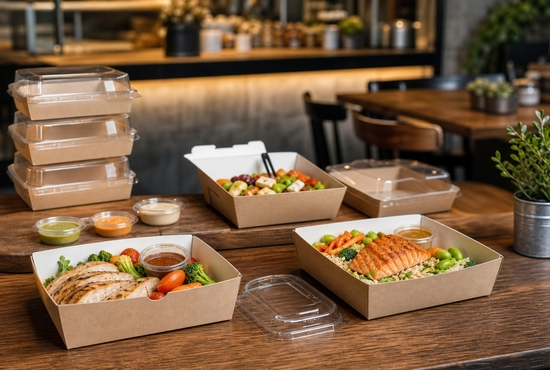
Square PE-Lined Takeout Food Containers | 300–1200 ml; 107 × 107 × 36 mm to 160 × 160 × 62 mm | Prepared meals, restaurant takeaway, delivery, and grab-and-go service |
Rectangular PE-Lined Takeout Food Container | 1200 ml; 200 × 137 × 52 mm | Large ready meals, combination foods, and delivery orders |
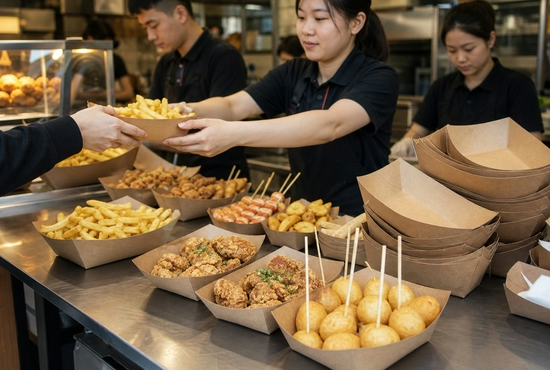
Kraft Paper Boat Trays | 125 × 90 × 19 mm to 255 × 178 × 50 mm | Snacks, sides, street food, concessions, events, and takeaway |
Kraft Paper Flat Plate and Trays | 170 × 120 × 16 mm to 250 × 175 × 23 mm | Catering, bakery, dessert, sampling, and food presentation |
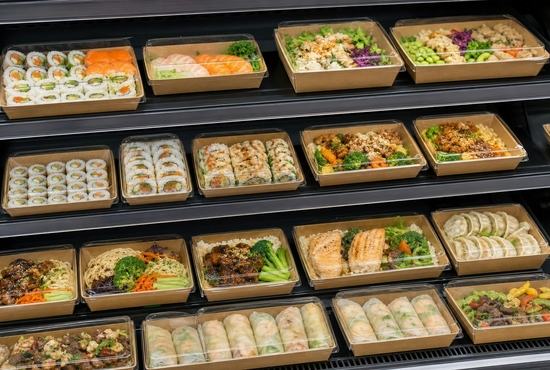
Paper Kraft Sushi Trays | Top: 135 × 75 mm to 251 × 178 mm; Height: 24 mm | Sushi, chilled foods, supermarket display, and retail grab-and-go |
Square and Rectangular PET Takeout Lids | 107 × 107 mm to 200 × 137 mm | Compatible takeout containers; verify the exact base-and-lid pairing |
Anti-Fog PET Sushi Tray Lids | Top: 135 × 75 mm to 251 × 178 mm; Height: 32 mm | Compatible sushi trays for chilled retail display and transport |
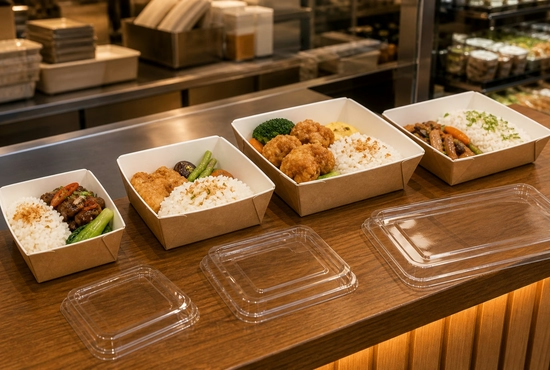
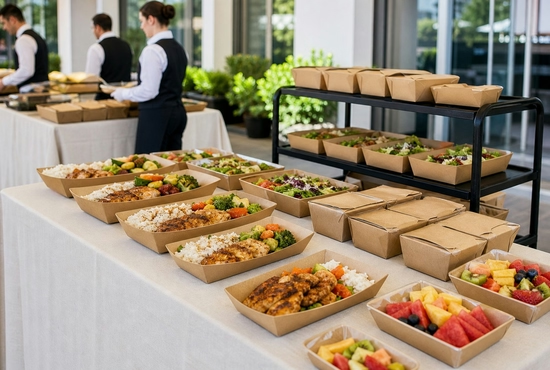
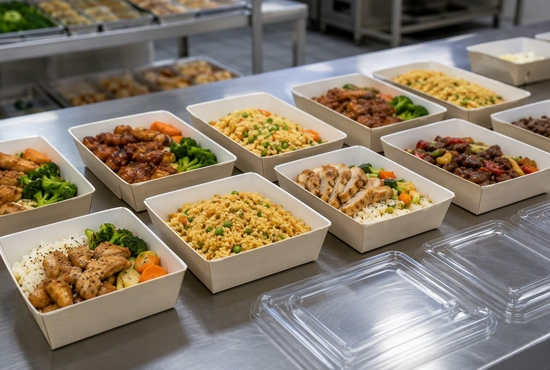
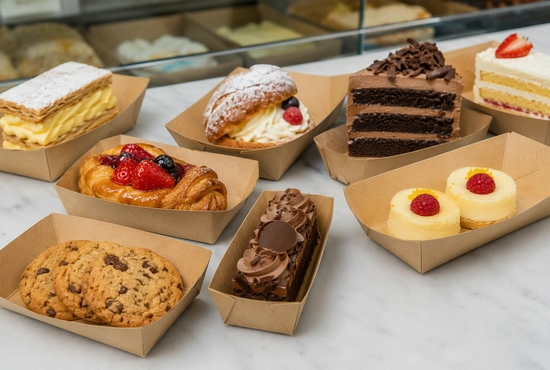

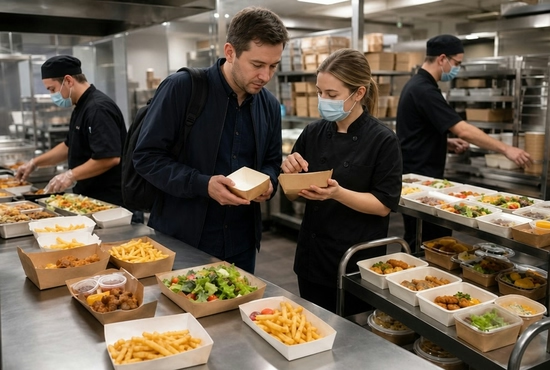

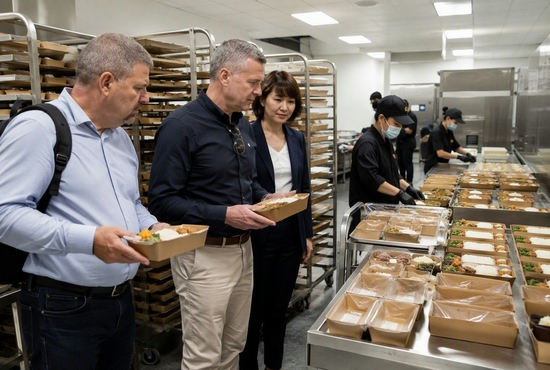
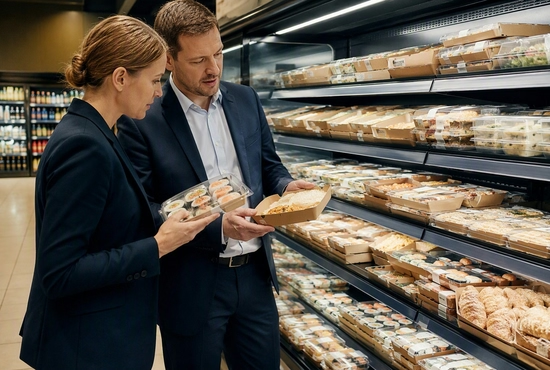


Use the following application guide to match food type, transport requirements, serving environment, and sustainability objectives with the appropriate tray.
Application | Recommended |
Restaurant Takeaway Food | ✓ |
Catering Service | ✓ |
Event Food Packaging | ✓ |
Food Delivery | ✓ |
Ready-to-Eat Meals | ✓ |
Meal Preparation Services | ✓ |
Retail Prepared Food | ✓ |
Bakery and Dessert Packaging | ✓ |
Sustainable Food Brands | ✓ |
Private Label Food Packaging | ✓ |
Long-Term Liquid Storage | ✗ |
Industrial Chemical Packaging | ✗ |
Non-Food Industrial Applications | ✗ |
A standard open paper tray is not intended for every requirement. Long-term liquid storage, airtight sealing, extreme heat, extended condensation, heavy industrial loads, or universal recycling and composting claims require a purpose-designed and verified packaging system.
Before ordering, evaluate application fit, performance, customization, documentation, MOQ, and supply reliability.
What Types of Food Can Be Used with a Paper Food Tray?
Depending on the SKU, applications can include prepared meals, snacks, fries, street food, bakery items, desserts, sushi, chilled foods, fruit, catering food, and grab-and-go products. The exact tray and lid must be selected for the food’s temperature, oil, moisture, acidity, weight, contact time, display, and transport conditions.
Is a Paper Food Tray Suitable for Hot Food?
Selected trays may be suitable for defined hot-food conditions, but paperboard, barrier, adhesive, ink, food type, temperature, and holding time vary. Microwave, oven, or hot-holding suitability must never be assumed without SKU-specific written instructions or supporting evidence.
Can a Paper Food Tray Be Customized?
Yes. Subject to feasibility and MOQ, buyers can customize dimensions, depth, paperboard, barrier, die line, sidewalls, compartments, printing, lids, packing, labels, and private-label cartons.
Customization options may include:
What Certifications or Documents Are Available for Paper Food Tray?
Available documents depend on the exact paperboard, coating or lamination, ink, adhesive, lid, food type, temperature, contact time, SKU, and destination market. Use the separate Compliance & Certification Support page to request documentation that matches the selected product and intended claim.
What Is the Minimum Order Quantity for Paper Food Tray?
MOQ varies by product, tooling, packaging, customization, and order volume; confirm the requirement for the selected standard or custom SKU.
How Can Buyers Ensure Stable Supply?
Assess production capacity, quality controls, scheduling, communication, and delivery performance before establishing a repeat-order program.
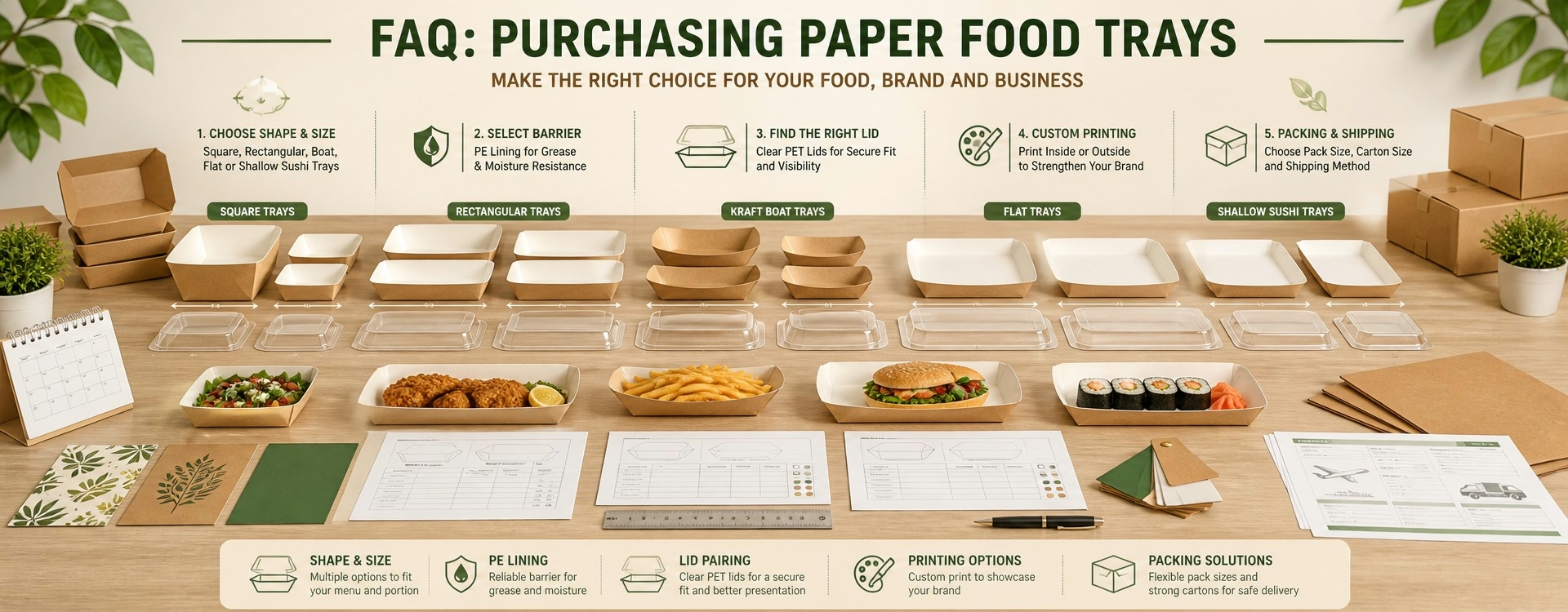
These trays suit many short-term foodservice uses but are not ideal for every packaging requirement.
For extended liquid containment, use a packaging format specifically designed and verified for long-term moisture resistance.
Where full visibility is essential, a transparent plastic or qualified PLA base-and-lid system may be more suitable than an opaque paperboard tray.
Applications involving exceptional impact, heavy loads, or specialized industrial handling require application-specific performance verification.
Environmental outcomes depend on the board, barrier, food residue, component separation, certification or evidence, and collection or processing infrastructure available in the destination market.
Where the lowest initial price is the only priority, conventional materials may cost less upfront; buyers should also consider performance, brand, and market requirements.

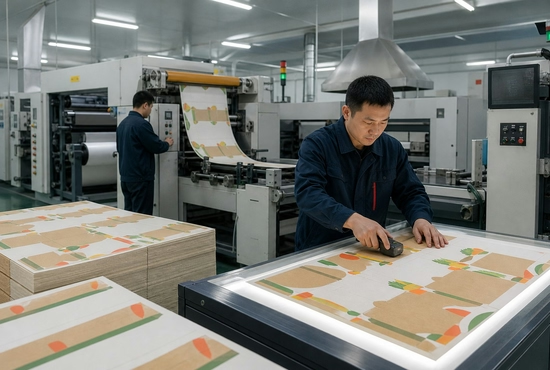
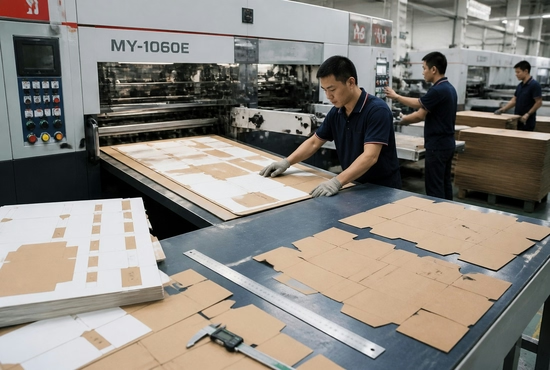
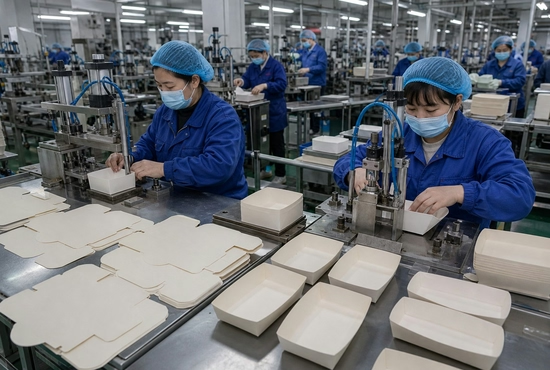
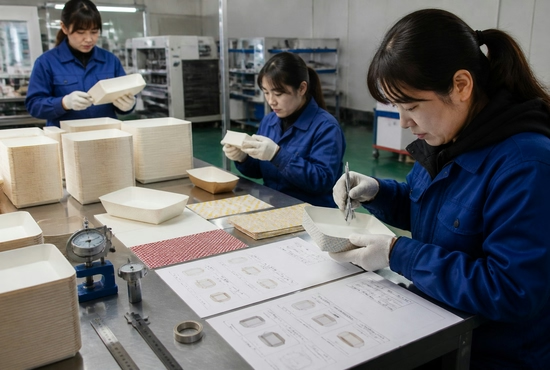
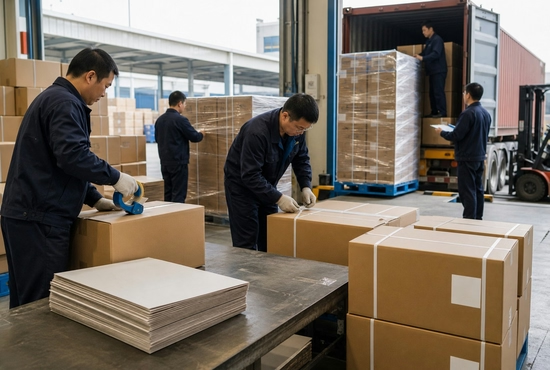
Evaluate a supplier by its production experience, product range, customization, technical capability, documentation support, communication, and long-term supply reliability.
A professional manufacturer should provide not only products but also stable production capability, customization support, quality management, and reliable communication throughout the cooperation process.
When evaluating a supplier, buyers should consider manufacturing experience, product range, technical capability, compliance support, and long-term supply reliability.
Confirm that the manufacturer has suitable paperboard equipment, quality controls, export experience, and capacity for the required order volume.
Buyers should evaluate:
A reliable production foundation helps ensure consistent product quality for long-term business cooperation.
A capable supplier should offer multiple sizes, shapes, compartments, die lines and forming tools, packaging options, and private-label support.
Customization capability may include:
Confirm that the supplier can provide material information, product specifications, food-contact documentation, and applicable test reports for the destination market.
This may include:
Repeat purchasing depends on clear schedules, order management, quality feedback, export coordination, and responsive after-sales communication.
Professional manufacturers should support:
Before placing an order for paper food tray products, buyers should review the following checklist to ensure the selected packaging solution meets product requirements, market expectations, and supply-chain needs.
□ Selected Paper Food Tray Category and Target SKU
□ Food Type, Portion, Temperature, Oil / Moisture Level, and Holding Time
□ Service Channel (Dine-In / Takeaway / Delivery / Catering / Retail / Institutional)
□ Top, Bottom, Usable-Area, Depth, and Food-Clearance Dimensions
□ Kraft or White Paperboard, Basis Weight / Caliper, Stiffness, and Fiber Information
□ Coating, Lamination, Liner, Ink, Adhesive, and Food-Contact Surface
□ Heat, Chilled, Freezer, Grease, Moisture, or Baking Requirements
□ Lid, Sleeve, Liner, Label, Bag, or Overbox Compatibility
□ Food-Contact Documents for the Exact SKU and Destination Market
□ Evidence and Qualified Wording for Environmental or Certification Claims
□ Approved Drawing, Physical Sample, Artwork, Color Standard, and Tolerances
□ Pack Count, Carton Dimensions, Shipping Marks, Pallet, and Container Plan
□ MOQ, Annual Forecast, Tooling, Development Schedule, and Production Lead Time
□ Inspection Method, Acceptance Criteria, Change Control, and Contract Terms
Completing this checklist before production begins helps reduce communication errors and procurement risks.
For businesses sourcing paper food tray solutions, confirming product specifications, application requirements, customization needs, and market expectations in advance allows manufacturers to provide more accurate recommendations and develop suitable packaging solutions.
DAILYECO supplies standard and custom paperboard food trays with product development, manufacturing, quality management, documentation, and export support.
With experience in paperboard packaging production, DAILYECO focuses on developing practical and sustainable packaging solutions that meet different market requirements.
From standard paper food tray products to customized paperboard packaging projects, DAILYECO supports customers with product development, manufacturing, quality management, and export supply services.
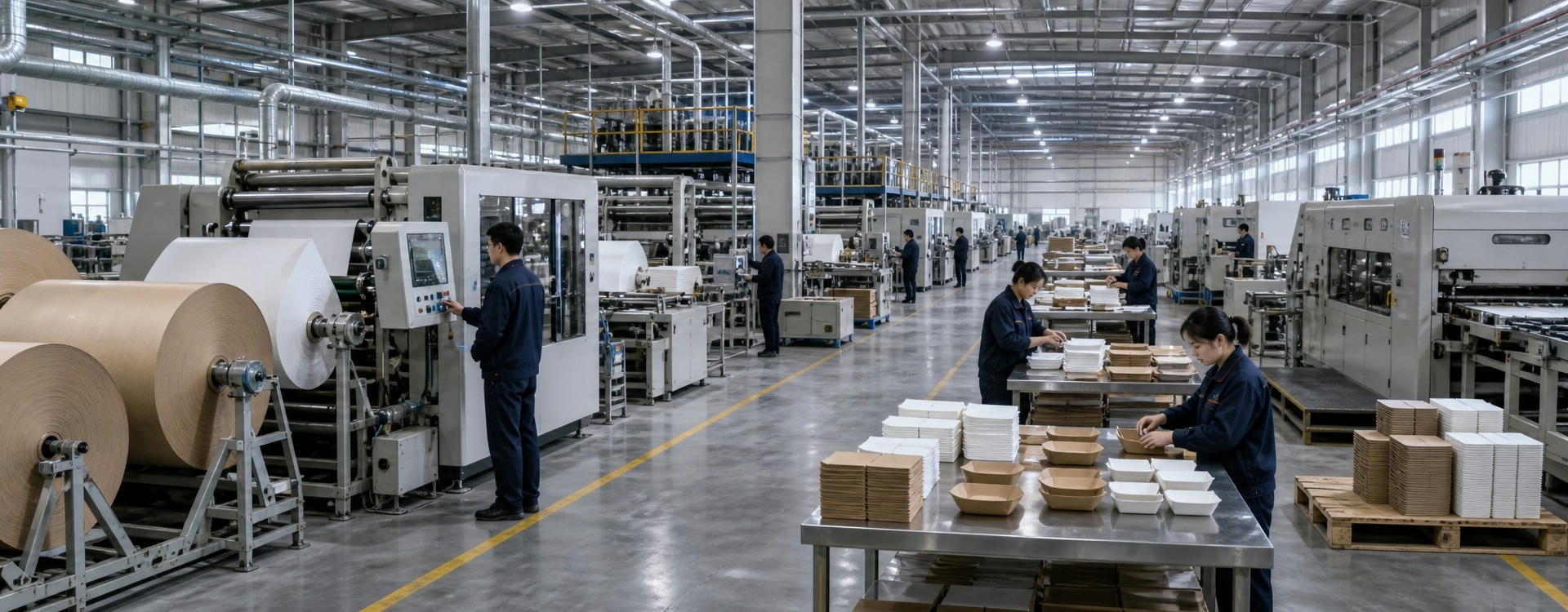
DAILYECO Manufacturing Facility | Description |
Employees | More than 1,000 employees |
Production Lines | Paper food tray converting, printing, die cutting, forming, packing, and coordinated sustainable food packaging production |
Monthly Supply Capacity | Monthly production capacity of up to 15 million pieces, supporting stable large-volume export orders |
Product Categories | PE-lined takeout food containers, kraft paper boat trays, flat plate and tray formats, paper kraft sushi trays, compatible PET lids, and custom paper food packaging |
Printing Capability | Flexographic & Offset Printing |
OEM | Logo, printing, packaging, carton customization |
ODM | Material, structure, artwork optimization |
Technical Support | Professional engineering and product development assistance |
Production MOQ | Flexible according to product specifications and customization requirements |
Typical Lead Time | Approximately 25–35 days for new customized orders |
Export Experience | North America, Europe, Middle East, Australia, Asia and Latin America |
Development support covers product selection, structure optimization, custom dimensions and compartments, packaging, and private-label requirements.
Our OEM and ODM capabilities allow customers to develop:
This flexibility enables food brands, distributors, and packaging companies to develop products that better match their market requirements.
Documentation support is matched to the selected product and customer requirements, including specifications, materials, food-contact information, quality records, and applicable testing.
Support may include:
View Our Compliance & Certification Support Page
International projects are supported through production management, responsive communication, export coordination, and repeat-order planning.
DAILYECO supports global customers through: