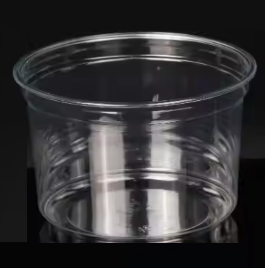
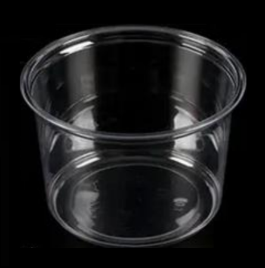
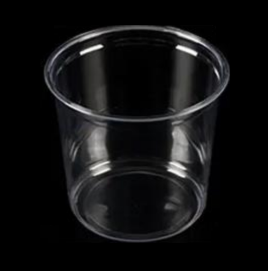
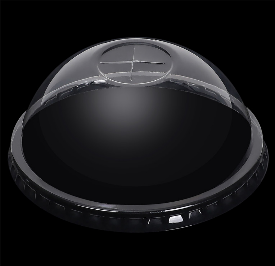
.png)
Item | Information |
Product Name | PLA Bowl |
Material | PLA (polylactic acid); exact resin grade and documentation should be confirmed for the selected SKU |
Available Bowl Capacities | 300ml, 350ml, 440ml, 450ml, 500ml, 600ml, and 700ml |
Series Diameter | 117mm rim series; catalog bowl dimensions list 117 × 96mm with model-specific heights |
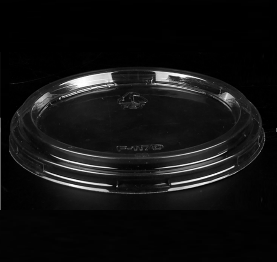
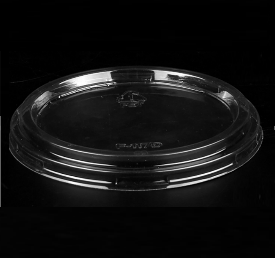
Catalog Lid Options | 117mm dome lid, 117mm flat lid, and 117mm flat lid with double holes |
Typical Applications | Cold salads, fruit, desserts, yogurt, chilled noodles, deli foods, snacks, and grab-and-go display |
Appearance | Clear molded structure designed to support product visibility |
Packing | 10 pieces per bag, 50 bags per carton, 500 pieces per carton |
Customization | OEM, ODM, Private Label, labels, sleeves, cartons, barcodes, and market-specific packing subject to project review |
Buyer Documentation | Product specification, material declaration, food-contact documentation, and applicable environmental documentation |
Supply Type | Manufacturer and export supply partner |
A PLA Bowl is a clear disposable food container molded from polylactic acid. The current DAILYECO catalog provides seven bowl capacities and three 117mm lid configurations, enabling buyers to build a coordinated range around one rim series.
The catalog does not state one universal temperature limit, microwave status, freezer status, leakage rating, or compostability certificate for every item. These conditions must therefore be confirmed for the exact SKU, food type, contact time, destination market, and supporting documentation before publication or purchase.
PLA Bowls are transparent molded food containers made from PLA, or polylactic acid, a biobased polymer commonly produced from fermented plant sugars. The exact feedstock, resin grade, additives, biobased content, and finished-product composition should be confirmed through the relevant material and product documentation.
A Clear PLA Bowl is generally selected when food visibility is important. Its transparent wall allows salads, fruit, yogurt, parfaits, desserts, chilled noodles, snacks, and prepared deli foods to remain visible in display cabinets, takeaway counters, and retail grab-and-go programs.
PLA should not be treated as identical to PET, PP, or high-heat CPLA. Standard clear PLA products are commonly evaluated for chilled or cold food applications, while hot-food, microwave, freezer, and extended liquid-contact performance must be verified for the exact bowl and lid combination.
A Compostable PLA Bowl claim is appropriate only when the finished bowl is covered by applicable test evidence or certification and the required industrial composting conditions are clearly stated. The material name alone does not prove that every finished item is certified, home compostable, recyclable, or accepted by local waste facilities.
Feature | Buyer-Relevant Performance | What to Confirm Before Ordering |
Clear Appearance | Supports visible presentation of chilled foods | Clarity, haze, surface marks, and display conditions |
Coordinated Size Range | Seven capacities from 300ml to 700ml | Actual fill volume, portion weight, and product code |
117mm Rim Series | Simplifies lid planning across catalog models | Exact rim engagement and approved bowl-lid codes |
Three Lid Formats | Dome, flat, and double-hole flat options | Headspace, venting, topping clearance, and transport test |
Lightweight Construction | Catalog bowl weights range from 10g to 16g | Weight tolerance, rigidity, and nesting performance |
Cold Food Presentation | Suitable starting point for salads, fruit, desserts, and deli display | Food temperature, contact time, acidity, oil, and condensation |
Food Contact | Documentation can be reviewed by market and intended use | Report scope, migration conditions, food type, and temperature |
Environmental Positioning | PLA can support a documented biobased-material story | Finished-item certification and local disposal route |
Customization | Private Label and export packing support | MOQ, artwork, label, sleeve, carton, sampling, and lead time |
The commercial value of a Disposable PLA Bowl comes from matching a defined food, service temperature, holding period, lid, display condition, and disposal message—not from the material name alone.
.png)
Foodservice and retail buyers often evaluate PLA Bowls when they need clear product visibility, lightweight handling, coordinated lids, and a documented biobased-material option for chilled food packaging.
For salad bars, cafés, supermarkets, caterers, dessert brands, and grab-and-go programs, transparent packaging helps customers see color, freshness, layering, toppings, and portion size before purchase. A common 117mm rim can also simplify lid planning across several bowl capacities when compatibility has been approved.
The category should still be specified market by market. Food-contact rules, single-use plastic policies, accepted environmental wording, industrial composting access, and waste-facility acceptance differ by location. A responsible PLA Bowl Manufacturer should help buyers confirm the product, documents, lid, test conditions, label wording, and disposal route for each project.
The market for clear biobased food packaging is becoming more specification-driven. Professional buyers increasingly compare actual item performance, material traceability, finished-product documentation, carton efficiency, lid compatibility, and end-of-life communication before approving a PLA Bowl.
This shift favors manufacturers that can explain which resin grade is used, how the bowl is formed, what temperature and food-contact conditions apply, which lids fit, and what evidence supports any compostability or environmental statement.
.png)
Demand for Wholesale PLA Bowls varies by country and channel because food-contact requirements, single-use product rules, industrial composting infrastructure, labeling expectations, and accepted disposal claims are not uniform.
Greater Material Transparency
Buyers increasingly distinguish PLA resin, finished-product formulation, additives, and verified biobased content instead of relying on the phrase ‘plant-based plastic’.
Application-Specific Temperature Control
Cold display, refrigerated storage, room-temperature holding, transport, and condensation are evaluated as separate conditions rather than covered by one broad temperature claim.
Qualified Compostability Communication
Professional brands identify the exact certified item, applicable standard, industrial or home composting route, and local acceptance conditions.
Common-Rim Portfolio Planning
A shared 117mm rim can reduce lid complexity across several bowl heights when exact compatibility is confirmed.
Retail and E-Commerce Readiness
Barcodes, retail labels, tamper-evidence requirements, carton artwork, product photography, and pack configuration are increasingly planned before sampling.
For distributors and Private Label brands, differentiation can come from a coherent size range, consistent clarity, reliable lid matching, accurate product naming, retail-ready labels, carton graphics, and transparent environmental communication.
Because the bowl wall itself is clear, branding may be coordinated through labels, sleeves, bags, inserts, cartons, shelf presentation, or approved printing methods rather than assumed to work like printing on paperboard.
Region | Typical Buyer Focus |
North America | Food-contact documentation, cold-use performance, commercial-composting claim scope, and packing efficiency |
Europe | Food-contact compliance, material traceability, single-use product rules, and substantiated end-of-life wording |
Australia & New Zealand | Application performance, packaging policy requirements, certified claims, and disposal communication |
Middle East | Chilled transport, hospitality presentation, export packing, and supply continuity |
Asia | Cost efficiency, stable quality, clarity, rapid replenishment, and destination-specific requirements |
This table is a procurement guide rather than a substitute for current legal review in the destination market.
Professional sourcing decisions should approve the complete bowl, lid, material, packing, documentation, application, and disposal-communication package.
The right bowl material depends on food temperature, contact time, clarity, barrier needs, microwave or freezer requirements, local rules, disposal infrastructure, and brand objectives. No material is automatically best for every application.
Choose PLA Bowls If You:
Choose PET Bowls If You:
Choose PP Bowls If You:
Choose Paper Bowls If You:
Choose Bagasse Bowls If You:
Application or Priority | Material to Evaluate | Primary Verification Point |
Clear chilled-food display | PLA or PET | Temperature, clarity, condensation, and local disposal route |
Industrial-compostability program | Certified finished PLA item | Certificate scope, standard, item code, and accepted facility |
Microwave or hot meal service | Tested PP, CPLA, paper, or bagasse | Exact temperature, time, food load, and lid |
Premium printed branding | Paper or sleeved/labeled PLA | Print method, label adhesion, condensation, and artwork |
Long liquid contact or retail shelf life | Specialized barrier structure | Migration, sealing, shelf-life, and distribution tests |
DAILYECO’s current PLA Bowl catalog includes seven transparent bowl capacities and three 117mm lid options. The series supports portion service, desserts, yogurt, fruit, salads, chilled noodles, deli display, catering, takeaway, and retail grab-and-go programs.
Pictures | Name | Size | Weight (g) | Pcs/Bag | Bags/CTN | Pcs/CTN | Carton L (cm) | Carton W (cm) | Carton H (cm) |
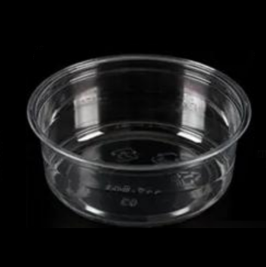
| 117-8oz A PLA Bowl | 117*96*39mm | 10 | 10 | 50 | 500 | 61 | 25 | 40 |
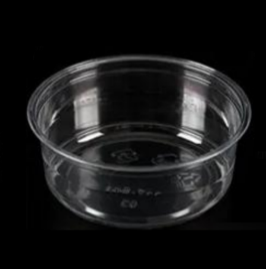
| 117-8oz B PLA Bowl | 117*96*45mm | 10 | 10 | 50 | 500 | 61 | 25 | 37 |
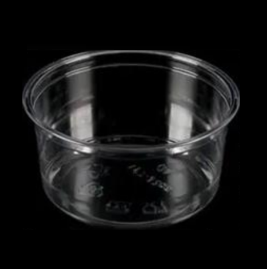
| 117-12oZ A PLA Bowl | 117*96*55mm | 12 | 10 | 50 | 500 | 61 | 25 | 42 |
| 117-12oZ B PLA Bowl | 117*96*60mm | 12 | 10 | 50 | 500 | 61 | 25 | 50 |
| 117-12oz C PLA Bowl | 117*96*64mm | 12 | 10 | 50 | 500 | 61 | 25 | 51 |
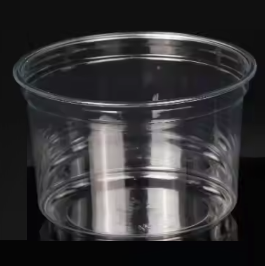
| 117-16oz PLA Bowl | 117*96*75mm | 14 | 10 | 50 | 500 | 61 | 25 | 45 |
| 117-24oz PLA Bowl | 117*96*108mm | 16 | 10 | 50 | 500 | 61 | 25 | 49 |
| 117 Dome lid | 117mm | 6 | 10 | 50 | 500 | 63 | 26 | 31 |
| 117 Flat lid | 117mm | 5 | 10 | 50 | 500 | 63 | 26 | 26 |
| 117 Flat lid with double holes | 117mm | 5 | 10 | 50 | 500 | 63 | 26 | 30 |
.png)
.png)
.png)
-1024x687.png)
.png)
.png)
.png)
.png)
.png)
-1024x687.png)
.png)
-1024x687.png)
.png)
.png)
.png)
-1024x687.png)
A PLA Bowl may be suitable when a buyer needs transparent chilled-food presentation and can validate the exact material, temperature, food-contact, lid, transport, and disposal conditions.
Application Requirement | Initial Recommendation | Required Confirmation |
Fruit, desserts, yogurt, and small portions | 300ml or 350ml bowl | Actual fill volume, temperature, and lid headspace |
Regular salads and chilled noodles | 440ml, 450ml, or 500ml bowl | Food weight, dressing contact, condensation, and lid fit |
Large salads and catering portions | 600ml or 700ml bowl | Stacking, center-of-gravity, and transport movement |
Extra topping clearance | Dome lid | Total food height, stacking, and lid retention |
Low-profile display | Flat lid | Rim engagement and food clearance |
Vented application | Double-hole flat lid | Purpose of holes, leakage path, and transport orientation |
Hot food or microwave use | Evaluate another tested structure or exact approved grade | Temperature, time, food load, and finished-product test |
Compostability claim | Only an evidenced or certified finished SKU | Standard, item code, certificate scope, and accepted facility |
How should I evaluate a PLA Bowl Manufacturer before placing an order?
Review the manufacturer’s experience with clear molded food packaging, relevant equipment, resin and lot controls, specifications, Quality Control, traceability, export packing, documentation, customization, and change-management procedures. Verify which production steps are performed in-house and which are outsourced.
What information should be included in my RFQ?
Specify the catalog model, nominal and working volume, intended food, filling temperature, holding time, lid format, order quantity, annual forecast, destination, label or sleeve requirements, retail packing, compliance-document needs, delivery schedule, and preferred Incoterm.
How should I compare quotations from different suppliers?
Normalize every quotation to the same resin grade, dimensions, unit weight, tolerances, clarity requirement, pack count, carton size, lid code, MOQ, tooling, label, inspection, and shipping term. Prices are not comparable when the product and packing specifications differ.
Which samples should be approved before mass production?
Approve the bowl, each required lid, representative application-test set, label or sleeve, retail pack, carton proof, and pre-production sample. The final approved samples should be linked to controlled product codes and specifications.
How should OEM and Private Label projects be managed?
Create a written approval register covering the bowl, lid, color, label, sleeve, artwork, barcode, bag, retail pack, carton, shipping mark, regulatory wording, approver, version, tolerance, and approval date.
How can buyers confirm production capacity and lead time?
Request capacity for the selected SKU and production period rather than one factory-wide number. Confirm resin availability, packaging-material lead time, tooling, production slot, inspection window, packing time, loading date, and the effect of artwork or sample delays.
What should be included in the Quality Control plan?
Define checks for resin identity, lot status, dimensions, weight, clarity, haze, black spots, scratches, deformation, rim condition, nesting, lid fit, application performance, pack count, carton condition, and batch identification. Agree tolerances and acceptance criteria before production.
How should pre-shipment inspection be arranged?
Identify the purchase order, SKU, quantity, approved sample, controlled specification, sampling level, defect classification, functional tests, packing requirements, inspection party, and release authority.
Which production and export records should be supplied?
Depending on the order, records may include the approved specification, material declaration, batch identification, inspection report, packing list, commercial invoice, certificate of origin where required, carton marks, loading record, and applicable product documentation.
How should changes, delays, and quality claims be handled?
Require written approval for changes to resin, additives, dimensions, color, mold, lid, label, artwork, pack count, carton, quantity, or schedule. Define retained samples, evidence requirements, notification deadlines, corrective action, replacement, and claim-resolution responsibilities.

Transparent discussion of limitations helps buyers avoid application failures and select a more appropriate structure.
Hot-Food or High-Temperature Applications
Do not assume that a standard clear PLA Bowl is suitable for hot filling, oven use, microwave heating, or high-temperature holding. Evaluate a product designed and tested for the required temperature and time.
Long-Term Liquid Storage
The catalog range should be evaluated as foodservice packaging rather than assumed to support filled retail shelf life, pasteurization, retort, or extended liquid storage. These uses require separate migration, sealing, and shelf-life assessment.
Applications Requiring Impact Resistance at Low Temperature
Freezer performance should not be assumed. Product-specific testing should evaluate brittleness, cracking, dimensional change, condensation, and lid engagement after storage and thawing.
Markets Without a Suitable Disposal Route
A certified industrially compostable item may still be unsuitable for a market where local facilities do not accept it. Disposal communication must reflect the actual local collection system.
Applications Requiring Large Printed Surfaces
A transparent molded bowl offers limited direct print area compared with paperboard. Labels, sleeves, inserts, cartons, or other approved branding methods may be more appropriate.
.png)
.png)
.png)
-1024x687.png)
.png)
-1024x687.png)
A reliable PLA Bowl Manufacturer should be evaluated on item-level technical control, material traceability, clarity and forming capability, documentation, capacity, customization, packing, and export execution—not on quotation price alone.
Choose a manufacturer with proven experience in transparent molded food packaging. Verify relevant PLA material approval, sheet or forming process, mold control, maintenance, finished-goods handling, and whether each operation is performed in-house or outsourced.
Compare normal and peak output for the selected SKU, resin and sheet lead time, tooling availability, planned maintenance, production cycle, packing capacity, and available slots. Capacity should be confirmed for the required period.
Review the controlled specification, inspection standard, measuring equipment, clarity and appearance criteria, application tests, nonconformance procedure, batch traceability, retained samples, and pre-shipment inspection options.
Confirm which labels, sleeves, packs, cartons, colors, structures, and molds can be customized. Clarify tooling ownership, artwork approval, barcode verification, pilot run, MOQ, lead time, and change control.
The supplier should map food-contact reports, material declarations, and environmental documentation to the relevant resin and finished item. Generic certificates without clear product scope should be treated only as supporting information.
Evaluate document accuracy, carton marks, palletization, container loading, time-zone communication, third-party inspection coordination, and customer-specific shipping requirements.
A professional supplier should help buyers select capacity, choose the lid, plan application tests, optimize cartons, review material claims, and define the approval file before purchase orders are released.
Evaluate quotation response, sample coordination, dedicated account support, artwork approval, production updates, inspection communication, shipping follow-up, complaint handling, and controlled-record maintenance.
Complete this checklist before approving a sample, purchase order, or production instruction for PLA Bowls.
A signed specification, approved bowl-and-lid samples, and an agreed inspection standard should control production. Email descriptions alone are not a complete approval file.
.png)
DAILYECO supports importers, distributors, foodservice companies, hospitality groups, retail packaging brands, and Private Label customers sourcing PLA Bowls for international markets.
The cooperation process can cover application review, catalog model selection, bowl and lid confirmation, sampling, packaging development, production, inspection, documentation, and shipment coordination.
DAILYECO PLA Bowl Capability | Catalog-Based Description |
Material | PLA; exact grade and supporting documentation confirmed by selected item |
Monthly Capacity | 50-55 containers for full PLA bowls and cup products |
Catalog Bowl Range | Seven bowl models from 300ml to 700ml |
Rim Series | 117mm series for bowls |
Catalog Lid Range | 117mm dome lid, flat lid, and flat lid with double holes |
Standard Packing | 10 pcs/bag, 50 bags/CTN, 500 pcs/CTN |
OEM | Label, sleeve, retail pack, barcode, carton artwork, and shipping-mark coordination |
ODM | Specification or new-product development subject to technical and commercial review |
Production MOQ | Confirmed by SKU, material, stock status, customization, packing, and tooling |
Lead Time | Confirmed after sample, artwork, material, production-slot, and packing review |
Technical Support | Product selection, sample evaluation, lid planning, packing review, and destination-document coordination |
DAILYECO can coordinate available product specifications, material declarations, food-contact reports, factory audit information, and applicable environmental documentation according to the selected item and destination market.
VIEW OUR COMPLIANCE & CERTIFICATION SUPPORT PAGE
Export support can include order coordination, carton and shipping-mark review, commercial documentation, inspection scheduling, pallet or floor-loading planning, container loading, and shipment communication subject to customer and destination requirements.
International sales and technical teams can support product selection, sample arrangement, artwork approval, production updates, inspection coordination, shipment preparation, and after-sales follow-up throughout the project lifecycle.
Product development should focus on verified improvements in size architecture, lid compatibility, clarity, wall consistency, stacking, packing density, application performance, traceability, and claim accuracy. A custom PLA Bowl should be introduced only after technical and commercial approval.