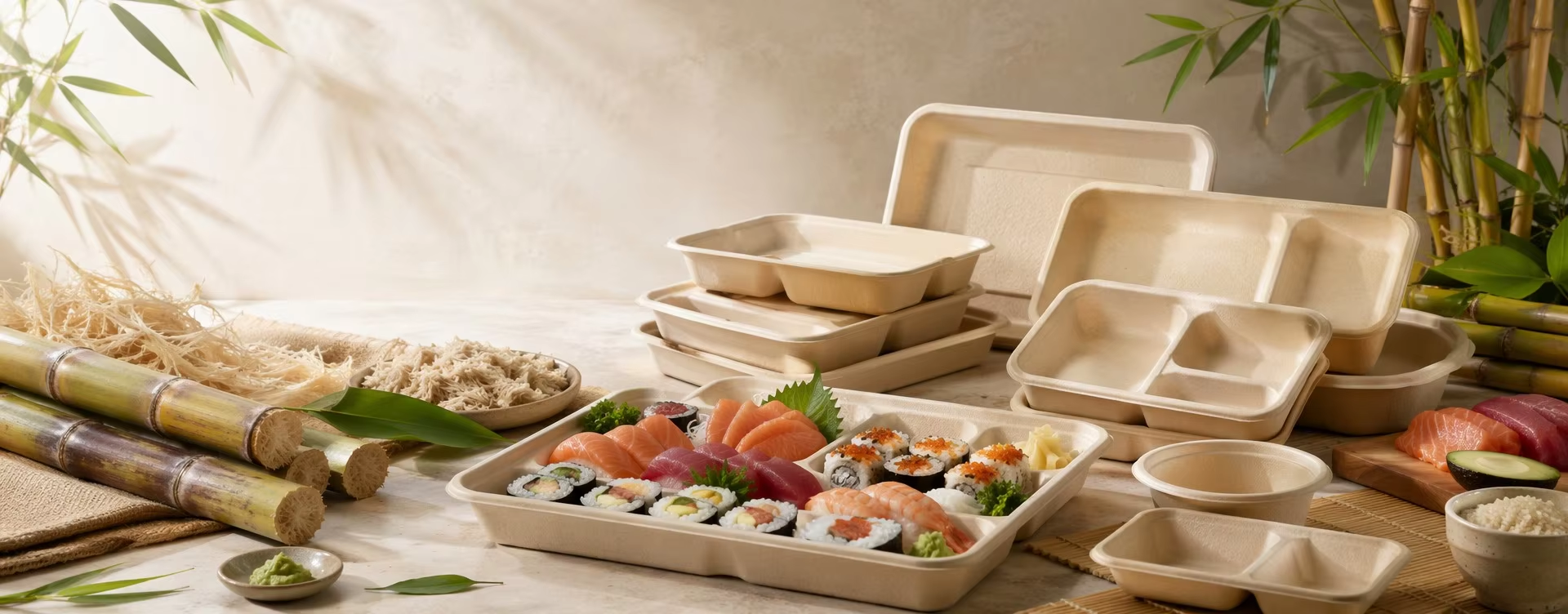
Item | Information |
Product Name | Bagasse Sushi Tray |
Material | Renewable Sugarcane Bagasse Fiber |
Product Type | Molded Fiber Food Tray |
Main Applications | Sushi Packaging, Takeaway Food, Catering, Foodservice |
Suitable Food Types | Sushi, Sashimi, Rice Dishes, Snacks, Ready Meals |
Raw Material Source | Sugarcane Agricultural Residue |
Product Structures | Rectangular Tray, Round Tray, Compartment Tray |
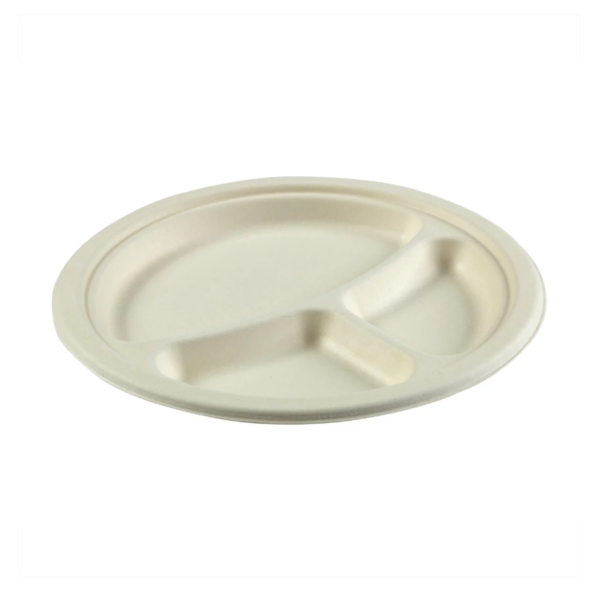
Common Products | Rectangular White Bagasse Tray, Round Bagasse Tray, Bagasse 5 Compartment Biodegradable Tray |
Surface Options | Natural Fiber Surface, Optional Barrier Treatment |
Sustainability | Renewable Fiber-Based Packaging Solution |
Customization | OEM & ODM Available |
Branding Options | Logo Embossing, Custom Packaging, Private Label |
Supply Type | Manufacturer & Global Packaging Partner |
Export Markets | North America, Europe, Australia, Middle East, Asia |
PFAS Free | Available with supporting test reports for applicable products |
Compostable | Available for certified product lines under specified composting conditions |
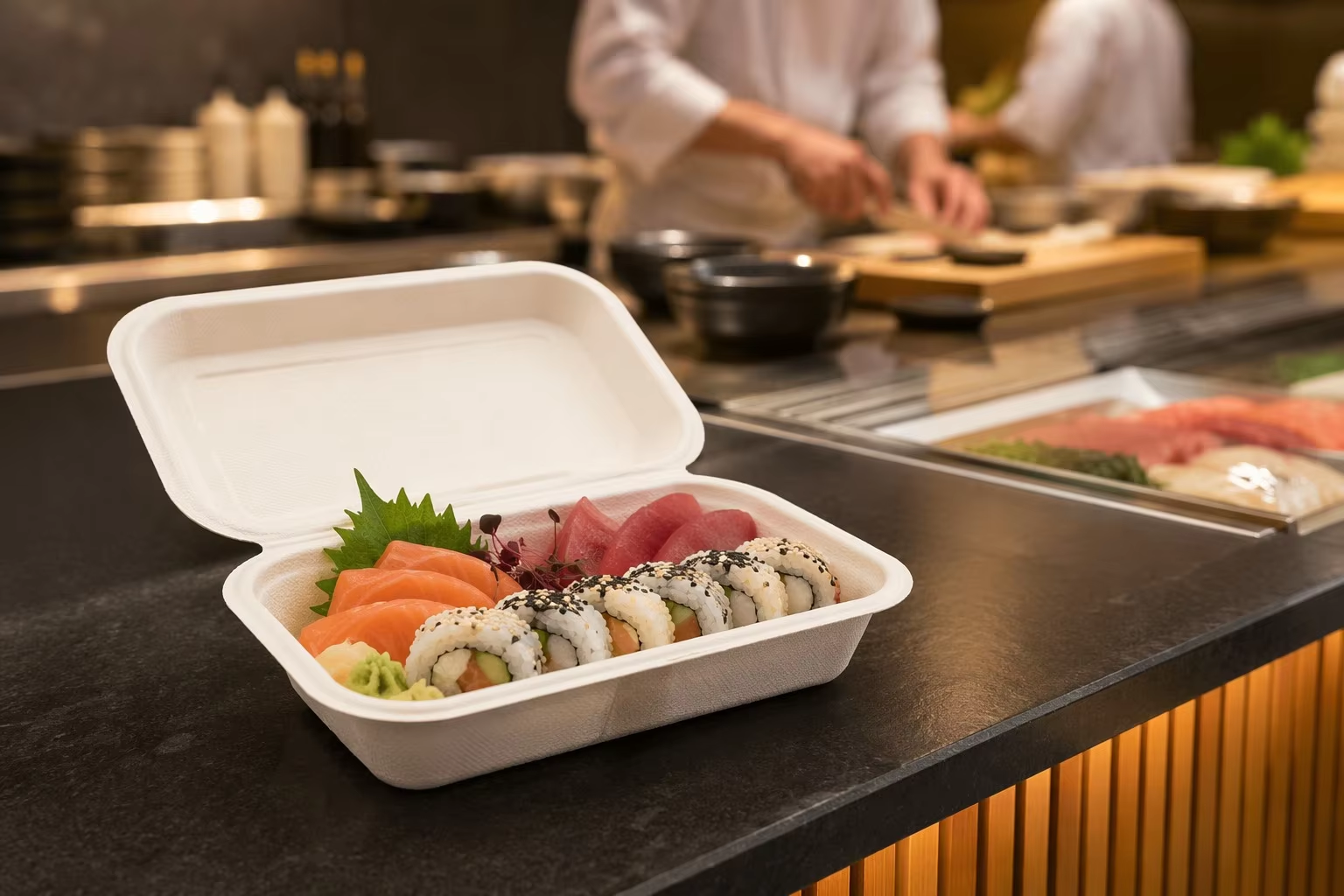
Bagasse sushi trays are molded fiber food packaging products manufactured from sugarcane bagasse, a renewable fiber material generated during sugar production. Through modern pulp molding technology, this agricultural by-product can be transformed into functional food packaging suitable for commercial foodservice applications.
Unlike conventional petroleum-based plastic packaging, sugarcane bagasse trays provide businesses with a renewable material option that supports sustainable packaging strategies while maintaining practical requirements such as product presentation, food organization, and transportation stability.
The growing demand for environmentally responsible food packaging has increased the adoption of bagasse food trays among sushi restaurants, takeaway businesses, catering companies, supermarkets, and hospitality operators.
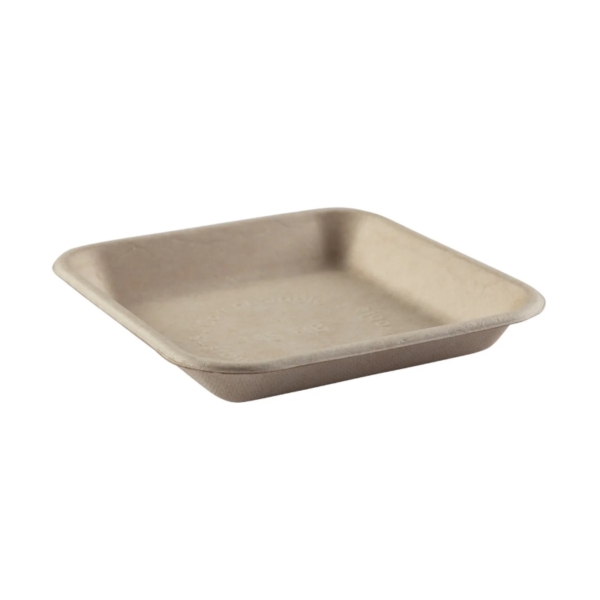
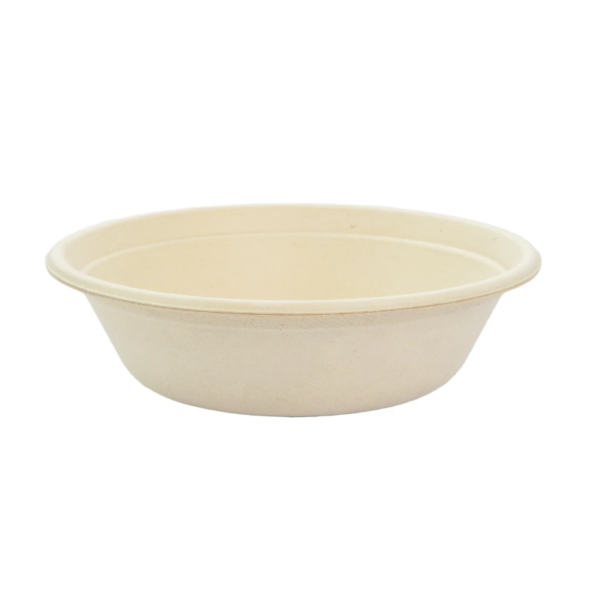
Different structures are available according to application requirements, including rectangular white bagasse trays for sushi combinations and prepared meals, round bagasse trays for specific food presentation formats, and bagasse 5 compartment biodegradable trays for separating different food components.
DAILYECO provides professional bagasse sushi tray manufacturing solutions, including customized specifications, OEM development, private-label packaging, and bulk supply services for global B2B customers.
Bagasse sushi trays are molded fiber packaging products made from processed sugarcane bagasse fiber. Bagasse is the fibrous material remaining after sugarcane juice extraction and is widely recognized as a renewable agricultural resource.
Instead of being discarded after sugar production, bagasse can be collected, cleaned, processed into pulp, and molded into different packaging structures. Through controlled molding technology, manufacturers can produce trays with suitable rigidity, shape stability, and food presentation performance.
For sushi and ready-to-eat food businesses, packaging must satisfy multiple requirements. A suitable tray should protect food during transportation, maintain product appearance, support efficient packing, and communicate the brand’s sustainability positioning.
This is why different bagasse tray designs are developed for different commercial needs.
A rectangular white bagasse tray is commonly selected for sushi combinations, meal sets, and takeaway food because of its efficient packing shape and clean appearance.
A round bagasse tray can provide a different presentation style for selected food categories where shape and visual arrangement are important.
For businesses offering multiple food components, a bagasse 5 compartment biodegradable tray provides separated sections that improve food organization and customer convenience.
Compared with traditional plastic food trays, biodegradable sugarcane trays provide a plant-fiber alternative for businesses seeking to reduce dependence on petroleum-based packaging materials.
For professional buyers, selecting the right bagasse sushi tray requires consideration of food type, tray structure, transportation requirements, market regulations, and sustainability objectives.
Feature | Performance | Explanation |
Renewable Material | Excellent | Manufactured from renewable sugarcane bagasse fiber |
Natural Fiber Appearance | Excellent | Provides a natural molded fiber appearance |
Food Packaging Compatibility | Excellent | Suitable for sushi, meals, snacks, and takeaway foods |
Structural Strength | Good | Maintains shape during handling and transportation |
Oil & Grease Resistance | Excellent | Helps prevent oil penetration during everyday meal service, up to 95°C, 30 minutes |
Water Resistance | Excellent | Performs reliably with sauces, soups, and moist foods for typical serving durations |
Heat Resistance | Excellent | Suitable for qualified microwave-reheating applications, subject to product-specific time and temperature limits |
Cold Food Performance | Excellent | Maintains stability for salads, desserts, fruits, and chilled dishes |
Freezer Compatibility | Available | Selected SKUs may be suitable for chilled or frozen-food applications down to −20°C, subject to product-specific verification |
Lightweight Construction | Excellent | Helps reduce packaging weight and storage requirements |
Multiple Designs | Available | Supports rectangular, round, and compartment structures |
Custom Development | Available | Supports OEM size and packaging requirements |
Sustainable Positioning | Excellent | Suitable for brands focusing on renewable packaging |
Commercial Supply Capability | Excellent | Suitable for distributors and large-volume buyers |
The main value of bagasse sushi trays is the balance between renewable material characteristics and commercial packaging performance.
For businesses moving toward sustainable packaging solutions, sugarcane bagasse trays provide a practical option that combines natural material sourcing with the functional requirements of modern foodservice operations.
However, buyers should evaluate the complete application environment before selecting packaging. Factors such as food moisture, transportation distance, stacking requirements, local waste management infrastructure, and customer expectations can influence the most suitable tray specification.
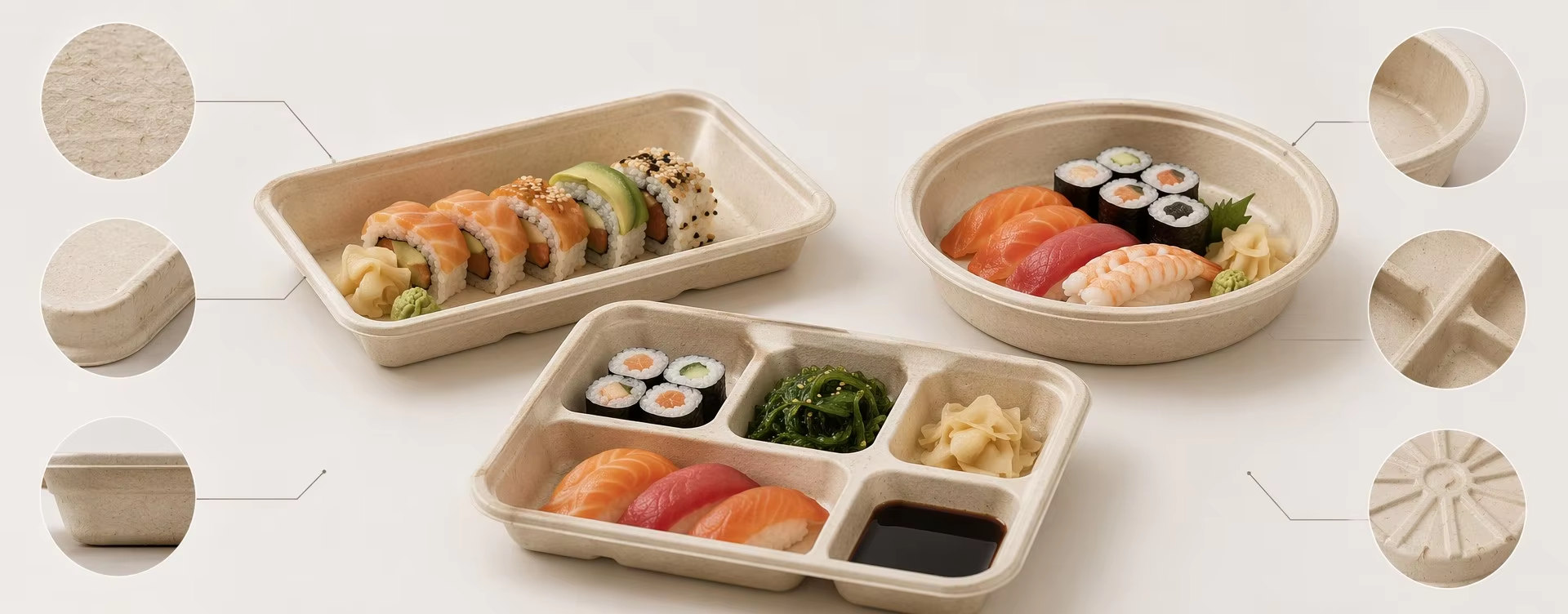
The global foodservice industry is experiencing a significant shift toward sustainable packaging solutions. Restaurants, retailers, and food brands are increasingly evaluating packaging materials based not only on cost and performance but also on environmental impact, customer expectations, and brand positioning.
Traditional plastic food trays have been widely used because of their durability and low cost. However, growing awareness of plastic waste, changing regulations, and increased consumer attention toward sustainable products have encouraged businesses to explore renewable alternatives.
Sugarcane bagasse trays have gained attention because they utilize agricultural residue as a packaging resource. This creates additional value from existing agricultural materials while supporting businesses that want to strengthen their sustainability image.
For sushi businesses specifically, packaging plays an important role because customers directly experience the tray when receiving takeaway meals. A well-designed bagasse sushi tray can improve food presentation while communicating a commitment to responsible packaging choices.
The increasing popularity of bagasse food trays is also connected with the expansion of takeaway culture, online food delivery, catering services, and ready-to-eat meals. These industries require packaging that can support efficient operations while meeting evolving sustainability expectations.
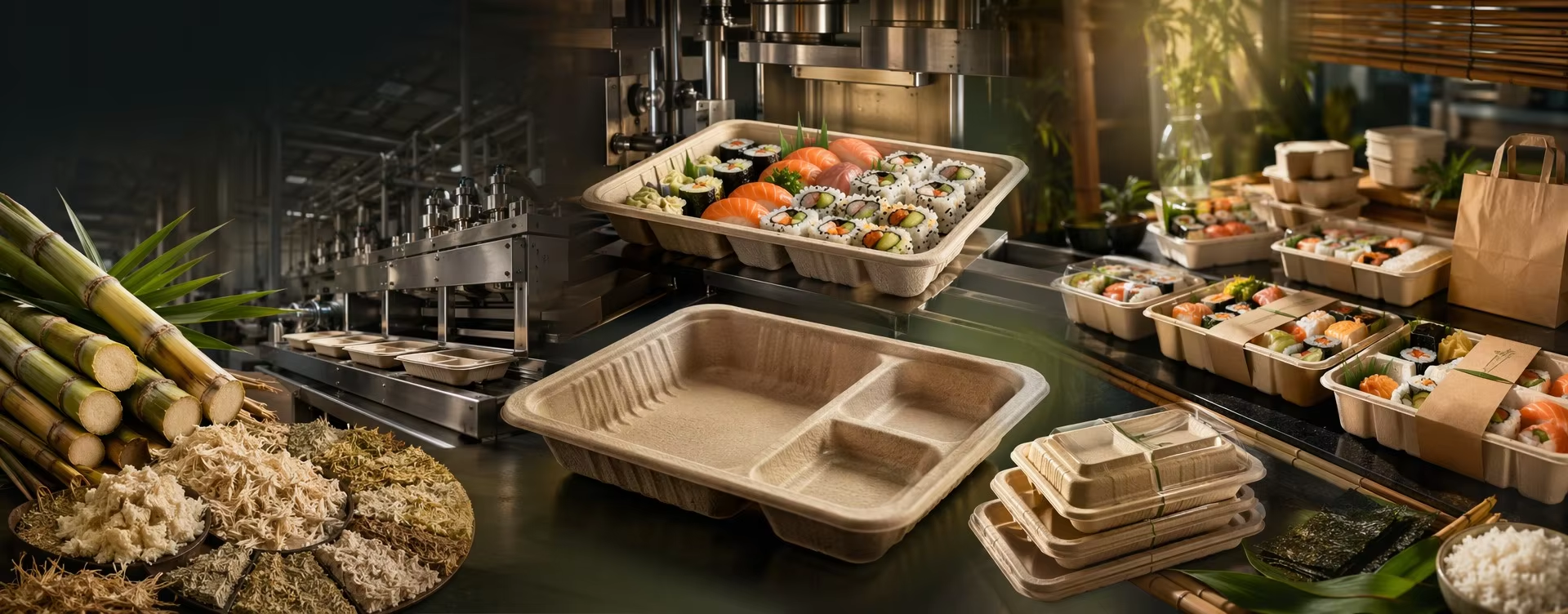
The global food packaging industry is undergoing a transition from traditional petroleum-based packaging toward renewable fiber-based solutions. As governments, businesses, and consumers place greater emphasis on reducing plastic dependency, sustainable packaging materials have become an important consideration in foodservice purchasing decisions.
Within the ready-to-eat food sector, sushi packaging represents a growing application area. Sushi restaurants, takeaway brands, supermarkets, and food delivery companies increasingly require packaging that can protect products during transportation while also supporting premium food presentation.
This trend has contributed to increasing demand for bagasse sushi trays, bagasse food trays, and other molded fiber packaging products.
One of the major drivers behind the adoption of sugarcane bagasse trays is the increasing focus on renewable material sourcing.
Unlike petroleum-based plastics, which rely on fossil resources, sugarcane bagasse fiber utilizes agricultural residue generated during sugar production. This approach allows manufacturers to create additional value from existing agricultural materials while developing packaging solutions based on renewable resources.
For many food brands, sustainability has become part of their purchasing strategy. Packaging is no longer viewed only as a functional container but also as an important element of brand communication and customer experience.
Businesses selecting biodegradable sugarcane trays often aim to demonstrate responsible material choices while maintaining practical packaging performance.
The continued growth of takeaway meals and online food delivery has changed packaging requirements across the foodservice industry.
For sushi businesses, packaging must support several operational needs:
Because of these requirements, bagasse sushi trays are increasingly considered by restaurants, catering companies, and foodservice distributors as an alternative to conventional plastic trays.
Products such as rectangular white bagasse trays are commonly selected for takeaway sushi sets because they provide efficient space utilization and a clean appearance suitable for retail presentation.
Professional buyers are increasingly evaluating packaging suppliers based on more than product price.
Modern procurement decisions often include:
This shift has created opportunities for manufacturers that can provide complete sustainable packaging solutions.
For example, a restaurant chain may evaluate whether a bagasse sushi tray manufacturer can provide stable production, consistent quality, customized packaging, and documentation support rather than simply comparing unit costs.
Different markets have different priorities when selecting sustainable food packaging.
Region | Typical Market Focus |
North America | Plastic reduction initiatives, foodservice efficiency, sustainable brand positioning |
Europe | Sustainability regulations, renewable materials, compostable packaging solutions |
Australia & New Zealand | Environmental awareness, premium takeaway experience |
Middle East | Food presentation, hospitality applications, reliable supply |
Asia | Cost efficiency, large-volume supply, expanding takeaway markets |
Understanding regional requirements helps buyers select the most suitable bagasse tray specifications for their target customers.
For importers, distributors, and foodservice companies, selecting sustainable packaging requires evaluating the complete supply chain rather than focusing only on individual product features.
A reliable bagasse sushi tray manufacturer should support:
As sustainable packaging markets continue to develop, businesses that combine suitable products with reliable manufacturing partnerships are better positioned to meet future customer expectations.
Selecting the appropriate food tray material requires understanding the differences between available packaging options.
For sushi, takeaway meals, and prepared food applications, buyers typically evaluate materials based on structural performance, sustainability objectives, appearance, cost, and market requirements.
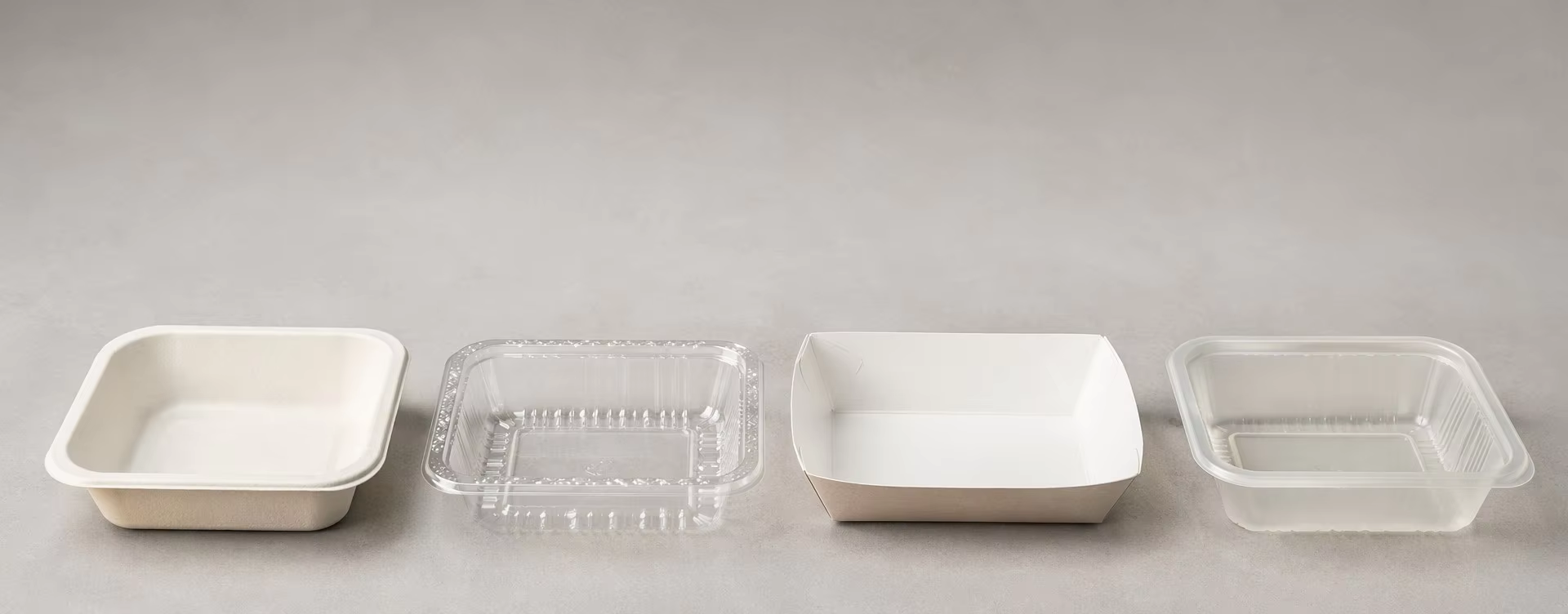
The following comparison provides an overview of common food tray materials from a commercial purchasing perspective.
Evaluation Criteria | Bagasse Sushi Tray | Plastic Sushi Tray (PP/PET) | Paperboard Food Tray | PLA Food Tray |
Primary Material | Sugarcane Bagasse Fiber | Petroleum-Based Plastic | Paperboard Fiber | Plant-Based PLA |
Renewable Material Source | Excellent | Limited | Good | Excellent |
Biodegradability | Excellent – Plant fiber material, biodegradable under suitable conditions | Poor – Traditional PP/PET plastic is not biodegradable | Good – Biodegradable depending on coatings and additives | Good – Requires industrial composting conditions |
Natural Appearance | Excellent | Standard | Good | Transparent / Plastic-Like |
Structural Strength | Good | Excellent | Moderate | Good |
Food Presentation | Excellent | Excellent | Good | Good |
Moisture Resistance | Good | Excellent | Depends on Barrier Coating | Excellent |
Sustainability Positioning | Excellent | Low | Good | Excellent |
Premium Natural Image | Excellent | Limited | Moderate | Moderate |
Custom Shape Options | Available | Excellent | Available | Available |
Typical Applications | Sushi, Meals, Takeaway Food | Sushi, Fresh Food, Retail Packaging | Bakery, Dry Food, Takeaway | Specialty Sustainable Packaging |
Cost Level | Medium | Low-Medium | Low-Medium | Higher |
Target Market | Recommended Material | Main Purchasing Considerations |
Sushi Restaurants | Bagasse Sushi Tray / Plastic Tray | Food presentation, customer experience, moisture performance |
Sustainable Food Brands | Bagasse Sushi Tray | Renewable materials, brand positioning |
Catering Companies | Bagasse Food Tray | Bulk supply, transportation stability |
Supermarkets | Plastic / Bagasse Food Trays | Shelf presentation, product protection |
Food Delivery Businesses | Sugarcane Bagasse Tray | Strength, stacking, sustainability image |
Hospitality Groups | Premium Fiber Packaging | Guest experience, packaging consistency |
| Pictures | Product | Size | Typical Paper Weight | Packing | CTN Size |
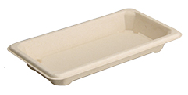 |
Bagasse Sushi Tray | 164 × 89 × 21 mm | 10 g | 50 pcs × 10 bags | 59.5 × 19 × 17.5 cm |
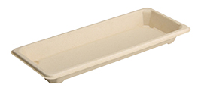 |
Bagasse Sushi Tray | 221 × 92 × 22 mm | 13 g | 50 pcs × 10 bags | 61 × 23.5 × 20 cm |
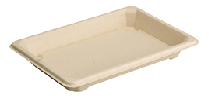 |
Bagasse Sushi Tray | 165 × 115 × 21 mm | 12 g | 50 pcs × 10 bags | 58 × 18 × 24 cm |
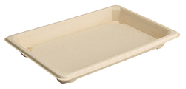 |
Bagasse Sushi Tray | 185 × 128 × 21 mm | 14 g | 50 pcs × 10 bags | 57 × 27.5 × 19.5 cm |
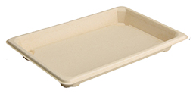 |
Bagasse Sushi Tray | 216 × 136 × 20 mm | 17 g | 50 pcs × 10 bags | 57.5 × 29.5 × 22.5 cm |
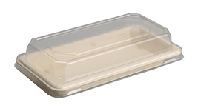 |
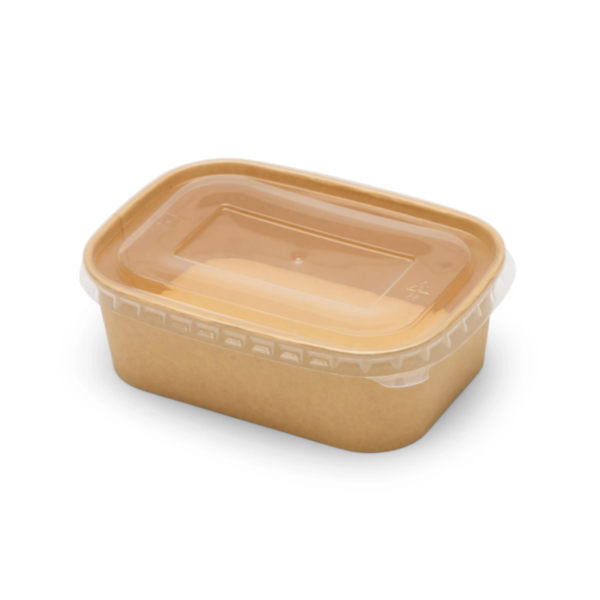
PET Lid for Bagasse Sushi Tray | 165 × 95 × 30 mm | 8 g | 50 pcs × 10 bags | 48 × 27 × 35 cm |
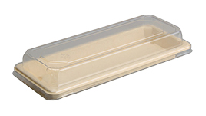 |
PET Lid for Bagasse Sushi Tray | 225 × 98 × 30 mm | 12 g | 50 pcs × 10 bags | 51 × 27 × 47 cm |
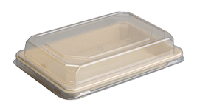 |
PET Lid for Bagasse Sushi Tray | 170 × 110 × 30 mm | 11 g | 50 pcs × 10 bags | 61 × 27 × 35 cm |
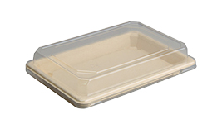 |
PET Lid for Bagasse Sushi Tray | 188 × 130 × 30 mm | 13 g | 50 pcs × 10 bags | 67 × 27 × 40 cm |
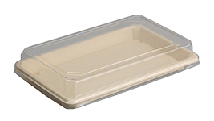 |
PET Lid for Bagasse Sushi Tray | 220 × 138 × 30 mm | 17 g | 50 pcs × 10 bags | 71 × 27 × 45 cm |
| Size | Typical Application |
| 164 × 89 × 21 mm | Individual sushi portions, small takeaway orders |
| 221 × 92 × 22 mm | Standard sushi combinations and restaurant servings |
| 165 × 115 × 21 mm | Medium sushi sets, rolls, and combination meals |
| 185 × 128 × 21 mm | Larger sushi meals and premium takeaway packaging |
| 216 × 136 × 20 mm | Family-size sushi sets, catering, and high-volume foodservice |
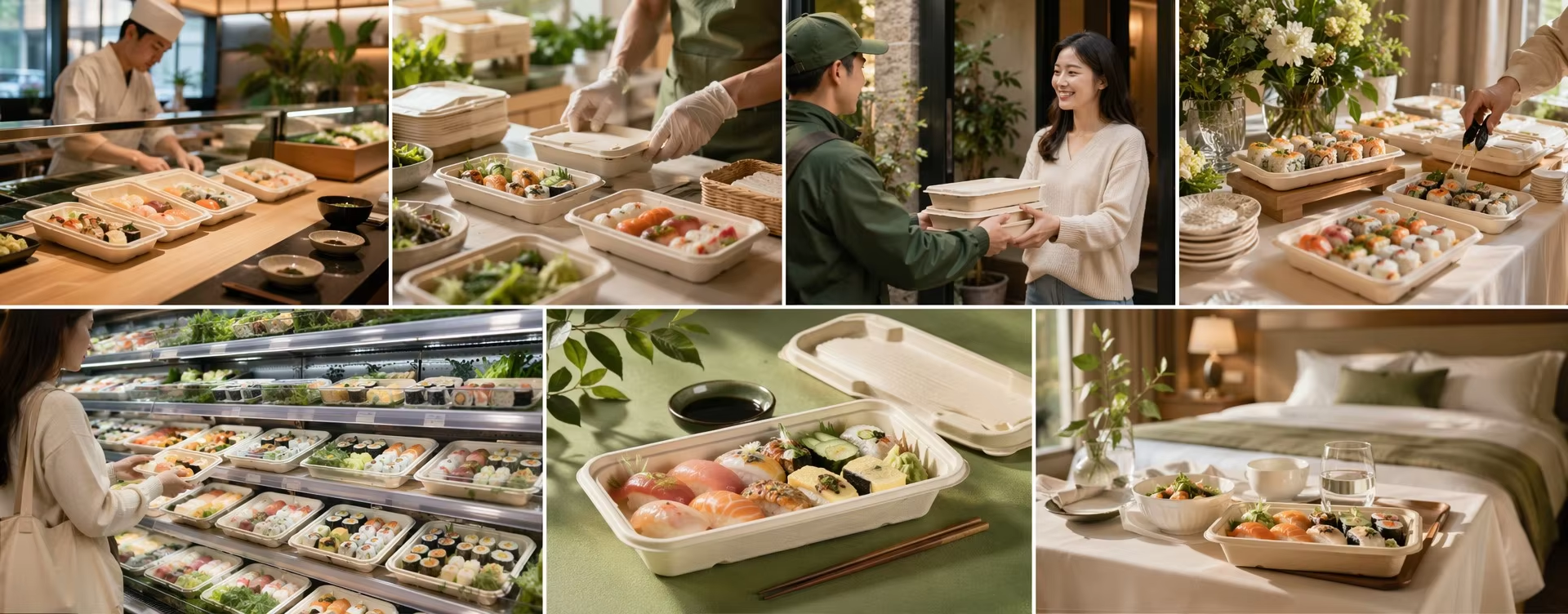
Bagasse sushi trays are widely used across the global foodservice industry because they combine practical food presentation, lightweight handling, and renewable material advantages.
Different businesses select sugarcane bagasse trays according to their specific operational requirements. A sushi restaurant may prioritize food presentation and customer experience, while a food delivery company may focus more on transportation stability and packaging efficiency.
Understanding application requirements helps buyers choose the most suitable tray structure, size, and material specification.
Sushi restaurants are one of the most common application areas for bagasse sushi trays.
For dine-in takeaway services and delivery orders, packaging must protect delicate food products while maintaining an attractive presentation. The natural fiber appearance of sugarcane bagasse trays provides a different visual experience compared with traditional plastic packaging and can support restaurants that emphasize sustainability.
Typical purchasing considerations include:
Recommended Products:
Rectangular White Bagasse Tray
Suitable for sushi combinations, rolls, sashimi sets, and takeaway meals.
Round Bagasse Tray
Suitable for special food arrangements and premium presentation formats.
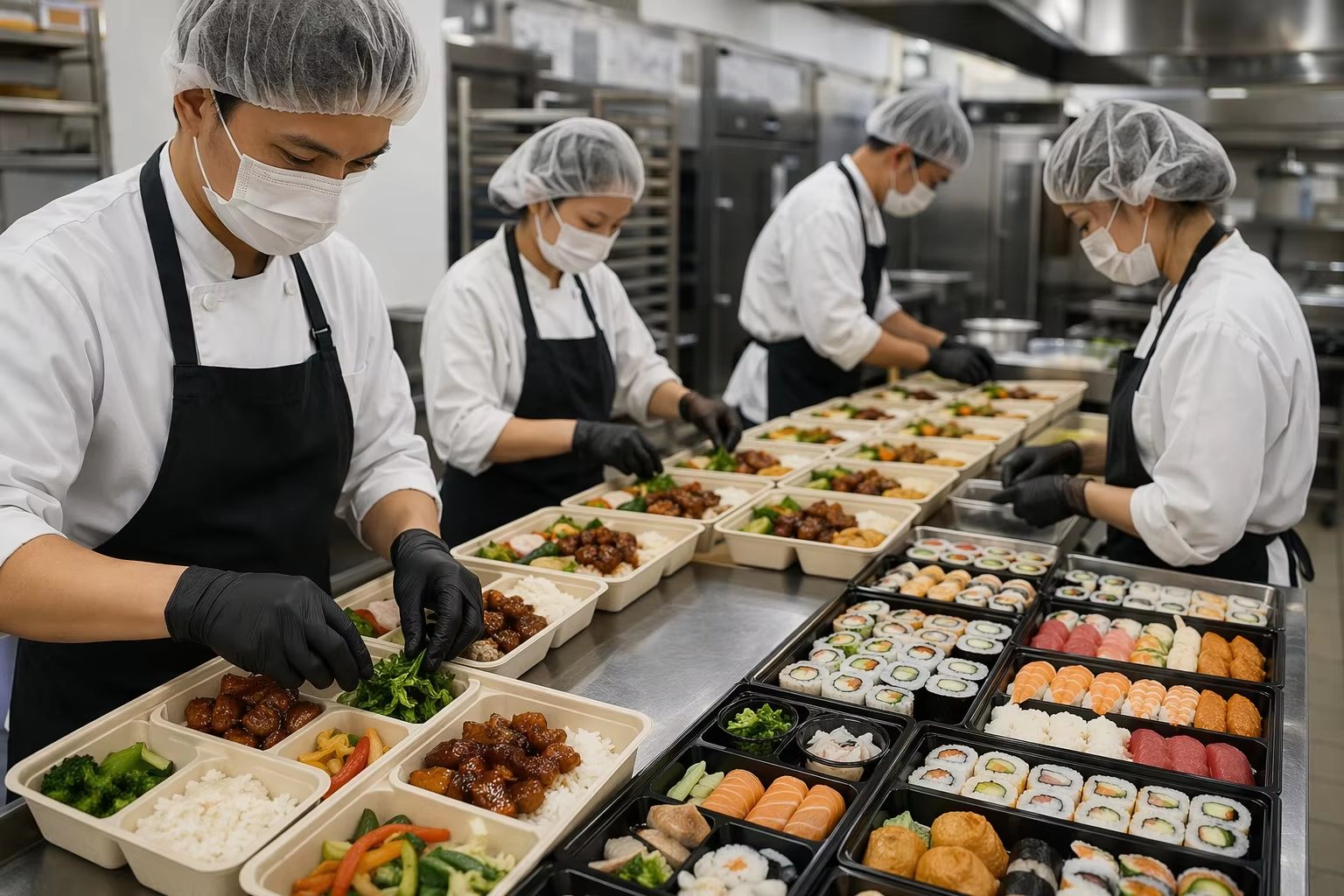
The expansion of takeaway dining has increased demand for reliable disposable food packaging.
Takeaway businesses require packaging that is easy to store, efficient to transport, and suitable for different food categories.
Bagasse food trays are commonly selected because they provide a lightweight structure while maintaining sufficient rigidity for daily foodservice operations.
For businesses offering sushi, rice meals, snacks, and combination dishes, different tray structures can improve packing efficiency.
Common requirements include:
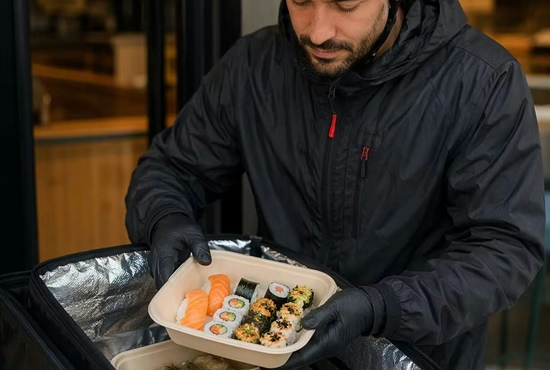
Food delivery has changed packaging requirements significantly.
During transportation, food packaging needs to maintain product appearance while reducing leakage risks and handling problems.
For sushi delivery businesses, selecting the correct bagasse sushi tray structure can improve customer experience by helping maintain organized food presentation.
Businesses typically evaluate:
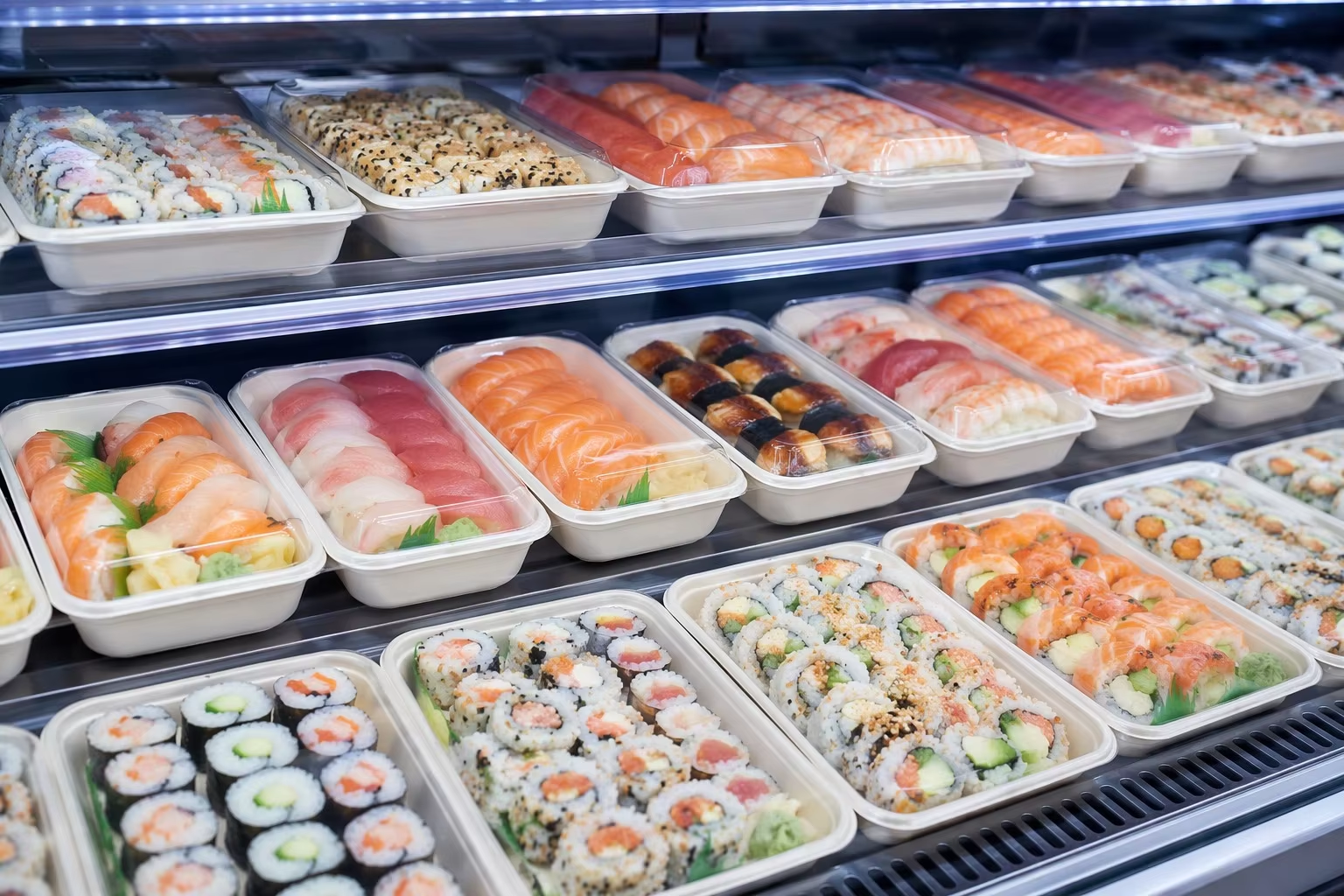
Supermarkets increasingly provide prepared meals, sushi boxes, and ready-to-eat food products.
Packaging in these environments must support shelf presentation while meeting customer expectations for convenient and responsible packaging.
Sugarcane bagasse trays can be used for:
For retail applications, buyers often consider:
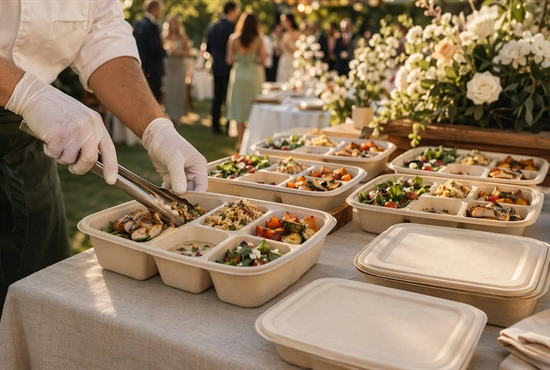
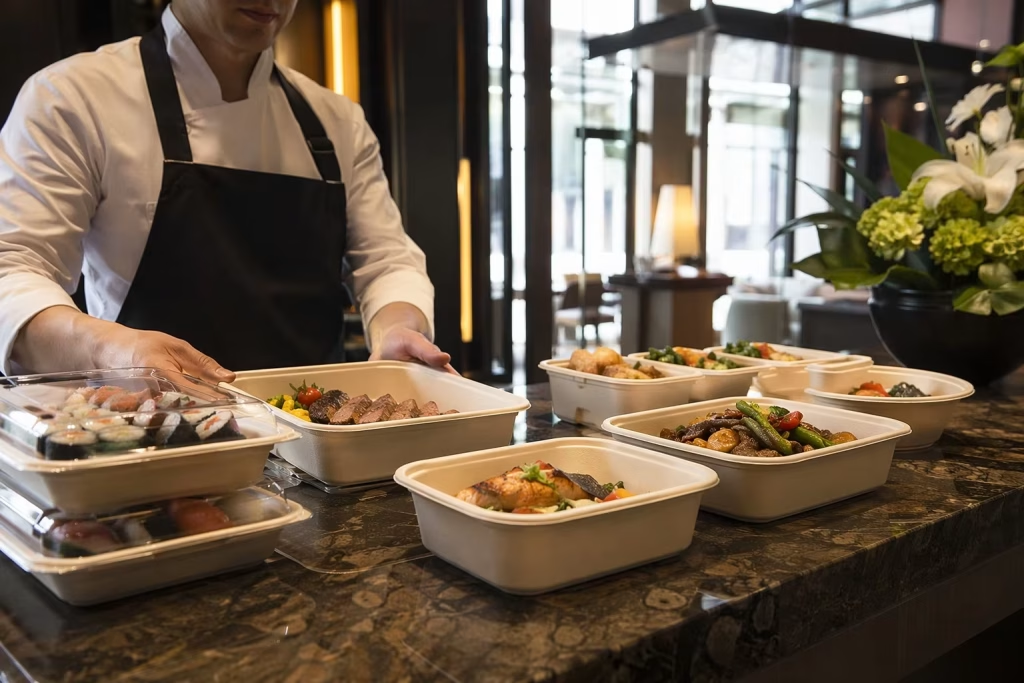
Hotels, resorts, and hospitality groups increasingly incorporate sustainable packaging into food service programs.
For breakfast services, events, room service, and catering operations, packaging quality contributes to the overall guest experience.
Bagasse food trays provide hospitality businesses with a natural-looking packaging option suitable for sustainable food programs.
Typical requirements include:
Application | Recommended Product | Main Purchasing Considerations |
Sushi Restaurants | Bagasse Sushi Tray | Food presentation, brand image, customer experience |
Takeaway Food | Bagasse Food Tray | Convenience, stacking, supply stability |
Food Delivery | Sugarcane Bagasse Tray | Transportation performance, durability |
Catering | Bagasse Meal Tray | Large-volume supply, portion separation |
Supermarkets | Rectangular White Bagasse Tray | Shelf appearance, product consistency |
Hospitality | Customized Bagasse Tray | Premium presentation, reliable supply |
Choosing the correct food tray requires balancing packaging performance, sustainability goals, customer expectations, and overall procurement cost.
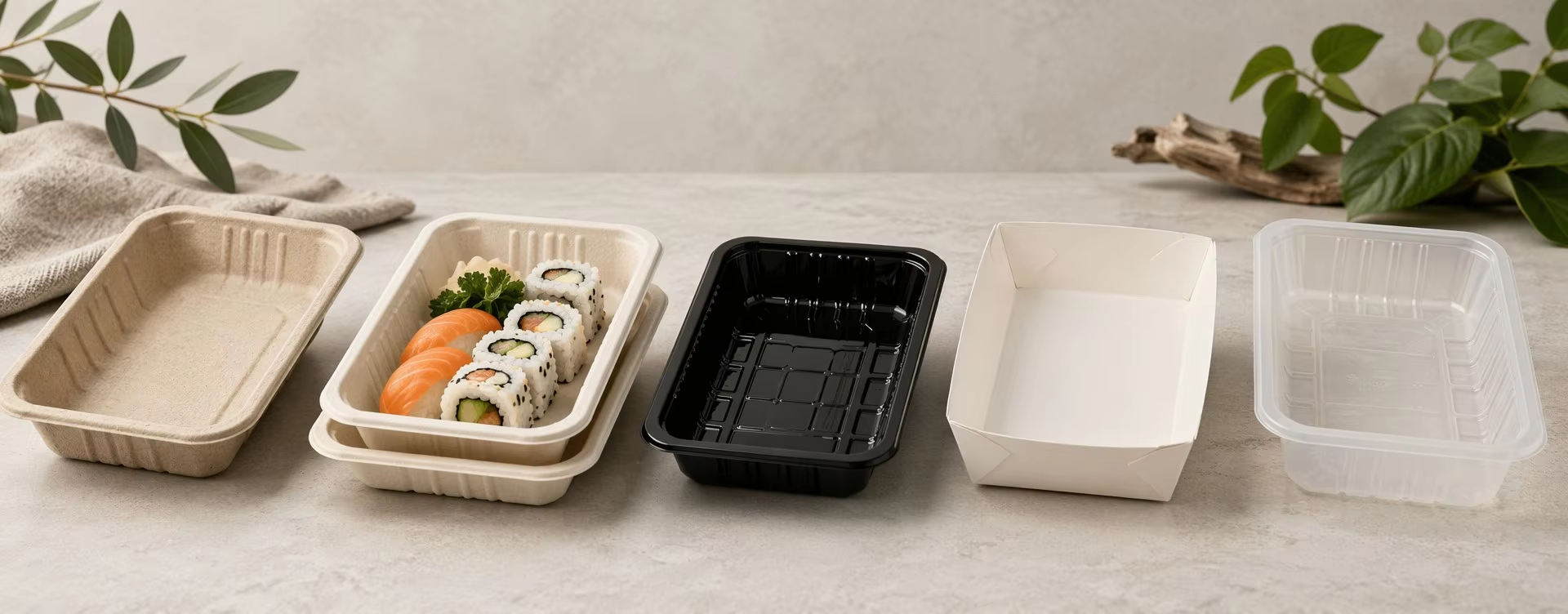
Different materials provide different advantages. A professional buyer should evaluate not only the material itself but also how the packaging performs in the intended application.
Factor | Bagasse Sushi Tray | Plastic Sushi Tray |
Primary Material | Sugarcane Bagasse Fiber | PP / PET Plastic |
Renewable Material | Excellent | Limited |
Natural Appearance | Excellent | Standard |
Transparency | No | Excellent |
Structural Strength | Good | Excellent |
Sustainability Image | Excellent | Lower |
Moisture Resistance | Good | Excellent |
Premium Natural Positioning | Excellent | Moderate |
Typical Users | Sustainable Brands, Sushi Restaurants, Catering | Retail Food, Supermarkets |
Plastic trays remain widely used because of their strength and transparency. However, bagasse sushi trays are increasingly selected by businesses prioritizing renewable materials and sustainable brand positioning.
Factor | Bagasse Sushi Tray | Paperboard Food Tray |
Material Source | Sugarcane Fiber | Paper Fiber |
Shape Stability | Good | Moderate |
Natural Appearance | Excellent | Good |
Food Presentation | Excellent | Moderate |
Moisture Performance | Better | Depends on Barrier |
Typical Applications | Sushi, Meals, Takeaway | Dry Food, Bakery, Snacks |
For food categories requiring stronger structure and a natural molded fiber appearance, sugarcane bagasse trays may provide a more suitable option.
Factor | Bagasse Sushi Tray | PLA Food Tray |
Material | Sugarcane Fiber | Plant-Based PLA |
Appearance | Natural Fiber | Plastic-Like Transparency |
Sustainability Positioning | Excellent | Excellent |
Product Visibility | Moderate | Excellent |
Typical Application | Sushi, Meals, Foodservice | Fresh Food, Retail Display |
The choice between these materials depends on whether the buyer prioritizes natural fiber appearance or transparent product visibility.
Bagasse sushi trays are primarily purchased by businesses that require reliable food packaging solutions rather than individual consumers. Different buyer groups have different purchasing priorities, including product quality, supply stability, customization capability, sustainability positioning, and overall procurement efficiency.
Understanding buyer requirements helps manufacturers provide more suitable packaging solutions and helps purchasing teams select the right supplier.

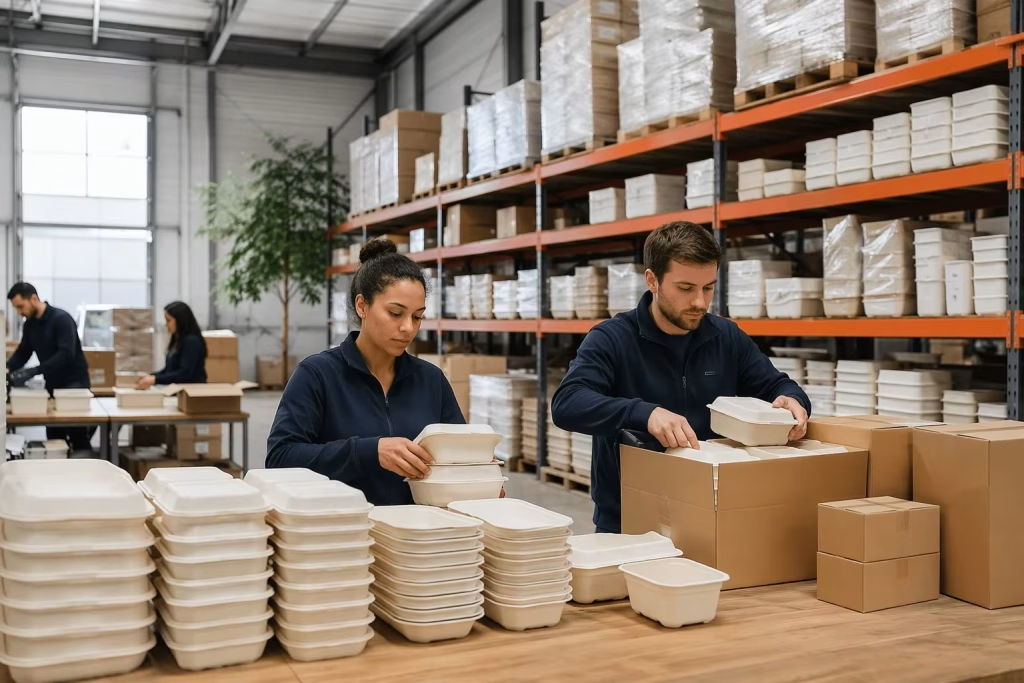
Importers purchase bagasse sushi trays in commercial quantities and distribute them through local packaging networks, foodservice channels, or retail markets.
Their primary concern is usually supply reliability. Because importers often serve multiple downstream customers, they require stable product specifications, consistent quality, competitive pricing, and dependable international logistics support.
For importers, an experienced bagasse sushi tray manufacturer should be able to provide:
A reliable manufacturing partner helps importers reduce supply chain risks and maintain stronger relationships with local customers.
Packaging distributors supply restaurants, catering companies, supermarkets, and foodservice businesses with a broad range of disposable packaging products.
Unlike individual buyers, distributors usually require multiple product categories and consistent inventory availability.
For distributors, sugarcane bagasse trays provide an opportunity to expand sustainable packaging portfolios and meet increasing customer demand for renewable material solutions.
Important purchasing considerations include:
Distributors often prefer manufacturers that can provide multiple related products, allowing them to simplify sourcing and improve operational efficiency.
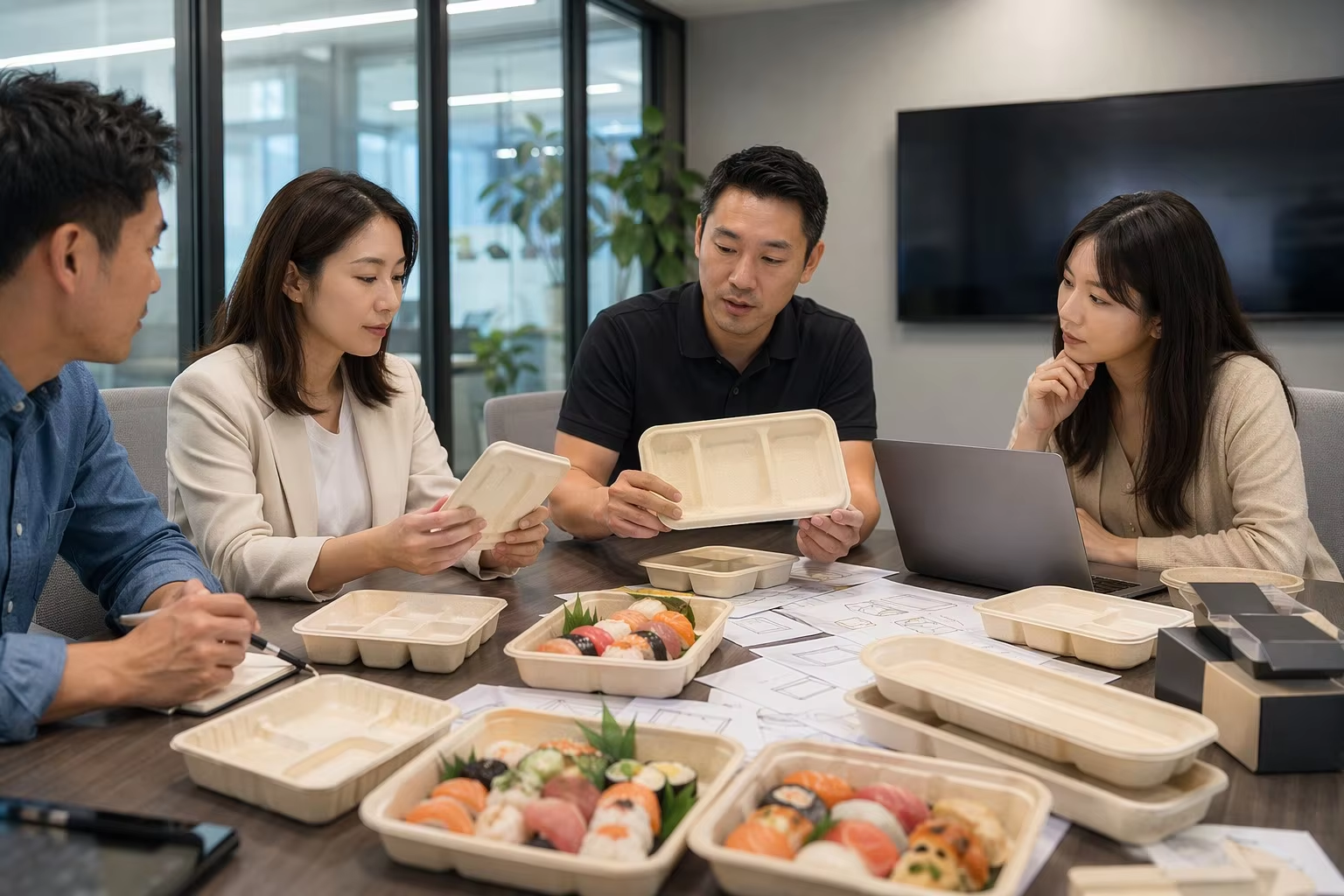
Sushi chains and restaurant groups often purchase packaging through centralized procurement systems.
For these buyers, packaging consistency is critical because customers expect the same food presentation experience across different locations.
A professional bagasse sushi tray supplier should support:
For growing restaurant groups, choosing the correct tray structure can also simplify inventory management and reduce packaging complexity.
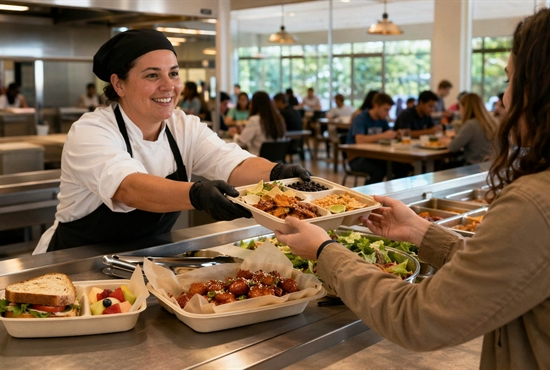
Foodservice suppliers provide packaging solutions to restaurants, hotels, schools, catering companies, and institutional customers.
These businesses usually require products that can support different food applications rather than a single packaging format.
For foodservice buyers, products such as:
can provide flexible solutions across different customer requirements.
Their purchasing priorities usually include:

Many food brands now view packaging as part of their overall customer experience.
For sushi brands, takeaway restaurants, and premium food companies, the tray influences how customers perceive the product before tasting the food.
A customized bagasse sushi tray can support brand differentiation through:
Brand owners usually evaluate suppliers based on both manufacturing capability and the ability to support long-term packaging development.
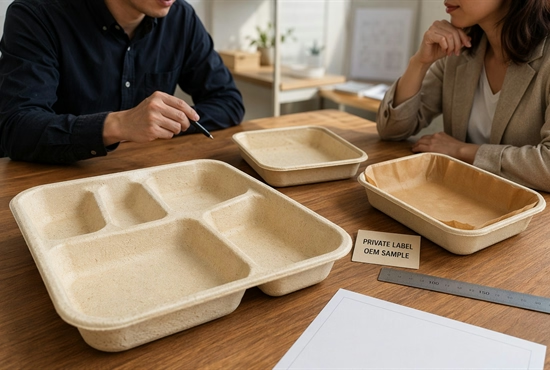
Private label companies develop packaging products under their own brands and require manufacturing partners capable of supporting customization.
For these buyers, confidentiality, production flexibility, and quality consistency are especially important.
A suitable manufacturer should provide:
Private-label cooperation allows businesses to develop differentiated sustainable packaging products for their own markets.
The suitability of a bagasse sushi tray depends on the product requirements, business model, market positioning, and packaging expectations.
The following guide helps buyers determine whether this product category matches their application.
Application | Recommended |
Sushi Takeaway | ✓ |
Sushi Delivery | ✓ |
Catering Food Service | ✓ |
Ready Meals | ✓ |
Bento Meals | ✓ |
Restaurant Food Packaging | ✓ |
Sustainable Food Brand Packaging | ✓ |
Supermarket Prepared Food | ✓ |
Dry Snack Packaging | ✓ |
Long-Term Liquid Storage | ✗ |
Industrial Chemical Applications | ✗ |
Applications Requiring Full Transparency | ✗ |
Bagasse sushi trays are particularly suitable for businesses that value renewable materials, natural appearance, and sustainable packaging positioning.
They are commonly selected by:
However, they may not be the ideal solution for every application.
Businesses requiring transparent product visibility, extremely high moisture resistance, or the lowest possible packaging cost may need to evaluate alternative materials.
Selecting packaging based on the complete application environment helps buyers achieve the right balance between performance, sustainability, and commercial value.
Choosing the correct bagasse sushi tray requires more than selecting a product size. Buyers should evaluate material specifications, application requirements, supplier capability, and long-term business needs.
A bagasse sushi tray is manufactured from processed sugarcane bagasse fiber, a renewable material created from sugarcane agricultural residue.
The material is converted into pulp and molded into different tray structures suitable for food packaging applications.
Yes.
Bagasse sushi trays are commonly used for takeaway sushi because they provide a stable structure for food presentation while supporting sustainable packaging goals.
The appropriate tray design depends on food quantity, transportation conditions, and customer expectations.
A standard bagasse tray provides a simple food holding structure, while a compartment design separates different food components.
For example, a bagasse 5 compartment biodegradable tray can help organize multiple food items within one package, making it suitable for combination meals and catering applications.
Yes.
DAILYECO supports customized solutions including:
Customization allows businesses to develop packaging solutions aligned with their operational needs and brand identity.
Yes.
Depending on the application requirements, buyers may choose options such as lined sugarcane trays when additional moisture protection is required.
The appropriate solution depends on food type, usage time, transportation conditions, and destination-market requirements.
Common specifications include:
Custom dimensions can be developed according to project requirements.
Providing complete project information helps manufacturers recommend suitable solutions.
Important information includes:
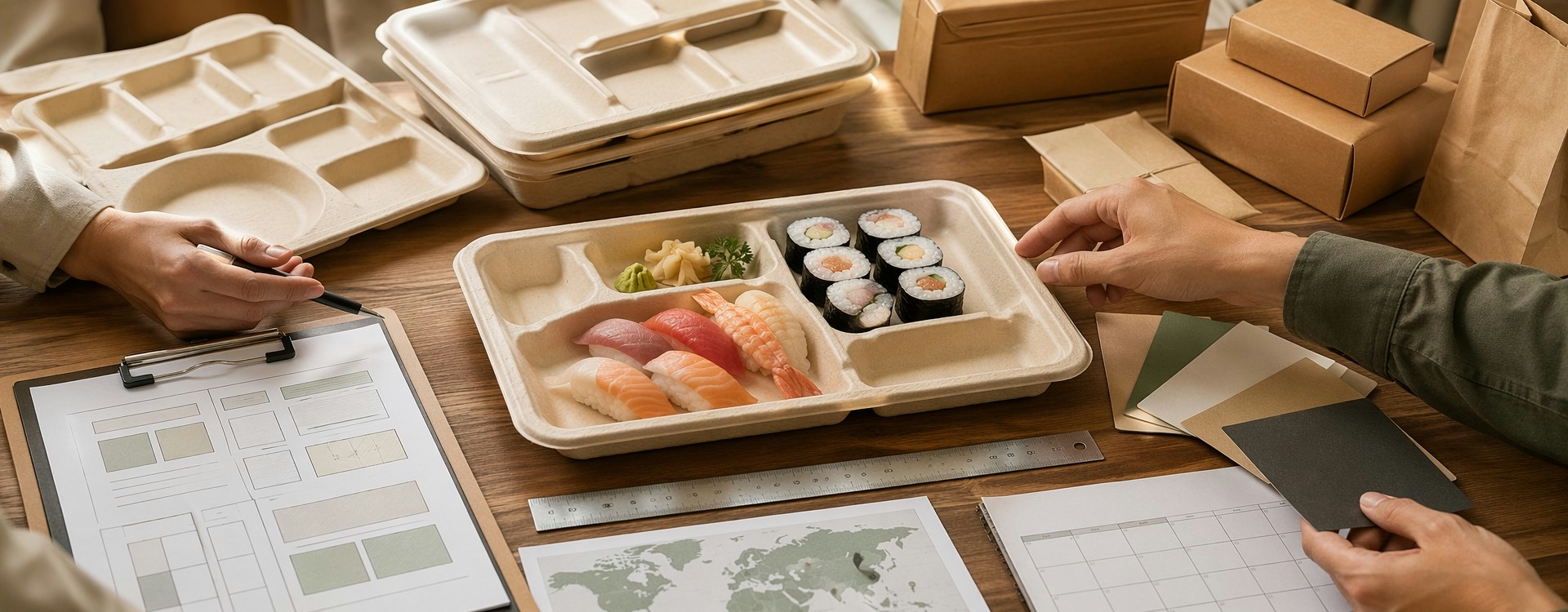
Although bagasse sushi trays are suitable for many sustainable food packaging applications, buyers should also understand their limitations.
Objective evaluation helps businesses select packaging solutions that match their actual requirements.
Some retail food applications require customers to directly see the product through the packaging.
In these situations, transparent plastic or PLA packaging may provide stronger visual product display.
For businesses focused only on minimizing packaging cost, traditional plastic trays may provide a lower initial purchase price.
However, buyers should also consider long-term factors such as brand positioning, customer expectations, and sustainability requirements.
Bagasse sushi trays are designed for foodservice and short-term food packaging applications.
For products requiring extended storage periods, liquid retention, or specialized barrier performance, alternative packaging solutions may be more suitable.
Plastic trays may provide higher rigidity in some applications requiring extreme mechanical strength.
The correct choice depends on transportation conditions, food weight, stacking requirements, and operational environment.
Selecting the right packaging solution requires balancing sustainability objectives with practical performance requirements.
A professional supplier should help buyers evaluate these factors before finalizing specifications.
Producing high-quality bagasse sushi trays requires precise control throughout the entire manufacturing process. Although the product is made from renewable sugarcane bagasse fiber, consistent quality depends on raw material preparation, pulp processing, molding accuracy, drying conditions, surface treatment, and quality inspection.
A professional bagasse sushi tray manufacturer should maintain stable production processes to ensure that every batch meets requirements for food packaging performance, dimensional consistency, and commercial reliability.
The typical manufacturing process includes the following stages.
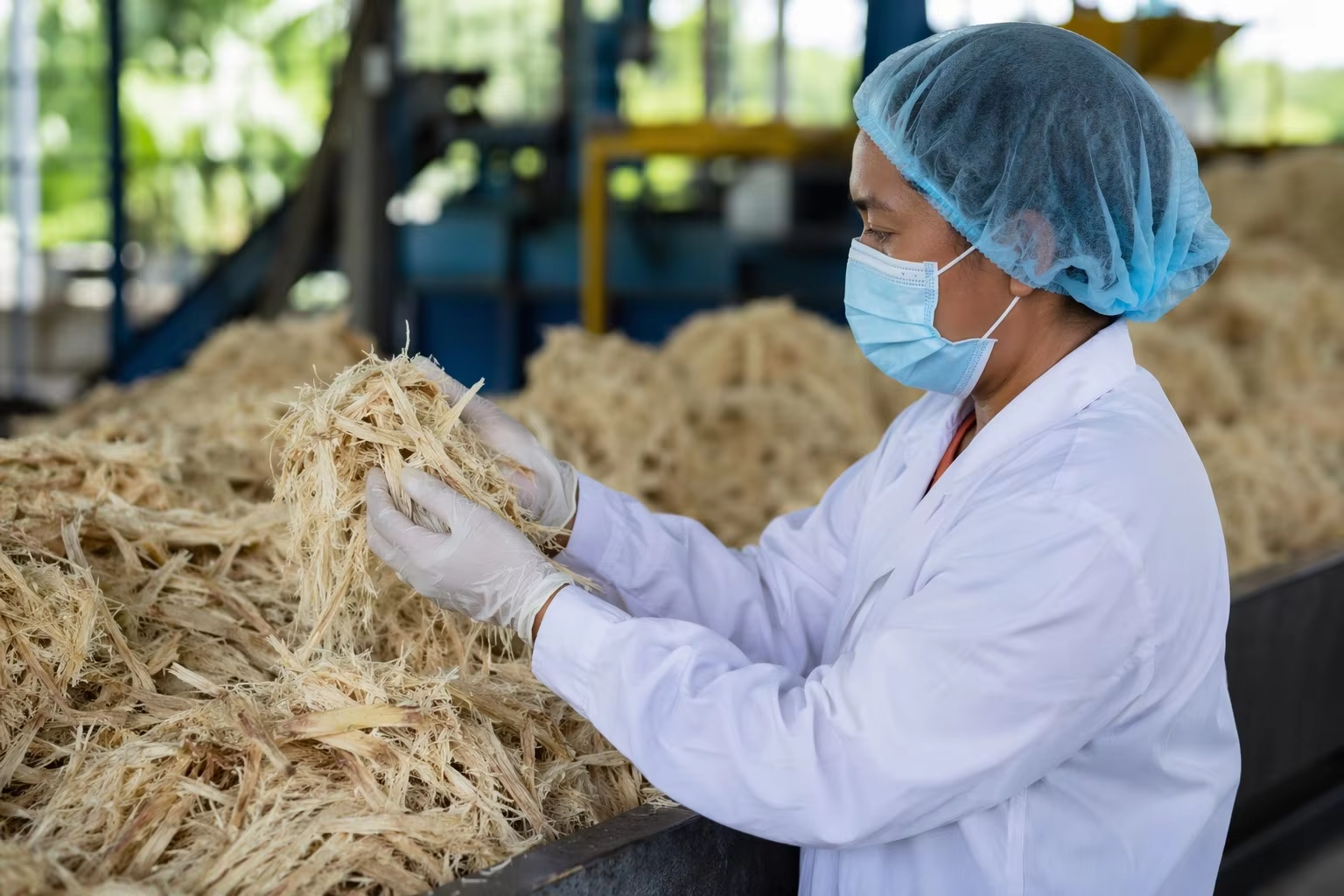
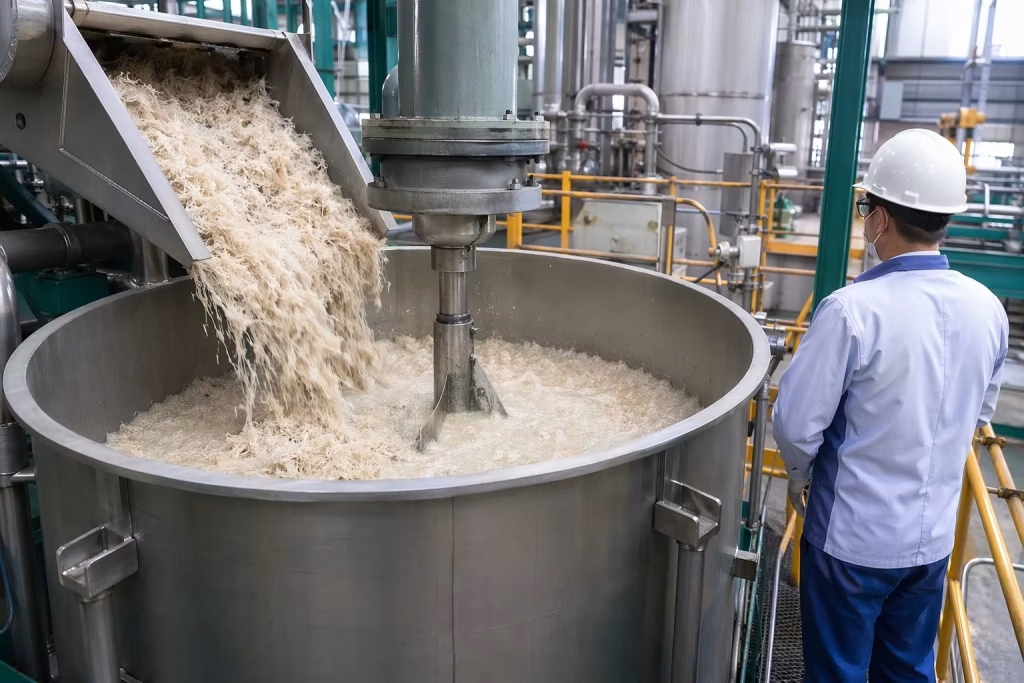
The production process begins with the preparation of sugarcane bagasse fiber.
Bagasse is collected after sugarcane juice extraction and undergoes cleaning and preparation procedures to remove unwanted materials. The quality of the raw material directly influences the final product’s appearance, strength, and consistency.
For professional food packaging production, manufacturers must carefully control:
High-quality raw materials provide the foundation for producing reliable bagasse food trays and other molded fiber packaging products.
After preparation, the sugarcane fiber is processed into pulp.
During this stage, the fiber structure is broken down and transformed into a suitable pulp mixture that can be molded into different tray shapes.
The pulping process influences:
A well-controlled pulp preparation process helps manufacturers produce consistent sugarcane bagasse trays with reliable performance.
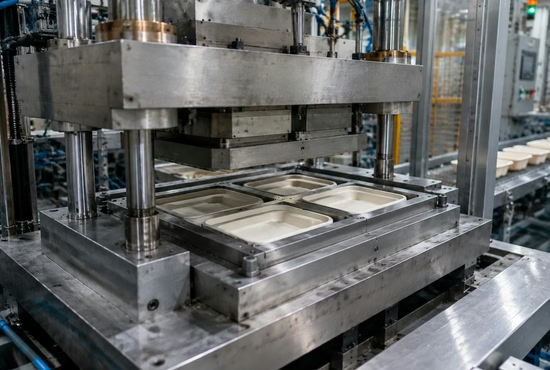
The prepared pulp is transferred into specially designed molds to create the required tray structure.
Through controlled temperature and pressure, the pulp forms into different designs, including:
The molding stage determines important product characteristics such as:
For businesses requiring customized packaging, mold design capability is an important factor when selecting a bagasse sushi tray manufacturer.
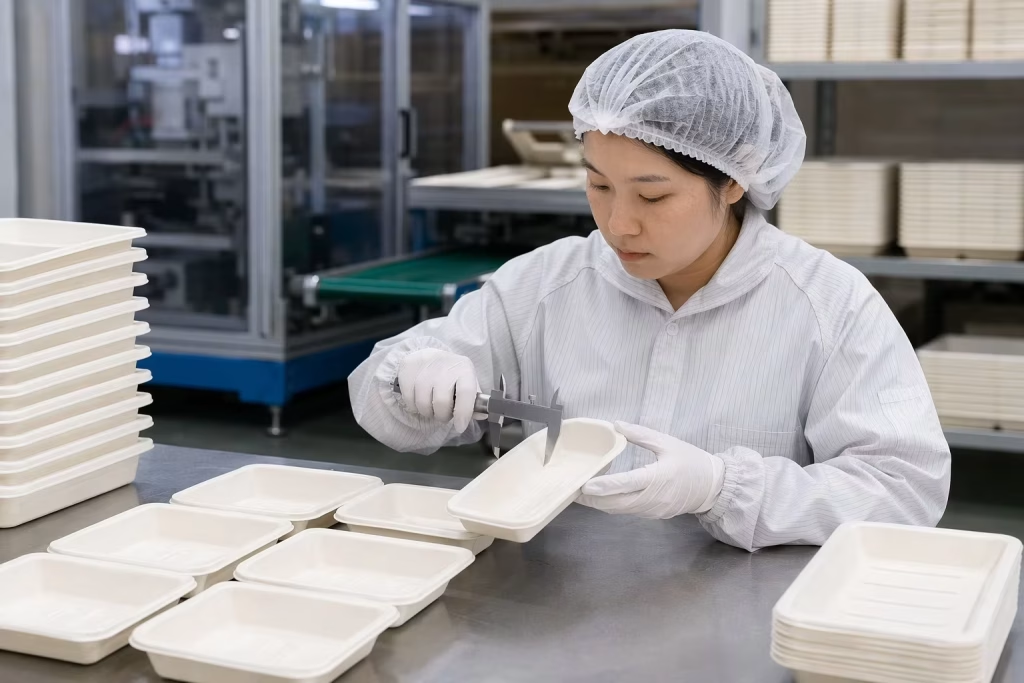
Quality control is an essential part of professional bagasse sushi tray manufacturing.
Before shipment, products should be inspected to ensure consistency in:
For international B2B customers, quality consistency is especially important because packaging performance directly affects downstream customer satisfaction.
A reliable manufacturer should maintain documented inspection procedures throughout production.
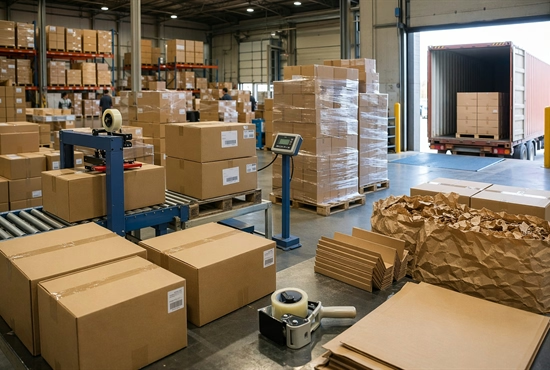
After inspection, finished bagasse sushi trays are packed according to customer requirements.
Export packaging is designed to protect products during international transportation while optimizing container space.
Professional packaging management includes:
For global buyers, manufacturing capability includes not only producing products but also ensuring reliable international supply.
Selecting a suitable supplier is one of the most important decisions when purchasing bagasse sushi trays.
A reliable manufacturer should provide more than product supply. The ideal partner should understand material characteristics, application requirements, customization needs, and international procurement processes.
The following factors can help buyers evaluate potential suppliers.
Experience in molded fiber packaging production is an important indicator of supplier capability.
A manufacturer with practical experience is usually better prepared to manage:
For buyers sourcing sugarcane bagasse trays, manufacturing experience can reduce project risks and improve long-term cooperation.
Production capability determines whether a supplier can support both current orders and future growth.
Buyers should evaluate:
A manufacturer with stable capacity can provide more reliable supply planning.
Quality control should cover the entire manufacturing process rather than only finished products.
Important quality management areas include:
Consistent quality is especially important for distributors and brand owners who need reliable performance across multiple shipments.
Different businesses have different packaging requirements.
A professional bagasse sushi tray manufacturer should support:
For example, a sushi chain may require a specific tray size, while a supermarket brand may need customized packaging for retail presentation.
International markets may have different requirements for food packaging products.
Before purchasing, buyers should confirm whether the supplier can support:
Compliance support helps reduce potential market-entry risks.
For international buyers, export capability is an important consideration.
Experienced suppliers understand:
A strong export background helps ensure smoother cooperation between manufacturers and global customers.
A professional supplier should provide technical recommendations instead of only accepting purchase orders.
Technical support may include:
This approach helps buyers select more suitable solutions and avoid unnecessary costs.
Before placing an order for bagasse sushi trays, buyers are encouraged to review the following checklist to help ensure that the selected products meet both commercial requirements and end-use application needs.
□ Tray Dimensions (Length, Width & Height)
□ Tray Capacity Requirements
□ Product Structure (Standard / Compartment Design)
□ Material Specification (Sugarcane Bagasse Fiber)
□ Food Application Requirements
□ Moisture & Oil Resistance Requirements
□ Tray Color Requirements
□ Custom Logo Printing Requirements
□ Private Label Packaging Requirements
□ Retail Packaging Requirements
□ Food Contact Compliance Requirements
□ Sustainability Requirements
□ PFAS-Free Requirements
□ MOQ Requirements
□ Production Lead Time
□ Packaging Specifications
□ Carton Marking Requirements
□ Shipping Method
□ Destination Market Regulations
□ Annual Purchasing Forecast
□ Sample Approval
□ Factory Audit Requirements
□ Documentation Requirements
□ Payment Terms
Completing this checklist before production begins can significantly reduce communication costs, improve quotation efficiency, and help both buyers and manufacturers clearly define project expectations from the beginning.
A successful bagasse sushi tray project depends not only on selecting the right product specifications, but also on establishing clear requirements regarding compliance, customization, packaging, logistics, and long-term supply planning between buyers and manufacturers.
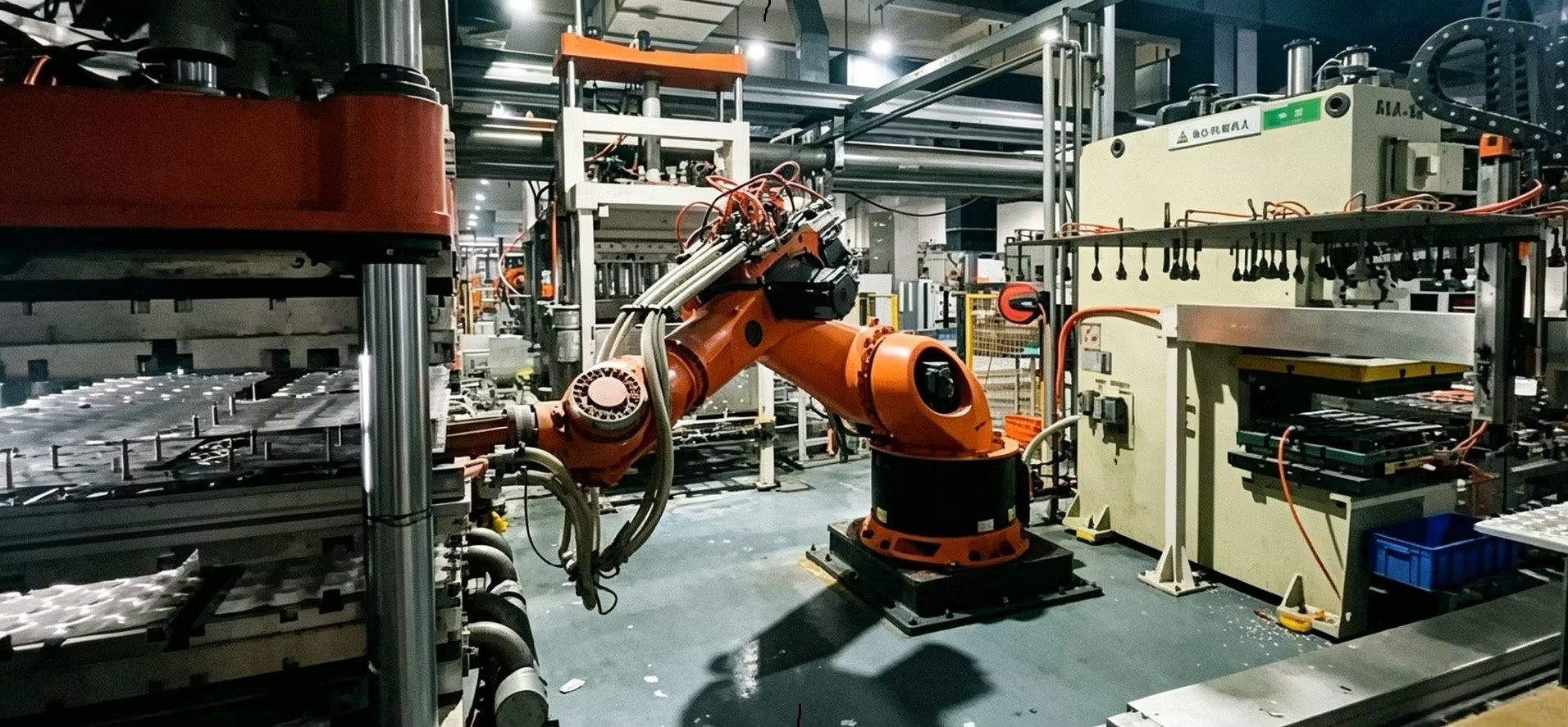
DAILYECO provides integrated sustainable food packaging solutions for importers, distributors, foodservice companies, restaurant groups, and global packaging brands.
As a professional bagasse sushi tray manufacturer, DAILYECO focuses on delivering reliable product quality, flexible customization, and stable international supply.
Our goal is not only to manufacture products but also to support customers throughout the entire packaging development process, from product selection and customization to production management and export delivery.
DAILYECO Manufacturing Facility | Description |
Employees | More than 1,000 employees |
Production Lines | Multiple molded fiber production lines for bagasse food packaging manufacturing,950kg final products one line one day |
Monthly Supply Capacity | 60 40HQ containers per month |
Tray Sizes | Bagasse Sushi Tray, PET Lid for Bagasse Sushi Tray standard specifications available |
Printing Capability | Flexographic & Offset Printing |
OEM | Logo, printing, packaging, carton customization |
ODM | Material, structure, artwork optimization |
Technical Support | Available |
Production MOQ | 50,000pcs per size for common MOQ, ready goods or special MOQ based on specification and customization |
Typical Lead Time | Approximately 30–35 days for new customized orders |
Different customers have different packaging requirements.
A sushi chain may require a customized tray size for a specific menu, while a distributor may need standardized products suitable for regional markets.
DAILYECO supports customization services including:
For customers developing new sustainable packaging programs, our team can provide recommendations based on food application, transportation requirements, and target-market expectations.
International food packaging markets often require different documentation standards.
DAILYECO supports customers with relevant documentation according to project requirements, including:
Proper documentation preparation helps customers reduce procurement risks and improve market entry efficiency.
Looking for food-contact test reports, composability certifications, PFAS test results, factory audit documentation, or responsible sourcing records?
DAILYECO works with global buyers including:
Our export experience allows us to support international projects through:
For buyers sourcing bagasse sushi trays internationally, supplier reliability is often as important as product specifications.
A successful packaging project requires effective communication throughout every stage.
DAILYECO supports customers with:
Our team works with customers to identify suitable solutions rather than simply supplying standard products.
Customer Background
A regional sushi restaurant group was expanding its takeaway business and wanted to replace conventional plastic packaging with a more sustainable packaging solution.
The company needed packaging that could maintain food presentation quality while supporting its sustainability positioning.
Challenge
The customer previously used multiple packaging suppliers with inconsistent tray specifications and different product quality standards.
This created several challenges:
DAILYECO Solution
DAILYECO evaluated the customer’s food categories, portion sizes, and transportation requirements.
Based on the application, we recommended a customized bagasse sushi tray solution with standardized dimensions and improved packaging efficiency.
The project included:
Results
The customer achieved more consistent packaging presentation across different locations while improving its sustainable packaging image.
The standardized tray solution also simplified purchasing management and improved supply efficiency.
Key Takeaways
Selecting the right packaging structure and manufacturing partner can provide greater long-term value than simply comparing unit prices.
Customer Background
A foodservice distributor wanted to expand its product portfolio with renewable packaging solutions for restaurants and catering customers.
Challenge
The distributor needed a supplier capable of providing stable quality across different product categories.
Managing multiple suppliers increased:
DAILYECO Solution
DAILYECO provided a broader sustainable packaging solution including:
Through product standardization and supply coordination, the customer improved sourcing efficiency.
Results
The distributor successfully expanded its sustainable packaging portfolio while reducing supplier management complexity.
Key Takeaways
A reliable manufacturing partner can help distributors improve product development efficiency and strengthen market competitiveness.
A bagasse sushi tray is a molded fiber food tray manufactured from processed sugarcane bagasse fiber.
It is designed for food applications such as sushi, takeaway meals, catering, and prepared foods.
Yes.
Professional manufacturers produce bagasse sushi trays using food-contact suitable materials and follow applicable quality control procedures according to market requirements.
The main difference is the material.
A bagasse tray is produced from renewable sugarcane fiber, while plastic trays are typically produced from petroleum-based materials.
Plastic trays often provide stronger transparency and moisture resistance, while sugarcane bagasse trays provide stronger sustainability positioning and natural appearance.
Yes.
They are widely used for takeaway sushi, meals, snacks, and catering applications.
The appropriate tray design depends on food type, transportation conditions, and packaging requirements.
Yes.
DAILYECO supports OEM and ODM customization including:
Lined sugarcane trays are fiber-based trays with additional barrier treatment designed for applications requiring improved moisture resistance.
They may be considered for specific food categories depending on customer requirements.
Available sizes depend on product design and application requirements.
Common options include:
Custom sizes can be developed according to project needs.
Buyers should provide:
Providing complete information helps manufacturers recommend suitable solutions.

Sourcing bagasse sushi trays requires more than comparing product prices.
Professional buyers should evaluate material quality, supplier capability, application suitability, and long-term supply reliability.
Based on experience supporting international packaging customers, the following insights help buyers avoid common purchasing mistakes.
Why It Matters
Different bagasse sushi trays may have different fiber quality, thickness, dimensions, packaging methods, and production standards.
A lower quotation does not always represent lower total purchasing cost.
DAILYECO Expert Advice
Always compare complete product specifications before making purchasing decisions.
Evaluate:
Why It Matters
Different food applications require different tray designs.
A sushi combination meal may require a different structure from a catering meal or snack application.
DAILYECO Expert Advice
Choose tray structures according to:
Why It Matters
Different foods create different moisture conditions.
Some applications may require additional barrier solutions.
DAILYECO Expert Advice
Evaluate whether standard bagasse trays or lined sugarcane trays are more suitable.
Why It Matters
The lowest purchase price may create additional costs through:
DAILYECO Expert Advice
Evaluate total procurement value rather than only unit cost.
Why It Matters
A supplier should provide more than products.
Manufacturing experience, technical support, and communication ability directly influence project success.
DAILYECO Expert Advice
Evaluate:
Why It Matters
Too many tray specifications increase inventory complexity.
DAILYECO Expert Advice
Develop a practical product portfolio based on the majority of applications.
Why It Matters
Packaging configuration influences storage and transportation costs.
DAILYECO Expert Advice
Consider:
Why It Matters
Seasonal demand may influence production schedules.
DAILYECO Expert Advice
Share purchasing forecasts early whenever possible.
Why It Matters
Experienced manufacturers can provide valuable technical recommendations.
DAILYECO Expert Advice
Select partners who can support product improvement and long-term development.
Why It Matters
Incomplete requirements often create unnecessary communication and delays.
DAILYECO Expert Advice
Prepare:
Successful sustainable packaging projects are built through informed decisions.
By evaluating material performance, product suitability, supplier capability, and long-term cooperation potential, buyers can reduce procurement risks and create stronger packaging solutions.
DAILYECO supports customers by combining manufacturing capability, technical knowledge, and practical packaging experience.
Lillian Guo
Food Packaging Compliance Manager
10+ Years of Experience
Specialized in:
Discover more sustainable food packaging solutions from DAILYECO.
Looking for a reliable Bagasse Sushi Tray Manufacturer?
Our packaging specialists are ready to support your project with:
✓ Product Catalog
✓ Free Product Consultation
✓ OEM & ODM Development
✓ Custom Packaging Solutions
✓ Sample Requests
✓ Compliance Guidance
✓ Packaging Optimization
✓ Global Export Support
Whether you are sourcing for a sushi restaurant group, foodservice distributor, importer, hospitality company, or private-label packaging brand, DAILYECO can help you select the most suitable bagasse sushi tray solution.