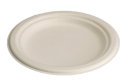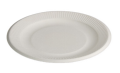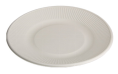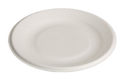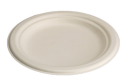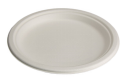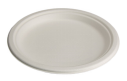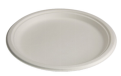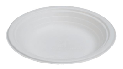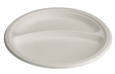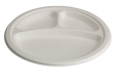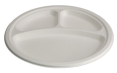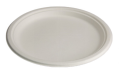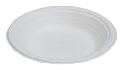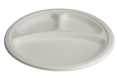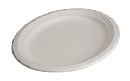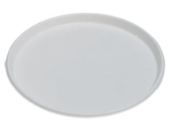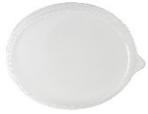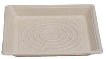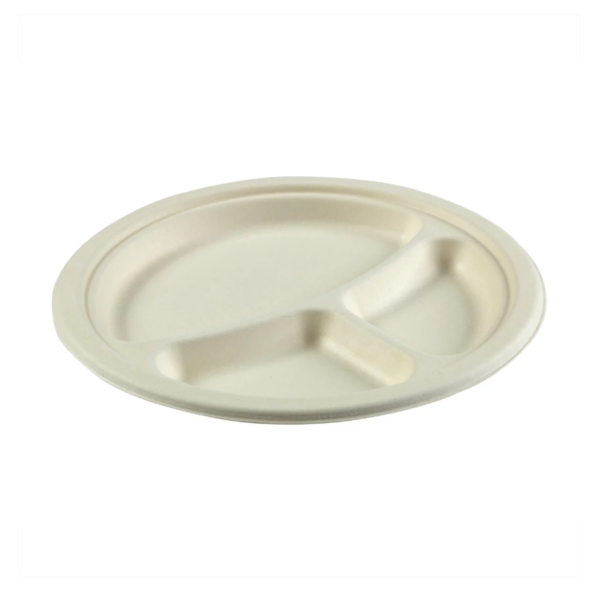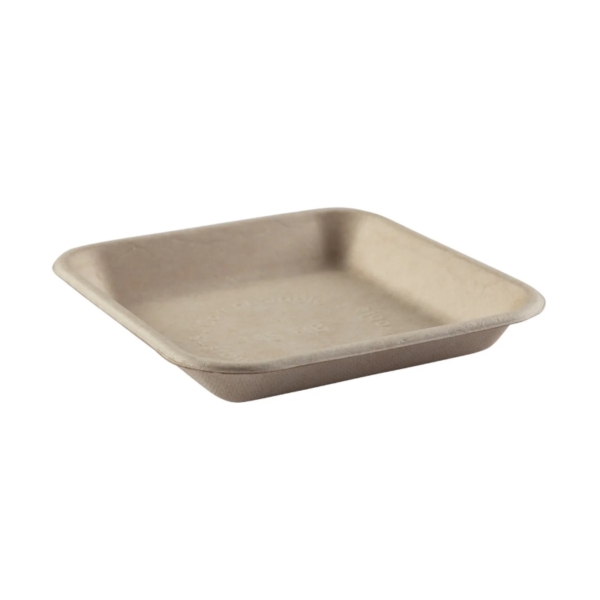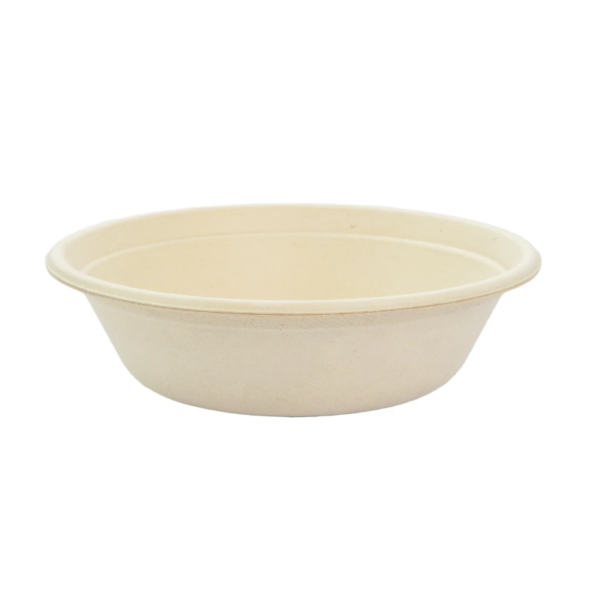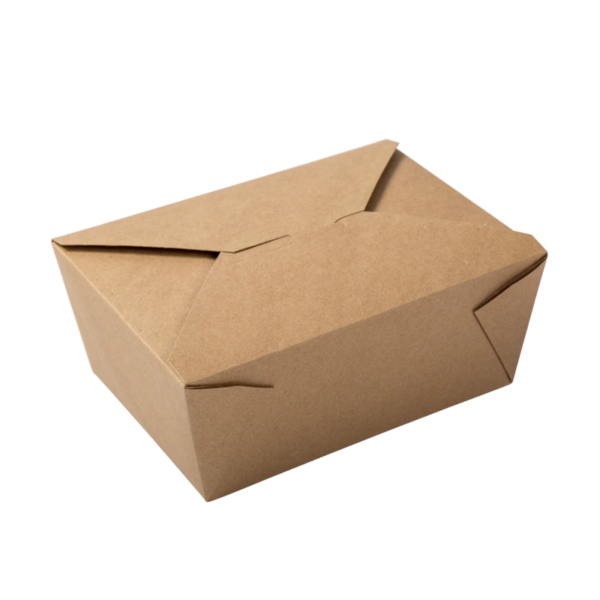
Item | Information |
Product Name | Compostable Paper Plates |
Material | Sugarcane Bagasse, Molded Fiber, Food-Grade Plant Fiber |
Product Type | Compostable Disposable Plates |
Typical Sizes | 6″ · 7″ · 8″ · 9″ · 10″ · 10.5″ · 12″ · Square: 7″ · 9″ · 10″ · Rectangular: 6″ × 4″ · 8″ × 5″ · 9″ × 6″ · Hot Dog: 7″ · 8″ |
Applications | Restaurants, Cafés, Catering, Hotels, Schools, Supermarkets, Food Delivery, Parties, Events |
Food Types | Hot Meals, Cold Foods, Salads, Desserts, BBQ, Fast Food |
Structure | Heavy Duty Molded Fiber Construction |
Surface Options | Natural, White, Smooth Finish |
Customization | OEM & ODM Available |
Printing | Custom Logo & Private Label Packaging |
Features | Oil Resistant, Water Resistant, Microwave Safe, Freezer Safe |
Supply Type | Manufacturer & Supply Chain Partner |
Export Markets | North America, Europe, Australia, Middle East, Asia |
Compostable paper plates are eco-friendly disposable food packaging products manufactured from renewable plant fibers such as sugarcane bagasse. Designed to replace conventional plastic and foam plates, they provide excellent strength, grease resistance, and food-contact safety while supporting sustainable foodservice operations.
Compared with traditional disposable plastic or foam plates, compostable paper plates offer superior environmental performance, excellent rigidity, and a natural premium appearance. They are widely used by restaurants, catering companies, cafés, hotels, supermarkets, foodservice distributors, and takeaway businesses seeking reliable and environmentally responsible disposable tableware.
DAILYECO supplies both self-manufactured and supply-chain-supported compostable paper plates, including bagasse plates, sugarcane plates, heavy-duty compostable plates, compartment plates, OEM production, private-label branding, custom packaging, and global export services for professional B2B customers.
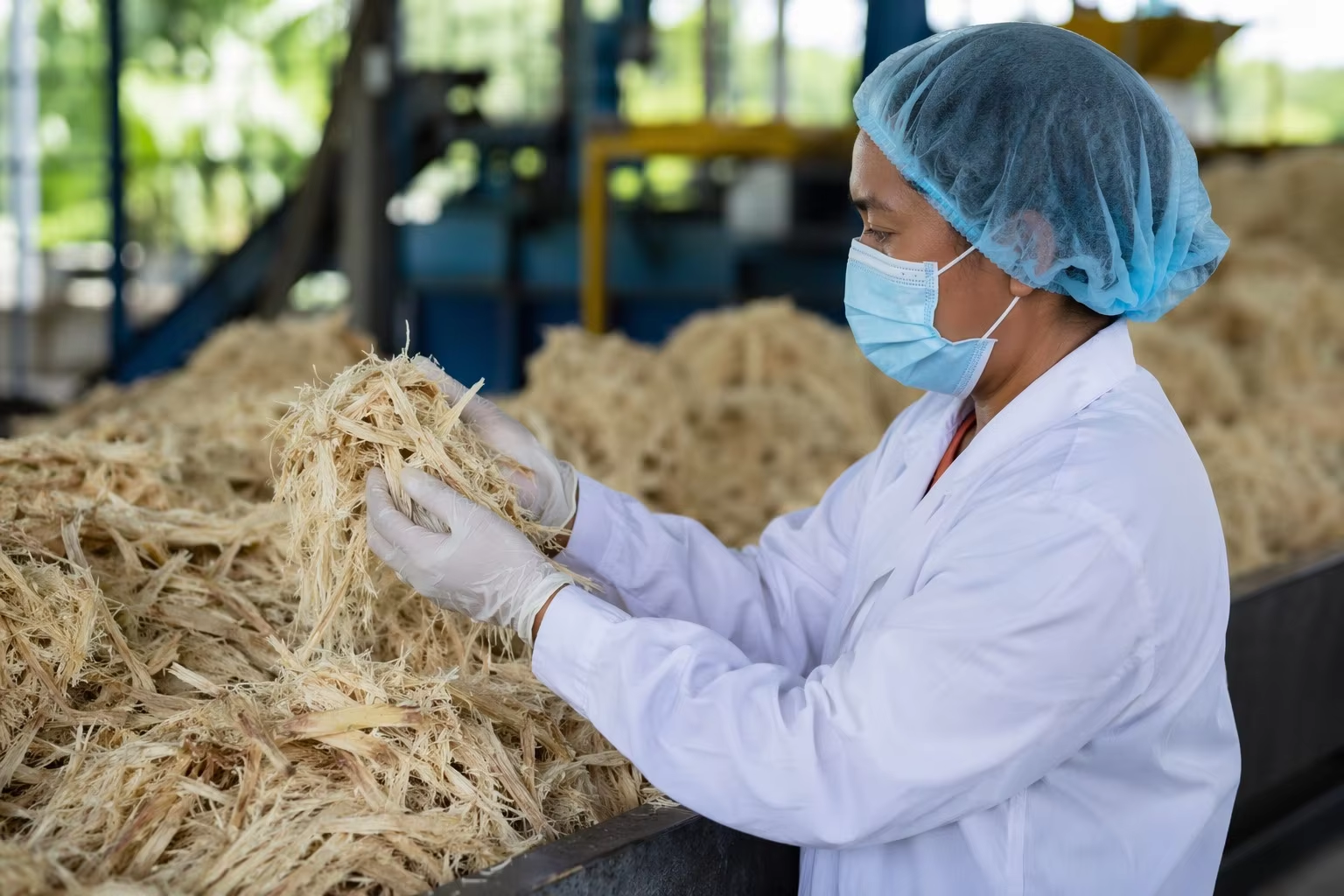
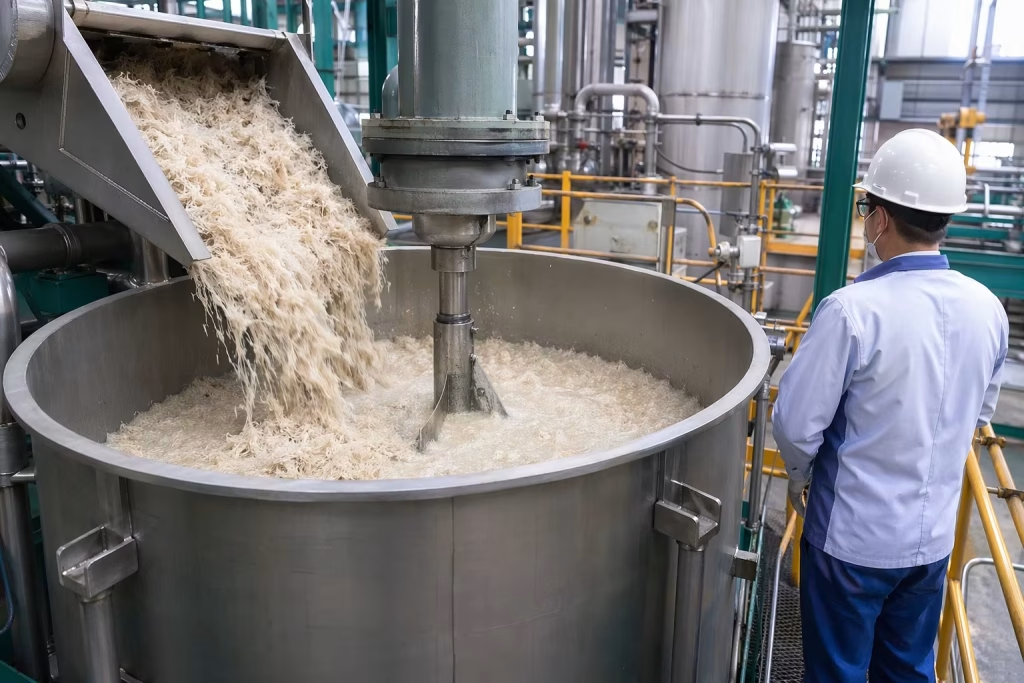
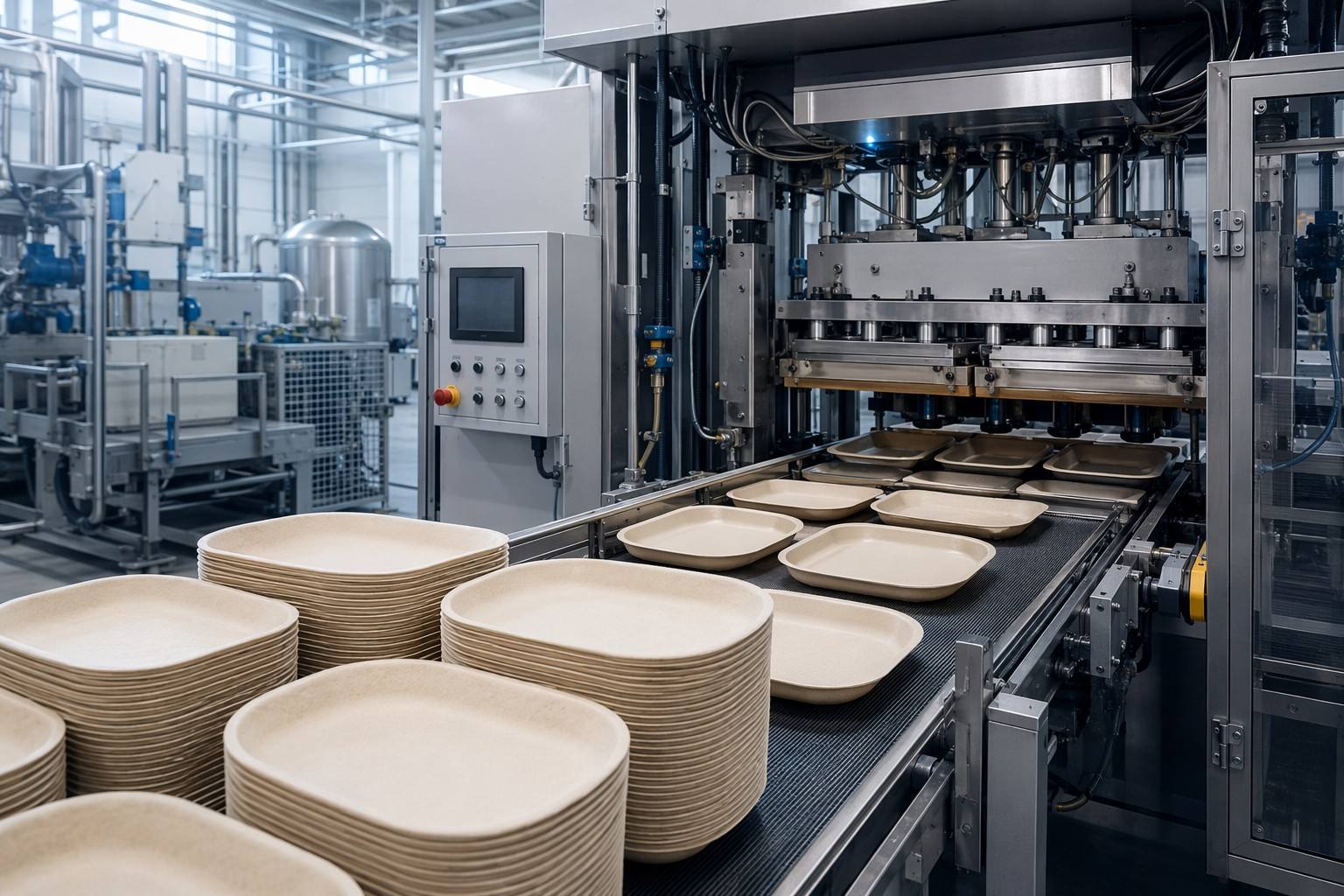
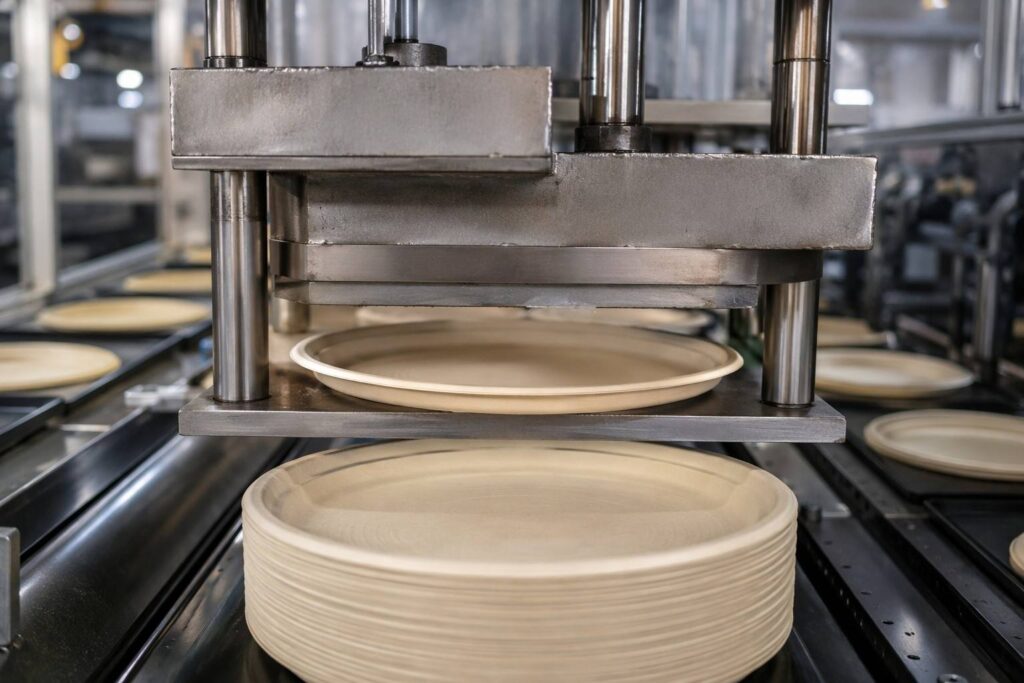
Compostable paper plates are disposable foodservice plates manufactured primarily from renewable plant fibers rather than petroleum-based plastics. The most common raw material is sugarcane bagasse, the natural fiber remaining after sugar extraction, which is transformed into durable molded fiber tableware through high-pressure and high-temperature production processes.
Unlike conventional plastic plates, bagasse paper plates are produced from agricultural by-products that would otherwise become waste. This manufacturing approach helps maximize resource utilization while reducing dependence on virgin plastic materials.
Depending on customer requirements, production specifications, and destination market regulations, compostable paper plates can be manufactured in various sizes, shapes, colors, and thicknesses. Products may include round compostable paper plates, square compostable paper plates, compartment plates, heavy-duty disposable plates, and custom-developed solutions for commercial foodservice applications.
Because molded fiber construction provides excellent rigidity and resistance to oil and moisture, these plates perform reliably when serving hot meals, grilled foods, fried foods, salads, desserts, pasta, rice dishes, and takeaway meals. They are suitable for microwave reheating and freezer storage, making them one of the most versatile disposable tableware solutions available today.
Today, compostable paper plates are widely used by restaurants, catering companies, food delivery platforms, supermarkets, institutional dining facilities, schools, hospitality businesses, and event organizers worldwide. Their combination of sustainability, strength, food safety, and customization flexibility has made them one of the fastest-growing categories in sustainable food packaging.
For businesses looking to improve sustainability while maintaining excellent food presentation and operational efficiency, compostable paper plates provide a practical, scalable, and commercially proven packaging solution.
Professional buyers typically evaluate compostable paper plates based on structural performance, food application compatibility, material options, compliance support, operational efficiency, and long-term supply capability rather than marketing claims alone.
The following table summarizes the key product characteristics commonly considered when sourcing compostable paper plates for commercial foodservice and retail packaging programs.
Feature | Procurement Information | Buyer Notes |
Material Construction | Manufactured primarily from molded sugarcane bagasse and other renewable plant fibers. Alternative fiber blends may be available depending on product specifications and project requirements. | Buyers should confirm the exact material composition, basis weight, and fiber formulation for each SKU, particularly when market-specific documentation or certifications are required. |
Structural Performance | Designed to support a wide range of foodservice applications, including hot meals, cold dishes, takeaway foods, and buffet service. Product rigidity varies according to plate size and construction. | Performance should be evaluated using the intended food type, serving weight, and service duration rather than relying on product descriptions alone. |
Oil & Grease Resistance | Suitable for serving foods containing oils, sauces, or moderate grease under normal commercial foodservice conditions. | Buyers serving high-fat or high-temperature foods should request samples for application-specific evaluation before mass purchasing. |
Moisture Resistance | Designed for foods with typical moisture content while maintaining structural integrity during normal serving periods. | Holding time, food temperature, and storage conditions may affect product performance and should be verified for the intended application. |
Microwave & Freezer Compatibility | Many product specifications are suitable for microwave reheating and freezer storage under normal usage conditions. | Compatibility should be confirmed for each individual product specification and validated according to customer requirements. |
Food Contact Documentation | Products may be supported by food-contact documentation appropriate to the destination market and agreed project scope. | Required documentation should be confirmed before production to ensure compliance with customer and regulatory requirements. |
Product Configuration | Available in multiple sizes, shapes, compartment designs, and depth options to support different meal formats and serving requirements. | Selecting standardized specifications across multiple product lines can simplify purchasing, warehousing, and inventory management. |
Customization Capability | OEM and ODM services may include custom dimensions, embossed logos, private-label packaging, retail-ready cartons, and tailored packaging configurations. | Custom projects should be reviewed according to minimum order quantity, artwork approval, production lead time, and packaging specifications. |
Supply Capability | Supports recurring purchasing programs for distributors, restaurant chains, wholesalers, supermarkets, catering suppliers, and private-label brands. | Long-term buyers should evaluate manufacturing consistency, production planning, quality control systems, and supply continuity in addition to product specifications. |
Sustainability Options | Material solutions may be selected according to local composting infrastructure, recycling systems, customer sustainability objectives, and destination-market expectations. | Environmental claims should always correspond to the specific product supplied and be supported by applicable documentation where required. |
Experienced buyers generally evaluate compostable paper plates as part of an overall foodservice packaging program rather than as standalone products. In addition to size and appearance, procurement decisions should consider food application, material performance, destination-market requirements, documentation, supply continuity, and customization capability.
For long-term purchasing programs, standardizing a core range of plate specifications across restaurants, catering operations, and distribution channels can simplify inventory management, improve purchasing efficiency, reduce logistics complexity, and support consistent product performance throughout the

The rapid growth of sustainable foodservice, takeaway dining, and environmentally responsible packaging has significantly increased global demand for compostable paper plates.
Governments, foodservice operators, and consumers are placing greater emphasis on reducing plastic waste and adopting renewable packaging materials. As a result, restaurants, cafés, catering companies, supermarkets, and hospitality businesses are increasingly replacing traditional plastic and foam tableware with bagasse plates and other compostable disposable plates.
Customer expectations have also evolved. Modern consumers increasingly prefer food packaging that not only performs well but also reflects a brand’s environmental commitment. The natural appearance of sugarcane plates helps businesses communicate sustainability while maintaining a premium dining experience.
Advances in molded fiber manufacturing technology have further improved product strength, dimensional consistency, grease resistance, and production efficiency. Today’s heavy-duty compostable paper plates provide excellent performance for hot meals, cold foods, oily dishes, and takeaway packaging while supporting large-scale commercial operations.
For importers, distributors, wholesalers, restaurant chains, and food packaging brands, compostable paper plates continue to represent one of the fastest-growing product categories within the global sustainable food packaging industry.
Growing environmental awareness, changing foodservice consumption habits, and international plastic reduction initiatives continue to accelerate demand for compostable paper plates across global markets.
Disposable tableware is evolving from a simple serving accessory into an important part of sustainability strategy, brand positioning, regulatory compliance, and customer experience.
For manufacturers, distributors, retailers, and brand owners, understanding these market trends helps guide more informed purchasing decisions and long-term sourcing strategies.

The global foodservice industry is experiencing a significant shift toward sustainable disposable packaging. As governments introduce stricter regulations on single-use plastics and consumers become more environmentally conscious, compostable paper plates have become one of the fastest-growing categories in disposable tableware.
Restaurants, cafés, hotels, catering companies, supermarkets, and food delivery platforms are increasingly replacing conventional plastic and foam plates with bagasse plates and sugarcane plates that offer both reliable performance and a lower environmental impact.
At the same time, food packaging has become an extension of brand identity. Businesses are looking for packaging solutions that not only protect food during serving and transportation but also demonstrate their commitment to sustainability and responsible sourcing.
This market evolution has contributed to the rapid adoption of heavy-duty compostable paper plates, which combine durability, food-contact safety, and premium presentation while supporting long-term environmental goals.
Growing Demand for Sustainable Food Packaging
Sustainability has become a key purchasing factor across the global foodservice industry. More restaurants, retailers, and distributors are actively replacing traditional disposable tableware with compostable paper plates manufactured from renewable plant fibers.
Expansion of Takeaway and Food Delivery
The continued growth of takeaway dining and food delivery services has increased demand for disposable plates that maintain their strength during transportation. Buyers now prioritize products with excellent grease resistance, rigidity, and leak prevention for commercial foodservice applications.
Premium Food Presentation
Disposable tableware is no longer viewed as a low-value product. Many restaurant chains and catering companies now select eco friendly paper plates with premium finishes and consistent quality to enhance customer experience and strengthen brand perception.
Customization Is Becoming Standard
Private-label packaging and branded disposable tableware continue to grow worldwide. Importers and distributors increasingly require custom compostable paper plates, OEM manufacturing, customized packaging, and retail-ready solutions to differentiate themselves in competitive markets.
For many foodservice businesses, disposable tableware is one of the first physical touchpoints customers experience.
High-quality compostable paper plates with consistent dimensions, clean molded surfaces, and attractive natural finishes help reinforce a professional brand image while supporting sustainability messaging.
Many international restaurant chains also use customized packaging to promote seasonal campaigns, strengthen brand recognition, and create a more memorable dining experience.
As a result, packaging has evolved from a simple serving product into an important marketing asset that contributes to customer satisfaction and brand value.
Different regions prioritize different purchasing considerations when sourcing compostable paper plates.
Region | Typical Market Focus |
North America | Product durability, food safety, operational efficiency |
Europe | Compostability, regulatory compliance, plastic reduction |
Australia & New Zealand | Sustainable materials, premium food presentation |
Middle East | Heavy-duty performance, hospitality applications |
Asia | Cost efficiency, production stability, reliable delivery |
Understanding regional purchasing priorities enables importers and distributors to select products that better align with local regulations, customer expectations, and commercial requirements.
Today’s procurement decisions are no longer based solely on unit price.
Professional buyers increasingly evaluate manufacturers based on their ability to provide:
As sustainable packaging regulations continue to evolve worldwide, successful sourcing depends on selecting manufacturing partners that can support both current operational needs and future market requirements.
Businesses that combine high-quality compostable paper plates with strategic packaging planning are better positioned to improve customer satisfaction, reduce procurement risks, and build stronger long-term competitive advantages.
Different businesses require different packaging solutions depending on food types, target markets, sustainability objectives, and budget.
Different international markets prioritize different packaging characteristics. Selecting the appropriate compostable paper plates according to your destination market can improve customer satisfaction while reducing procurement and compliance risks.
Target Market | Recommended Material | Primary Purchasing Considerations |
North America | Bagasse Plates | Product Performance, Food Contact Compliance, Operational Efficiency |
Europe | Bagasse / PLA Plates | Compostability, Sustainability, Plastic Reduction Regulations |
Australia & New Zealand | Bagasse Plates | Environmental Performance, Premium Foodservice |
Middle East | Heavy Duty Bagasse Plates | Heat Resistance, Strength, Hospitality Applications |
Asia | Bagasse & Paper Plates | Cost Efficiency, Stable Supply, Fast Delivery |
Restaurants & Catering | Heavy Duty Compostable Paper Plates | Food Performance, Customer Experience |
Eco-Focused Brands | Sugarcane Plates | Renewable Materials, Sustainability Marketing |
Rather than selecting products based on price alone, buyers should evaluate material performance, destination market regulations, branding objectives, food applications, production stability, and long-term procurement costs. This comprehensive approach helps identify the most suitable compostable paper plates for sustainable business growth.
DAILYECO offers a comprehensive range of compostable paper plates designed for restaurants, cafés, hotels, catering companies, supermarkets, institutional dining, food delivery businesses, wholesalers, distributors, and private-label food packaging brands.
Our product portfolio covers the industry’s most popular sizes and configurations, providing reliable solutions for appetizers, desserts, full meals, BBQ, takeaway foods, and commercial catering. Every product is engineered to deliver excellent rigidity, grease resistance, and food safety while supporting sustainable packaging initiatives.
Pictures | Name | Size | Weight | Pcs/bag | Bag/CTN | Pcs/CTN | Length | Width | Height |
| 6“ Lace Plate | Ø155*12.5 | 7 | 125 | 8 | 1000 | 32 | 27 | 32 |
| 5” Plate | Ø127*15.16 | 5.5 | 125 | 8 | 1000 | 26.5 | 27 | 26.5 |
| 7” Lace Plate | Ø182*15 | 8 | 125 | 8 | 1000 | 36 | 29.5 | 36 |
| 8“ Lace Plate | Ø210*15 | 11 | 125 | 8 | 1000 | 32 | 24 | 46 |
| 6” Plate | Ø155*12.5 | 6 | 125 | 8 | 1000 | 32 | 27 | 32 |
| 7” Plate | Ø175*15.8 | 8 | 125 | 8 | 1000 | 36 | 29.5 | 36 |
| 8″Plate | Ø205*16 | 11 | 125 | 8 | 1000 | 42 | 26 | 42.5 |
| 8.78″Plate | Ø22.23*18.95 | 12 | 125 | 4 | 500 | 32 | 23.3 | 45.6 |
| 9” Plate | Ø225*19.6 | 15 | 125 | 4 | 500 | 32 | 23.5 | 46 |
| PET Lid for 9” Plate | Ø230*53 | 19 | 50 | 4 | 200 | 55.5 | 47.5 | 47 |
| 9” Large Plate | Ø230*22 | 16 | 125 | 4 | 500 | 47 | 32 | 24 |
| 9″ Deep Plate | Ø225*36 | 19 | 125 | 4 | 500 | 46 | 18.5 | 46 |
| 9” 2 Compartment Plate | Ø225*19.6 | 15 | 125 | 4 | 500 | 46 | 32 | 23.5 |
| 9” 3 Compartment Plate | Ø225*19.6 | 15 | 125 | 4 | 500 | 46.5 | 32 | 23.5 |
| 9″ 3 Compartment Plate (Big) | Ø235*20.4 | 18 | 125 | 4 | 500 | 49 | 34 | 24.5 |
| 10” Plate | Ø258*20.5 | 20 | 125 | 4 | 500 | 53 | 34 | 27 |
| 10″ Deep Plate | Ø258.6*28 | 24 | 125 | 4 | 500 | 53 | 19.5 | 53 |
| 10” 3 Compartment Plate | Ø258*25.5 | 21 | 125 | 4 | 500 | 52.5 | 18 | 52.5 |
| Square Edge Oval Plate | 230*160*20 | 13 | 125 | 4 | 500 | 47 | 37 | 33 |
| Small Oval Plate | 264*200*18 | 17 | 125 | 4 | 500 | 36 | 27.5 | 41 |
| Large Oval Plate | 317.5*254*24.5 | 28 | 125 | 4 | 500 | 34 | 32.5 | 53 |
| 12″ Pizza Box | 320*17 | 34 | 50 | 4 | 200 | 55 | 34 | 34 |
| 12″ Pizza Box PET Lid | 350*330*50 | 42 | 50 | 4 | 200 | 66 | 45.5 | 67 |
Pictures | Name | Size | Weight | Pcs/bag | Bag/CTN | Pcs/CTN | Length | Width | Height |
| 6” Square Plate | 160*160*15 | 13 | 50 | 10 | 500 | 34 | 28 | 17 |
| 8” Square Plate | 200*200*15 | 17 | 50 | 10 | 500 | 56 | 21 | 21 |
| 10” Square Plate | 260*260*15 | 30 | 50 | 10 | 500 | 57 | 27 | 27 |
| 10” Rec Plate | 260*130*20 | 17 | 50 | 10 | 500 | 30.5 | 27 | 28 |
| 10 Square Plate | 260*260*30 | 35.5 | 100 | 2 | 200 | 34 | 27 | 27 |
All specifications can be customized according to your target market, food applications, branding strategy, and sustainability requirements.
DAILYECO provides comprehensive OEM and private-label solutions for foodservice brands, distributors, wholesalers, retailers, and packaging companies worldwide.
Customization services include:
Our engineering, mold development, and packaging teams work closely with customers to ensure every project reflects brand identity while maintaining stable production quality and efficient large-scale manufacturing.
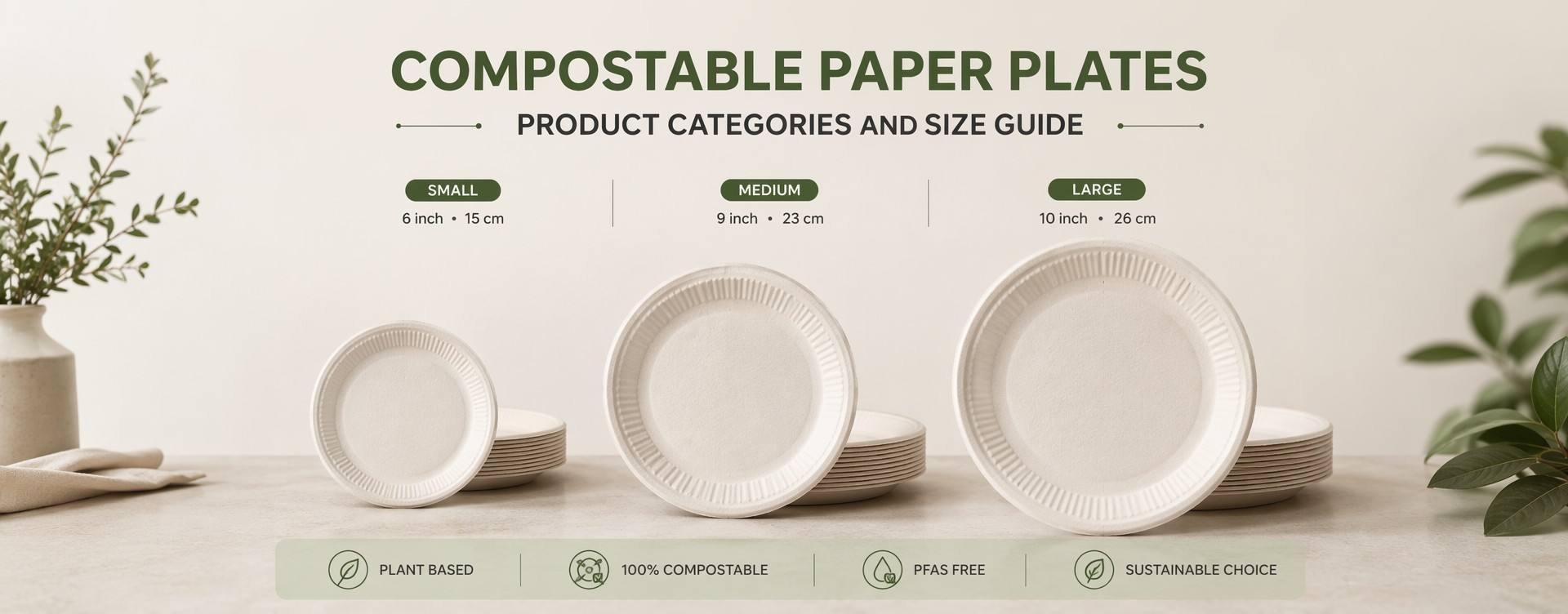
Selecting the appropriate compostable paper plates helps improve food presentation, portion control, transportation performance, and customer satisfaction. DAILYECO manufactures a complete range of compostable paper plates in multiple sizes, shapes, and styles to meet the needs of restaurants, catering companies, bakeries, supermarkets, food delivery businesses, and institutional foodservice providers.
Plate Size | Approx. Diameter | Typical Applications |
6 Inch Compostable Paper Plates | 155 mm | Cakes, pastries, fruit, desserts, appetizers |
7 Inch Compostable Paper Plates | 180 mm | Salads, snacks, side dishes, breakfast |
8 Inch Compostable Paper Plates | 200 mm | Sandwiches, burgers, light meals, café service |
9 Inch Compostable Paper Plates | 230 mm | Lunch, takeaway meals, fast food, restaurant dining |
10 Inch Compostable Paper Plates | 255 mm | Dinner, BBQ, grilled food, buffet service |
10.5–10.75 Inch Compostable Paper Plates | 268 mm | Main courses, steak, premium catering |
12 Inch Compostable Paper Plates | 305 mm | Seafood platters, family meals, banquets, sharing dishes |
Plate Size | Typical Applications |
7 Inch Square Compostable Paper Plates | Cakes, desserts, salads |
9 Inch Square Compostable Paper Plates | Lunch, bakery, takeaway meals |
10 Inch Square Compostable Paper Plates | Restaurants, catering, premium food presentation |
Product Type | Recommended Applications |
Hot Dog Paper Trays | Hot dogs, sandwiches, street food |
Rectangular Paper Trays | Fries, snacks, bakery products, takeaway meals |
Rounded Square Paper Trays | Cafés, restaurants, desserts |
Conch Shell Paper Trays | Seafood, fried food, outdoor events |
Food Type | Recommended Size |
Cake & Desserts | 6 Inch |
Bread & Pastries | 6–7 Inch |
Salads | 7 Inch |
Sandwiches | 8 Inch |
Burgers | 8–9 Inch |
Lunch Meals | 9 Inch |
Main Courses | 10 Inch |
Steak & Seafood | 10.5–12 Inch |
BBQ & Buffet | 10–12 Inch |
Family Sharing Meals | 12 Inch |
DAILYECO provides 6 inch, 7 inch, 8 inch, 9 inch, 10 inch, 10.5 inch, and 12 inch compostable paper plates, together with square plates, specialty trays, and custom OEM solutions. Our experienced team can recommend the most suitable plate specifications based on your menu, serving style, annual purchasing volume, and destination market.
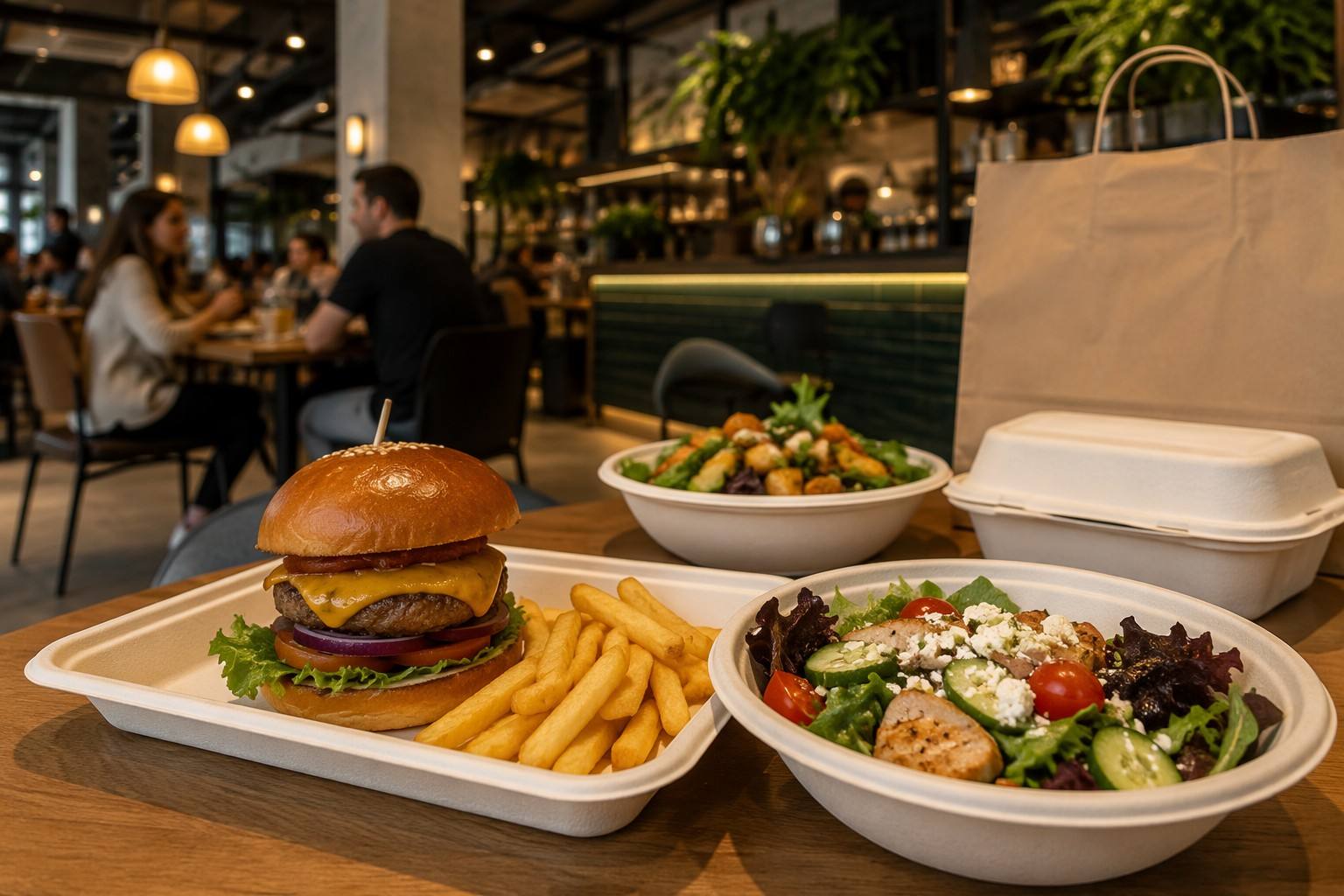
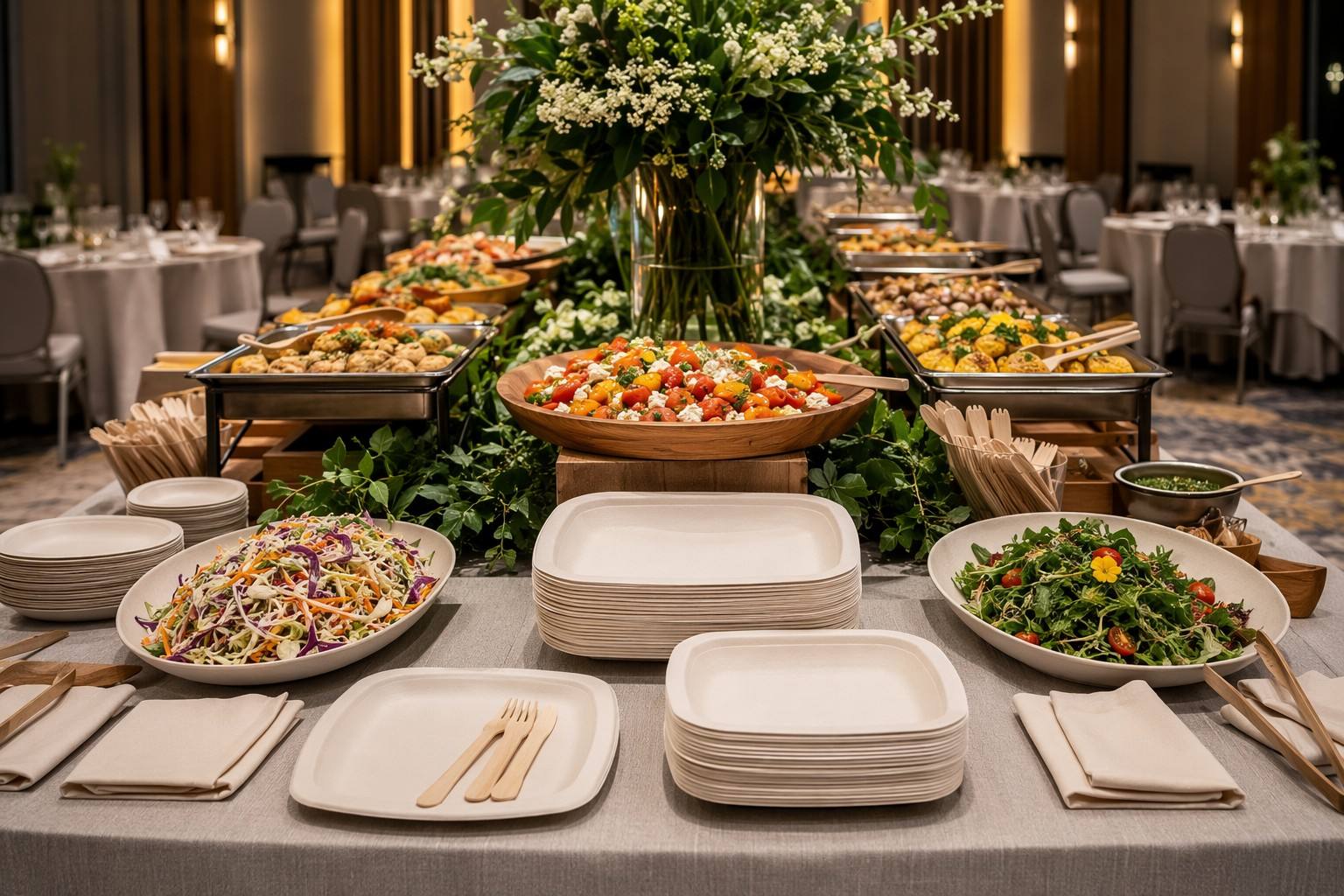
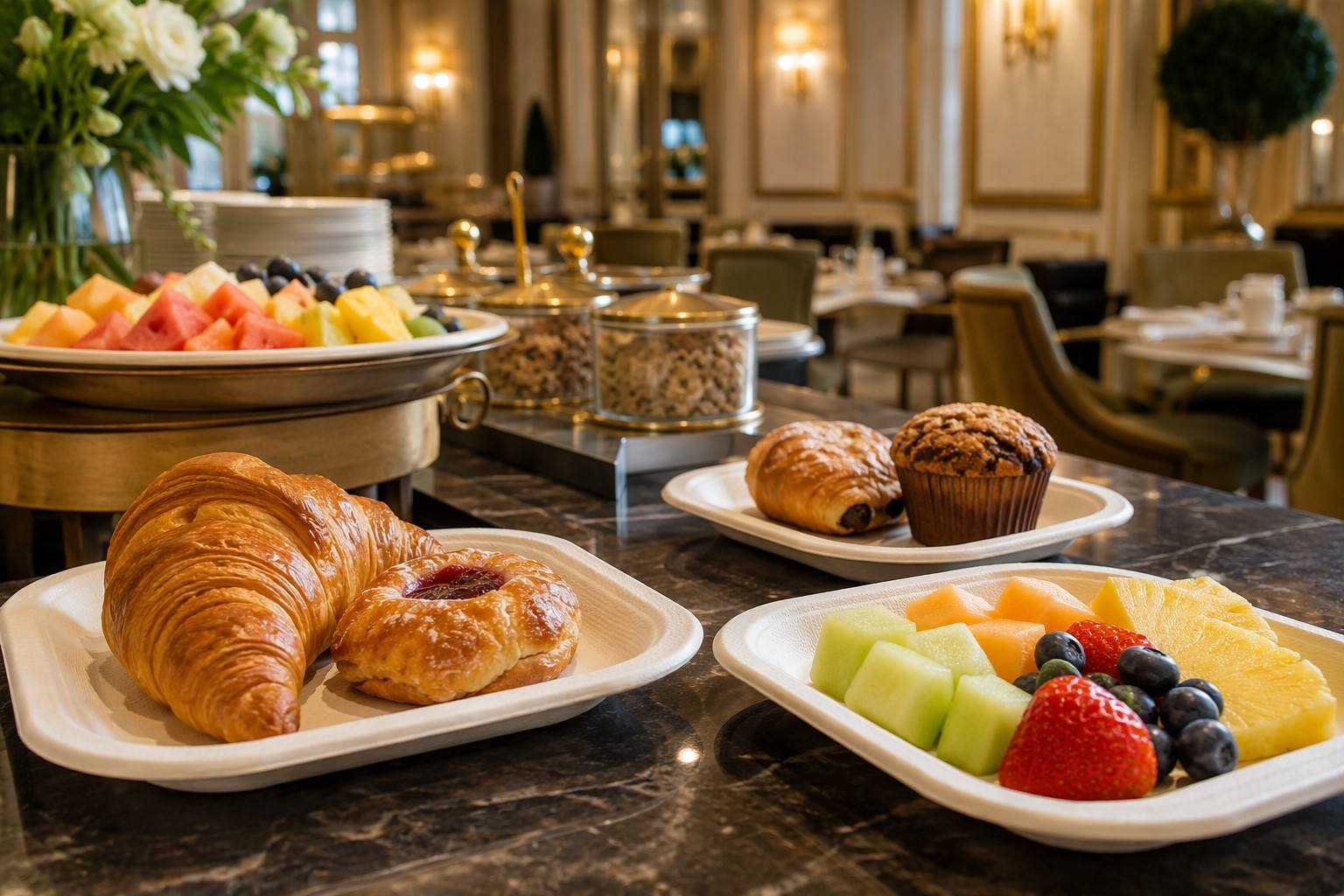
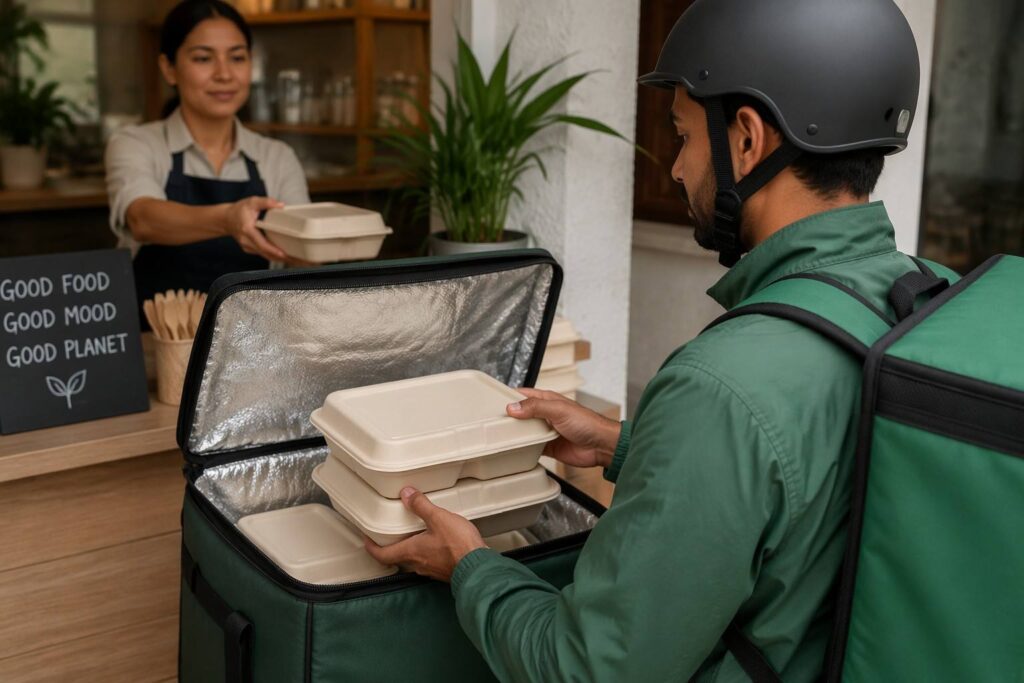


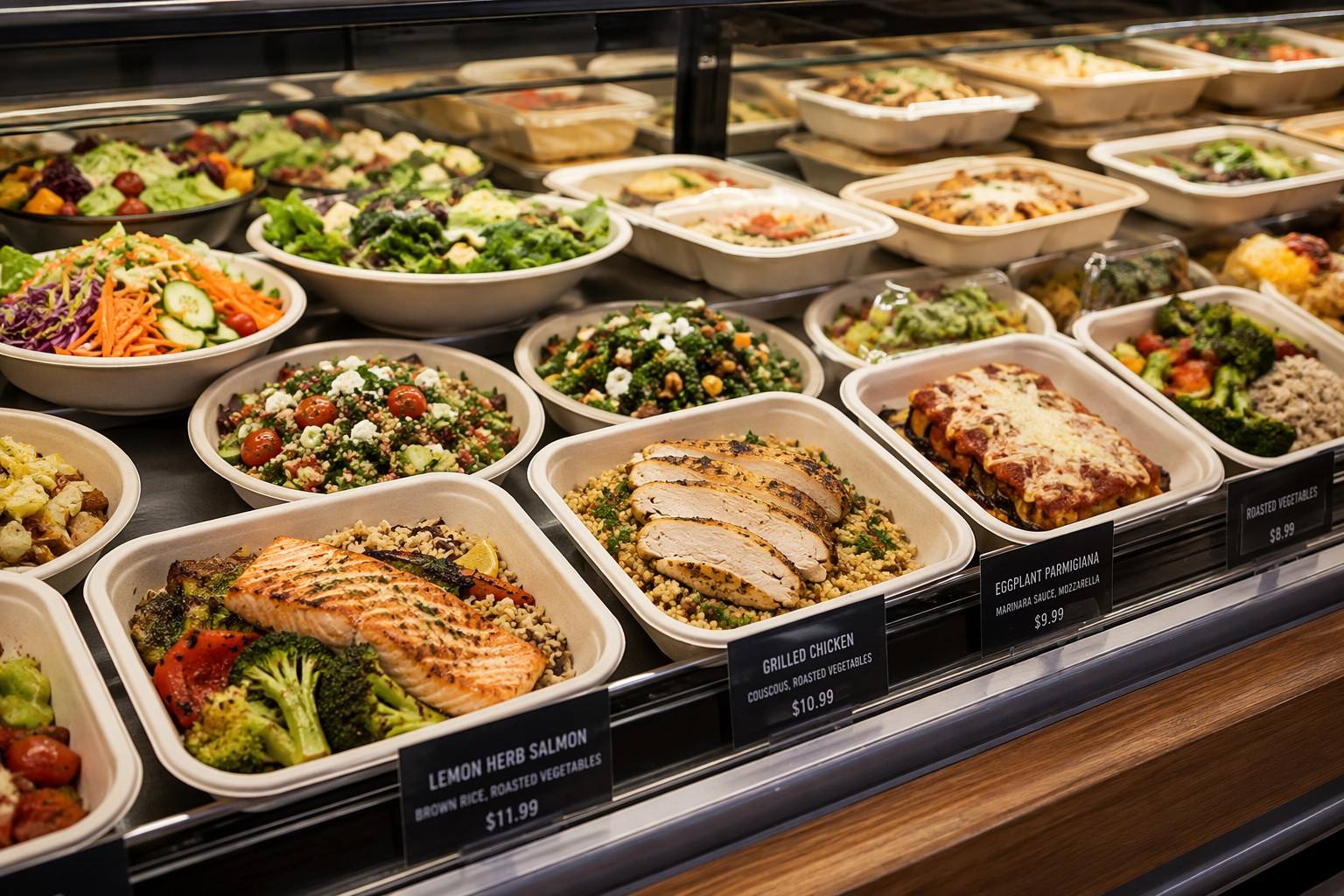
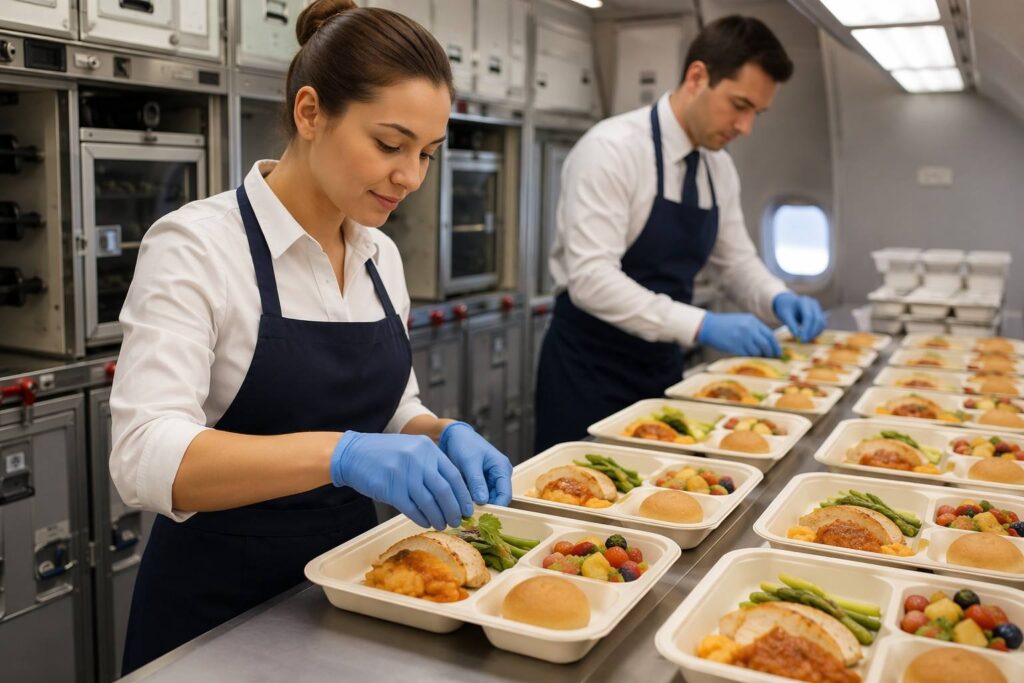


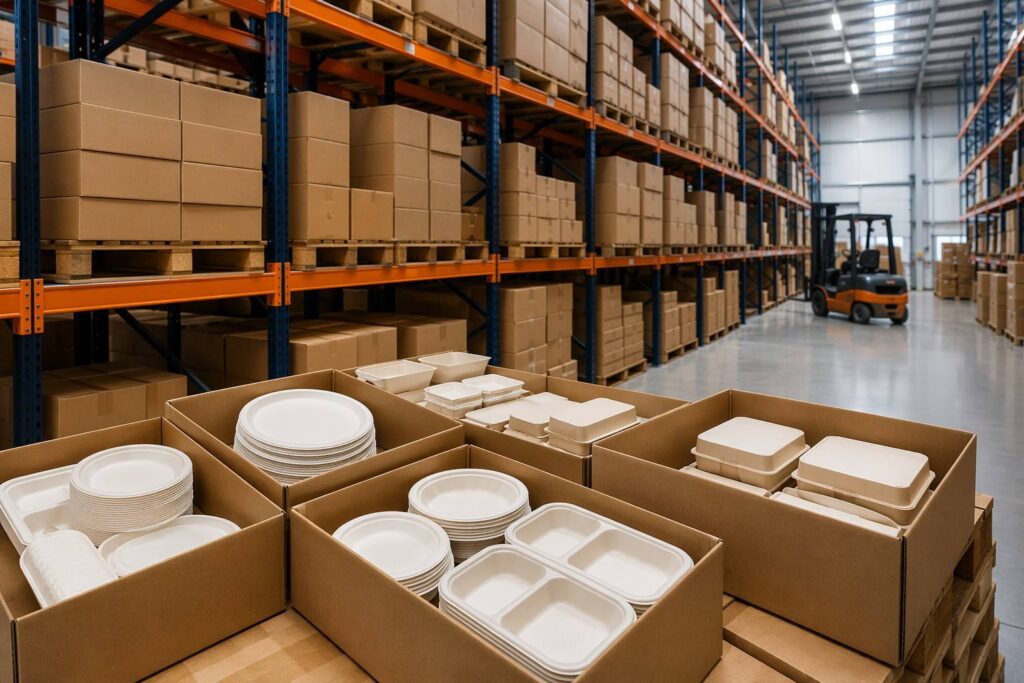



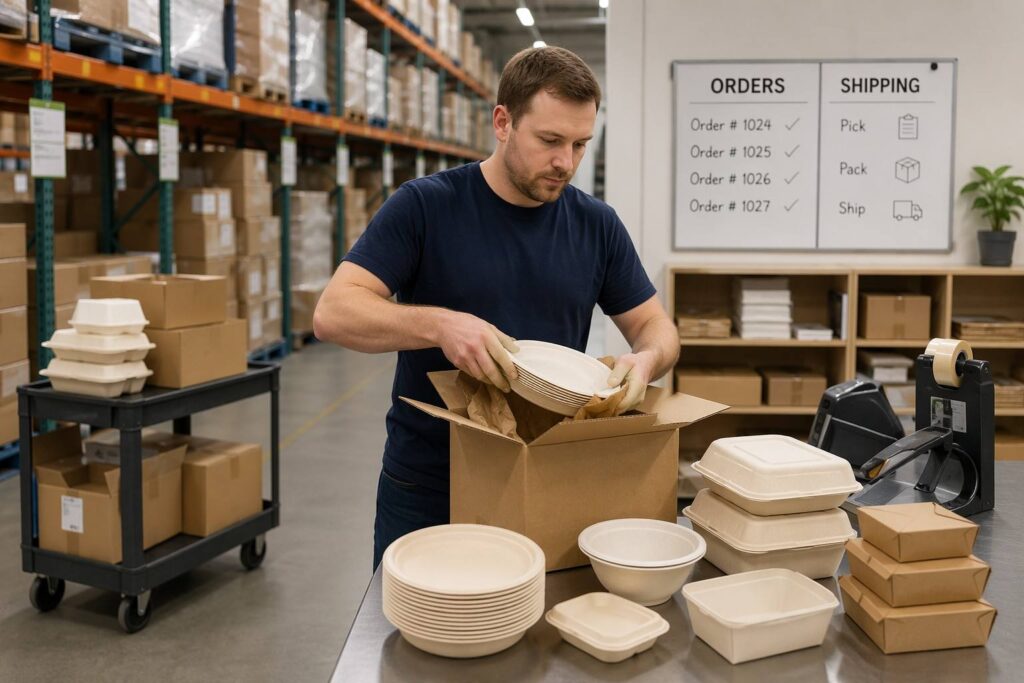


The following guide helps buyers determine whether compostable paper plates are suitable for different commercial foodservice applications.
Application | Recommended |
Restaurant Dining | ✓ |
Takeaway Meals | ✓ |
Catering Service | ✓ |
Hotel Breakfast Service | ✓ |
School Food Programs | ✓ |
Corporate Events | ✓ |
Food Delivery | ✓ |
Outdoor Festivals | ✓ |
BBQ & Grilled Food | ✓ |
Buffet Service | ✓ |
Dessert Service | ✓ |
Salad Service | ✓ |
Supermarket Ready Meals | ✓ |
Long-Term Liquid Storage | ✗ |
Industrial Packaging Applications | ✗ |
Compostable paper plates are specifically designed for short-term food serving applications across commercial foodservice environments. They provide excellent strength, food-contact safety, and sustainable performance for restaurants, catering operations, takeaway services, and institutional dining.
For applications requiring long-term liquid containment, industrial packaging performance, or specialized chemical resistance, alternative packaging solutions should be considered.
Choosing the right compostable paper plates involves more than selecting a product size. Professional buyers should evaluate material type, food performance, sustainability requirements, customization options, supplier capability, and long-term supply stability before placing an order.
The following questions help importers, distributors, restaurant groups, retailers, and foodservice businesses make more informed purchasing decisions.
Yes.
Compostable paper plates are specifically designed for serving hot foods such as burgers, rice meals, pasta, grilled foods, fried foods, and catering dishes.
High-quality bagasse plates provide excellent heat resistance and structural strength, allowing them to maintain shape when exposed to hot meals without easily becoming soft or deformed.
For restaurants and catering companies serving heavier meals, heavy duty compostable paper plates are usually recommended.
Yes.
One of the key advantages of premium compostable paper plates is their excellent grease resistance.
Products manufactured from molded sugarcane fiber provide a dense structure that helps prevent oil penetration when serving foods such as:
For commercial foodservice applications, buyers should select plates with suitable thickness and material density according to their food requirements.
The most common material is sugarcane bagasse, a renewable fiber produced from the residue left after sugar extraction.
Other possible materials include:
Among these options, bagasse plates are widely preferred because they offer excellent strength, natural appearance, and reliable foodservice performance.
Yes, most high-quality compostable paper plates made from molded fiber are microwave safe.
They are commonly used for takeaway meals where customers need to reheat food before consumption.
However, microwave performance can vary depending on product structure, thickness, food type, and heating conditions. Buyers should always confirm product specifications before large-scale purchasing.
Yes.
Many sugarcane plates and molded fiber plates maintain their structural integrity under frozen storage conditions.
This makes them suitable for:
Yes, products made from suitable plant fibers can naturally break down under appropriate composting conditions.
However, buyers should distinguish between:
Different countries and regions may have different certification requirements and composting infrastructure.
DAILYECO provides a wide range of sizes to meet different foodservice requirements.
Common sizes include:
The correct size depends on food type, serving portion, customer expectations, and application environment.
Yes.
DAILYECO supports OEM and private-label customization services.
Available options include:
For businesses building their own sustainable packaging brands, customization helps create stronger market differentiation.
Yes.
Custom logo solutions are available for qualified projects.
Branding options may include:
Custom branding is especially popular among:
Bagasse plates are one type of compostable paper plates manufactured from sugarcane fiber.
The term compostable paper plates describes the broader product category, while bagasse plates specifically refer to products made from sugarcane residue.
Bagasse products are popular because they provide:
Yes.
Restaurants are one of the largest application markets for compostable paper plates.
They are commonly used for:
Their combination of sustainability, durability, and professional appearance makes them suitable for modern foodservice operations.
MOQ depends on:
Standard products usually have lower MOQ requirements, while customized OEM products may require larger production quantities.
DAILYECO works with different buyer types, including wholesalers, distributors, retailers, and brand owners.
Production lead time depends on order quantity, customization requirements, and current production schedules.
Typical factors include:
For customized projects, early communication helps ensure efficient production scheduling.
Yes.
Sample evaluation is recommended before large-scale purchasing.
Samples allow buyers to confirm:
Yes.
DAILYECO supports customers with relevant documentation based on market requirements.
Documentation support may include:
Compostable paper plates are widely used in:
Different markets may have different requirements regarding compostability, labeling, recycling systems, and food-contact regulations.
Professional buyers should evaluate:
Choosing the right supplier helps reduce procurement risks and ensures consistent product quality.
For many foodservice applications, yes.
Restaurants, catering companies, and event organizers are increasingly replacing plastic plates with compostable disposable plates because they provide:
Yes.
Food delivery businesses require packaging that remains stable during transportation.
Compostable paper plates provide:
When combined with suitable containers and packaging systems, they support a better delivery experience.
Although compostable paper plates are widely used across restaurants, catering services, food delivery, hospitality, and institutional foodservice industries, they may not be the ideal solution for every application.
Understanding these limitations helps buyers choose the most appropriate disposable tableware solution based on food type, operational requirements, sustainability objectives, and overall cost considerations.
For projects where minimizing unit cost is the highest priority, conventional paper plates or lightweight disposable tableware may provide a more economical alternative.
Although compostable paper plates deliver better sustainability performance and stronger environmental positioning, certain high-volume applications with strict cost limitations may prioritize the lowest possible purchase price.
However, buyers should consider the complete cost impact, including product performance, customer perception, waste management requirements, and future sustainability regulations.
Compostable paper plates are designed for short-term food serving rather than long-term food storage.
For applications requiring extended shelf life, refrigerated storage, frozen distribution, or sealed food preservation, specialized food packaging solutions should be evaluated.
Products such as meal trays, sealed containers, or modified atmosphere packaging may be more suitable depending on the application requirements.
Although many bagasse plates provide excellent moisture resistance and grease resistance, they are primarily designed for solid food applications.
For products involving:
buyers should evaluate alternative packaging solutions specifically designed for liquid containment.
Compostable paper plates are intended for commercial foodservice and disposable tableware applications.
They are not designed for:
For specialized industrial requirements, buyers should select packaging solutions developed specifically for those environments.
For brands whose primary objective is extensive graphic printing, full-color retail packaging, or maximum visual branding space, coated paperboard packaging solutions may sometimes provide greater printing flexibility.
Compostable paper plates offer a natural fiber appearance that strongly communicates sustainability, but the surface characteristics differ from traditional coated paper products.
Understanding the intended application before purchasing helps buyers select packaging that balances food performance, sustainability positioning, customer expectations, and overall commercial value.

Selecting the right manufacturing partner is just as important as selecting the right disposable tableware product.
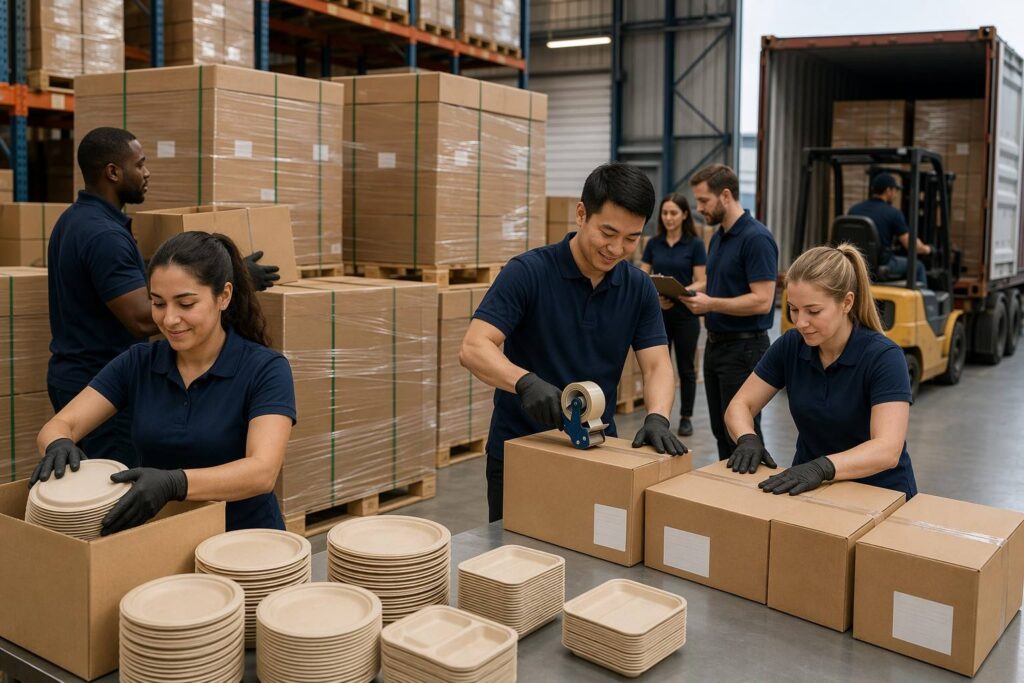
A reliable compostable paper plates manufacturer not only provides consistent product quality but also helps buyers reduce procurement risks, improve supply chain stability, and develop long-term sustainable packaging programs.
When evaluating potential suppliers, buyers should consider the following factors.
Choose a manufacturer with proven experience in producing compostable paper plates, bagasse plates, and other sustainable food packaging products for international markets.
Experienced manufacturers are generally better equipped to manage:
A manufacturer with extensive industry experience can provide more professional recommendations based on different foodservice applications.
Evaluate whether the supplier has sufficient production capacity to support both your current purchasing volume and future business growth.
Important factors include:
Stable manufacturing capacity helps reduce supply interruptions and ensures reliable delivery for distributors, wholesalers, restaurant groups, and retail customers.
Reliable manufacturers should implement standardized quality control procedures throughout the complete production process.
Typical inspections include:
A documented quality management system helps ensure every shipment of compostable paper plates meets customer expectations.
Many food brands and packaging distributors require products that match their sustainability positioning and brand identity.
Evaluate whether the manufacturer can support:
Strong customization capability allows compostable plates to become not only functional food packaging but also an effective brand communication tool.
Different international markets have different requirements for sustainable food packaging products.
Before placing an order, confirm whether the supplier can provide support for:
Preparing compliance documentation early can significantly reduce project delays and support smoother market entry.
Manufacturers with extensive export experience are generally more familiar with international shipping requirements, packaging standards, and customer expectations.
Important considerations include:
A professional export partner helps buyers simplify sourcing and reduce supply chain risks.
A professional supplier should provide technical recommendations rather than simply accepting purchase orders.
Examples include:
Technical support helps buyers select the most suitable compostable paper plates solution while avoiding unnecessary costs.
Timely communication is essential throughout every stage of a project.
Evaluate whether the supplier provides:
Reliable communication contributes to smoother project execution and long-term cooperation.
Before placing an order for compostable paper plates, buyers are encouraged to review the following checklist to ensure the selected products meet both commercial and technical requirements.
□ Plate Size
□ Plate Shape & Design
□ Material Specification
□ Fiber Type (Bagasse / Bamboo Fiber / Other Compostable Materials)
□ Plate Thickness Requirements
□ Food Contact Compliance
□ Compostability Requirements
□ Microwave Safety Requirements
□ Grease Resistance Requirements
□ Hot Food Performance
□ Product Weight
□ Packaging Specifications
□ Retail Packaging Requirements
□ Custom Logo Requirements
□ Printing Requirements
□ Private Label Requirements
□ MOQ
□ Production Lead Time
□ Carton Marking
□ Shipping Method
□ Destination Market Regulations
□ Annual Purchasing Forecast
□ Sample Approval
□ Factory Audit Requirements
□ Payment Terms
Completing this checklist before production begins can help minimize procurement risks and improve communication between buyers and suppliers.
DAILYECO provides integrated sustainable food packaging solutions for importers, distributors, restaurant chains, catering companies, hospitality groups, retailers, and global packaging brands.
As a professional manufacturer and supply chain partner, we focus on delivering stable quality, flexible customization, and reliable international supply for customers seeking long-term cooperation in sustainable packaging.
DAILYECO Manufacturing Facility | Description |
Employees | More than 1,000 employees |
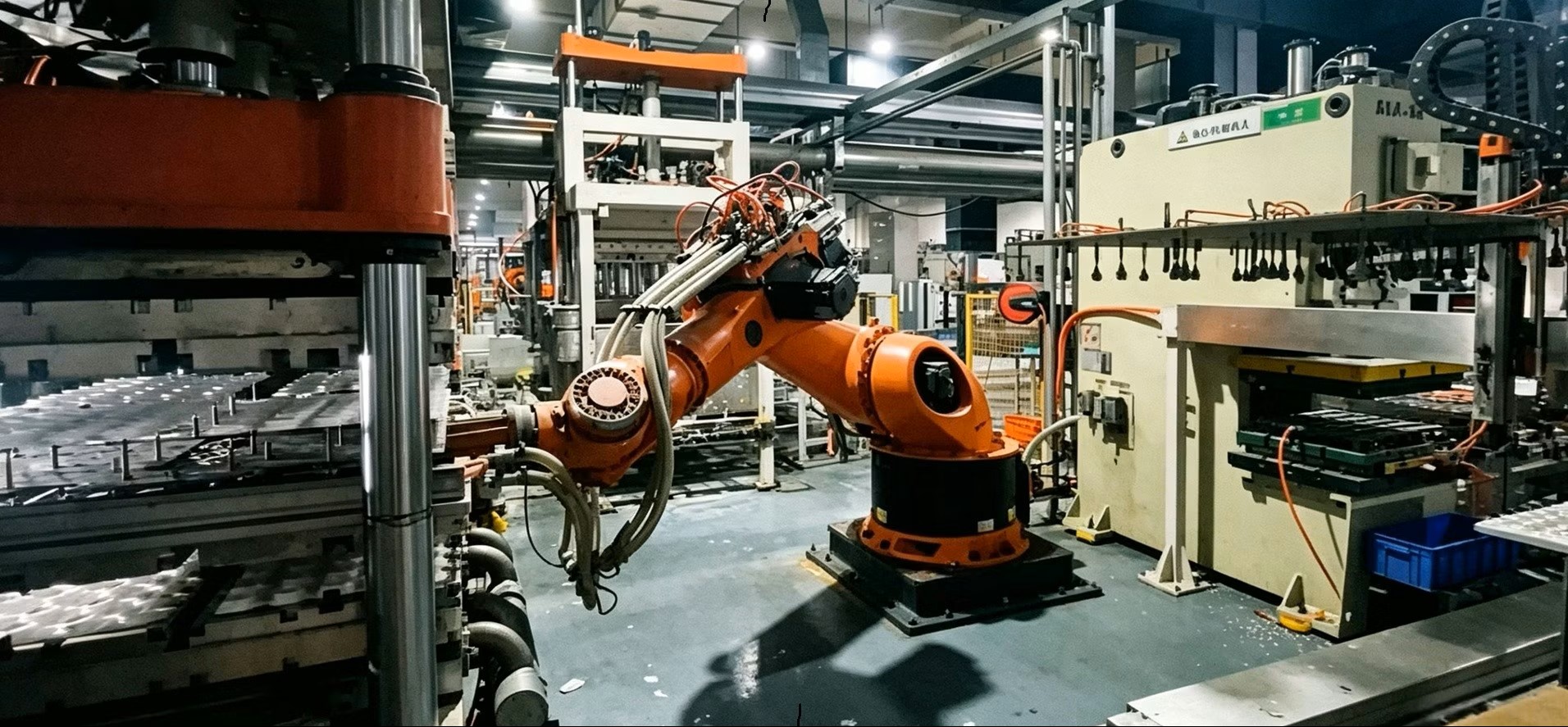
Production Lines | Advanced molding production lines and automated equipment, 950kg production capacity for one machine daily |
Monthly Supply Capacity | Stable capacity for large-volume export orders,40HQ*200 c0ntainers monthly |
Product Range | Compostable paper plates, bagasse plates, bowls, trays, and molded fiber packaging |
Material Options | Sugarcane bagasse, plant fiber, and customized sustainable materials |
Production Capability | More than 200 40HQ containers per monthly |
Customization | Logo, packaging, carton customization, and private label solutions |
Quality Control | Complete inspection procedures throughout production |
Technical Support | Available |
Production MOQ | Based on product specification, packaging requirements, and customization level |
Typical Lead Time | Approximately 30–40 days for new customized orders |
DAILYECO supports customers with documentation according to destination market requirements.
Support may include:
View Our Compliance & Certification Support Page
DAILYECO supports comprehensive customization throughout the product lifecycle, including:
For brands looking to build a differentiated sustainable packaging portfolio, customized compostable paper plates provide strong opportunities for market positioning.
DAILYECO products are exported to customers across:
With extensive international shipping experience, we help customers simplify sourcing, optimize supply chains, and maintain stable long-term supply.
Our export experience allows us to better understand different market expectations regarding:
DAILYECO’s experienced international sales team provides responsive communication throughout the entire project lifecycle.
Support includes:
We work closely with customers from initial product selection through final delivery to ensure smooth project execution.
As global demand for sustainable food packaging continues to grow, DAILYECO continuously develops new compostable paper plates, bagasse plates, and molded fiber packaging solutions.
Our development focus includes:
Continuous innovation helps customers respond to changing market demands and evolving environmental expectations.