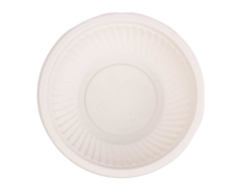
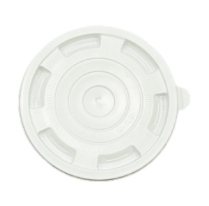
.jpg)
Item | Information |
Product Name | Cornstarch Bowls |
Material | Cornstarch-based compound; exact formulation and renewable content should be confirmed for the selected SKU |
Available Bowl Sizes | 9oz, 11oz, 15oz, 20oz, 24oz, and 33oz (approximately 250ml–1000ml) |
Matching Lids in Current Range | 15oz, 20oz, 24oz, and 33oz lid options |
Typical Applications | Restaurants, catering, takeaway, food delivery, retail meals, snacks, salads, noodles, and desserts |
Manufacturing Structure | Molded cornstarch-based bowl; forming process depends on the confirmed material grade |
Customization | OEM packaging, private label, carton printing, barcode, and market-specific packing |
Buyer Documentation | Product specification, material declaration, food-contact reports, packing list, and applicable environmental documentation |
Supply Type | Manufacturer and export supply partner |
Cornstarch Bowls are lightweight disposable food containers produced from a starch-based compound formulated for molding and commercial foodservice use. The current range covers portion bowls through full-meal formats, giving buyers a practical size ladder from 250ml to 1000ml.
Because performance and end-of-life claims depend on the complete formulation—not cornstarch alone—buyers should match every Cornstarch Bowl to its intended food type, service temperature, holding time, lid, destination market, and supporting documentation before ordering.
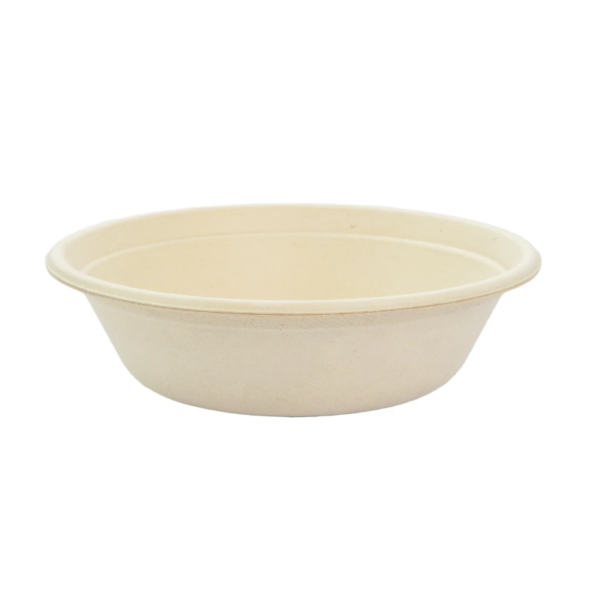
Cornstarch Bowls are molded disposable bowls made from a cornstarch-based compound rather than untreated cornstarch powder. The compound may contain additional polymers and food-contact additives needed for strength, forming stability, moisture resistance, and temperature performance. The exact composition must therefore be confirmed by product grade and supplier documentation.
Commercial buyers use Cornstarch Food Bowls for prepared meals, rice, salads, noodles, desserts, snacks, and selected soup or sauce applications. Suitability for hot, oily, acidic, chilled, microwave, or freezer use should be verified against the relevant product test rather than assumed from the product name.
The range is designed for restaurants, catering companies, foodservice distributors, takeaway brands, hospitality suppliers, retail packaging companies, and private-label operators that need repeatable specifications and export-oriented packing.
A Cornstarch Bowl should not automatically be described as compostable or biodegradable. Those claims apply only when the finished item is covered by suitable test evidence or certification and when the disposal conditions are clearly stated.
Feature | Buyer-Relevant Information | What to Confirm Before Ordering |
Size Range | 9oz–33oz bowls; approximately 250ml–1000ml | Portion size, fill line, top diameter, and lid compatibility |
Lightweight Construction | Individual bowl weights in the current catalog range from 7g to 30g | Weight tolerance and target application |
Molded Structure | Consistent shape and stackability for high-volume handling | Wall thickness, rim strength, and nesting performance |
Foodservice Performance | Designed for short-term serving and takeaway use | Food temperature, contact time, oil, sauce, and transport conditions |
Lid Options | Selected 15oz, 20oz, 24oz, and 33oz lids are listed | Exact lid code, material, fit test, and venting requirement |
Food Contact | Documentation can be reviewed by destination market | Applicable standard, test report, food type, and conditions of use |
Environmental Positioning | Contains a plant-derived starch component | Renewable content, full formulation, certification scope, and disposal route |
Customization | Private label, carton printing, barcodes, and packaging configuration | MOQ, artwork, tooling, sampling, and lead time |
The practical value of Disposable Cornstarch Bowls comes from matching the selected size and material grade to a defined foodservice condition. Buyers obtain more reliable results when specifications are approved with actual food, temperature, filling, stacking, and transport tests.
Image Placement & Size: Feature image — 1920 × 750 px, centered, not full width.
Image Content: A close-up cross-section and rim view of a cornstarch bowl beside material pellets and a matching lid; show actual texture and proportions without certification logos.
Image Alt: Cornstarch bowl rim structure, molded finish, and material pellets(图2)
Foodservice buyers are evaluating disposable packaging through a wider set of criteria than unit price alone. Material origin, food-contact documentation, service performance, appearance, packing efficiency, and end-of-life communication now influence product selection in many markets.
Cornstarch Bowls attract interest because they provide a visible plant-based material story while retaining the molded form and lightweight handling expected from disposable food containers. Their suitability, however, depends on the complete formulation and the operating conditions of each application.
Buyer Driver | Why It Matters |
Plant-Derived Material Interest | Supports packaging programs that want documented renewable-content information |
Takeaway and Delivery Growth | Creates demand for lightweight bowls that stack efficiently and travel with matching lids |
Private-Label Expansion | Allows distributors and brands to differentiate cartons, labels, barcodes, and retail presentation |
Material Transparency | Encourages buyers to request composition, food-contact reports, and end-of-life evidence |
SKU Rationalization | A planned 9oz–33oz range can cover portions, meals, and sharing formats without unnecessary duplication |
For importers and distributors, the commercial opportunity lies in offering a clearly documented product range rather than relying on broad environmental wording. A reliable Cornstarch Bowl Manufacturer should help buyers define the right SKU, lid, packing method, and compliance file for each market.
Professional foodservice buyers increasingly evaluate disposable bowls through product specifications, application performance, documentation, packing efficiency, and total supply-chain cost—not unit price alone.
For Cornstarch Bowls, buyers commonly request clearer information about material composition, food-contact conditions, usable capacity, temperature limits, lid compatibility, carton configuration, and applicable end-of-life claims.
These priorities should not be interpreted as one universal global market trend. Food-contact requirements, single-use product policies, accepted environmental claims, and disposal infrastructure vary by destination country and customer channel. Importers should therefore evaluate each market separately and use current primary regulatory sources when confirming legal requirements.
Image Placement & Size: Industry image — 1920 × 750 px, centered, not full width.
Image Content: A foodservice packaging sourcing meeting with cornstarch bowl samples, specification sheets, cartons, and compliance documents on the table.
Image Alt: Buyers comparing cornstarch bowl specifications and documentation(图3)
Demand varies significantly by country because food-contact rules, single-use product policies, composting infrastructure, accepted environmental claims, and customer expectations are not identical. Export programs should therefore be built by destination market rather than using one global claim set.
Greater Material Transparency
Buyers want the percentage and identity of the plant-derived and polymer components, not only the generic term ‘cornstarch material’.
Performance Data by Application
Temperature, oil, liquid, stacking, and delivery tests are becoming more useful than subjective ratings such as ‘excellent heat resistance’.
Qualified Environmental Claims
Professional brands distinguish plant-based content from certified compostability and state the applicable disposal conditions.
Fewer, Better-Defined SKUs
Distributors are building size ranges around real portion and lid requirements to reduce slow-moving inventory.
Retail and E-Commerce Readiness
Barcode control, carton artwork, retail packs, online photography, and consistent product naming are increasingly planned at the sourcing stage.
For distributors and private-label brands, differentiation comes from a coherent size range, reliable lid matching, accurate product naming, consistent retail presentation, and claims that can be supported by the selected SKU documentation.
Clear carton graphics, stable product color, controlled pack counts, high-quality product photography, and consistent specification data help strengthen buyer confidence after the product enters distribution.
Different regions prioritize different aspects of disposable food packaging. The following table is a sourcing guide rather than a substitute for destination-market legal review.
Region | Typical Market Focus |
North America | Food-contact documentation, product performance, operational efficiency, and qualified environmental claims |
South America | Food-contact compliance, single-use product rules, material transparency, and substantiated end-of-life claims |
Middle East | Heat and transport performance, hospitality presentation, export packing, and supply continuity |
Asia | Cost efficiency, production stability, rapid replenishment, and market-specific import requirements |
Professional sourcing decisions are no longer based solely on unit price. Buyers increasingly evaluate whether a supplier can deliver:
For Cornstarch Bowls, this means approving the complete material, product, lid, packing, documentation, and use-condition package rather than selecting a bowl from the product name alone.
The right bowl material depends on the food, service temperature, contact time, barrier requirement, local rules, disposal route, and brand objective. No single material is automatically the best choice for every application.
Choose Cornstarch Bowls If You:
Choose Plastic Bowls If You:
Choose Paper Bowls If You:
Choose Bagasse Bowls If You:
Choose PLA Bowls If You:
Application or Priority | Material to Evaluate | Primary Verification Point |
Short-service meals and snacks | Cornstarch-based, bagasse, paper, or PP | Food temperature, contact time, oil, and lid fit |
Hot and oily meals | Bagasse, suitable paper, PP, or tested cornstarch grade | Heat and grease test under actual use |
Cold product display | PLA, PET, or clear PP | Temperature range and local end-of-life route |
Plant-derived material positioning | Cornstarch-based, bagasse, PLA, or paper | Verified renewable content and qualified claims |
Long holding or liquid storage | Specialized plastic or coated structure | Barrier, sealing, migration, and shelf-life data |
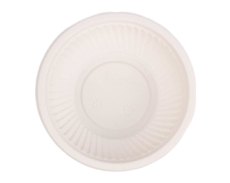
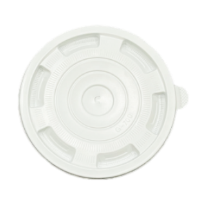
DAILYECO’s current Cornstarch Bowls range includes six bowl capacities and four listed lid options. The dimensions and packing data below are transcribed from the supplied product catalog; buyers should request the latest controlled specification before purchase.
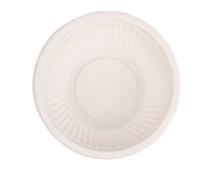
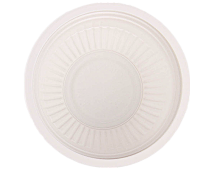
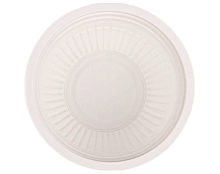
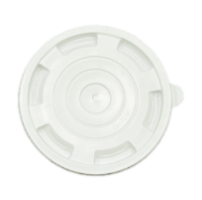
Pictures | Name | Size | Weight (g) | Pcs/Bag | Bags/CTN | Pcs/CTN | Carton L (cm) | Carton W (cm) | Carton H (cm) |
| 9oz Cornstarch Bowl | Ø110x46mm (Ø4.3″x1.8″) 250ml | 7.0 | 125 | 16 | 2000 | 46 | 28 | 46.5 |
| 11oz Cornstarch Bowl | Ø118x51mm (Ø4.6″x2″) 330ml | 7.5 | 125 | 16 | 2000 | 49 | 25 | 49.5 |
| 15oz Cornstarch Bowl | Ø122x60mm (Ø4.8″x2.3″) 450ml | 17.0 | 40 | 12 | 480 | 51 | 39 | 32 |
| 15oz Cornstarch Bowl Lid | Ø124mm | 8.0 | 40 | 12 | 480 | 53 | 23.5 | 40.5 |
| 20oz Cornstarch Bowl | Ø123x70mm (Ø4.8″x2.8″) 600ml | 17.0 | 25 | 20 | 500 | 63 | 50.5 | 39 |
| 20oz Cornstarch Bowl Lid | Ø122mm | 8.0 | 25 | 20 | 500 | 52 | 26 | 39 |
| 24oz Cornstarch Bowl | Ø152x76mm (Ø6.0″x3.0″) 700ml | 25.0 | 40 | 12 | 480 | 62 | 46.5 | 32 |
| 24oz Cornstarch Bowl Lid | Ø152mm | 10.0 | 40 | 12 | 480 | 59 | 26 | 44 |
| 33oz Cornstarch Bowl | Ø168x80mm (Ø6.6″x3.1″) 1000ml | 30.0 | 40 | 12 | 480 | 69 | 52 | 40.5 |
| 33oz Cornstarch Bowl Lid | Ø168mm | 12.0 | 40 | 12 | 480 | 71 | 25 | 54 |
.jpg)
.jpg)
.jpg)
-1024x687.jpg)
.jpg)
.jpg)
.jpg)
-1024x687.jpg)
.jpg)
-1024x687.jpg)
.jpg)
-1024x687.jpg)
.jpg)
-1024x687.jpg)
.jpg)
-1024x687.jpg)
Cornstarch Bowls can be a suitable option when a buyer wants an opaque molded bowl with a plant-derived starch component and can validate the material, performance, and end-of-life wording for the intended market.
Choose Cornstarch Bowls If You:
Need a Structured Size Range
You require bowls from small portions through 1000ml meal formats and can standardize product codes by actual fill volume.
Serve Short-Hold Foodservice Meals
Your application is dine-in, takeaway, catering, or delivery rather than extended filled-product storage.
Can Test the Real Application
You can evaluate samples with the actual food, temperature, contact time, lid, stacking, and transport process.
Need OEM Packaging Support
You require private label, carton printing, barcode, retail pack, or market-specific shipping marks.
Will Use Qualified Environmental Claims
You can distinguish plant-derived content from compostability and apply only claims supported by the selected SKU documentation.
Application Suitability Guide
Application Requirement | Initial Recommendation | Required Confirmation |
Sides, desserts, and tasting portions | 9oz or 11oz bowl | Actual fill volume and food temperature |
Regular meals and noodles | 15oz or 20oz bowl | Food weight, rim strength, and lid fit |
Large salads and meal portions | 24oz or 33oz bowl | Stacking, transport, and carton handling |
Hot soup or oily food | Test selected SKU | Temperature, duration, leakage, and deformation |
Long-term liquid storage | Evaluate specialized packaging | Barrier, sealing, migration, and shelf life |
Transparent food display | Evaluate PLA, PET, or clear PP | Temperature and local disposal route |
Compostability claim | Only a certified/evidenced SKU | Standard, certificate, item code, and disposal conditions |
What information should I provide for an accurate commercial quotation?
Provide the intended application, target capacity, lid requirement, annual forecast, first-order quantity, destination market, packing configuration, Private Label scope, required documents, requested delivery date, and Incoterm. A complete sourcing brief allows the Cornstarch Bowl Manufacturer to quote the correct SKU, packing basis, tooling requirement, and lead time.
How is the MOQ determined for a Cornstarch Bowl order?
MOQ should be confirmed separately for standard stock items, made-to-order products, custom colors, printed bags, Private Label cartons, retail packs, and new molds. Ask the supplier to state the MOQ by SKU, artwork version, packing format, and shipment lot so that the commercial basis is unambiguous.
What sampling and pre-production approval steps are required?
The approval sequence may include standard samples, application testing, artwork proofs, printed-packaging samples, pre-production samples, pilot production, and a signed golden sample. The purchase order should identify which approved sample, drawing, specification, artwork file, and inspection standard control mass production.
How are OEM and Private Label requirements confirmed before production?
Define every customized element, including product color, mold, logo, bag, sleeve, carton, label, barcode, shipping mark, language, and regulatory wording. Confirm artwork ownership, tooling ownership, color reference, barcode verification, print tolerance, approval responsibility, MOQ, and additional lead time before production is released.
What production capacity and lead-time information should I verify?
Request normal and peak-season output for the selected SKU, available production slots, raw-material lead time, packaging lead time, molding cycle, inspection window, and shipment cut-off. The confirmed schedule should distinguish sample approval, production, inspection, loading, and transit time rather than presenting one unsupported total lead time.
How should the manufacturer control quality during mass production?
The Quality Control plan should cover incoming-material identity, formulation and moisture control, molding parameters, dimensions, weight, appearance, rim integrity, stackability, lid engagement, application testing, pack count, carton condition, and batch traceability. Agree the tolerances, sampling level, defect classification, and acceptance criteria before production.
Can buyers arrange inspections and obtain batch traceability records?
Confirm whether the supplier supports first-article approval, in-process checks, pre-shipment inspection, third-party inspection, retained samples, lot identification, and corrective-action records. The inspection report should reference the purchase order, SKU, approved specification, batch, quantity, and agreed acceptance standard.
Which export documents and packing details must be confirmed?
Confirm the commercial invoice, packing list, certificate of origin where required, product and material documents, carton marks, barcode data, pallet or non-pallet loading, wooden-packing requirements, gross and net weight, container-loading plan, and destination labeling. The importer should verify local legal and customs requirements before shipment.
How should payment terms, shipping terms, schedule changes, and claims be managed?
Record the currency, payment stages, Incoterm, shipment method, delivery window, document deadline, change-control process, delay-notification rule, inspection release, and claim procedure in the commercial agreement. Any change to specification, artwork, material, quantity, packing, or schedule should require written approval before implementation.
.jpg)
Transparent discussion of limitations helps buyers avoid failures and select a better packaging structure. Cornstarch-Based Bowls should be evaluated carefully in the following situations.
Extremely Cost-Sensitive Projects
If the only purchasing objective is the lowest initial unit price, a standard paper or conventional plastic format may be more competitive. Total cost should still include packing density, defects, leakage, complaints, and inventory complexity.
Applications Requiring Product Transparency
Opaque cornstarch bowls do not provide the visibility offered by clear PLA, PET, or PP. Transparent packaging may be more suitable for display-led salads, desserts, and chilled retail foods.
Industrial Applications
These bowls are not designed for chemicals, laboratory samples, solvents, industrial liquids, or other non-food uses requiring specialized resistance data.
Applications Requiring Specific Sustainability Certifications
If a tender requires a named compostability, renewable-content, carbon, or chemical certificate, confirm that the finished item and exact SKU are covered before quoting or printing the claim.
.jpg)
-1024x687.jpg)
.jpg)
-1024x687.jpg)
.jpg)
-1024x687.jpg)
A suitable Cornstarch Bowl Manufacturer should be evaluated on technical control, documentation, repeatability, customization, capacity, and export execution—not on the quotation alone.
Choose a manufacturer with proven experience in molded disposable food packaging for international markets. Verify the relevant cornstarch material approval, molding process, tooling, maintenance, finished-goods handling, and which operations are performed in-house or outsourced.
Compare normal monthly output, peak-season capacity, planned maintenance, material lead time, packaging lead time, production cycle, and available production slots. Capacity should be confirmed for the selected SKU and period rather than accepted as one unsupported factory-wide number.
Review the controlled specification, inspection standard, measuring equipment, application tests, nonconformance process, batch traceability, and pre-shipment inspection options. Samples should be linked to the approved specification and production lot.
Confirm which elements can be customized, the development sequence, tooling ownership, artwork approval, color tolerance, barcode verification, pilot run, MOQ, and cost. Customization should be technically reviewed before price and schedule are finalized.
The supplier should map food-contact reports, material declarations, and environmental documentation to the relevant material grade and finished item. Generic certificates without clear product scope should be treated as supporting information rather than automatic proof.
Evaluate documentation accuracy, carton marks, container loading, palletization, communication across time zones, change control, and the ability to coordinate third-party inspections and customer-specific shipping requirements.
A professional supplier should help buyers select bowl capacity, confirm lid compatibility, plan application tests, optimize packing, review material claims, and define the approval file before purchase orders are released.
Evaluate quotation response, sample coordination, dedicated account support, production updates, inspection communication, shipping follow-up, complaint handling, and the supplier’s ability to maintain controlled records throughout long-term cooperation.
Complete this checklist before approving a sample, purchase order, or production instruction for Cornstarch Bowls.
Technical & Product Checks | Commercial & Supply Checks |
☐ Bowl capacity and actual fill line | ☐ Diameter, height, and unit weight |
☐ Weight and dimensional tolerances | ☐ Exact material formulation description |
☐ Renewable-content information, if claimed | ☐ Food-contact reports and conditions of use |
☐ Compostability scope and disposal conditions, if claimed | ☐ Hot-food temperature and contact time |
☐ Oil, sauce, and leakage test | ☐ Microwave and freezer status |
☐ Lid code, material, venting, and fit | ☐ Stacking and delivery performance |
☐ Unit pack and carton quantity | ☐ Carton dimensions, gross weight, and loading plan |
☐ Logo, artwork, barcode, and label approval | ☐ MOQ, tooling cost, and pilot quantity |
☐ Sample and golden-sample approval | ☐ Production lead time and shipment window |
☐ Inspection standard and batch traceability | ☐ Destination-market and importer requirements |
☐ Payment terms and change-control process | ☐ After-sales and claim-handling procedure |
A signed specification, approved sample, and agreed inspection standard should control production. Email descriptions alone are not a substitute for a complete approval file.
.jpg)
DAILYECO supports importers, distributors, foodservice companies, hospitality groups, retail packaging brands, and private-label customers sourcing Cornstarch Bowls for international markets.
The cooperation process can cover specification review, material and application confirmation, sampling, packaging development, production, inspection, documentation, and shipment coordination.
Available production capacity, MOQ, customization scope, lead time, documentation, and packing configuration are confirmed according to the selected SKU, order quantity, destination market, and project requirements during quotation.
DAILYECO Manufacturing Capability | Description |
Employees | More than 1,000 experienced employees across relevant operations |
Production Process | Cornstarch-based material preparation and automated molding; exact equipment scope to be confirmed by product grade |
Monthly Capacity | 300 tons final products or 30 containers x 40HQ containers |
Available Bowl Sizes | 9oz, 11oz, 15oz, 20oz, 24oz, and 33oz (approximately 250ml–1000ml) |
Matching Lids | Listed lid options for 15oz, 20oz, 24oz, and 33oz bowls |
OEM | Retail pack, bag, label, barcode, carton artwork, and shipping-mark customization |
ODM | Specification optimization and new-product development subject to technical review |
Production MOQ | Confirmed by product, stock status, color, printing, packaging, and tooling requirement, common MOQ start from 50,000pcs |
Typical Custom Lead Time | Approximately 30–35 days after final approval, subject to material and production schedule |
Technical Support | Product selection, sample evaluation, packing review, and destination-document coordination |
DAILYECO can coordinate available product specifications, material declarations, food-contact reports, factory audit information, and applicable environmental documentation according to the selected item and destination market.
View Our Compliance & Certification Support Page
Export support can include order coordination, carton and shipping-mark review, commercial documentation, inspection scheduling, container loading, and shipment communication for North America, Europe, Australia, the Middle East, Asia, and other markets subject to customer requirements.
The international sales and technical teams can support product selection, sample arrangement, artwork approval, production updates, inspection coordination, shipment preparation, and after-sales follow-up throughout the project lifecycle.
Product development should focus on verified improvements such as better size architecture, lid compatibility, stacking, packing density, application performance, traceability, and claim accuracy. New Custom Cornstarch Bowls should be introduced only after technical and commercial approval.