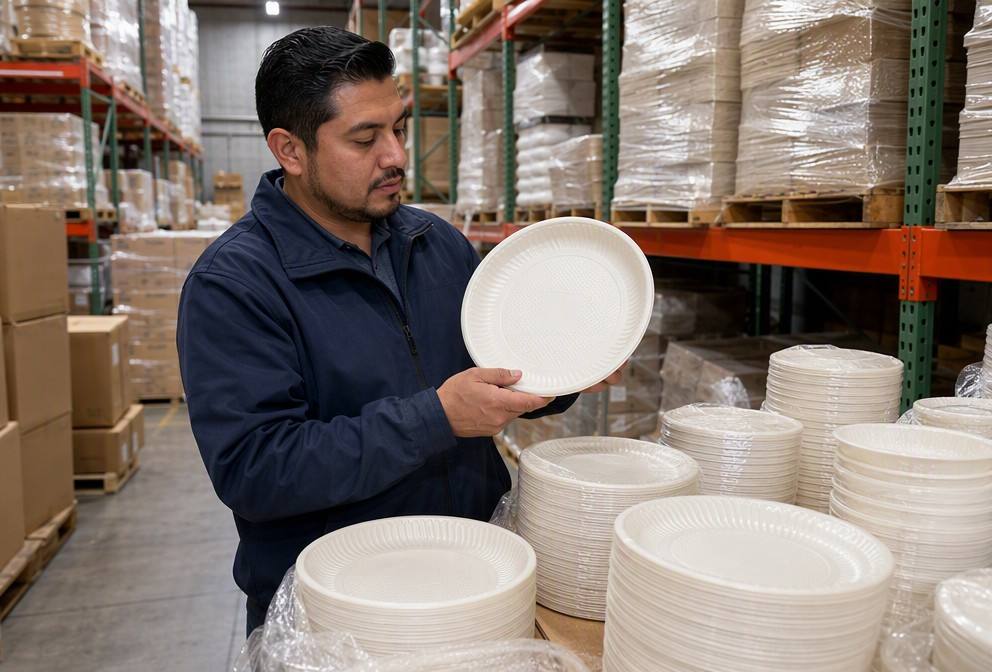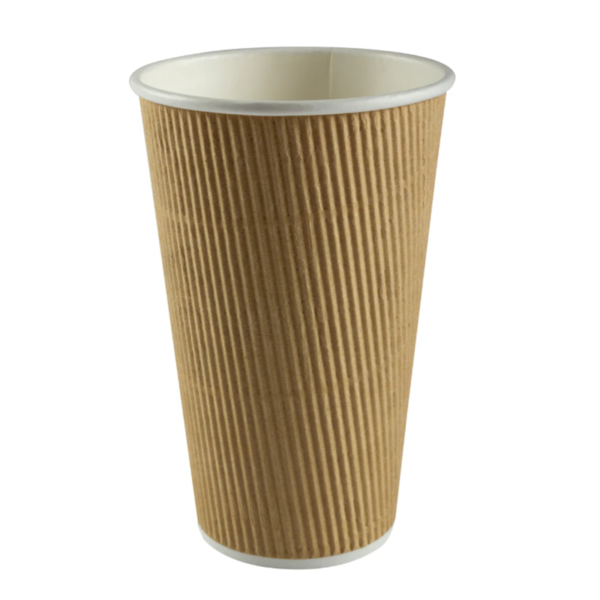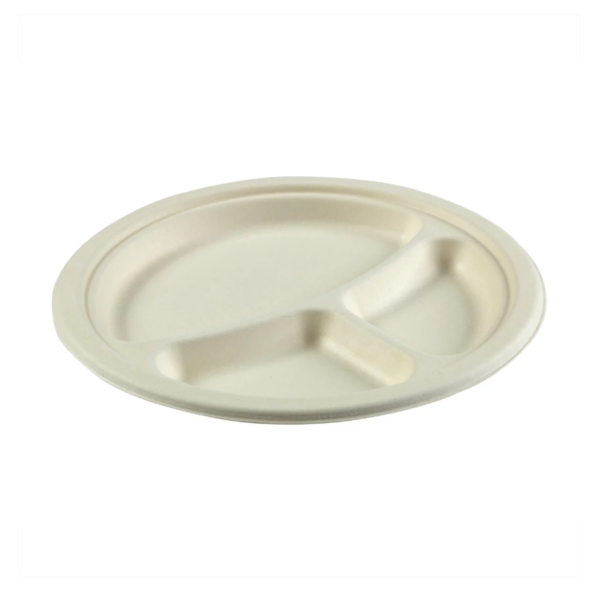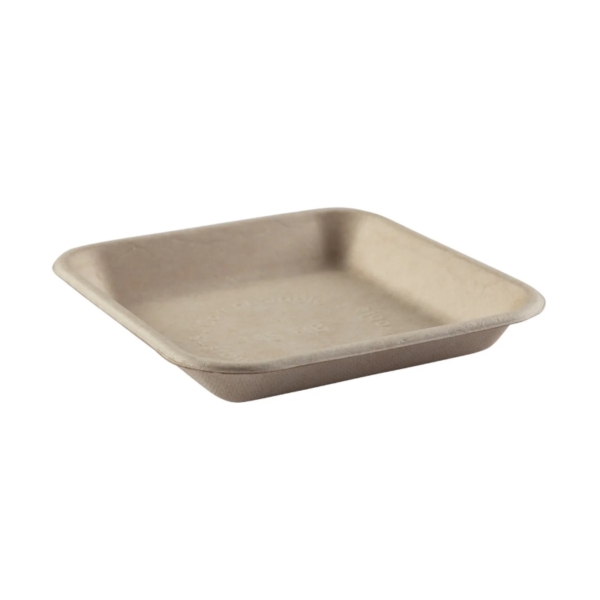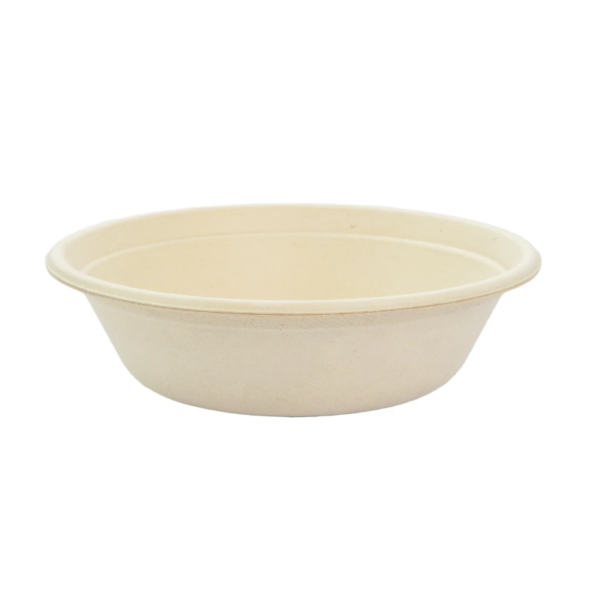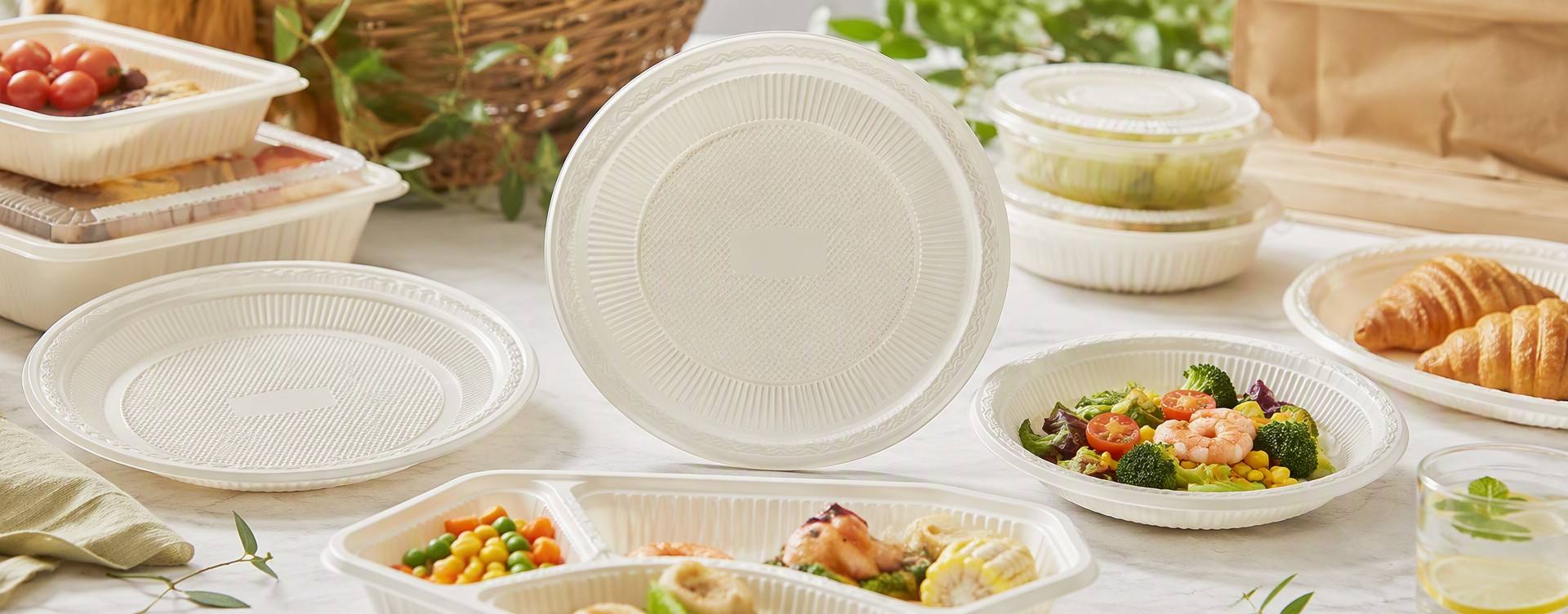
CPLA plate

DAILYECO, Your Professional CPLA Plate Manufacturer

Custom CPLA Plate for Sustainable Food Packaging Solutions

Key Facts About CPLA Plate

Item

Information

Product Name

CPLA Plate

Material

Crystallized PLA (CPLA)

Product Type

Compostable Plant-Based Disposable Plate

Typical Shapes

Round Plate, Rectangular Plate

Typical Applications

Restaurants, Catering, food service, Events, Retail, Hospitality

Food Types

Hot Foods, Cold Foods, Desserts, Snacks, Ready-to-Serve Meals

Temperature Performance

Typically suitable for approximately -20°C to 100°C depending on product design

Microwave Use

Short-term reheating applications may be available depending on product specifications

Material Source

Renewable plant-based PLA material

Sustainability Position

Designed for industrial composting environments where applicable

Customization

OEM, Private Label, Custom Packaging Available

Supply Type

Manufacturer & Global Packaging Partner

Export Markets

North America, Europe, Australia, Middle East, Asia, South America

CPLA Plate is a plant-based disposable tableware solution manufactured from crystallized PLA material. Compared with traditional plastic plates, CPLA plates provide businesses with an alternative option that combines functional performance, renewable material positioning, and sustainable packaging objectives.

CPLA technology improves the heat resistance and rigidity of PLA-based materials, making these plates suitable for a wider range of food service applications compared with conventional PLA products.

Today, CPLA plates are increasingly selected by restaurants, catering companies, sustainable food brands, distributors, and private-label packaging companies that are looking for reliable disposable tableware with compostable positioning.

DAILYECO provides professional CPLA plate manufacturing solutions, including OEM production, custom designs, private-label packaging, and international supply support for global B2B customers.


What Are CPLA Plates

CPLA plates are disposable plates manufactured from crystallized polylactic acid (PLA), a plant-based material commonly produced from renewable resources such as corn starch or other agricultural materials.

Compared with standard PLA products, CPLA undergoes a crystallization process that improves material stability, rigidity, and temperature performance. This makes CPLA plate products more suitable for food service applications where traditional PLA tableware may have limitations.

The manufacturing process begins with PLA resin preparation. Through controlled crystallization and molding technology, the material achieves improved structural strength while maintaining its plant-based characteristics.

Unlike petroleum-based plastic plates, CPLA plates are designed to support sustainable packaging strategies by using renewable raw materials and offering compostable solutions in markets with suitable industrial composting facilities.

Common applications include:

  • Restaurants and cafés
  • Catering services
  • Hotels and hospitality operations
  • Food delivery businesses
  • Events and festivals
  • Corporate catering
  • Retail sustainable tableware programs

For professional buyers, selecting CPLA plates is not only a material decision but also a packaging strategy decision. Businesses need to consider application requirements, local waste management infrastructure, certification requirements, customer expectations, and total procurement value.

DAILYECO helps customers evaluate suitable compostable plates solutions based on market requirements, food applications, and sustainability goals.


What Are the Key Features of CPLA Plates?

CPLA plates are designed to provide a balance between sustainable material positioning, functional performance, and commercial usability. Compared with conventional PLA tableware, crystallized PLA technology improves rigidity and heat performance, making CPLA plate products suitable for a wider range of food service applications.

Feature

Typical Performance Reference

Explanation

Plant-Based Material

100% PLA-based renewable material

Manufactured from PLA resin derived from renewable resources such as corn starch and other plant-based materials

Compostable Positioning

Industrial composting programs where applicable

Designed for markets requiring certified compostable plates solutions; availability depends on local standards and facilities

Temperature Resistance

Approximately -20°C to 100°C

Suitable for chilled foods and many hot food applications; actual performance depends on product design and usage conditions

Structural Strength

20–40% higher rigidity than standard PLA (typical reference)

Crystallization technology improves stiffness and helps reduce bending during food service

Heat Performance

Suitable for short-term hot food contact

Provides improved thermal stability compared with conventional PLA products

Grease Resistance

Suitable for oily foods for approximately 30–60 minutes (typical reference)

Helps reduce oil penetration when serving fried foods, sauces, and high-fat meals

Moisture Resistance

Suitable for short-term food contact

Helps maintain plate structure when used with moist foods

Surface Appearance

Smooth molded finish

Provides a clean and premium presentation for restaurants, catering, and branded events

Food Contact Safety

Food-grade material options available

Manufactured using materials selected for food-contact applications according to market requirements

Custom Branding

OEM & private label available

Supports custom packaging, logo printing, retail-ready solutions, and product customization

The combination of renewable material characteristics, improved rigidity, and premium appearance makes CPLA plates an attractive alternative to traditional plastic tableware.

For professional buyers, selecting the right compostable plates solution requires evaluating application requirements, local regulations, certification needs, and sustainability objectives.
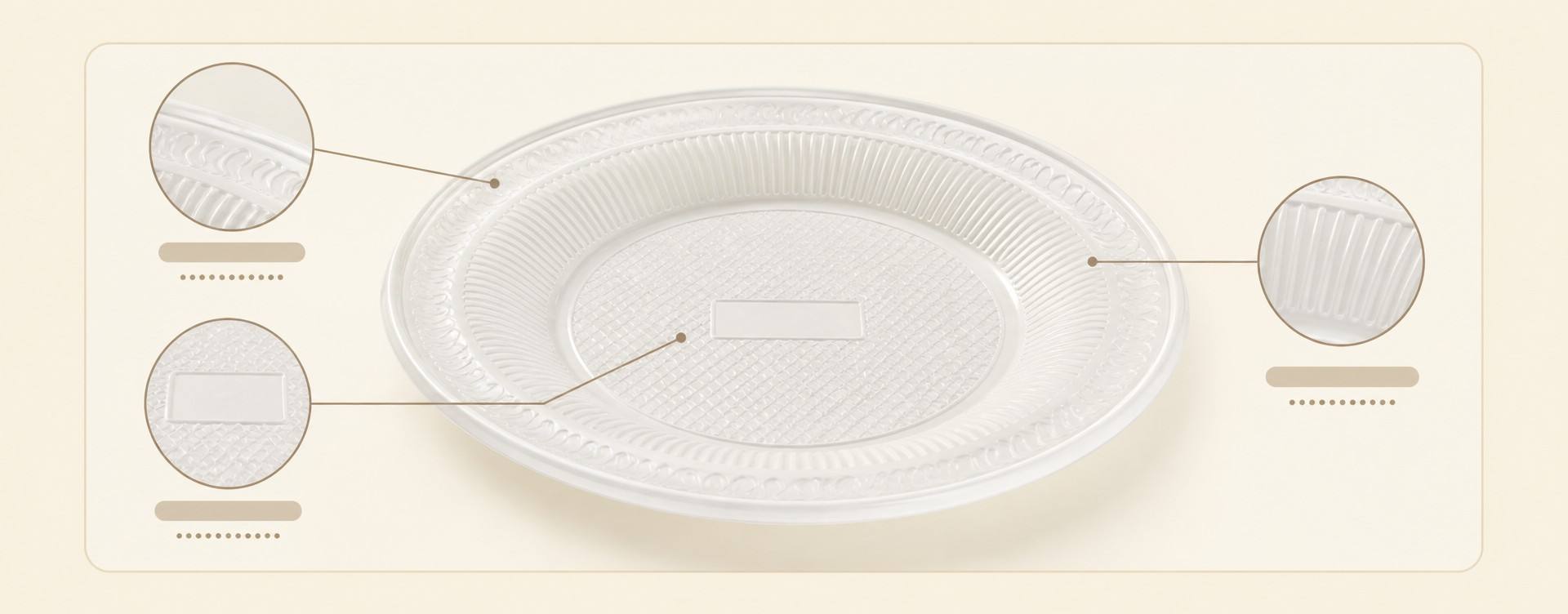
CPLA Plate Structure and Plant-Based Compostable Tableware Features


Why Are CPLA Plates Becoming Popular Worldwide? 

The global food service packaging industry is experiencing a significant transition as businesses increasingly evaluate sustainability, regulatory requirements, and consumer expectations when selecting disposable tableware solutions.

Traditional plastic tableware has faced increasing pressure due to plastic reduction policies and changing customer preferences. As a result, many restaurants, catering companies, retailers, and food service distributors are exploring renewable alternatives such as CPLA plates, compostable plates, and other plant-based packaging solutions.

One of the main reasons for the growing popularity of CPLA plates is their ability to combine sustainable material positioning with practical performance.

Compared with many conventional biodegradable materials, CPLA provides improved rigidity and heat resistance, allowing businesses to use sustainable tableware without significantly compromising daily operational requirements.

Key reasons businesses choose CPLA plates include:

Sustainable Brand Positioning

Sustainability has become an increasingly important factor in purchasing decisions.

Restaurants, cafés, hotels, and food brands are using plant-based tableware to demonstrate environmental responsibility and strengthen their brand image.

Improved Functional Performance

Standard PLA products may have limitations in high-temperature applications. CPLA technology improves crystallinity, helping create stronger plates with better heat stability.

This makes CPLA plates suitable for:

  • Catering services
  • Hot food presentation
  • Corporate events
  • Premium takeaway meals
  • Sustainable retail packaging programs

Growing Regulatory Pressure

Many regions are introducing stricter requirements regarding single-use plastics.

Businesses are therefore evaluating alternatives that support plastic reduction strategies while maintaining commercial performance.

Consumer Preference for Sustainable Packaging

Modern consumers increasingly consider packaging materials when choosing restaurants, food brands, and retail products.

Using compostable tableware allows businesses to align packaging choices with customer sustainability expectations.

For importers, distributors, and private-label brands, CPLA plate products represent a growing category that combines environmental positioning with practical food service performance.


Industry Insights & Market Trends 

The sustainable food packaging industry is undergoing rapid development as businesses worldwide reconsider disposable tableware materials.

The demand for compostable plates, plant-based tableware, and renewable packaging solutions continues to increase as governments, businesses, and consumers focus more on reducing dependence on conventional plastics.
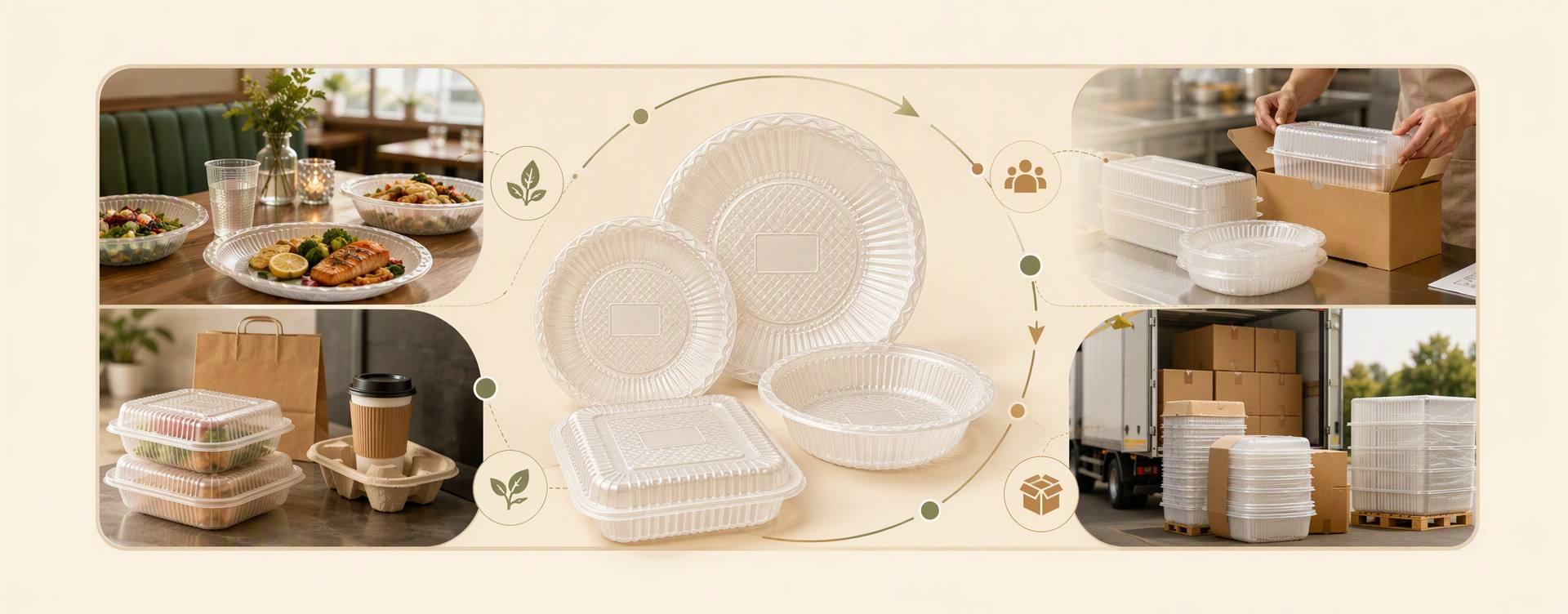
CPLA Plate Industry Insights and Sustainable Packaging Trends

Global Market Overview 

food service industries including restaurants, catering companies, hospitality groups, and food delivery platforms continue to expand globally.

At the same time, sustainability has become an important purchasing factor alongside traditional considerations such as cost, durability, and supply reliability.

For professional buyers, disposable tableware selection is no longer only about choosing the lowest-cost option. Businesses increasingly evaluate:

  • Material origin
  • Environmental positioning
  • Product performance
  • Regulatory requirements
  • Customer acceptance
  • Supplier capability

This shift has increased demand for advanced plant-based materials such as CPLA, which provide a balance between sustainability objectives and commercial usability.

Key Industry Trends 

Growth of Compostable food service Packaging

Many food service businesses are expanding their use of compostable tableware as part of broader sustainability strategies.

Products such as CPLA plates, compostable cutlery, and molded fiber packaging are increasingly included in sustainable packaging portfolios.

Sustainability Becomes a Purchasing Requirement

Environmental performance is becoming a key consideration for buyers in North America, Europe, Australia, and other developed markets.

Companies are increasingly looking for packaging solutions that support:

  • Plastic reduction goals
  • Sustainable branding
  • Customer expectations
  • Corporate responsibility programs

Premium Sustainable Packaging Development

Sustainable packaging is no longer focused only on environmental benefits.

Businesses also require:

  • Attractive appearance
  • Reliable strength
  • Consistent quality
  • Custom branding opportunities

This has created demand for premium sustainable products such as CPLA plates, which combine appearance, functionality, and sustainability messaging.

Regional Market Focus 

Region

Typical Market Focus

North America

Compostable packaging programs, food service sustainability, brand positioning

Europe

Regulatory compliance, plastic reduction, certified compostable solutions

Australia & New Zealand

Sustainable consumer preferences and premium takeaway packaging

Middle East

Hospitality applications, premium presentation, reliable performance

Asia

Cost efficiency, stable supply, expanding sustainable packaging demand

Different markets have different purchasing priorities. Understanding regional requirements helps buyers select the most suitable CPLA plate solutions.


Which Material Is Right for Your Business? 

Selecting the right disposable plate material depends on your application requirements, target market, sustainability objectives, and procurement strategy.

Different materials provide different advantages. Buyers should evaluate performance, appearance, cost, certification requirements, and local waste management infrastructure before making a decision.

Choose CPLA Plates If You:

  • Need a plant-based disposable tableware solution.
  • Want improved heat performance compared with standard PLA products.
  • Serve restaurants, catering businesses, hotels, or sustainable food brands.
  • Require premium-looking compostable plates.
  • Target markets with strong sustainability demand.
  • Need OEM customization and private-label packaging options.

Choose Bagasse Plates If You:

  • Prefer natural molded fiber appearance.
  • Require strong disposable plates for general food applications.
  • Focus on renewable agricultural fiber materials.
  • Need cost-effective sustainable tableware solutions.

Choose Paper Plates If You:

  • Need lightweight disposable tableware.
  • Require large-volume food service
  • Prioritize cost efficiency and flexible printing options.

Choose Plastic Plates If You:

  • Mainly focus on lowest initial purchasing cost.
  • Operate in markets where plastic restrictions are limited.
  • Require applications where compostability is not a priority.

Procurement Recommendations by Market

Target Market

Recommended Material

Primary Purchasing Considerations

North America

CPLA Plates / Bagasse Plates

Sustainability programs, food service requirements, branding

Europe

CPLA Plates / Certified Compostable Tableware

Regulations, compostability requirements, environmental positioning

Australia & New Zealand

CPLA Plates / Plant-Based Tableware

Consumer sustainability expectations

Middle East

CPLA Plates / Premium Disposable Plates

Heat performance, presentation quality

Asia

CPLA Plates / Bagasse Plates

Supply stability, cost efficiency, market demand

Rather than selecting materials based on a single factor, professional buyers should evaluate:

  • Application requirements
  • Food types
  • Temperature conditions
  • Sustainability objectives
  • Certification needs
  • Total procurement cost

DAILYECO helps global customers select suitable CPLA plate solutions according to their market positioning, product requirements, and long-term supply strategy.

DAILYECO’s Complete CPLA Plate Categories Will Cover All Your Sales and On-Site Application Needs

DAILYECO provides a complete range of CPLA plates designed for restaurants, catering companies, food service distributors, hospitality groups, retailers, and sustainable packaging brands.

Our product portfolio covers different food service requirements, including daily meals, premium catering, takeaway services, events, and private-label packaging programs.

With reliable production capabilities, customized specifications, and OEM support, DAILYECO helps global buyers develop suitable compostable plates solutions based on their target markets and application needs.

Product Image

Product Name

Diameter (cm)

Packing (pcs/bag × bags/ctn)

Quantity / CTN (pcs)

Carton Size (L × W × H cm)

6” CPLA Plate

15.24 cm

50pcs/bag × 20 bags/ctn

1000 pcs

45 × 32 × 18 cm

7” CPLA Plate

17.78 cm

50pcs/bag × 20 bags/ctn

1000 pcs

47 × 37 × 19.5 cm

8” CPLA Plate

20.32 cm

50pcs/bag × 10 bags/ctn

500 pcs

45 × 22 × 22 cm

9” CPLA Plate

22.86 cm

50pcs/bag × 10 bags/ctn

500 pcs

48 × 24 × 24 cm

10” CPLA Plate

25.40 cm

10pcs/bag × 10 bags/ctn

500 pcs

49 × 27 × 27 cm

Customization Options

DAILYECO provides comprehensive customization services for professional buyers seeking differentiated CPLA plate solutions.

Customization options include:

  • Custom plate sizes
  • Custom shapes
  • Logo printing
  • Custom packaging design
  • Private-label solutions
  • Retail-ready packaging
  • Barcode and QR code printing
  • Custom carton marking
  • Product color customization

Our engineering and production teams work closely with customers to ensure that customized compostable plates meet both market requirements and commercial expectations.

For distributors, brand owners, and retail packaging companies, customized CPLA plates provide an opportunity to create stronger product positioning while maintaining stable supply.

CPLA Plate Size Guide

Selecting the appropriate CPLA plate size helps improve food presentation, portion control, operational efficiency, and customer experience.

Size

Typical Application

6 inch

Desserts, Snacks, Appetizers, Fruit

7 inch

Side Dishes, Breakfast Items, Small Meals

8 inch

Salads, Sandwiches, Light Meals

9 inch

Main Courses, Takeaway Meals, Restaurant Service

10 inch

Dinner Portions, Catering, Premium Food Presentation

Compartment Plate

Combination Meals, School Meals, Catering Programs

Different markets may use different serving standards and food presentation requirements. DAILYECO can recommend the most suitable CPLA plate specifications according to your target market, food service application, and packaging program.
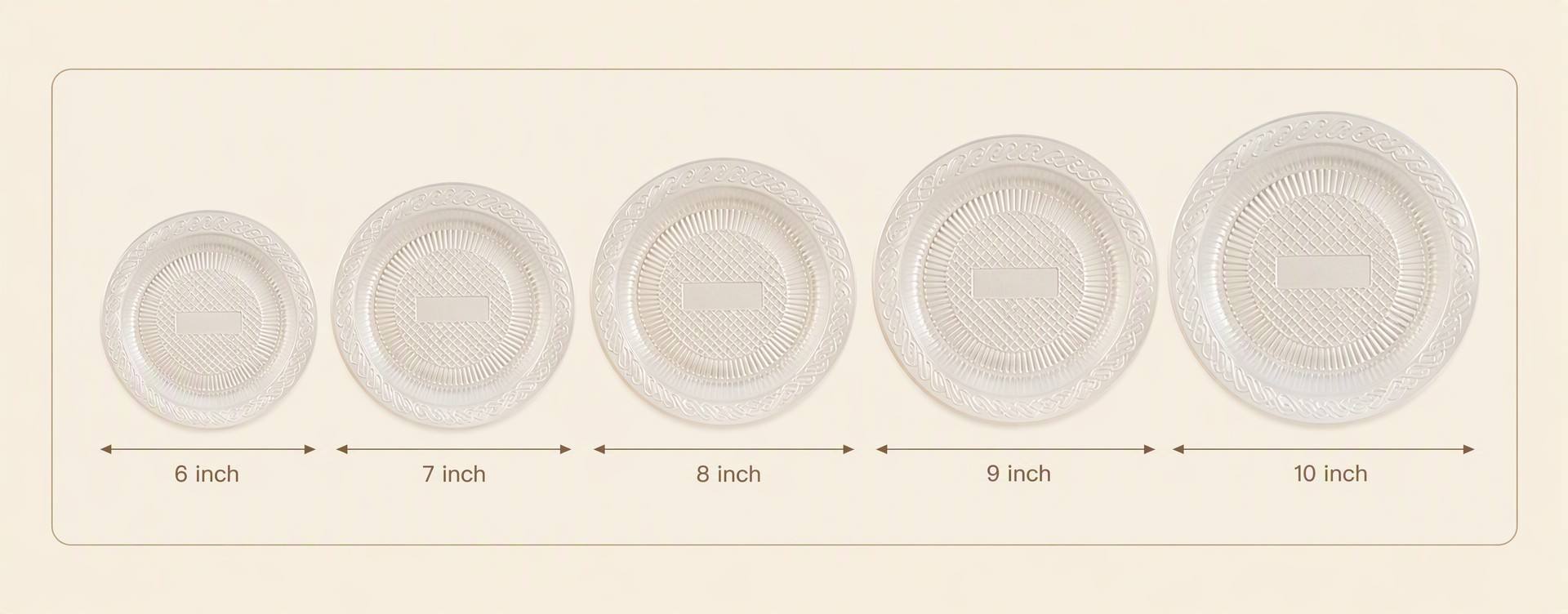
CPLA Plate Size Guide and Compostable Plate Categories

Get Latest Catalog

What Is the Application of CPLA Plates

CPLA plates are widely used across food service, hospitality, catering, retail, and sustainable packaging markets.

Their combination of plant-based material positioning, improved rigidity, and premium appearance makes them suitable for businesses looking for alternatives to conventional plastic plates.

The following applications explain where CPLA plate products are commonly used and why professional buyers select them.

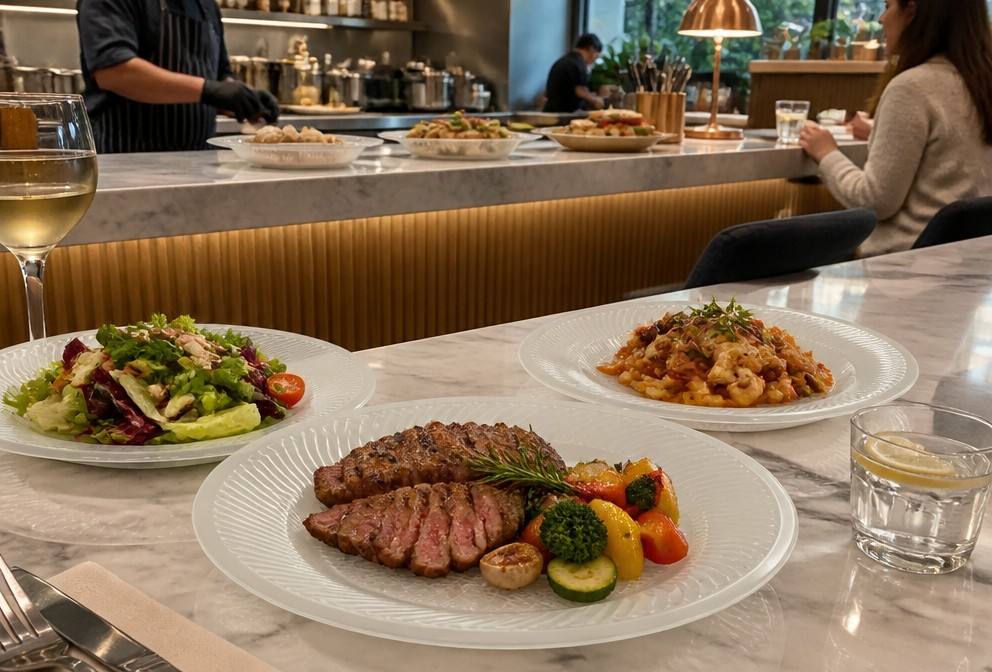
CPLA Plates Used in Restaurant food service Applications

Restaurants & food service Operations 

Restaurants increasingly use CPLA plates as part of sustainable dining and takeaway packaging programs.

Compared with traditional plastic plates, CPLA products help restaurants communicate environmental responsibility while maintaining practical food presentation.

Typical Requirements:

  • Reliable plate strength
  • Food-contact safety
  • Premium appearance
  • Sustainable packaging positioning
  • Consistent supply

Recommended Applications:

  • Main dishes
  • Salads
  • Desserts
  • Appetizers
  • Takeaway meals

Catering Services & Events

Large-scale catering operations require disposable tableware that combines convenience, appearance, and operational efficiency.

CPLA plates are commonly selected for:

  • Corporate events
  • Weddings
  • Conferences
  • Festivals
  • Outdoor catering

Typical Requirements:

  • Attractive presentation
  • Easy transportation
  • Reliable strength
  • Large-volume availability
CPLA Plates for Catering Events and Food Service
Compostable CPLA Plates for Hotel Hospitality Applications

Hotels & Hospitality Groups

Hotels and hospitality businesses increasingly evaluate sustainable packaging options as part of their environmental initiatives.

CPLA plates can be used for:

  • Breakfast service
  • Conference catering
  • Guest events
  • Room service applications

Typical Requirements:

  • Premium appearance
  • Food safety documentation
  • Stable supply capability
  • Brand consistency

Food Delivery & Takeaway Businesses

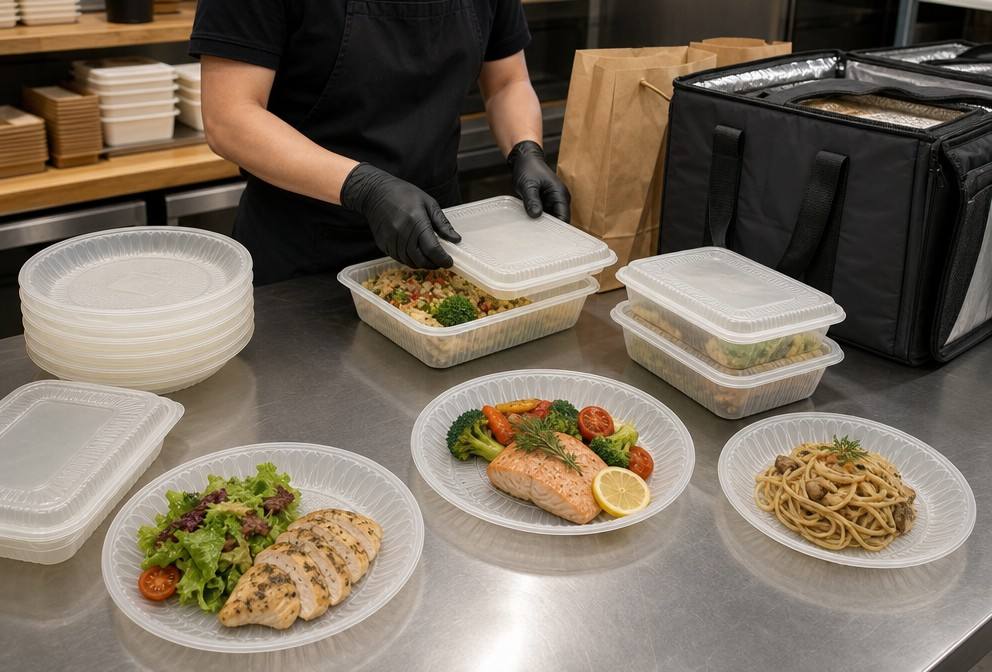
The growth of food delivery has increased demand for disposable tableware that maintains performance during transportation.

CPLA plates provide businesses with:

  • Lightweight packaging
  • Reliable food presentation
  • Sustainable brand messaging
  • Convenient disposal options where composting infrastructure exists

Typical Requirements:

  • Strong structure
  • Moisture resistance
  • Packaging efficiency
  • Customer-friendly appearance
CPLA Plates for Sustainable Food Delivery Packaging
Retail Compostable CPLA Plate Packaging Solutions

Retail Sustainable Tableware Programs

Retailers and e-commerce brands are expanding sustainable disposable tableware categories to meet consumer demand.

CPLA plates are suitable for:

  • Household sustainable tableware
  • Outdoor activities
  • Picnic products
  • Retail private-label programs

Typical Requirements:

  • Attractive packaging
  • Product consistency
  • Custom branding
  • Stable manufacturing support

CPLA Plates vs Other Disposable Plates

Choosing the right disposable plate requires evaluating material characteristics, application requirements, sustainability goals, and procurement considerations.

Different materials offer different advantages. Understanding these differences helps buyers select the most suitable solution for their market.

CPLA Plates vs Plastic Plates

Factor

CPLA Plate

Plastic Plate

Primary Material

Crystallized PLA

Petroleum-based plastic

Sustainability Position

Plant-based material

Limited sustainability positioning

Heat Performance

Improved thermal stability

Depends on plastic type

Appearance

Premium matte finish

Standard plastic appearance

Brand Positioning

Sustainable packaging

Traditional disposable packaging

Typical Applications

Sustainable food service, catering, events

General disposable use

CPLA plates are often selected by businesses that want to combine practical performance with stronger sustainability messaging.

CPLA Plates vs PLA Plates

Factor

CPLA Plate

PLA Plate

Material Structure

Crystallized PLA

Standard PLA

Rigidity

Higher rigidity

Moderate rigidity

Heat Resistance

Improved

Lower compared with CPLA

Food Applications

Wider food service use

More limited applications

Sustainability Position

Plant-based and compostable positioning

Plant-based and compostable positioning

The main difference is that crystallization technology improves the performance characteristics of CPLA plates, making them suitable for applications requiring better strength and temperature resistance.

CPLA Plates vs Bagasse Plates

Factor

CPLA Plate

Bagasse Plate

Material Source

PLA-based renewable material

Sugarcane fiber

Surface Appearance

Smooth and uniform

Natural molded fiber texture

Printing Capability

High customization potential

Limited printing options

Heat Performance

Good

Good

Sustainability Position

Plant-based polymer

Agricultural fiber

Both materials are sustainable alternatives. The best choice depends on whether buyers prioritize premium appearance, natural fiber positioning, application requirements, or cost considerations.

CPLA Plates vs Paper Plates

Factor

CPLA Plate

Paper Plate

Material

PLA based

Paper fiber

Moisture Resistance

Good

Depends on coating

Premium Appearance

High

Moderate

Sustainability Position

Plant-based compostable option

Fiber-based option

Typical Use

Sustainable food service

General disposable applications

Who Usually Buys CPLA Plates?

CPLA plates are primarily purchased by professional businesses rather than individual consumers.

Different buyer groups have different priorities, including sustainability positioning, supply stability, customization capability, compliance support, and cost management.

Understanding buyer requirements helps manufacturers provide more suitable solutions.

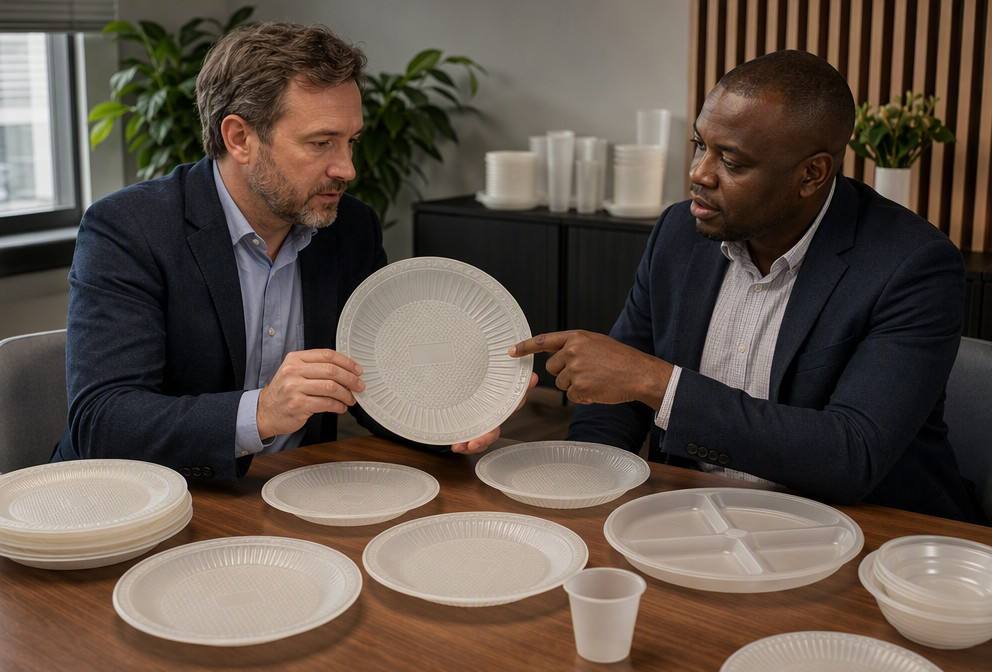
Importer Evaluating CPLA Plate Samples

Importers

Importers typically purchase CPLA plates in large quantities and distribute them through regional sales networks.

Their main concerns include:

  • Stable product quality
  • Competitive pricing
  • Export documentation
  • Reliable production capacity
  • Long-term supplier relationships

Food service Distributors

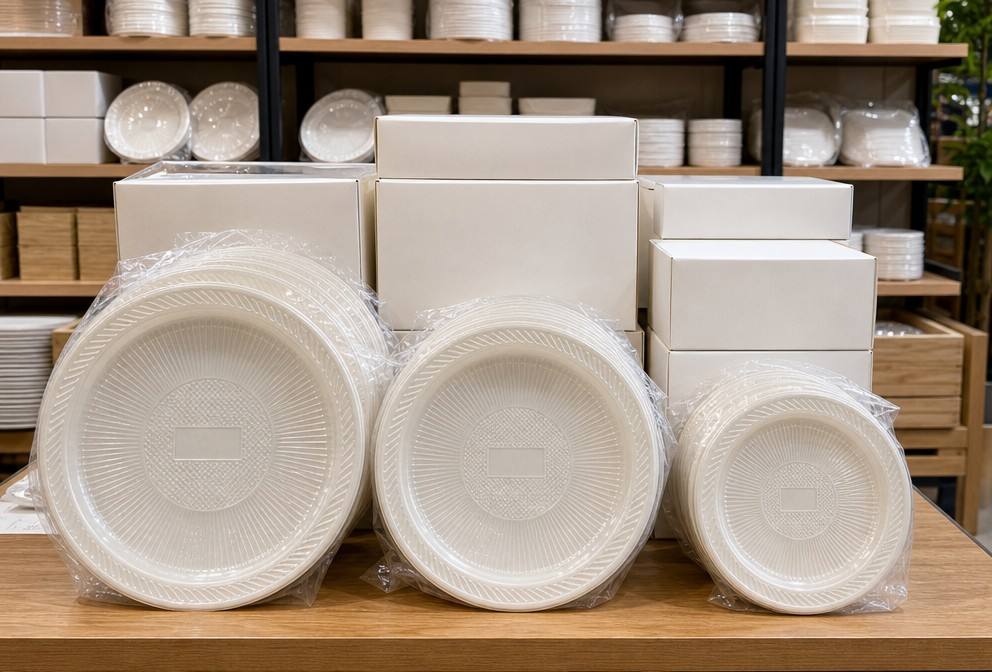
food service distributors supply restaurants, catering companies, hotels, and institutional customers.

They usually require:

  • Multiple product sizes
  • Consistent availability
  • Flexible packaging options
  • Competitive commercial pricing
food service Distributor Managing CPLA Plate Inventory
Restaurant Chain Selecting Compostable CPLA Plates

Restaurant Chains

Restaurant groups often select CPLA plates to improve sustainability performance across multiple locations.

Their priorities include:

  • Product consistency
  • Brand alignment
  • Stable supply
  • Packaging standardization

Brand Owners & Private Label Companies

Brand owners use customized CPLA plates to create differentiated sustainable product lines.

They typically require:

  • Custom packaging
  • Logo printing
  • Product development support
  • Confidential manufacturing
Private Label CPLA Plate Product Development
Hospitality Catering Using CPLA Plates

Hospitality & Catering Companies

Hotels, resorts, and catering companies select CPLA plates for events, guest services, and sustainable hospitality programs.

Their priorities include:

  • Premium presentation
  • Reliable supply
  • Food-contact compliance
  • Large-volume capability

Is CPLA Plate Right for Your Application? 

Choosing the right disposable plate depends on your food application, operating environment, sustainability objectives, and customer expectations.

CPLA plates are designed for businesses that need a balance between plant-based material positioning, reliable performance, and professional food presentation.

The following guide helps buyers evaluate whether CPLA plate products are suitable for their specific applications.

Application

Recommended

Restaurant Food Service

Catering Events

Hotel Hospitality Service

Corporate Catering

Sustainable Takeaway Meals

Food Delivery Applications

Festivals & Outdoor Events

Retail Sustainable Tableware Programs

Desserts & Snacks

Cold Food Service

Hot Food Service

Long-Term Food Storage

Industrial Applications

Applications Without Composting Infrastructure

Consider Local Requirements

CPLA plates are particularly suitable for businesses that want to replace traditional plastic plates with a more sustainable alternative while maintaining practical performance.

Typical suitable applications include:

  • Restaurants seeking sustainable tableware options
  • Catering companies requiring premium disposable plates
  • Hotels improving sustainability programs
  • Food brands developing eco-friendly packaging lines
  • Retailers offering compostable tableware products

However, buyers should consider local waste management systems and certification requirements before selecting compostable plates.

The environmental benefits of CPLA plates depend on proper disposal conditions, especially the availability of suitable industrial composting facilities.


Key Buyer Questions Before Purchasing CPLA Plates

Selecting the right CPLA plate supplier involves more than choosing a product size.

Professional buyers should evaluate material performance, application requirements, customization options, compliance documentation, and supplier capabilities before placing an order.

Are CPLA plates suitable for hot food applications?

Yes.

Compared with standard PLA products, CPLA plates provide improved heat stability due to the crystallization process.

They are commonly used for:

  • Hot meals
  • Catering dishes
  • Restaurant food service
  • Event catering

However, actual performance depends on food temperature, contact time, plate design, and product specifications.

What is the difference between CPLA plates and PLA plates? 

The main difference is the material structure.

PLA plates are made from standard polylactic acid, while CPLA plates undergo a crystallization process that improves rigidity and temperature performance.

Feature

CPLA Plate

PLA Plate

Material

Crystallized PLA

Standard PLA

Strength

Higher rigidity

Moderate rigidity

Heat Performance

Improved

Lower

Application Range

Wider

More limited

For food service applications requiring better structural stability, CPLA plates are often preferred.

Are CPLA plates compostable?

CPLA plates are designed as compostable tableware solutions when appropriate certification and industrial composting conditions are available.

Buyers should confirm:

  • Destination market requirements
  • Applicable composting standards
  • Local waste management infrastructure
  • Required certification documents

DAILYECO can support customers with relevant product documentation according to project requirements. 

What sizes are available for CPLA plates?

Common sizes include:

  • 6 inch
  • 7 inch
  • 8 inch
  • 9 inch
  • 10 inch
  • Customized sizes

Different sizes are selected according to food applications:

Size

Typical Application

6 inch

Desserts, snacks, appetizers

7–8 inch

Breakfast, salads, side dishes

9 inch

Main meals, takeaway food

10 inch

Dinner portions, catering

Can CPLA plates be customized? 

Yes.

DAILYECO provides OEM and private-label solutions including:

  • Custom sizes
  • Custom shapes
  • Packaging design
  • Private label branding
  • Retail packaging
  • Barcode printing
  • Carton customization

Customization helps distributors and brands develop differentiated sustainable tableware products. 

Are CPLA plates food-contact safe? 

Yes.

DAILYECO manufactures CPLA plates using food-grade materials and can provide supporting documentation according to customer requirements and destination market regulations. 

Who usually purchases CPLA plates? 

Typical buyers include:

  • Importers
  • food servicedistributors
  • Restaurant groups
  • Catering companies
  • Hospitality businesses
  • Sustainable packaging brands
  • Private-label companies

These buyers typically focus on:

  • Stable quality
  • Reliable supply
  • Customization capability
  • Compliance support
  • Long-term cooperation


When CPLA Plates May Not Be the Best Choice 

Although CPLA plates provide many advantages, they are not suitable for every application.

Understanding product limitations helps buyers select the most appropriate disposable tableware solution.

Extremely Cost-Sensitive Projects 

For projects where the lowest purchasing cost is the primary objective, traditional disposable materials may provide a more economical option.

CPLA plates generally have higher material costs due to renewable raw materials and specialized processing technology.

For high-volume applications where sustainability is not a purchasing priority, buyers may consider alternative solutions.

Markets Without Composting Infrastructure 

The sustainability advantages of compostable plates depend on proper waste management systems.

In regions without suitable industrial composting facilities, buyers should evaluate whether local disposal infrastructure can support compostable products.

Heavy Industrial Food Applications 

CPLA plates are designed for food service and consumer applications.

They are not intended for:

  • Industrial material handling
  • Chemical applications
  • Long-term storage environments

Specialized packaging solutions should be considered for these applications.

Applications Requiring Maximum Natural Fiber Positioning

Some brands prefer the visible appearance of natural fiber materials.

For businesses seeking:

  • Natural texture
  • Agricultural fiber storytelling
  • Molded fiber appearance

Products such as bagasse plates may better match their sustainability positioning.

Long-Term Food Storage Requirements

CPLA plates are designed for serving and short-term food contact.

Applications requiring extended storage, shelf-life protection, or controlled-atmosphere packaging require different packaging technologies.

Selecting the right material requires balancing:

  • Performance requirements
  • Sustainability goals
  • Local regulations
  • Customer expectations
  • Procurement budget

What Is the Processing to Manufacture CPLA Plates

Producing high-quality CPLA Plates requires precise material preparation, crystallization technology, sheet forming, thermoforming processes, and strict quality control to ensure consistent dimensions, structural strength, heat performance, food-contact safety, and reliable product performance.

Unlike Cornstarch Plates, which are produced from cornstarch-based materials, CPLA Plates are manufactured from PLA resin that undergoes crystallization treatment to improve rigidity, thermal stability, and dimensional consistency. After PLA material preparation and crystallization, the processed material is converted into sheets and formed into different plate structures according to product specifications, size requirements, and application needs.

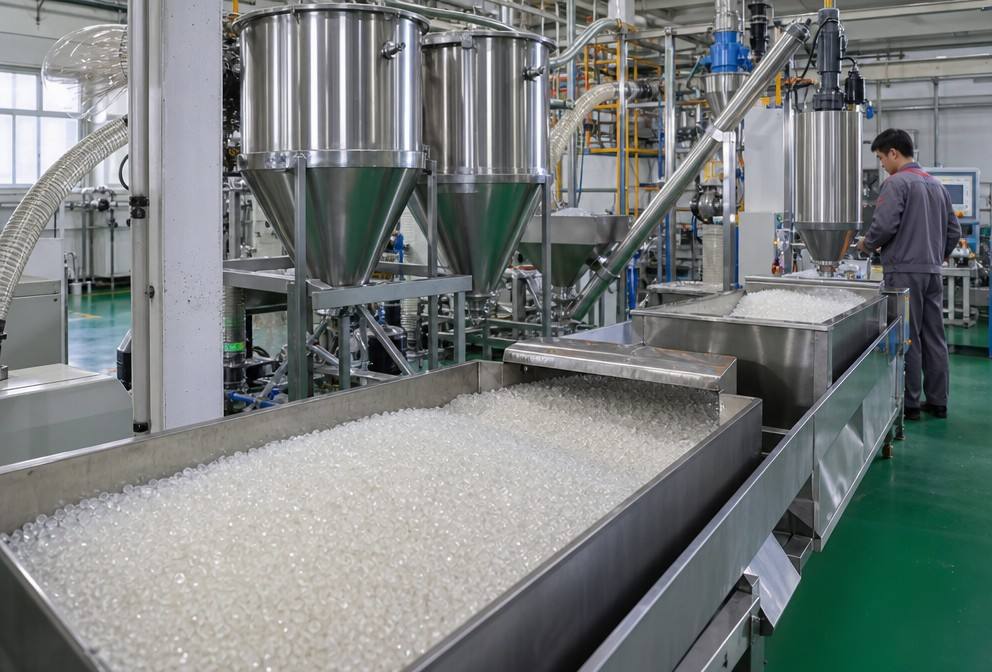
PLA Resin Preparation for CPLA Plates Production

Step 1 – PLA Resin Preparation 

PLA resin and approved functional additives are prepared according to the required product formulation.

The raw materials are accurately measured and mixed under controlled conditions to ensure consistent material composition, stable processing performance, and reliable quality for CPLA Plate production.

Material ratios, processing conditions, and batch information are controlled throughout the preparation stage.

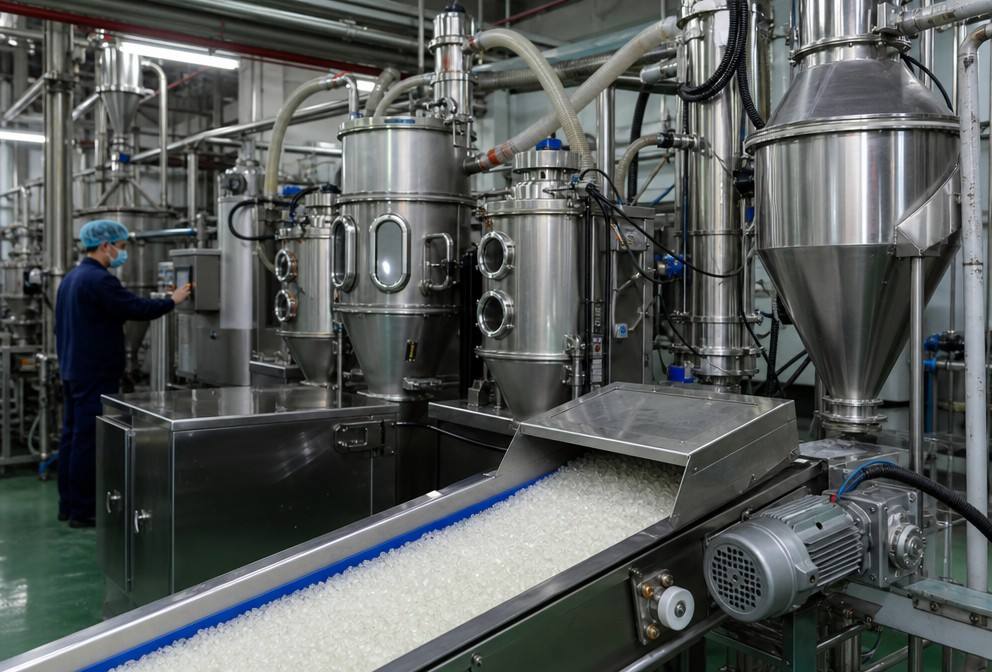
Step 2 – Crystallization Treatment

The prepared PLA material undergoes controlled crystallization treatment to improve its physical properties.

During this process, the internal structure of PLA is modified to enhance rigidity, heat resistance, and dimensional stability, which are important performance characteristics for CPLA Plates.

Crystallization parameters are carefully controlled to achieve consistent material performance for downstream forming processes.

PLA Crystallization Treatment Process for CPLA Plate Production
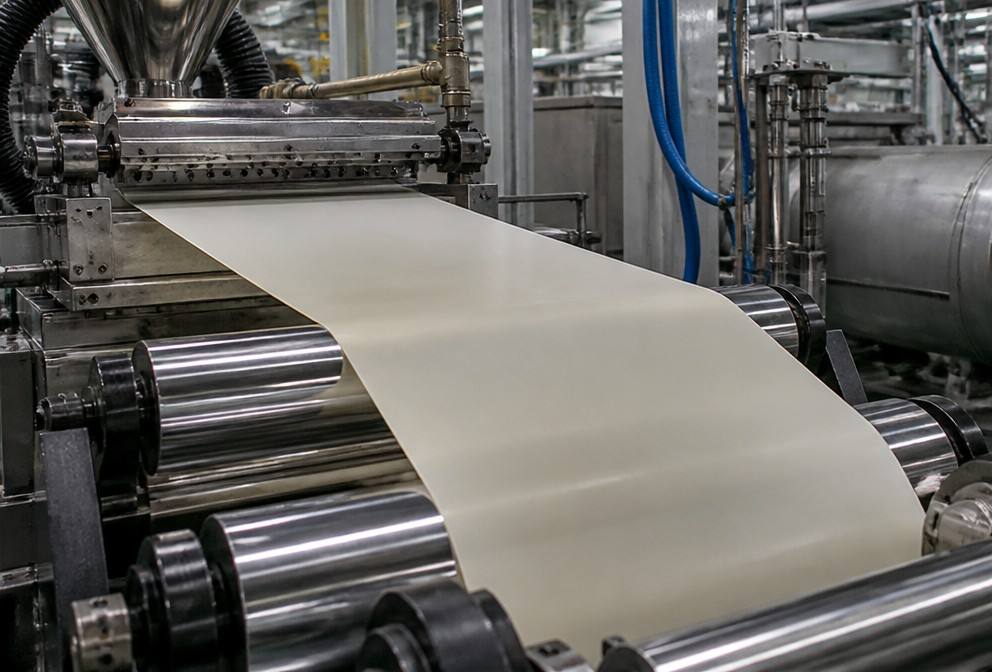
CPLA Sheet Extrusion Process for Plate Production

Step 3 – Sheet Extrusion

The crystallized PLA material is processed through sheet extrusion equipment to produce continuous CPLA sheets.

During extrusion, key parameters including sheet thickness, width, temperature, and surface quality are monitored to ensure stable forming performance.

Consistent sheet quality helps achieve accurate dimensions and uniform thickness during plate forming.

Step 4 – Plate Forming

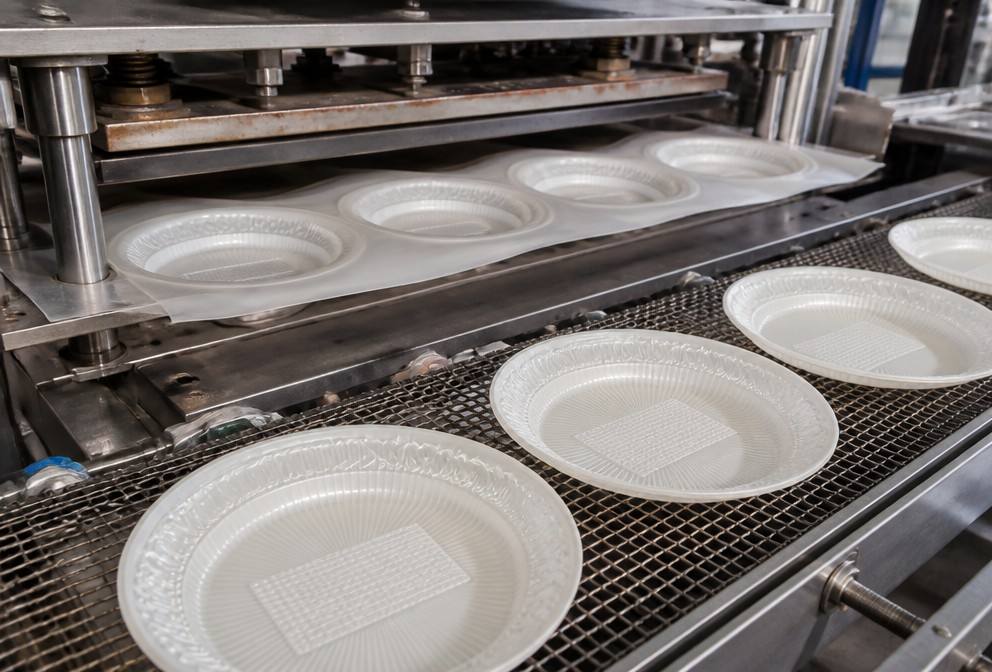
The prepared CPLA sheets are reheated and shaped into plate structures through precision thermoforming equipment with dedicated molds.

Forming temperature, pressure, cycle time, and mold parameters are controlled to achieve accurate dimensions, stable shape, consistent thickness, and smooth surface finish.

Different designs, including round plates, compartment plates, and customized plate structures, can be produced according to customer requirements.

CPLA Plates Thermoforming and Forming Process
Trimming and Edge Finishing of CPLA Plates

Step 5 – Trimming & Edge Finishing 

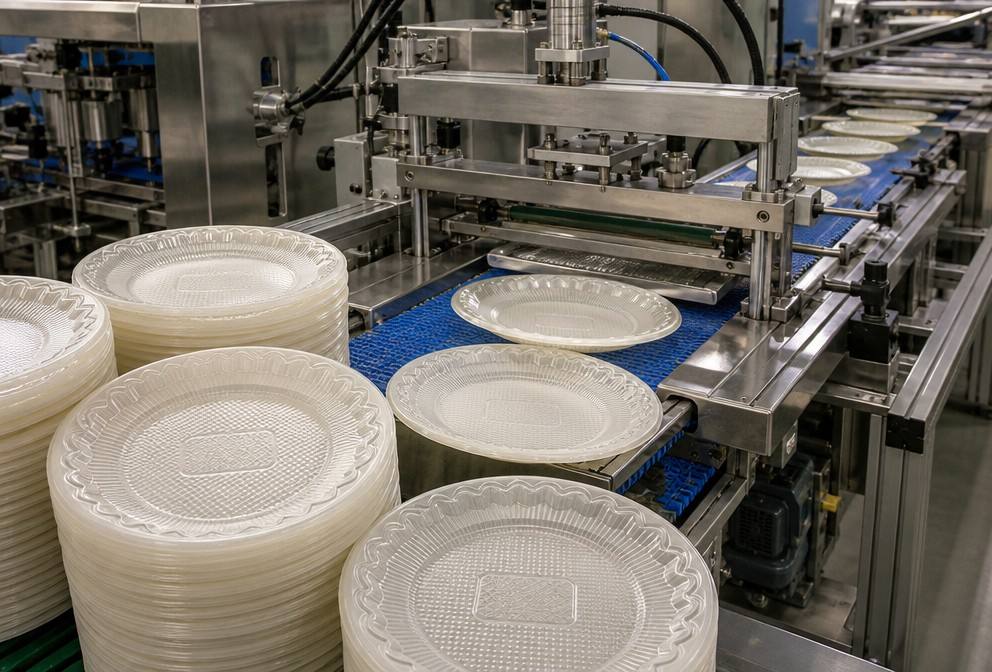
The formed CPLA Plates are separated from excess sheet material and processed through trimming equipment.

The trimming process controls plate dimensions, edge quality, stacking performance, and overall product appearance.

Clean and consistent edges help improve product presentation and user experience during foodservice applications.

Step 6 – Inspection & Quality Control 

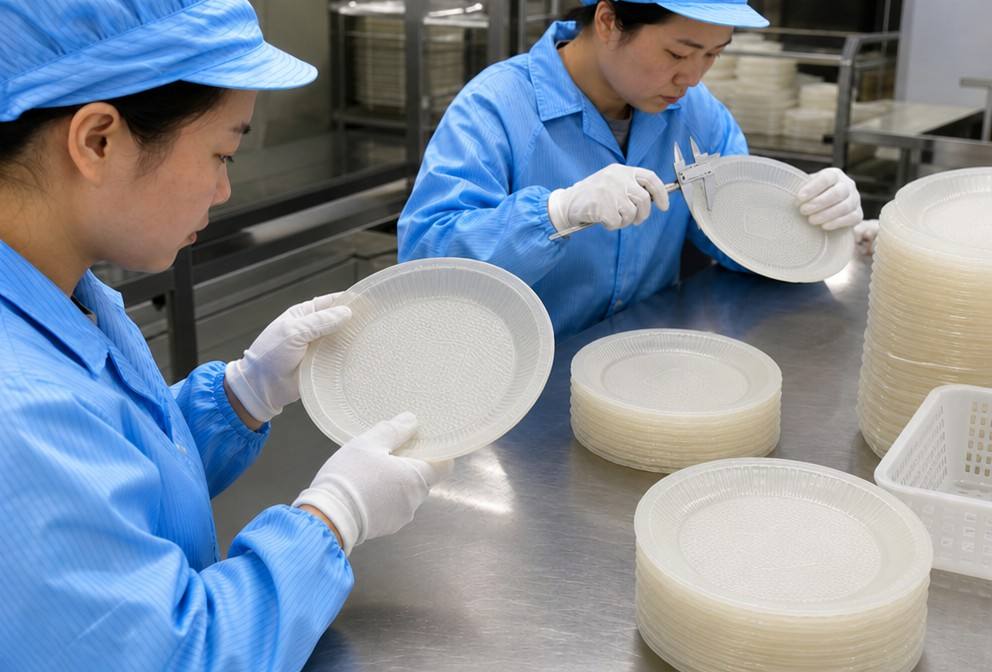
Finished CPLA Plates are inspected for dimensions, unit weight, appearance, surface finish, deformation, stacking performance, and product consistency.

Quality inspections are performed according to approved specifications and customer requirements before packaging.

These procedures help ensure stable product performance across different production batches.

Quality Inspection of CPLA Plates Before Packaging
Packaging and Shipment of CPLA Plates

Step 7 – Packaging & Shipment

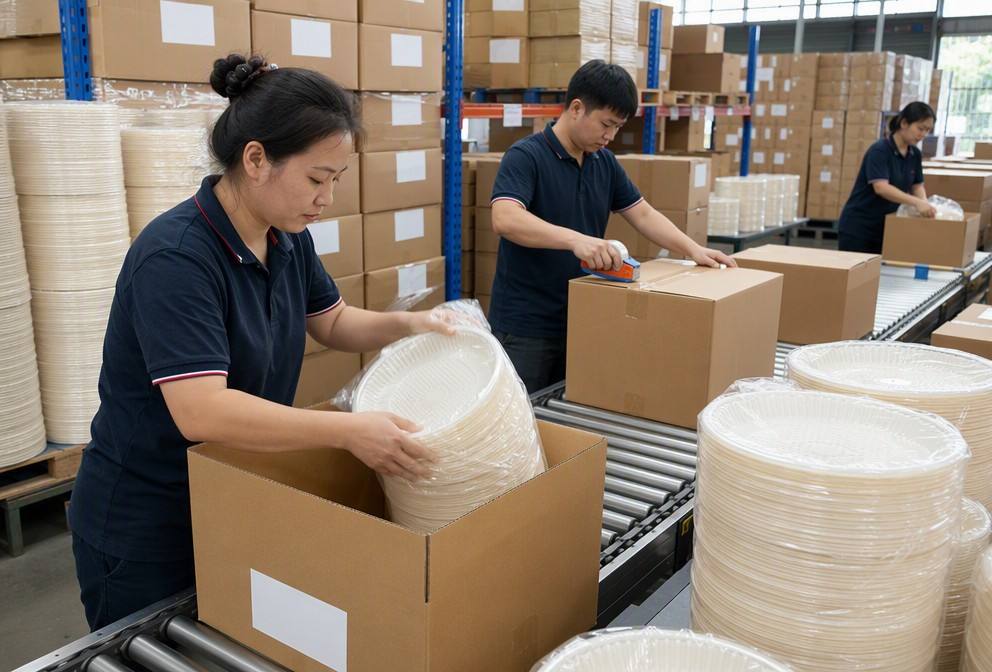
Approved CPLA Plates are counted, packed into inner bags and export cartons, and labeled according to confirmed order requirements.

Finished cartons are stored, palletized when required, and prepared for domestic or international shipment.

Packaging specifications can be customized according to distributor, foodservice, retail, and private-label requirements.

How to Choose the Right CPLA Plate Manufacturer? 

Selecting the right CPLA plate manufacturer is an important decision for importers, distributors, food service suppliers, and private-label brands.

A reliable manufacturing partner does not only provide products. The right supplier should also support material selection, customization, quality control, compliance documentation, production stability, and long-term supply management.

When evaluating potential CPLA plate manufacturers, buyers should consider the following factors.

Manufacturing Experience

Experience in sustainable disposable tableware manufacturing is one of the most important factors when selecting a supplier.

An experienced manufacturer should understand:

  • CPLA material characteristics
  • Compostable tableware requirements
  • Food-contact standards
  • International market expectations
  • Large-volume production management

Manufacturers with export experience are generally better prepared to manage different customer requirements, including product specifications, packaging standards, and documentation support.

For professional buyers, choosing a manufacturer with proven experience helps reduce sourcing risks and improves long-term supply reliability.

Production Capacity

Stable production capacity is essential for distributors, wholesalers, and brands requiring continuous supply.

When evaluating a supplier, buyers should consider:

  • Production equipment capability
  • Monthly output capacity
  • Manufacturing lead time
  • Peak season production ability
  • Supply chain stability

A manufacturer with sufficient capacity can better support:

  • Container-volume orders
  • Seasonal demand changes
  • New product launches
  • Long-term business growth

Production capability should match both current purchasing needs and future expansion plans.

Product Quality Management

Consistent product quality is critical for disposable tableware businesses.

A professional CPLA plate manufacturer should implement quality control throughout the production process.

Typical quality inspections include:

  • Raw material inspection
  • Material consistency checking
  • Product dimension verification
  • Appearance inspection
  • Strength testing
  • Packaging inspection
  • Random quality sampling

A documented quality management system helps ensure that every shipment maintains consistent performance.

Customization Capability

Many businesses require customized CPLA plates to strengthen their market positioning.

A capable manufacturer should support:

  • Customized plate sizes
  • Customized shapes
  • Private-label production
  • Packaging design
  • Retail-ready packaging
  • Logo customization
  • Barcode and carton printing

Strong customization capability allows distributors and brands to create differentiated sustainable tableware products.

Food Contact & Compliance Support 

International markets may have different requirements for sustainable food packaging.

Before placing an order, buyers should confirm whether the supplier can support:

  • Food-contact documentation
  • Material declarations
  • Product testing reports
  • Sustainability-related documents
  • Customer audit requirements

Proper documentation preparation helps reduce delays during product approval and market entry.

Export Experience

Export experience is especially important for global buyers.

A professional manufacturer should understand:

  • International shipping requirements
  • Export packaging standards
  • Container loading optimization
  • Documentation preparation
  • Communication processes

Experienced suppliers can help customers manage international procurement more efficiently.

Technical Support & Product Recommendations

A professional supplier should provide recommendations rather than simply accept purchase orders.

Technical support may include:

  • Selecting suitable plate sizes
  • Recommending product specifications
  • Evaluating application requirements
  • Suggesting packaging solutions
  • Supporting customized development

This helps buyers avoid unsuitable product choices and improves overall project efficiency.

Customer Service Capability

Reliable communication is essential during international cooperation.

Buyers should evaluate whether suppliers provide:

  • Fast quotation response
  • Sample support
  • Production updates
  • Order tracking
  • After-sales communication

Strong customer service contributes to smoother cooperation and long-term partnerships.


Pre-Purchasing Checklist for Buyers 

Before placing an order for CPLA Plates, buyers are encouraged to review the following checklist to ensure the selected products meet both commercial requirements and application needs.

□ Plate Size & Shape

□ Material Specification (CPLA Material)

□ Product Thickness & Structure

□ Structural Strength Requirements

□ Temperature Resistance Requirements

□ Hot Food & Cold Food Applications

□ Grease Resistance Requirements

□ Moisture Resistance Requirements

□ Food Contact Compliance

□ Compostability Requirements

□ Certification Requirements

□ Custom Logo Printing Requirements

□ Packaging Specifications

□ Private Label Requirements

□ MOQ

□ Production Lead Time

□ Sample Approval

□ Quality Inspection Requirements

□ Factory Audit Requirements

□ Carton Marking

□ Shipping Method

□ Destination Market Regulations

□ Annual Purchasing Forecast

□ Payment Terms


Completing this checklist before production begins can help reduce procurement risks, improve communication between buyers and suppliers, and ensure the selected CPLA Plate solution meets long-term business requirements.
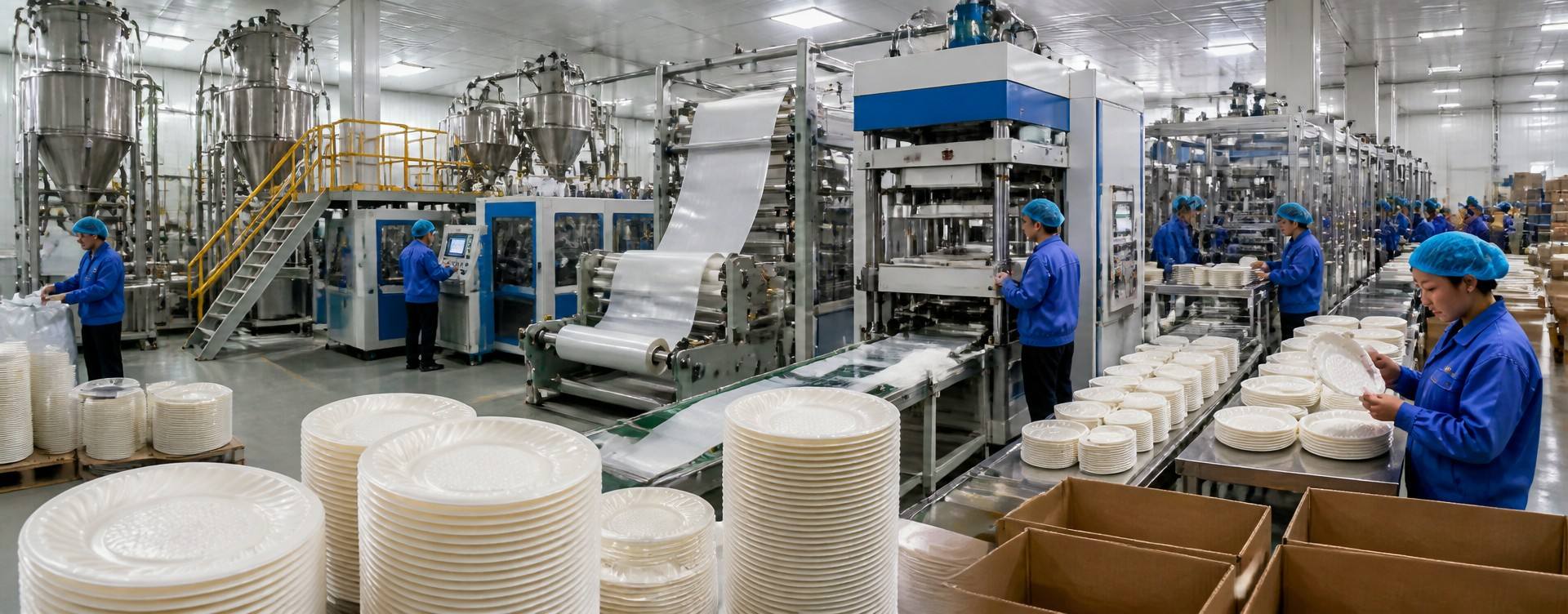
 

Choose DAILYECO to Be Your Professional CPLA Plate Manufacturer

DAILYECO CPLA Plate Manufacturing Facility

DAILYECO provides integrated sustainable disposable tableware solutions for importers, distributors, food service companies, hospitality groups, and private-label packaging brands.

As a professional sustainable packaging manufacturer and supply chain partner, we focus on delivering stable product quality, flexible customization, and reliable global supply solutions for customers seeking long-term cooperation.

Factory Capability

DAILYECO Manufacturing Facility

Description

Employees

More than 1,000 employees

Production Support

Professional disposable packaging production facilities and automated manufacturing systems

Production Lines

Advanced molding production lines and automated equipment

Production Capability

More than 30 40HQ containers per monthly customers

Product Range

CPLA plates, compostable tableware, molded fiber products, and sustainable packaging solutions

Customization

Plate size, packaging, logo, and private-label customization

OEM

Custom products, branding, and packaging solutions

ODM

Product structure and specification optimization

Technical Support

Available

Production MOQ

Based on product specification and customization requirements

Typical Lead Time

Approximately 30–35 days for customized orders

DAILYECO’s manufacturing capability allows global buyers to develop reliable CPLA plate supply solutions while maintaining consistent quality and flexible customization options.

Compliance & Documentation Support

DAILYECO supports customers with documentation according to destination market requirements.

Support may include:

  • Food-contact documentation
  • Material declarations
  • Product testing reports
  • Sustainability documentation
  • Factory audit support

View Our Compliance & Certification Support Page

Customization Services

DAILYECO provides comprehensive customization solutions throughout the product development process, including:

  • Custom Plate Sizes
  • Custom Plate Shapes
  • Logo Printing
  • Private Label Solutions
  • Retail Packaging
  • Custom Carton Printing
  • Barcode Printing
  • QR Code Printing
  • Customized Product Sets

Our team works closely with customers to develop sustainable tableware solutions that match their market positioning, product requirements, and packaging strategies.

Whether launching a new CPLA plate product line or expanding an existing sustainable tableware portfolio, DAILYECO provides flexible OEM and private-label support.

Export Experience

DAILYECO products are supplied to customers across North America, Europe, Australia, the Middle East, Asia, and other international markets.

With international export experience, we help customers simplify sourcing processes, improve supply chain stability, and maintain reliable long-term cooperation.

Our export support includes:

  • International communication
  • Export documentation
  • Packaging optimization
  • Shipping coordination
  • Long-term supply planning

Customer Service

DAILYECO’s experienced international sales team provides support throughout the entire project lifecycle.

Support includes:

  • Product Consultation
  • Sample Arrangement
  • Specification Confirmation
  • Production Updates
  • Shipping Coordination
  • After-sales Support

Professional communication helps ensure smoother project execution from initial inquiry to final delivery.

Continuous Product Development 

As sustainable packaging requirements continue to evolve, DAILYECO continuously develops new material solutions, product specifications, and customization capabilities.

Through ongoing improvement in sustainable disposable tableware manufacturing, we help customers respond to changing market demands and build competitive product portfolios.

Why Global Buyers Choose DAILYECO

Buyer Requirement

DAILYECO Support

Reliable Supply

Professional production management and stable manufacturing capability

Product Customization

OEM and private-label solutions

Sustainable Packaging

Plant-based and compostable tableware options

Quality Consistency

Standardized quality control processes

Market Support

Technical recommendations and product guidance

International Cooperation

Export experience and global customer service

Whether you are sourcing for a food service distributor, restaurant group, hospitality company, importer, or private-label brand, DAILYECO can provide suitable CPLA plate solutions based on your business requirements.
REQUEST A QUOTE

Case Study 

Case Study 1: Helping a Catering Group Standardize Sustainable Disposable Tableware Across Multiple Events

Customer Background

A regional catering group operating more than 40 event service locations was looking for a more sustainable disposable tableware solution.

The company previously used multiple disposable plate suppliers, including traditional plastic plates and different types of compostable products. However, inconsistent specifications, unstable supply, and different product quality affected daily operations.

The customer wanted CPLA plates that could provide:

  • Reliable strength for catering applications
  • Consistent appearance across events
  • Sustainable packaging positioning
  • Stable large-volume supply

Challenge

Before cooperation, the customer faced several operational challenges:

  • More than 18 active plate SKUsfrom different suppliers
  • Different plate sizes and packaging standards
  • Inconsistent product appearance between orders
  • Difficulty managing inventory for seasonal events
  • Limited customization options for branded catering projects

The customer needed a supplier that could simplify procurement while maintaining product quality.

DAILYECO Solution

After reviewing the customer’s event types, food applications, and purchasing requirements, DAILYECO recommended a standardized CPLA plate product portfolio.

The solution included:

  • Reducing unnecessary plate variations
  • Selecting three core plate sizes for different food applications
  • Optimizing packaging specifications
  • Providing customized carton identification
  • Establishing consistent production standards

DAILYECO also supported the customer with product recommendations based on:

  • Catering meal types
  • Portion requirements
  • Transportation conditions
  • Event frequency

Results

After implementation:

Improvement Area

Result

Active Product SKUs

Reduced from 18 to 6 core specifications

SKU Reduction

Reduced by approximately 67%

Inventory Management

Simplified through standardized packaging

Supplier Management

Reduced multiple suppliers to one primary partner

Order Efficiency

Improved through centralized purchasing

Product Consistency

Improved across different event locations

Key Takeaway

For professional buyers, selecting the right CPLA plate manufacturer is not only about purchasing products.

A capable supplier can also help optimize product selection, simplify supply management, and improve long-term operational efficiency.

Case Study 2: Supporting a Sustainable Retail Brand Launch with Private Label CPLA Plates 

Customer Background

A sustainable household products brand planned to launch a new disposable tableware product line targeting environmentally conscious consumers.

The customer required:

  • A plant-based disposable plate solution
  • Retail-ready packaging
  • Private-label production
  • Stable manufacturing support

Challenge

The customer needed to move quickly from product concept to commercial launch but faced several challenges:

  • No existing production partner
  • Need for customized packaging
  • Requirement for consistent product appearance
  • Need for export-ready documentation

DAILYECO Solution

DAILYECO provided a complete OEM solution including:

  • CPLA plateproduct development support
  • Packaging structure recommendations
  • Private-label packaging production
  • Export carton design
  • Production quality control

The project team worked with the customer to confirm:

  • Product specifications
  • Packaging requirements
  • Market positioning
  • Shipping requirements

Results

The project achieved:

Project Area

Result

Product Development

Completed customized CPLA plate solution

Packaging

Developed private-label retail packaging

Product Launch

Supported commercial market introduction

Supply Model

Established long-term manufacturing cooperation

Production Consistency

Maintained standardized product quality

Key Takeaway

For brands entering the sustainable tableware market, working with an experienced CPLA plate manufacturer can reduce product development risks and accelerate market entry.


FAQ 

Are CPLA plates suitable for outdoor events and festivals? 

Yes.

CPLA plates are commonly used for outdoor events such as festivals, markets, company gatherings, and catering activities.

Their advantages include:

  • Lightweight transportation
  • Easy distribution
  • Professional appearance
  • Sustainable product positioning

However, buyers should consider local waste collection and composting systems when planning outdoor events.

How should CPLA plates be stored before use? 

CPLA plates should generally be stored in a clean, dry environment away from excessive heat and direct sunlight.

Proper storage helps maintain:

  • Product appearance
  • Packaging integrity
  • Structural performance

For large-volume buyers, warehouse conditions should be considered during procurement planning.

Do CPLA plates have a different appearance compared with plastic plates? 

Yes.

Compared with traditional plastic plates, CPLA plates typically have a different surface appearance and texture.

They are often selected by brands that prefer:

  • A modern sustainable appearance
  • Premium food presentation
  • Plant-based material positioning

The final appearance depends on product design, molding technology, and surface finishing.

Can CPLA plates be used for branded food service programs? 

Yes.

Many food service businesses use CPLA plates as part of branded sustainability programs.

Applications include:

  • Restaurant chains
  • Corporate catering
  • Hotels
  • Events
  • Sustainable food brands

Custom packaging and private-label solutions can help businesses create a consistent brand experience.

How do buyers evaluate the quality of CPLA plates?

Professional buyers usually evaluate quality through several factors:

  • Material consistency
  • Plate rigidity
  • Surface finish
  • Dimensional accuracy
  • Packaging quality
  • Production consistency

A reliable manufacturer should provide quality control procedures and product documentation.

What affects the price of CPLA plates?

The price of CPLA plates depends on multiple factors, including:

  • Product size
  • Plate thickness
  • Order quantity
  • Packaging requirements
  • Customization level
  • Shipping destination

Large-volume purchasing and standardized specifications usually help improve procurement efficiency.

Are CPLA plates suitable for supermarkets and retail sales? 

Yes.

CPLA plates can be developed for retail programs through:

  • Private-label packaging
  • Consumer-friendly pack sizes
  • Barcode labeling
  • Custom carton design

Retail buyers should consider packaging design, shelf presentation, and market requirements when developing products.

How long can CPLA plates maintain product quality during transportation? 

When properly packaged and transported under suitable conditions, CPLA plates can maintain stable product quality throughout international shipping.

Buyers should evaluate:

  • Packaging protection
  • Container loading method
  • Transportation environment
  • Destination climate conditions

A professional supplier can recommend suitable export packaging solutions.

What information should buyers provide when requesting a CPLA plate quotation? 

To receive an accurate quotation, buyers should provide:

  • Required plate size
  • Estimated order quantity
  • Application scenario
  • Packaging requirements
  • Customization requirements
  • Destination market

Providing complete information helps manufacturers recommend the most suitable solution.

Can CPLA plates be combined with other sustainable packaging products?

Yes.

Many businesses develop complete sustainable packaging collections combining:

  • CPLA plates
  • Compostable cutlery
  • Bagasse containers
  • Paper packaging
  • Other plant-based tableware

A complete product portfolio helps distributors and brands provide one-stop sustainable packaging solutions.


DAILYECO Industry Expert Tips: 10 Professional Insights for Sourcing CPLA Plates 

Selecting the right CPLA plate supplier requires more than comparing product prices.

Professional buyers should evaluate material quality, production capability, application suitability, compliance requirements, and long-term supply reliability before making purchasing decisions.

Based on years of experience supporting global food service businesses, distributors, and sustainable packaging brands, DAILYECO summarizes the following 10 professional insights to help buyers make more informed sourcing decisions.

1. Evaluate Material Quality Before Comparing Prices 

One of the most common mistakes when purchasing CPLA plates is focusing only on unit price.

Although cost is an important purchasing factor, material quality directly affects:

  • Plate strength
  • Heat performance
  • Surface appearance
  • Customer experience
  • Product consistency

Lower-cost products may use different material formulations or manufacturing standards, which can result in inconsistent performance.

Professional buyers should evaluate the overall value of the product rather than selecting suppliers based only on the lowest quotation.

2. Understand the Difference Between PLA and CPLA Materials 

Many buyers confuse PLA plates and CPLA plates because both materials are plant-based.

However, their performance characteristics are different.

CPLA plates use crystallization technology to improve:

  • Rigidity
  • Structural stability
  • Temperature resistance

Before purchasing, buyers should confirm whether the selected material matches their intended application.

For hot food service, catering, and premium disposable tableware programs, CPLA plates are often considered because of their improved performance compared with standard PLA products.

3. Select Plate Specifications According to Food Applications 

Choosing the correct plate size and design is essential for operational efficiency.

Different applications require different specifications:

Application

Recommended Plate Consideration

Desserts & Snacks

Small-size plates

Breakfast & Light Meals

Medium-size plates

Restaurant Main Courses

Standard dinner plates

Catering Events

Larger plates or compartment designs

Retail Programs

Consumer-friendly packaging sizes

A professional supplier should recommend products based on actual usage scenarios rather than simply providing standard catalog options.

4. Confirm Compostability Requirements in Target Markets 

The sustainability value of compostable plates depends on local regulations, certification requirements, and waste management infrastructure.

Before purchasing, buyers should confirm:

  • Destination market requirements
  • Required certifications
  • Composting availability
  • Customer sustainability expectations

Different countries and regions may have different standards for compostable packaging.

Early confirmation helps avoid compliance issues after product arrival.

5. Consider the Complete Supply Chain, Not Only the Product

Successful sourcing requires more than receiving qualified products.

Buyers should evaluate the supplier’s ability to support:

  • Production stability
  • Packaging requirements
  • Export documentation
  • Shipping coordination
  • Long-term cooperation

A reliable manufacturing partner can reduce operational risks and improve supply chain efficiency.

6. Request Samples Before Large-Volume Orders

Product samples allow buyers to evaluate whether the CPLA plates meet actual business requirements.
Before mass production, buyers should check:

  • Plate appearance
  • Material texture
  • Strength during food service
  • Packaging condition
  • Compatibility with intended applications

Sample evaluation helps identify potential issues before commercial production begins.

7. Evaluate Supplier Customization Capability

For brands, distributors, and retailers, customization is an important competitive advantage.

A capable CPLA plate manufacturer should support:

  • Custom packaging
  • Private-label solutions
  • Retail-ready designs
  • Barcode labeling
  • Product development assistance

Customized sustainable tableware allows businesses to create stronger market differentiation.

8. Review Quality Control Procedures

Consistent quality is essential for international buyers.

Before cooperation, buyers should understand the supplier’s quality management process.

Important considerations include:

  • Raw material inspection
  • Production monitoring
  • Finished product inspection
  • Packaging checks
  • Shipment quality verification

A structured quality control system helps ensure reliable performance across repeated orders.

9. Balance Sustainability Goals With Practical Requirements

Sustainable packaging decisions should consider both environmental objectives and operational needs.

A suitable CPLA plate solution should balance:

  • Material advantages
  • Food application requirements
  • Cost expectations
  • Customer acceptance
  • Local disposal conditions

The most sustainable choice is not always the same for every market.

Professional buyers should select products according to their complete business strategy.

10. Choose a Manufacturer That Provides Long-Term Support

Disposable tableware sourcing is usually a long-term business relationship.

A reliable manufacturer should provide:

  • Product recommendations
  • Technical communication
  • Production updates
  • Documentation support
  • Continuous improvement

The right supplier becomes more than a product provider. It becomes a strategic partner supporting business growth.

DAILYECO Expert Recommendation 

When sourcing CPLA plates, professional buyers should evaluate suppliers from multiple perspectives:

✓ Material expertise
✓ Manufacturing capability
✓ Quality management
✓ Customization support
✓ Compliance assistance
✓ Export experience
✓ Long-term cooperation capability

A successful sourcing decision is not only about purchasing disposable plates. It is about building a reliable supply chain that supports product quality, customer satisfaction, and sustainable business development.

DAILYECO works with importers, distributors, food service companies, hospitality groups, and private-label brands worldwide to provide professional CPLA plate manufacturing solutions.


This Page Reviewed By 

FangJun Chan

Food Packaging Compliance Manager

10+ Years of Experience

Specialized in:

  • Food Contact Compliance
  • Sustainable Packaging
  • CPLA PLATEManufacturing
  • FDA
  • EU Food Contact Regulations
  • Packaging Compliance Documentation

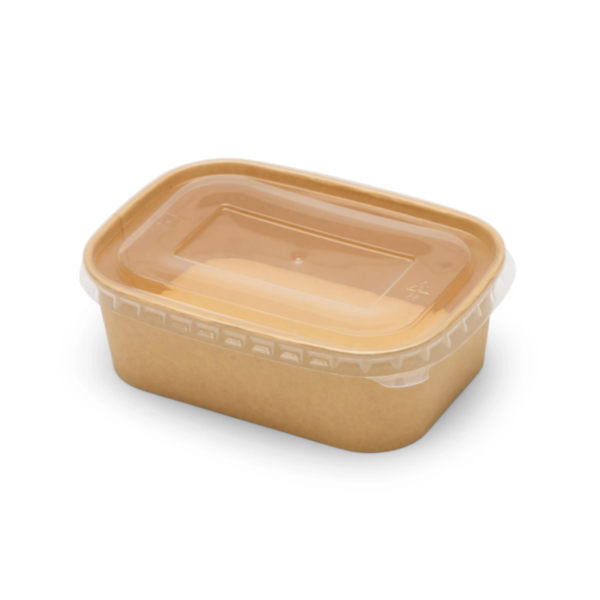
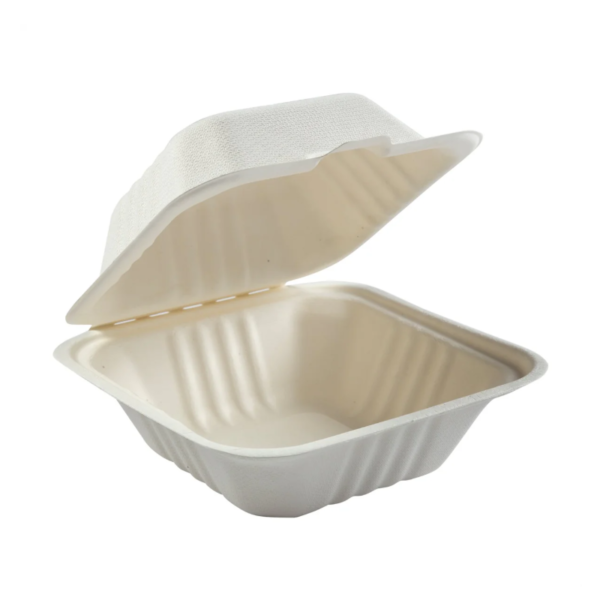
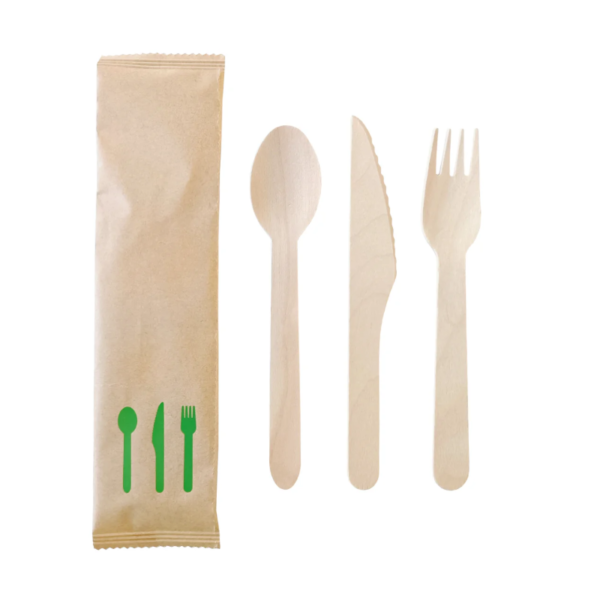
Explore Our Related Sustainable Packaging

Discover more sustainable beverage and food packaging solutions from DAILYECO.

Contact Our Team

Looking for a reliable CPLA plate Manufacturer?

Our packaging specialists are ready to support your project with:

✓ Product Catalog

✓ Free Product Consultation

✓ OEM & ODM Development

✓ Custom Printing Solutions

✓ Sample Requests

✓ Compliance Guidance

✓ Packaging Optimization

✓ Global Export Support

Whether you are sourcing for a restaurant chain, food service distributor, importer, hospitality group, catering company, or private-label brand, our team will work with you to recommend the most suitable CPLA plate solution based on your application requirements, target market, packaging strategy, and sustainability goals.

Submit Your Inquiry Now