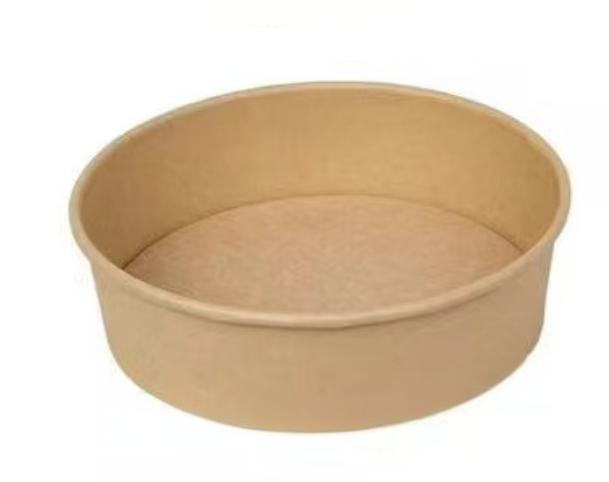
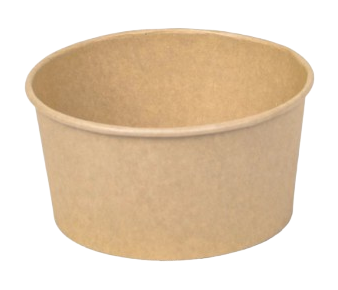
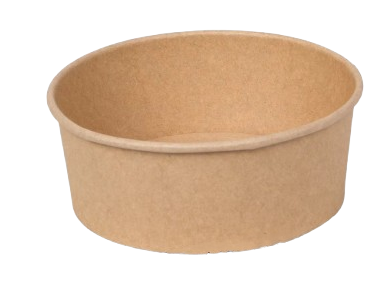
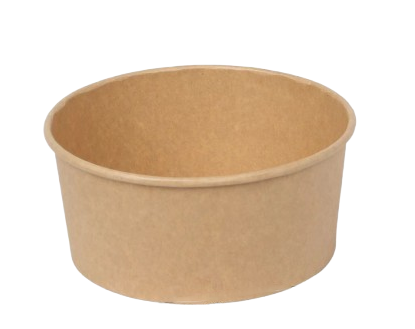
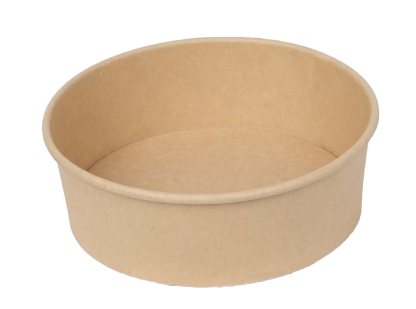
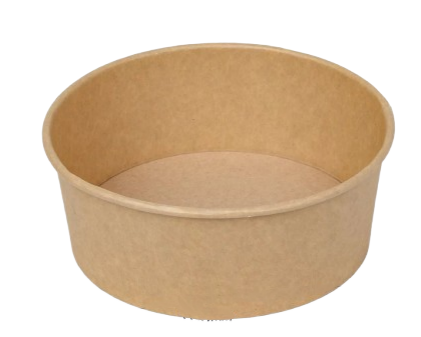
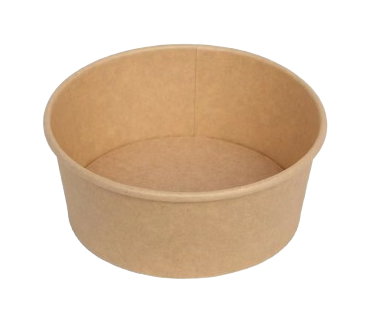
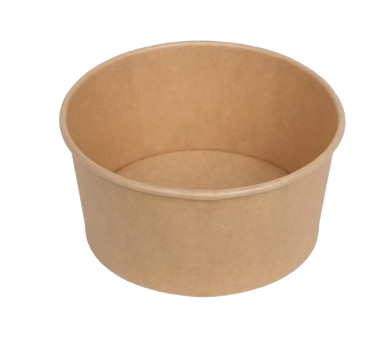
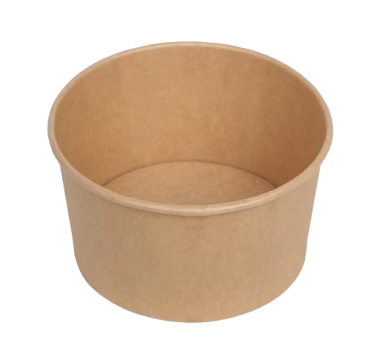
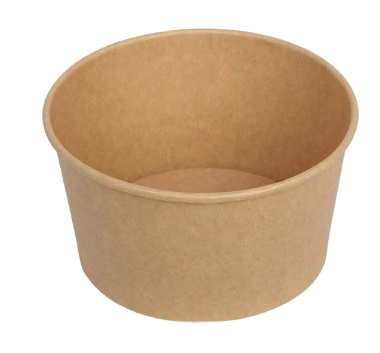
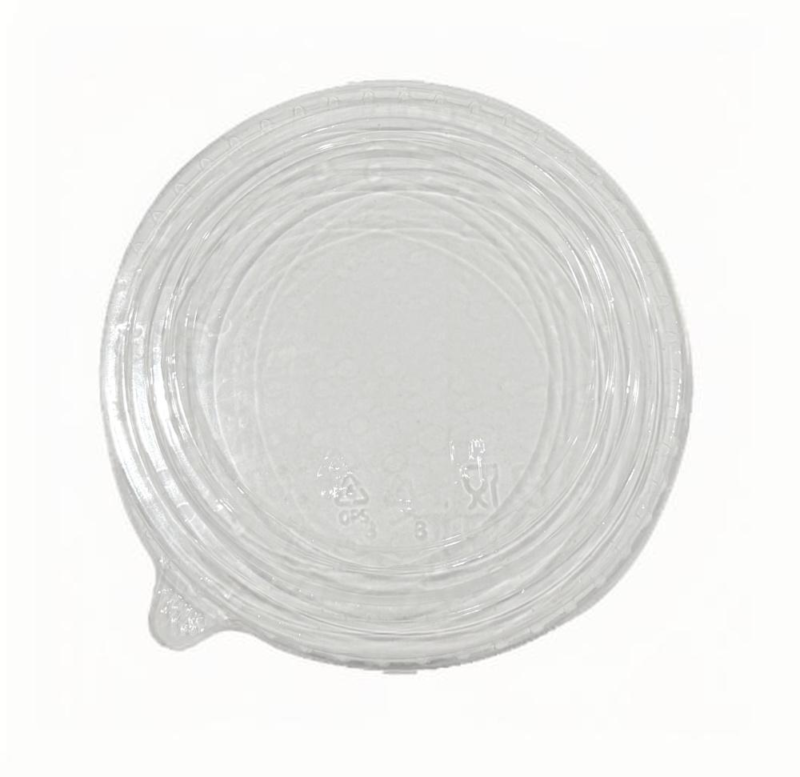
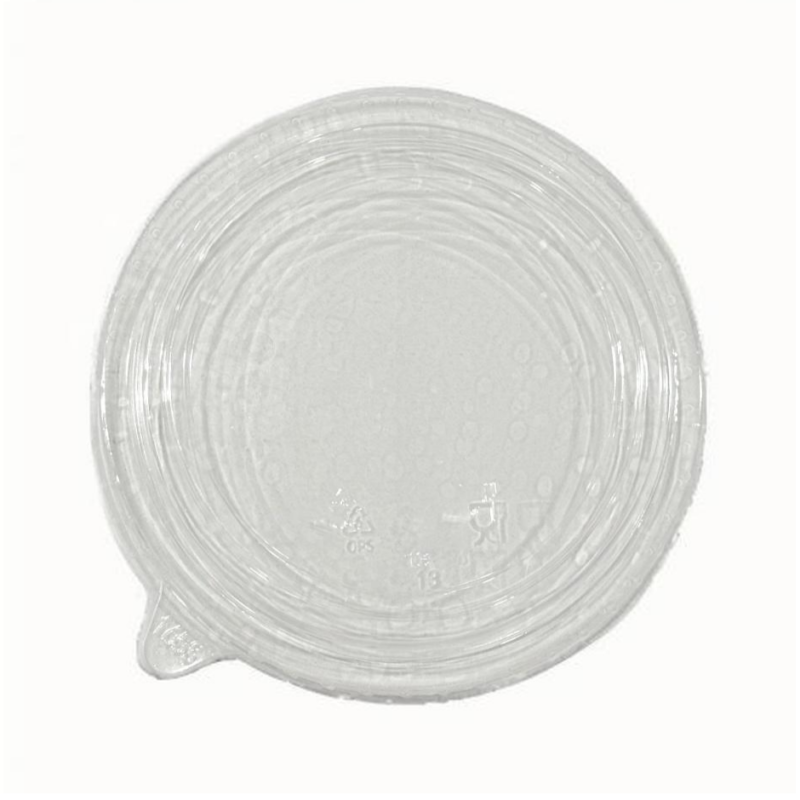
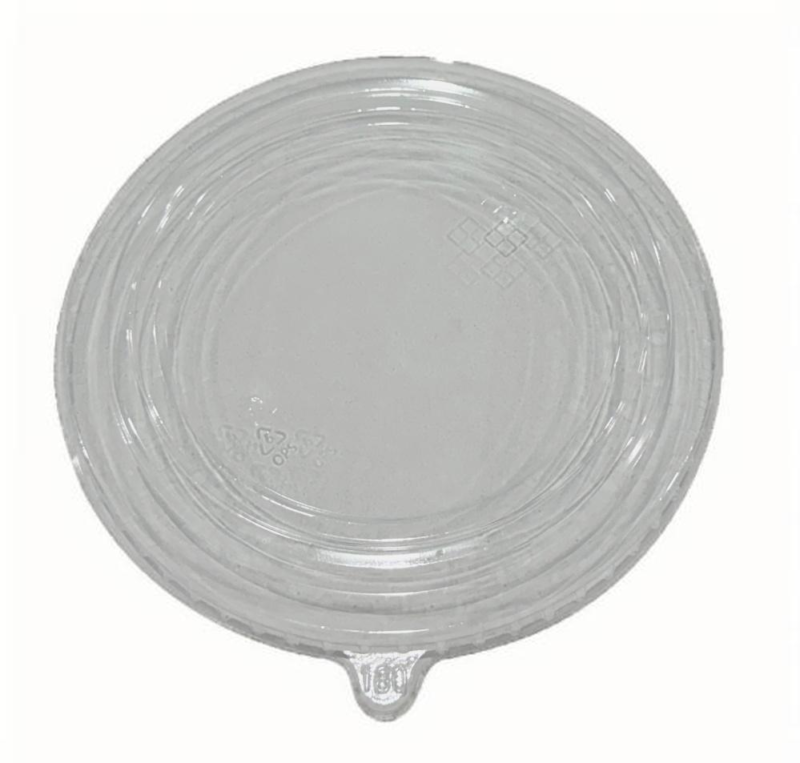
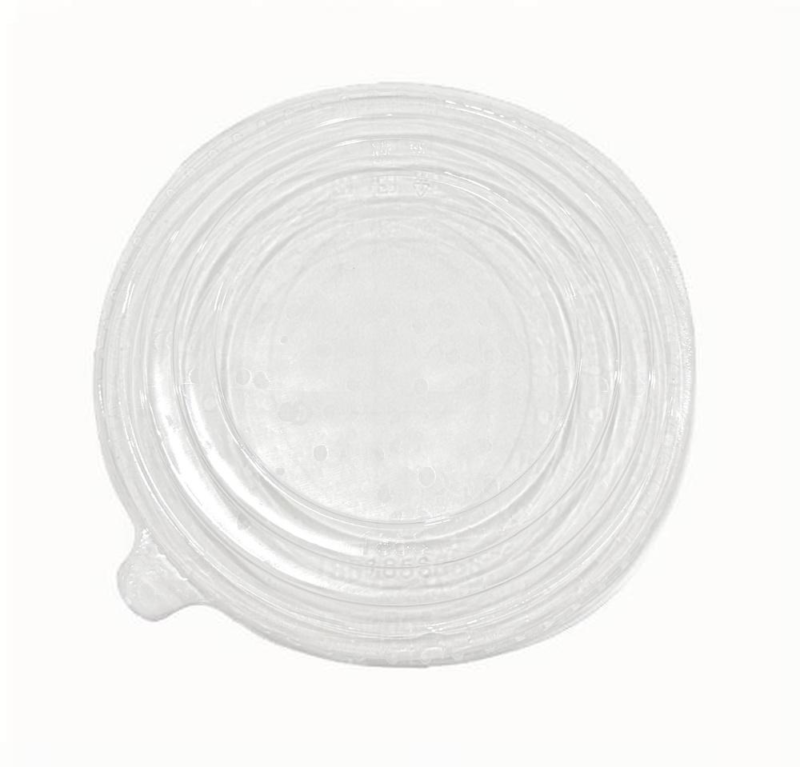
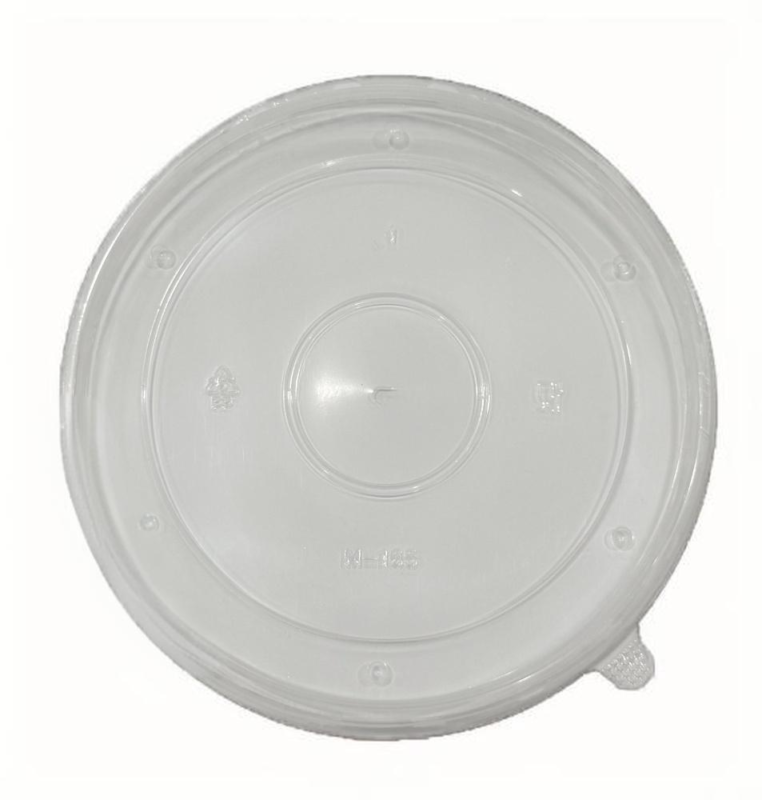
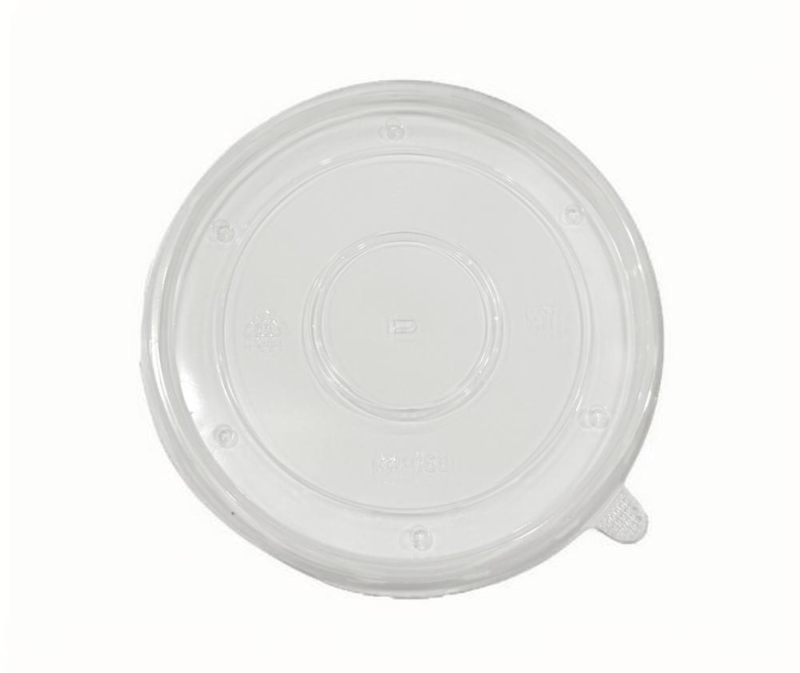
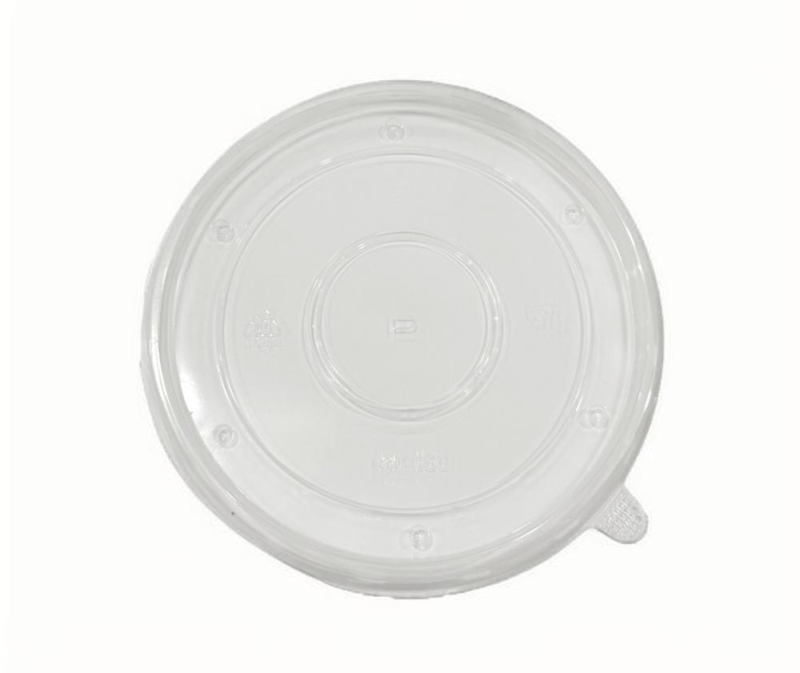
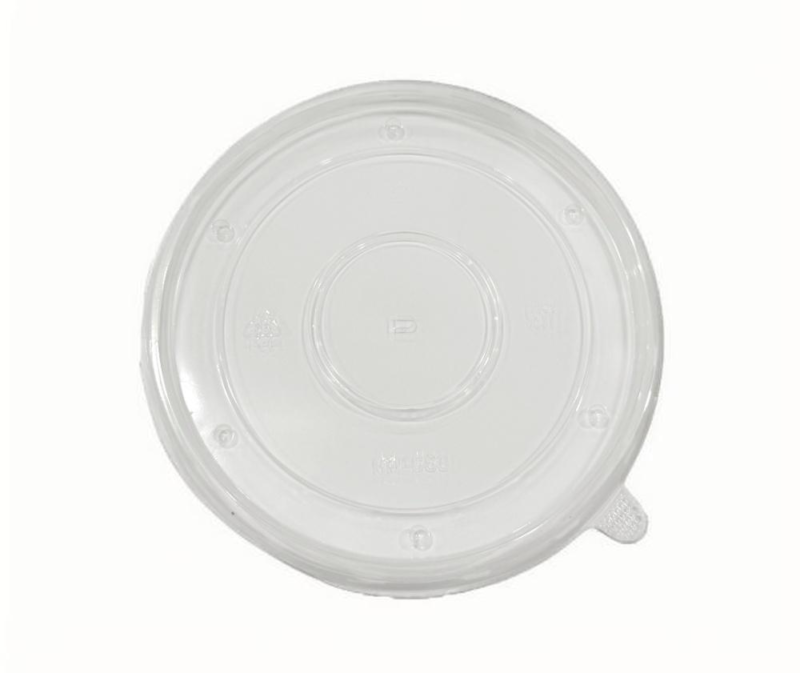
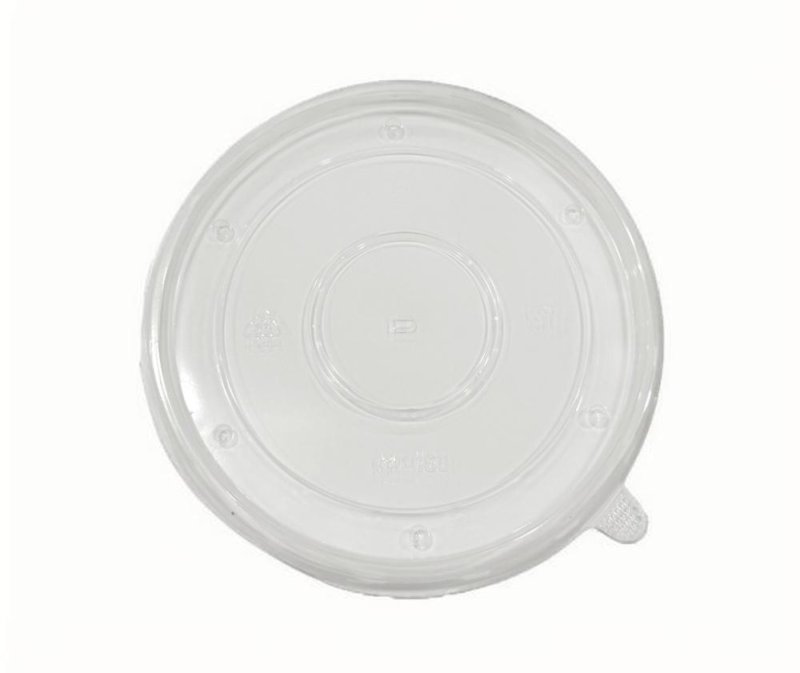
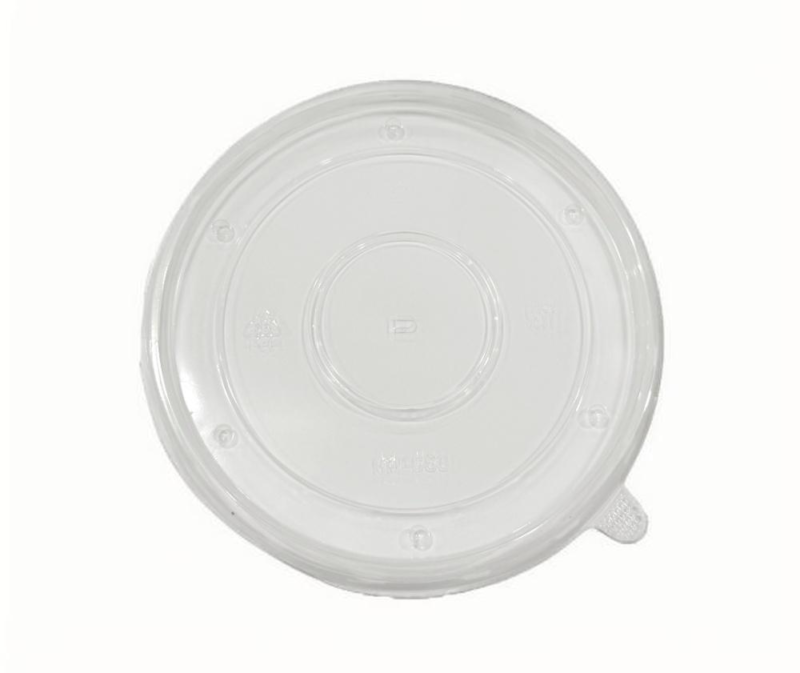
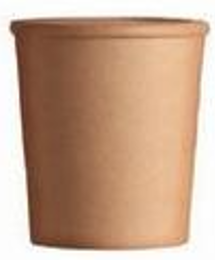
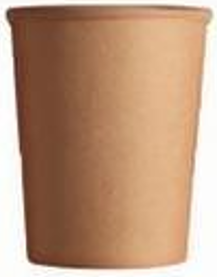
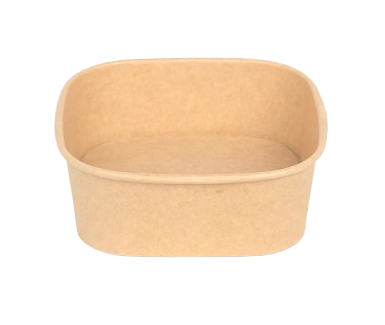
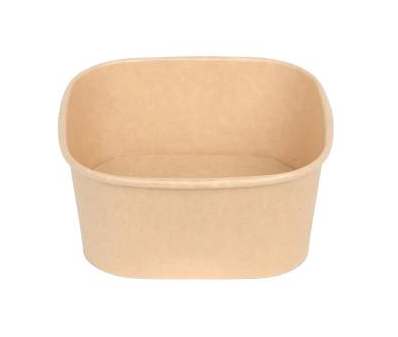
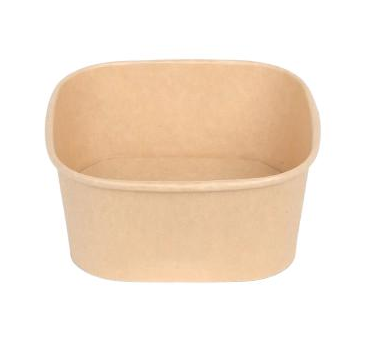
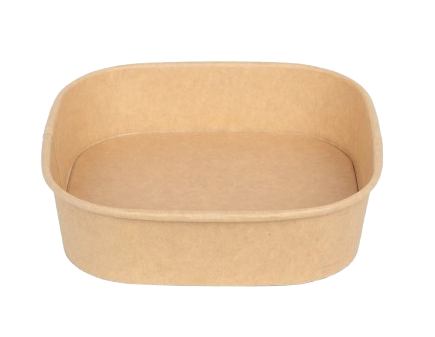
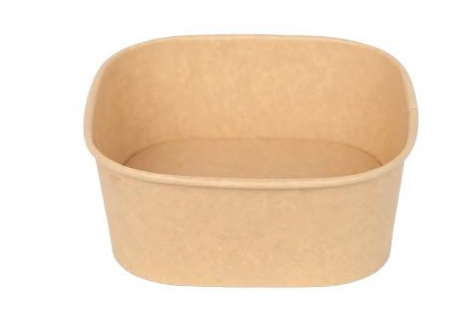
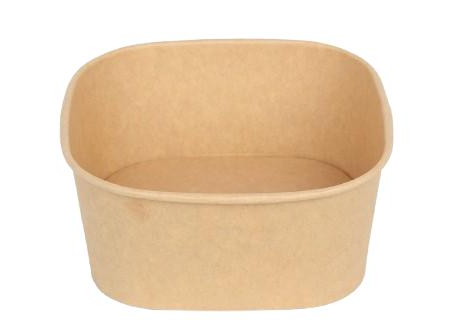
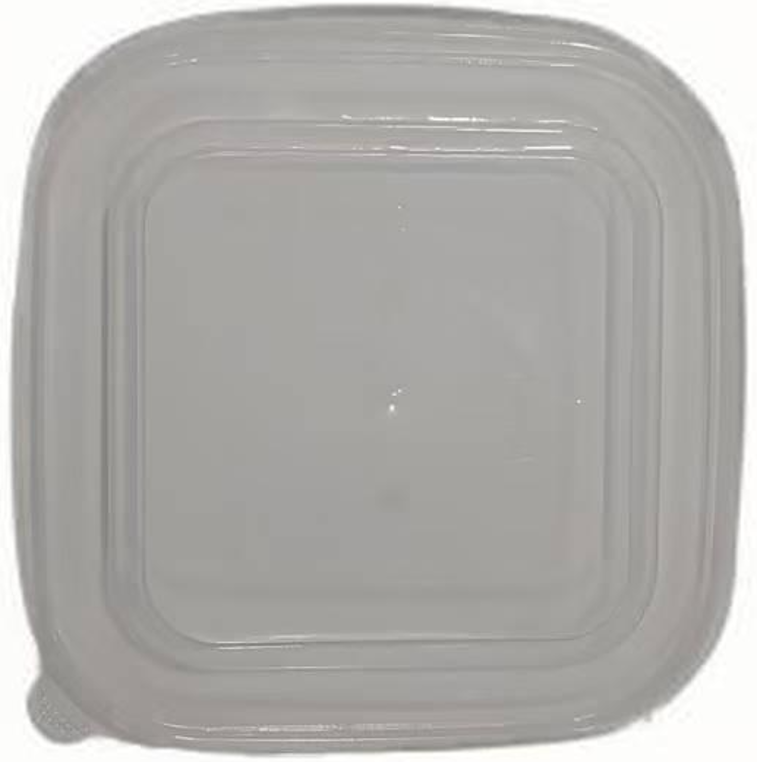
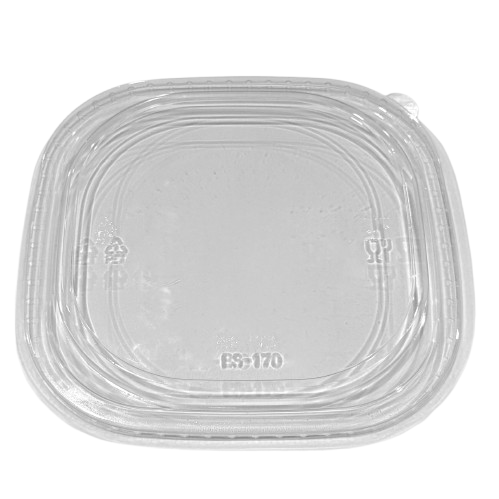
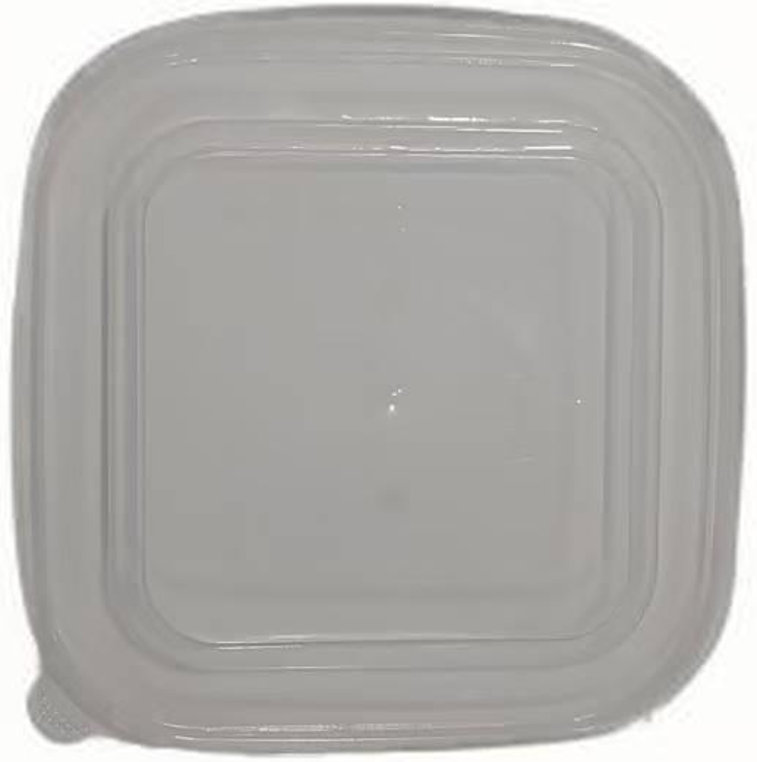
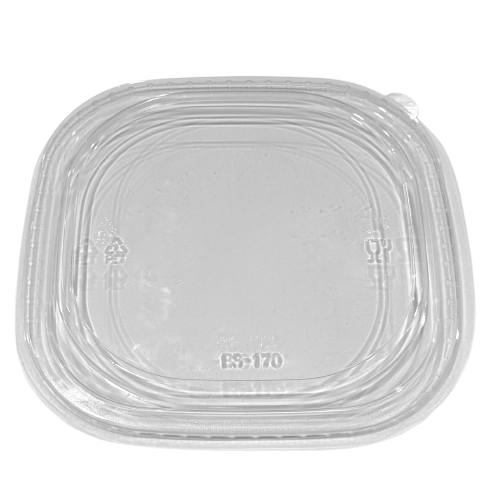
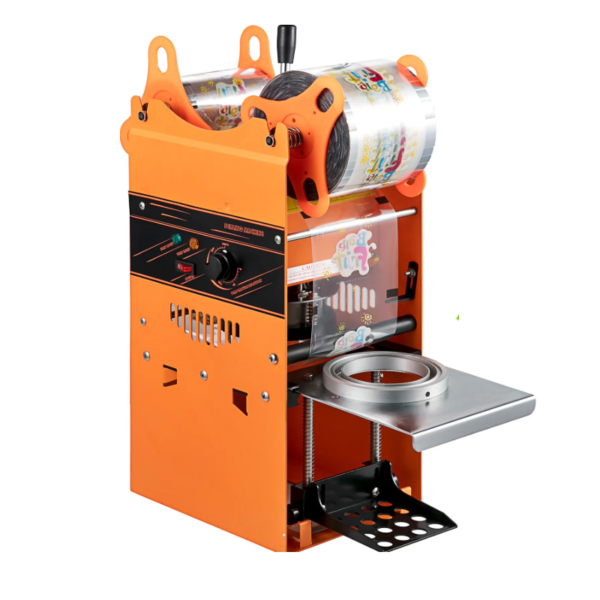
Rectangular Paper Bowl

DAILYECO, Your Professional Disposable Paper Bowl Manufacturer

Wholesale Disposable Kraft Paper Bowls and Matched Lids for Foodservice

Key Facts About Disposable Paper Bowls

Item

Information

Product Name

Disposable Paper Bowls

Catalogue Construction

Food-contact kraft paperboard combined with PE lining

Format Families

Round disposable paper bowls, deep paper soup bowls, square paper bowls and their compatible lid systems

Nominal Catalogue Range

240 ml to 1500 ml

Service Uses

Single-use portions for soup, salad, rice, noodles, pasta, snacks, desserts, takeaway meals and delivery

Food Conditions

Hot, warm, chilled or dry foods after the selected specification has passed relevant use-condition testing

Paperboard Listed in Catalogue

Side walls: 280–320 gsm kraft; bottoms: 210–250 gsm; referenced barrier: 18 gsm PE

Body Geometry

Round and square

Brand Program Options

Logo or full-wall graphics, QR content, private-label inner packs and cartons after project approval

Color Control

CMYK or Pantone targets subject to artwork review, selected print route and production sign-off

Assigned Closure Options

Paper, PP, OPS and anti-fog PET lids according to the bowl diameter or square format

Commercial Role

Manufacturer supporting repeat supply programs

International Order Support

Product records and logistics coordination based on confirmed destination requirements


Designed for one service cycle, disposable paper bowls move prepared food from the filling point to the customer in a lightweight paperboard format. DAILYECO’s catalogue brings together kraft paper bowls, paper soup bowls, square paper bowls and their assigned lids for rice, noodles, pasta, salads, snacks, desserts and temperature-controlled meal service.

A reliable specification begins with the route the meal will travel. Buyers should record the portion, food temperature, expected contact time, handling method and delivery conditions first, then select the rim, depth, board weight, barrier and lid. Print coverage, case pack, MOQ and lead time can be finalized after the functional combination is proven.

DAILYECO builds disposable paper bowls with lids into manageable B2B programs for importers, distributors, chains and packaging brands. Before production release, the project file should connect the approved drawing, lid code, food-use limits, artwork version, packing instruction and required documentation.

What Are Disposable Paper Bowls? 

A disposable paper bowl is a formed paperboard pack intended to serve a prepared portion once and then enter the applicable local waste stream. Round, deep-soup and square constructions accommodate anything from sides and desserts to complete rice, noodle or salad meals. Branding options can extend to logos, wraparound graphics, QR codes, private-label bags and coordinated shipping cartons.

The catalogue construction combines kraft paperboard with a PE barrier. Board weight supplies the body stiffness and print face; the PE layer protects the fiber during food contact. Production converts printed blanks into tapered walls, joins the side seam, seals in the bottom disc and curls the rim to the profile required by the specified lid.

Choose the bowl geometry around serving behavior. Paper salad bowls and round meal formats provide open access for mixed dishes, while paper soup bowls add depth for broth, chili and hot sides. Square paper bowls create a wider visual frame for prepared-food displays and portioned takeaway meals.

Buyers may encounter labels such as cardboard bowls or paper bowl containers in search results, but those phrases do not define performance. The purchase specification must instead state the board and lining, top and bottom dimensions, seam construction, verified use conditions and exact compatible lid.

Treat every disposable paper bowl with lid as a paired pack, not two independent components. Approve the closure after realistic filling, stacking and movement, and confirm how the printed face should orient at the counter. Sharing a nominal diameter does not make two lid profiles interchangeable.

What Are the Key Features of Disposable Paper Bowls?

Feature

Operational Purpose

What the Buyer Should Confirm

Paperboard body

Keeps the pack rigid

Verify grammage, fiber quality, nesting and forming stability with the intended portion.

Barrier layer

Separates food moisture and grease from fiber

PE is the catalogue route; qualify any alternative barrier as a separate project.

Curled rim

Creates the handling edge and lid interface

Approve rim consistency with the exact assigned lid rather than diameter alone.

Wall and base seams

Contain the filled food

Test the joined areas with the actual recipe, fill temperature and service duration.

Capacity ladder

Allocates portions across the menu

Use the 240–1500 ml catalogue range to cover sides, soups, meals and larger servings without unnecessary duplication.

Round and square bodies

Supports different filling and display routines

Evaluate how shape changes denesting, presentation, stacking and lid inventory.

Exterior printing

Carries identification and brand content

Review logos, campaign graphics, QR codes and private-label information on the formed wall.

Proof and color reference

Controls repeat appearance

Lock the dieline, CMYK or Pantone target and the approved physical or production reference.

Matched closures

Protects takeaway and delivery portions

Select the specified paper, PP, OPS or PET lid for the relevant family and rim.

Nested pack format

Saves counter and transport space

Check denesting at service speed as well as case and warehouse efficiency.

Approved product record

Keeps repeat orders aligned

Use drawings, signed samples, lid codes and packing data as the reorder baseline.

Disposable Paper Bowl Structure, Print Area and Lid Compatibility

Why Are Disposable Paper Bowls Becoming Popular Worldwide? 

The growth of off-premises eating has made single-use bowl systems more important for prepared-food retailers, delivery kitchens and multi-location operators. A well-planned disposable paper bowl range lets the same brand serve soups, grain meals, noodles, salads, snacks and desserts without forcing every menu item into one shape.

For operators, the value of disposable paper bowls with lids lies in repeatable service: staff can portion quickly, close the pack consistently and hand it off for takeaway or dispatch. Consolidating several capacities around fewer rim families also reduces lid picking and makes replenishment easier to forecast.

Disposable kraft paper bowls combine a natural board appearance with a printable exterior. That surface can carry the brand, menu identifiers, handling messages or QR content, but graphics should support rather than obscure the container’s primary job of holding and transporting food.

Language sustainability is now influences many tenders, yet a paper look is not evidence of a disposal outcome. Compostable paper bowls, biodegradable paper bowls and recyclable paper bowls may only be described that way when the complete construction, supporting evidence and destination waste route, justify the wording.

Industry Insights & Market Trends

Commercial programs are shifting from stand-alone bowl purchasing to controlled bowl-and-lid families. Distributors and chains increasingly measure success through fit consistency, limited artwork versions, repeatable pack data, seasonal readiness and the ability to reorder the same approved specification.

Disposable Paper Bowls Industry Insights and Foodservice Packaging Trends 

Global Market Overview

Quick-service operators, meal-prep businesses, supermarkets, caterers, hospitality groups, travel concessions and packaging resellers all buy this category, but they experience the same failure point: the pack must remain predictable after filling and until consumption. That makes the approved disposable paper bowl system more important than a generic product label.

Markets describe capacity differently, so a number alone can mislead. Ounce, milliliter and cubic-centimeter listings should all be tied back to the same drawing, brim dimensions and lid reference before a distributor publishes local product data.

Key Industry Trends

  • SKU discipline: build several portion sizes around a limited number of proven rim families to control lid inventory.
  • Dispatch validation: reproduce delivery vibration, stacking pressure, condensation and elapsed time with a filled pack.
  • Private-label execution: align bowl artwork, inner bags, retail packs and cartons under one controlled revision system.
  • Evidence-first sourcing: settle barrier disclosure, food-contact records and permitted end-of-life wording before launch.
  • Menu-led formats: add deep or square bowls only when they create a clear serving, display or portion advantage.

Brand Differentiation Through Packaging

Printed disposable paper bowls turn the exterior wall into a controlled customer touchpoint. Color blocks, logos, menu codes, disposal directions and promotional content can be coordinated with lids or cartons, while custom disposable paper bowls extend the same system into private-label ranges. White paper bowls, brown paper bowls and black paper bowls should each be linked to an approved substrate or ink build rather than used as loose color names.

A tapered wall changes the way flat artwork is perceived. Position key marks within the usable panel, inspect barcodes and fine copy at actual scale, and establish the color reference before plates or production files are released.

Regional Market Focus

Region / Buyer Group

Common Procurement Emphasis

North America

Portion architecture, delivery trials, food-contact records and retail or distributor case formats

Europe

Barrier disclosure, plastics policy, support for published claims and destination waste infrastructure

Australia & New Zealand

Takeaway performance plus evidence for any recycling or composting statement and realistic hot-food trials

Middle East

Hospitality presentation, storage in warm climates, supply continuity and controlled printed programs

Asia

Efficient cost structure, useful capacity coverage, stable mass production and fast-moving takeaway menus


What This Means for Buyers

A useful RFQ explains the meal journey: what is filled, at what temperature, how long it remains in the pack, how the lid is applied, what is stacked above it and how it reaches the diner. With that brief, the supplier can recommend construction instead of guessing from capacity alone.

Compare quotations at system level. A cheaper bowl can create a more expensive program when it adds lid variants, wastes container space, slows closing or produces stock that cannot be repeated consistently. Equivalent drawings, lids and case packs are the correct basis for cost comparison.

Which Material Is Right for Your Business? 

Material selection is a programming decision rather than a ranking exercise. Match the construction to food exposure, service conditions, destination rules and the disposal route that can actually be documented.

Start with PE-Lined Kraft Paper Bowls When Your Program:

  • Follows the PE-lined construction listed in the current catalogue.
  • Needs a familiar grease-and-moisture barrier for mainstream takeaway service.
  • Uses round, soup or square bodies with catalogue-assigned lid choices.
  • Can limit environmental wording to claims supported in the destination market.

Evaluate PLA-Coated Paper Bowls When Your Program:

  • Operates within a verified industrial-composting collection network.
  • Requires evidence covering the converted bowl, rather than resin evidence alone.
  • Has validated heat contact, sealing, print durability and shelf performance.

Evaluate Water-Based Barrier Paper Bowls When Your Program:

  • Is designed around fiber recovery and includes final-pack testing.
  • Can obtain coating disclosure and local paper-mill acceptance before making a claim.
  • Allows development trials and accepts project-dependent MOQ or timing.

Consider Bagasse Bowls When Your Program:

  • Values a molded plant-fiber form and the performance profile of bagasse.
  • Does not depend on a smooth paperboard wall for detailed full-color graphics.
  • Has matched temperature, moisture exposure and disposal route to the finished item.

Consider Plastic Bowls When Your Program:

  • Requires visibility, longer wet holding or a rigid presentation that resembles reusable ware.
  • Is sold where the selected polymer and its local waste route are acceptable.
  • Places visibility or a specialized barrier ahead of paper-based appearance.

Procurement Recommendations by Market

Market / Program

Practical Starting Route

Approval Gate

General takeaway and delivery

Catalogue PE-lined kraft paper bowl

Recipe temperature, contact time, seams, exact lid fit and system cost

Industrial composting program

PLA-coated or otherwise certified compostable system

Finished-product evidence plus collection and processing access

Fiber-recovery program

Accepted paper structure or verified water-based barrier

Coating disclosure, food residue and confirmation from the local recovery route

Premium prepared-food retail

Printed paperboard bowl paired with a clear or paper closure

Shelf appearance, anti-fog need, graphic quality and closure retention

Institutional foodservice

Standardized soup or round-bowl family

Portion control, reduced stock complexity and dependable replenishment

Eco-focused brand

Construction selected from verifiable evidence

Environmental language must not exceed the support available for the finished item

Do not let one environmental adjective decide the format. Screen each option through performance, evidence, infrastructure, regulation and the total cost of operating the pack.

DAILYECO’s Complete Disposable Paper Bowl Categories Will Cover All Your Sales and On-Site Application Needs

The catalogue provides a common technical platform for round meal bowls, soup bowls and square food bowls with designated lids. From that base, a buyer can assemble a controlled disposable range for sides, individual portions, larger meals, takeaway counters and delivery operations.

Pictures

Name

Size

Material and Weight

Pcs/Bag

Bags/CTN

Pcs/CTN

Carton L (cm)

Carton W (cm)

Carton H (cm)

17oz/500ml Bowl with PE Lined

150*47*128

Wall 280gsm Kraft Paper/Bottom 210gsm Kraft Paper+18gsm PE

50

6

300

45

30

38

25oz/750ml Bowl with PE Lined

150*60*128

Wall 280gsm Kraft Paper/Bottom 210gsm Kraft Paper+18gsm PE

50

6

300

45

30

39

30oz/900ml Bowl with PE Lined

180*50*160

Wall 280gsm Kraft Paper/Bottom 210gsm Kraft Paper+18gsm PE

50

6

300

55

37.2

38.5

34oz/1000ml Bowl with PE Lined

150*75*128

Wall 280gsm Kraft Paper/Bottom 210gsm Kraft Paper+18gsm PE

50

6

300

50.5

34

41.5

37oz/1100ml Bowl with PE Lined

165*65*144

Wall 280gsm Kraft Paper/Bottom 210gsm Kraft Paper+18gsm PE

50

6

300

52

35.5

44

44oz/1300ml Bowl with PE Lined

165*75*144

Wall 280gsm Kraft Paper/Bottom 210gsm Kraft Paper+18gsm PE

50

6

300

50.5

34

41

50oz/1450ml Bowl With PE Lined

180*60*160

Wall 300gsm Kraft Paper/Bottom 210gsm Kraft Paper+18gsm PE

50

6

300

42

27.5

44

50oz/1500ml Bowl with PE Lined

185*70*160

Wall 300gsm Kraft Paper/Bottom 210gsm Kraft Paper+18gsm PE

50

6

300

51

26

35

18oz/530ml Bowl with PE Lined

135*55*114

Wall 300gsm Kraft Paper/Bottom 210gsm Kraft Paper+18gsm PE

50

6

300

41.7

28.2

40.7

21oz/630ml Bowl with PE Lined

135*65*114

Wall 280gsm Kraft Paper/Bottom 210gsm Kraft Paper+18gsm PE

50

6

300

40.3

27.2

42

25oz/730ml Bowl with PE Lined

135*75*114

Wall 280gsm Kraft Paper/Bottom 210gsm Kraft Paper+18gsm PE

50

6

300

41

27.5

41

50oz/1480ml Bowl with PE Lined

165*88*131

Wall 300gsm Kraft Paper/Bottom 210gsm Kraft Paper+18gsm PE

50

6

300

49.5

33.5

49.3

D135 PP Lid

Lid for 530/630/730 Bowl

4.8g

50

6

300

42

33

28.5

D150 OPS Lid

Lid for 500/750/1000 Bowl

3.6g

50

6

300

38

16

32

D165 OPS Lid

Lid for 1100/1300/1480 Bowl

4.5g

50

6

300

47

33.5

18

D180 OPS Lid

Lid for 900/1450 Bowl

5.5g

50

6

300

40

19

37

D185 OPS Lid

Lid for 1500 Bowl

5.4g

50

6

300

41

19

39

D150PP Lid (Tall Lid)

Lid for 500/750/1000 Bowl

5.5g

50

6

300

48

31

31.5

D150 PP Lid (Standard Lid)

Lid for 500/750/1000 Bowl

5.6g

50

6

300

48

33

31.5

D165 PP Lid (Tall Lid)

Lid for 1100/1300/1480 Bowl

6.6g

50

6

300

51.5

31

35

D165 PP Lid (Standard Lid)

Lid 1100/1300/1480 Bowl

6.5g

50

6

300

51.5

33

35.5

D180 PP Lid (Standard Lid)

Lid for 900/1450 Bowl

7.6g

50

6

300

58

30

38

D185 PP Lid (Standard Lid)

Lid for 1500 Bowl

8.3g

50

6

300

58

30

38

8oz/240ml Soup Bowl with PE Lined

90*72*60

Wall 300gsm Kraft Paper/Bottom 210gsm Kraft Paper+18gsm PE

25

20

500

45.5

19

60.5

12oz/360ml Soup Bowl with PE Lined

90*72*88

Wall 300gsm Kraft Paper/Bottom 210gsm Kraft Paper+18gsm PE

25

20

500

45.5

20

61.5

16oz/480ml Soup Bowl with PE Lined

97*72*100

Wall 300gsm Kraft Paper/Bottom 210gsm Kraft Paper+18gsm PE

25

20

500

49.5

21

63

26oz/760ml Soup Bowl with PE Lined

115*90*110

Wall 300gsm Kraft Paper/Bottom 210gsm Kraft Paper+18gsm PE

25

20

500

58

23

61.5

32oz/950ml Soup Bowl with PE Lined

116*89*134

Wall 300gsm Kraft Paper/Bottom 210gsm Kraft Paper18gsm PE

25

20

500

60

48

46

8oz/12oz Kraft Paper Lid With PE Lined

D90

250gsm Kraft Paper +18gsm PE

25

20

500

50

33

38.5

16oz Kraft Paper Lid with PE Lined

D97

250gsm Kraft Paper +18gsm PE

25

20

500

50

33

38.5

26oz Kraft Paper Lid with PE Lined

D115

250gsm Kraft Paper +18gsm PE

25

20

500

53

43

34

32oz Kraft Paper Lid with PE Lined

D116

250gsm Kraft Paper +18gsm PE

25

20

500

61

50

34

16oz/500ml Square Bowl with PE Lined

130*130*49 114*114

Wall 300gsm Kraft Paper/Bottom 210gsm Kraft Paper18gsm PE

50

6

300

42

27.5

44

22oz/650ml Square Bowl with PE Lined

130*130*59 112*112

Wall 300gsm Kraft Paper/Bottom 210gsm Kraft Paper18gsm PE

50

6

300

42

27.5

45

24oz/700ml Square Bowl with PE Lined

151*151*45 130*130

Wall 320gsm Kraft Paper/Bottom 250gsm Kraft Paper18gsm PE

50

6

300

47.5

32.5

42.5

25oz/750ml Square Bowl with PE Lined

170*170*45 153*153

Wall 320gsm Kraft Paper/Bottom 250gsm Kraft Paper18gsm PE

50

6

300

52

35.5

44

29oz/850ml Square Bowl with PE Lined

151*151*55* 130*130

Wall 320gsm Kraft Paper/Bottom 250gsm Kraft Paper18gsm PE

50

6

300

47.5

32.5

42.5

33oz/1000ml Square Bowl with PE Lined

170*170*56 152*152

Wall 320gsm Kraft Paper/Bottom 250gsm Kraft Paper18gsm PE

50

6

300

52

35.5

44

37oz/1100ml Square Bowl with PE Lined

151*151*65 130*130

Wall 320gsm Kraft Paper/Bottom 250gsm Kraft Paper18gsm PE

50

6

300

47.5

32.5

43.5

40oz/1200ml Square Bowl with PE Lined

170*170*68 149*149

Wall 320gsm Kraft Paper/Bottom 250gsm Kraft Paper18gsm PE

50

6

300

52

35.5

45.5

48oz/1400ml Square Bowl with PE Lined

170*170*76 147*147

Wall 320gsm Kraft Paper/Bottom 250gsm Kraft Paper18gsm PE

50

6

300

52

35.5

46

D130 PP Square Bowl Lid

Square Bowl Lid for 500/650

6.3g

50

6

300

42

33

28

D130 Anti-Fog PET Square Bowl Lid

Square Bowl Lid for 500/650

6.3g

50

6

300

40

27

28

D151 PP Square Bowl Lid

Square Bowl Lid for 700/850/1100

9g

50

6

300

52

35

35

D151 Anti-Fog PET Square Bowl Lid

Square Bowl Lid for 700/850/1100

8.5g

50

6

300

50

26

35

D170 PP Square Bowl Lid

Square Bowl Lid for 750/1000/1200/1400

11g

50

6

300

53

36

36

D170 Anti-Fog PET Square Bowl Lid

Square Bowl Lid for 750/1000/1200/1400

10.8g

50

6

300

51

26

35

Get Latest Catalog

What Is the Application for Disposable Paper Bowls? 

The same disposable paper bowl should not be assumed to suit every menu. Commercial success depends on matching capacity, closure and barrier to the service moment. The application modules below therefore focus on what can interrupt a single-use foodservice workflow and what should be confirmed before rollout.

Disposable Kraft Paper Bowls for Takeaway Meal Service (图 A1)

Takeaway Meal Service

At takeaway counters, a matched paper bowl with lid can carry rice, noodles, pasta, salad or a mixed meal through a fast handoff. The operational test is simple: a takeaway paper bowl must denest, fill, close and stack without interrupting the serving rhythm, whether it functions as a paper rice bowl, paper noodle bowl or one of several paper pasta bowls.

Counter Priorities

  • Match usable fill volume to the plated portion and required headspace.
  • Use the lid code assigned to the selected rim profile.
  • Validate the barrier with the actual sauce, oil and service time.
  • Check that nested bowls are released smoothly during peak service.
  • Control the facing direction of printed graphics at filling.

Recommended Capacity Range: 500–1000 ml for individual meals; larger sizes for shared or high-volume portions

Office & Corporate Catering

Office cafeterias and meeting caterers usually serve several menu types through a predictable daily routine. Disposable paper bowls work best here when breakfast, soup, salad and meal portions are mapped to a small core assortment that staff can identify and restock easily.

Corporate Program Priorities

  • Present a clean, workplace-appropriate pack.
  • Limit the number of bowls and lid codes held on site.
  • Plan repeat deliveries around the catering calendar.
  • Keep the same portion outcome across service teams.
  • Print disposal directions only when the local route is confirmed.

Recommended Capacity Range: 360–950 ml depending on sides, soup or complete meals

Disposable Paper Bowls for Office and Corporate Catering (图 A2)
Disposable Paper Bowls for Conferences and Exhibitions (图 A3)

Conference & Exhibition Food Service

Event service compresses many portions into short breaks between sessions. Disposable paper bowls can cover meals, soups, salads and snacks, while controlled event graphics add sponsor visibility. The program succeeds when volume allocation, carton access and lid matching are planned before the venue opens.

Event Execution Priorities

  • Allocate confirmed quantities by service point and menu.
  • Close the artwork approval window before production booking.
  • Use cartons so that crews can open and move quickly.
  • Separate lids by exact bowl family.
  • Hold contingency stock for attendance or menu changes.

Recommended Capacity Range: 500–1000 ml for meal service; 240–480 ml for sides or desserts

Hotel & Guest Hospitality

Hotels may use paper soup bowls and meal bowls across breakfast, banqueting, room service and employee dining. Selection should reflect both the guest-facing presentation and the time the closed pack spends moving from kitchen to room or event area.

Hospitality Program Priorities

  • Choose a finish appropriate to the guest experience.
  • Prepare the required food-contact document set.
  • Trial the closed pack on the real room-service route.
  • Approve print quality against physical reference.
  • Forecast core demand and event-driven peaks separately.

Recommended Capacity Range: 240–950 ml for soups, breakfast and sides; 1000 ml or more for complete meals

Disposable Paper Bowls for Hotel and Guest Hospitality (图 A4)
Disposable Paper Bowls for Airport and Railway Food Service(图A5)

Transportation & Travel Food Service

Travel-food packaging is often carried immediately after purchase and opened later in a moving environment. Airport, rail and roadside operators should validate that the selected bowl closes securely, remains easy to hold and still performs at the expected consumption time.

Travel-Service Priorities

  • Verify closure retention after movement.
  • Tests were nested and filled stacks at the concession.
  • Use efficient case packs for restricted storage areas.
  • Make menu and handling labels easy to identify.
  • Reserve capacity for predictable passenger peaks.

Recommended Capacity Range: 500–1000 ml for meals; smaller soup bowls for sides

Quick-Service Restaurants

For quick-service chains, disposable kraft paper bowls must work at production speed across every location. Grain bowls, curries, noodles, salads and sides require controlled portions, easy denesting and the same brand result regardless of the crew or store.

Chain-Operation Priorities

  • Measure bowl release and filling speed during a live shift.
  • Set a practical fill line for each menu item.
  • Hold rim dimensions within the approved fit range.
  • Reduce duplicate lids across the core assortment.
  • Use one approved artwork reference across locations.

Recommended Capacity Range: 500–1300 ml depending on menu and portion strategy

Disposable Kraft Paper Bowls for Quick-Service Restaurants (图 A6)
Disposable Paper Bowls with Lids for Food Delivery(图A7)

Food Delivery Platforms

A delivery order experiences movement, compression, waiting time and temperature change after it leaves the counter. Validate paper bowls with lids inside the intended carrier bag, with the same secondary items and stacking arrangement used by riders or drivers.

Delivery Validation Priorities

  • Run a filled-pack route simulation, not only a bench test.
  • Define closure and tamper-evidence responsibilities.
  • Observe condensation at the expected delivery time.
  • Keep order labels clear without weakening the pack.
  • Use the bag or divider needed to stabilize the full order.

Recommended Capacity Range: 630–1500 ml for meals; 360–950 ml for paper bowls for soup

Outdoor Events & Seasonal Promotions

At festivals, sports venues and seasonal pop-ups, paper serving bowls, paper snack bowls, paper dessert bowls and paper ice cream bowls must be quick to handle in temporary workspaces. The plan should account for limited back-of-house storage, outdoor exposure and rapid replenishment as carefully as the bowl itself.

Temporary-Site Priorities

  • Freeze campaign artwork early enough for the event date.
  • Select cases that fit temporary storage and handling limits.
  • Confirm the pack can be served and carried one-handed where needed.
  • Protect stock from weather and uncontrolled storage conditions.
  • Use waste-stream instructions that apply at the actual venue.

Recommended Capacity Range: 240–1000 ml depending on snack, dessert, side or meal

Disposable Paper Bowls for Outdoor Events and Promotions (图 A8)

Disposable Paper Bowls vs Other Disposable Food Containers

These formats solve different operating problems; none is automatically the best. Compare them against the food, closing method, display goal, service duration and verified disposal route before selecting a disposable paper bowl alternative.

Kraft Paper Bowls vs White Paper Bowls

Decision Point

Kraft Paper Bowl

White Paper Bowl

Base appearance

Warm, natural board tone

Bright neutral surface

Color behavior

The kraft base changes some inks

Colors reproduce against a more neutral background

Brand position

Casual, natural or craft-led presentation

Premium retail, clean-label or high-color graphics

Food-use result

Governed by the actual barrier and construction

Governed by the actual barrier and construction

Best fit

Programs that want the material tone visible

Programs that prioritize a white canvas and closer color accuracy


Round Paper Bowls vs Square Paper Bowls 

Decision Point

Round Paper Bowl

Square Paper Bowl

Service behavior

Familiar filling for soup, salad, rice and noodles

Wider visual frame for plated prepared meals

Catalogue coverage

Round meal and deep soup families

Square capacities from 500–1400 ml

Assigned lids

Diameter-based paper, PP or OPS options

D130, D151 or D170 PP and anti-fog PET options

Handling cue

Easy rotation through common filling routines

Corner profile creates a more distinctive presentation

Best fit

Mainstream menus needing flexible portion coverage

Prepared-food displays or brands seeking format differentiation


PE-Coated Paper Bowls vs PLA-Coated Paper Bowls

Decision Point

PE-Coated Paper Bowl

PLA-Coated Paper Bowl

Current status

Construction documented in the supplied catalogue

Separate project route requiring confirmation

Use validation

Familiar barrier for many foodservice applications

Must pass testing with the selected bowl, recipe and process

Disposal wording

Depends on the recovery system in the sales market

Compostability requires finished-product evidence and access to the relevant facility

Commercial effect

Typically follows the established catalogue process

May change price, MOQ, schedule and storage requirements

Best fit

Programs seeking the proven catalogue construction

Documented industrial-composting programs with a real collection route


Paper Bowls vs Plastic Bowls

Decision Point

Paper Bowl

Plastic Bowl

Body material

Barrier-lined paperboard

Polymer

Presentation

Natural board or a printable exterior

Transparent, colored or opaque wall

Long wet contact

Limited by the tested specification and elapsed time

Often supports longer wet contact when the chosen polymer is suitable

Food visibility

The meal is normally hidden by the wall

Clear versions can display the contents

Best fit

Paper-led branding and defined single-service use

Visibility or a specialized barrier requirement


Paper Bowls vs Bagasse Bowls

Decision Point

Paper Bowl

Bagasse Bowl

Conversion route

Printed or unprinted paperboard formed and sealed

Plant fiber molded in a shaped tool

Surface character

Smooth wall suited to detailed printing

Textured molded-fiber appearance

Geometry options

Converted round and square families

Tool-defined forms and compartment layouts

Graphic capability

Strong exterior branding potential

Usually more limited than paperboard printing

Best fit

Projects needing a broad-sized system and controlled graphics

Projects preferring a molded-fiber look and its validated performance

Who Usually Buys Disposable Paper Bowls?

Bulk buyers choose disposable paper bowls to keep a repeated single-use operation under control. The weighting changes by buyer: one may prioritize container loading, another retail presentation, store execution, stock turns or confidential artwork management.

Importer Reviewing Disposable Paper Bowl Samples and Specifications(图B1)

Importers

Importers look beyond the sample to the shipment system. They typically review container utilization, export records, locked specifications and whether wholesale disposable paper bowls, assigned lids and adjacent packaging can be consolidated without losing SKU control.

Packaging Distributors

Packaging distributors need enough range to cover customer demand without filling the warehouse with duplicate formats. A disciplined mix of small paper bowls, core meal sizes, large paper bowls and replacement lids helps them manage stock turns, artwork revisions and replenishment.

Packaging Distributor Stocking Disposable Paper Bowls with Lids(图 B2)
Foodservice Procurement Team Reviewing Disposable Paper Bowls (图 B3)

Foodservice Chain Procurement Teams 

Restaurant and café groups judge the program at store level. They need approved dimensions and lids to behave the same across locations, while brand colors, training steps and scheduled supply remain repeatable.

Brand Owners

For brand owners, the bowl wall is working media used now the customer receives and eats the meal. Print decisions should connect visual identity with menu recognition, handling information and the overall unboxing experience.

Brand Owner Reviewing Disposable Paper Bowl Designs (图 B4)
Private Label Paper Bowl Product Development (图 B5)

Private Label Packaging Companies

Private-label packaging businesses require clear ownership of files and specifications. Confidential development, revision control, stable repeat production and sales-ready product data are central to their program.

Foodservice Supply Companies

Foodservice supply companies assemble multi-category orders for restaurants, education, healthcare and caterers. They often need soup and meal bowls to align commercially with cups, cutlery, bags and related inventory.

Foodservice Supplier Managing Paper Bowl Inventory (图 B6)
Hospitality Procurement Team Evaluating Paper Bowls (图 B7)

Hospitality Procurement Companies

Hospitality procurement teams assess how a pack appears to guests and how reliably it works across properties and events. Documentation, standardized operation and continuity of supply therefore carry similar weight.

E-commerce Packaging Brands

E-commerce packaging brands must translate factory specifications into accurate online listings. Retail pack structure, barcodes, product photography, search naming and repeat stock availability all affect whether the range can scale online.

E-commerce Packaging Brand Developing Paper Bowl Listings (图 B8)

Are Disposable Paper Bowls Right for Your Application? 

Application

Screening Outcome

Soup, chili and curry

Proceed after a filled test at the stated temperature and service time

Rice, grain and burrito bowls

Suitable starting application

Salads and chilled prepared meals

Suitable starting application

Noodles and pasta

Proceed after sauce exposure and delivery simulation

Snacks, chips and popcorn

Suitable starting application

Desserts and ice cream

Suitable after condensation and any freezer conditions are defined

Takeaway meals

Suitable with the portion and closure confirmed

Food delivery

Use the matched lid and validate the complete carrier-bag setup

Hotel and catering service

Suitable when presentation and transport time are confirmed

Retail prepared-food display

Conditional: check shelf duration, closure clarity and anti-fog requirements

Microwave reheating

Conditional: publish only the limits of a verified microwave-safe specification

Freezer storage

Conditional: complete the intended storage and freeze-thaw cycle

Extended liquid storage

Generally unsuitable unless a purpose-built construction has been tested

Industrial or chemical liquids

Outside the intended application

Oven use

Outside the standard specification unless a separate ovenable product is documented

Reuse program

Not designed as a washable reusable bowl


Use the table as a screening tool only. Approval requires the chosen bowl and lid to be filled with the actual food, processed as staff will handle it, held for the expected time and moved through the intended transport conditions.

Key Buyer Questions Before Purchasing Disposable Paper Bowls

What conditions should be supplied before a hot-food recommendation?

Provide the fill temperature, oil or moisture level, contact time and whether the pack will travel closed. Paper bowls for hot soup should pass a filled and lidded trial under those stated limits.

How do I identify the correct lid rather than a similar-size lid?

Match the bowl to the manufacturer’s assigned lid code and request both components in the same sample set. Top diameter is only one variable; rim profile, engagement depth and lid material also control the closure.

Should the project begin with PE, PLA or a water-based barrier?

Use the catalogue’s PE-lined construction as the documented starting point. Treat PLA and water-based routes as separate developments whose food performance, evidence, MOQ and schedule must be reconfirmed.

Which elements of a disposable bowl program can carry private-label customization?

Custom disposable paper bowls may use logos, wraparound color, QR information, handling copy and product identifiers. Inner packing, labels and cartons can also be coordinated, subject to the selected print route and manufacturing approval.

What should be completed before artwork enters prepress?

Work from the approved bowl-specific dieline, keep mandatory content inside the safe area and supply fonts as outlined or packaged files. Add defined CMYK or Pantone references plus minimum barcode and QR dimensions.

Which reference will control color during repeat production?

Agree on a control reference such as a signed sample, press proof, drawdown or Pantone target. Because kraft alters some inks, a monitor image should never be the sole approval standard.

How should buyers translate catalogue capacities into local listings?

The available range is 240–1500 ml across soup, round-meal and square formats. Confirm the drawing and practical fill level before converting those figures into ounce or cubic-centimeter listings.

When may a disposable paper bowl be promoted for microwave reheating?

Use microwave wording only after the exact bowl and any retained lid has a documented food load, power setting, maximum time and temperature. Unless the lid specification expressly permits heating, instruct users to remove it.

What evidence is needed before publishing a recycling or composting statement?

Evaluate the complete bowl, its barrier and food contamination against the collection and processing system in the sales market. Recyclable paper bowls, compostable paper bowls and biodegradable paper bowls require claim-specific support.

How is the required food-contact document package defined?

DAILYECO can coordinate declarations or test records after the material, SKU, food use and destination requirements are confirmed. List the required documents in the order specification before approval.

Can several SKUs be managed as one OEM or private-label program?

Yes, subject to project review. Printing, packing, carton marks and range coordination can be planned together, while the confirmed specification determines MOQ and lead time for each SKU.

Key Buyer Questions Before Purchasing Disposable Paper Bowls


When Disposable Paper Bowls May Not Be the Best Choice

Disposable paper bowls are built for defined single-service food applications, not every possible storage or heating process. Recognizing the limits early prevents buyers from forcing paperboard into a job that requires another barrier, a visible wall or a reusable format.

Long liquid residence: When food must remain wet for an extended shelf period, investigate foil, rigid plastic or a purpose-built high-barrier pack and compare test evidence.

See-through merchandising: An opaque paper wall cannot provide full product visibility; a clear container may better serve display-led retail.

Direct appliance exposure: A standard catalogue bowl must not enter an oven or microwave unless that exact construction has written approval for the stated cycle.

Freeze-and-reheat handling: Temperature cycling can challenge the board, seam and closure. Approve the pack only after a dedicated cycle test.

Purchase-price-only tenders: Simpler thin-wall formats may quote lower, but include closure failures, labor, lid cost and customer experience in the decision.

Micro-runs and short promotions: Custom print may be uneconomic below the confirmed MOQ. Stock bowls paired with a label, sleeve or printed secondary pack can offer a better route.

Unreleased brand files: Ongoing legal or design changes expose a project to reproofing and obsolete stock. Lock the artwork revision before production authorization.

Unverified disposal language: Fiber appearance does not establish recyclability, biodegradability or compostability. Publish only the outcome supported by the finished structure and local pathway.

For uses beyond normal prepared-food takeaway, obtain a written application review and complete a realistic filled-pack trial before placing the production order.

What Is the Processing to Manufacture Disposable Paper Bowls? 

Production starts with coated boards and ends with a nested, closure-ready food pack. Printing and die cutting prepare the blank; forming joins the wall, seals the base and curls the rim; inspection then verifies the disposable paper bowl against its approved drawing and lid combination.

Paperboard Selection for Kraft Paper Bowls (图P1)

Step 1 – Paperboard Selection 

The converter matches the board to the required rigidity, barrier, print result and forming behavior, then checks the supporting food-contact records. Catalogue specifications use 280–320 gsm kraft side walls and 210–250 gsm bottoms.

Step 2 – Printing

Before any bowl is formed, the approved design is checked against its dieline and prepared for the selected press. Operators monitor registration, safe zones, small copy, QR readability and the agreed color target, keeping the authorized proof as the repeat-production reference.

Printing Process for Disposable Paper Bowls (图 P2)
Automatic Paper Bowl Forming Process (图 P3)

Step 3 – Bowl Forming

Die-cut wall pieces enter the forming station, wrap around the tooling and join at the side seam. Machine setup controls taper, seam continuity and the top geometry that will later meet the lid.

Step 4 – Bottom Sealing & Rim Forming

A bottom disc is positioned and bonded to the former wall before the upper edge is curled. Heat, pressure and alignment must produce a sound base seal and a uniform rim profile for the approved lid.

Paper Bowl Bottom Sealing and Rim Forming (图 P4)
Quality Inspection of Paper Bowls and Lids (图P5)

Step 5 – Inspection & Quality Control 

Inspection checks the finished dimensions, rim shape, wall seam, base seal, print position, odor and nesting behavior. The quality plan should also include filled-food exposure and closing tests with the assigned lid.

Step 6 – Packaging & Export Preparation

Released bowls are counted into bags and cartons under the approved pack instruction. Before dispatch, verify carton labels, dimensions, pallet or floor-load plan and any mixed-SKU loading sequence against the shipping documents.

Paper Bowl Packaging and Export Preparation (图P6)

How to Choose the Right Disposable Paper Bowl Manufacturer?

Manufacturing Experience

Look for relevant converting history rather than years in business alone. Comparable formed-container samples should demonstrate control of bowl geometry, barrier materials and lid systems.

Production Capacity

Ask how installed machines translate into dependable output for this specific bowl family. Review normal and peak capacity, maintenance coverage, allocation for repeat orders and the method used to communicate production risk.

Product Quality Management

Trace the quality system from approved specification through incoming board, forming checks and lot identification to filled-product, seal and lid-fit verification. Also review how nonconformities are contained and corrected.

Customization Capability

Customization capability is more than printing a logo. The manufacturer should be able to interpret a tapered dieline, control color and safe areas, select a proof route and connect the design to retail packs and shipping marks.

Food Contact & Compliance Support

Define the document list for the exact SKU and sales market. Ask which declarations, migration records, material evidence and customer questionnaires apply, and do not extend one report to an untested variant.

Export Experience

A reliable exporter should coordinate packing, carton marks, loading efficiency, commercial documents and milestone communication as one schedule rather than treating logistics as an afterthought.

Technical Support

Technical support should translate the buyer’s food and process into a recommended capacity, board, barrier and lid. A written application review before quotation reduces avoidable sampling rounds.

Customer Service

Judge service through the complete project record: response time, version discipline, sample status, production reporting, shipment coordination and the handling of post-delivery issues.

Pre-Purchasing Checklist for Buyers

Complete the following project record before seeking a final quotation or releasing mass production.

Project Field

Information the Buyer Should Lock

Menu application

Soup / salad / rice / noodles / pasta / snack / dessert / other

Portion definition

Nominal ml or oz, fill weight in grams and required headspace

Body format

Round / soup / square

Approved geometry

Top diameter, height, bottom diameter and drawing revision

Board and barrier

Grammage, paper color and lining construction

Fill condition

Actual food temperature when packed

Service window

Counter time, transport duration and expected consumption time

Closure

Paper / PP / OPS / PET, including flat, tall or anti-fog requirements

Heating or freezing

Exact operating limits and the evidence required

Artwork release

Final files, safe zone, compulsory copy, barcode and QR specifications

Print standard

Pantone or CMYK targets, method, coverage and registration tolerance

Color approval route

Digital proof / color reference / press proof / signed production sample

Revision control

Released filename, version, approver and approval date

Food-contact file

Destination country, applicable regulation or customer protocol

Published environmental wording

Exact statement and the document supporting it

Volume plan

MOQ by SKU plus annual forecast

Packing instruction

Pieces per bag, bags per carton, retail pack and barcode

Shipment plan

Destination, pallet or floor loading and required dispatch date

Approval evidence

Plain sample, printed sample, filled trial and signed specification


When every field is closed, suppliers quote the same requirement, samples can be tested against defined limits and repeat orders can refer to one approved bowl-and-lid specification.

Choose DAILYECO to Be Your Professional Disposable Paper Bowl Manufacturer

DAILYECO Disposable Paper Bowl Manufacturing Facility

DAILYECO works with importers, distributors, foodservice operators and packaging brands that source wholesale disposable paper bowls as a repeatable range. Bowl specifications, assigned lids, optional graphics and related food packaging can be managed within one project file.

The team translates menu use and destination requirements into a testable SKU: drawing, sample, quality checkpoints, pack instruction and replenishment plan are agreed before the project moves into repeat supply.

Factory Capability

DAILYECO Manufacturing Capability

Confirmed Program Information

Workforce

Approximately 1,000 employees

Paper bowl equipment

Nearly 30 machines in total

Monthly output capacity

Approximately 30,000,000 pieces per month

Catalogue formats

Round, soup and square paper bowls covering 240 ml to 1500 ml

Printing route

Available flexographic, offset or other processes to be confirmed for the selected SKU

OEM program

Logo, graphics, inner pack and carton customization after approval

ODM evaluation

Material, structure and new-product review subject to technical feasibility

Application support

Specification review, sample planning, lid matching and use-condition guidance

Production MOQ

50,000 pieces

Typical lead time

20–30 days


Compliance & Documentation Support

The document set is assembled around the approved material, finished item and destination. Depending on the program, it may include specifications, material declarations, food-contact reports, audit questionnaires and other customer records that have been confirmed as available.

View Our Compliance & Certification Support Page

Customization Services

Customization may cover bowl graphics, logo positioning, CMYK or Pantone targets, barcodes, private-label inner packs, e-commerce presentation and shipping cartons. The production file is released only after both the SKU specification and artwork revision are approved.

Export Experience

For international orders, DAILYECO aligns product data, carton identification, loading plans and shipment paperwork with the agreed destination and trade terms. Any country-specific requirement should be reconfirmed for the current order.

Customer Service

A project can move through consultation, samples, print review, signed specification, production reporting, shipment coordination and post-delivery follow-up under one communication record.

Continuous Product Development

When menus or channel requirements change, DAILYECO can review additional capacities, lid combinations, graphics or barrier concepts. Development proceeds only where volume, tooling and technical validation make the new route feasible.
REQUEST A QUOTE

Case Study

Case 1: North American Campus Catering Completed Large-Volume Paper Bowl Procurement

Customer Background

A North American educational catering group serving 39 schools and universities purchased 1.02 million pieces of heavy-duty kraft paper bowls annually for hot soup, noodles and daily campus meal service.

Challenge

Multi-supplier sourcing caused unstable paper grammage and inconsistent heat resistance. Irregular carton specifications increased warehouse sorting labor, with annual defective inspection rates reaching 4.7%.

DAILYECO Solution

DAILYECO standardized the program around one 25 oz / 750 ml round kraft paper bowl with a matched D150 PP lid and a carton configuration of 300 bowls per carton.

Results

Approved suppliers reduced from 4 to 1

Monthly purchase orders reduced from 31 to 6

Warehouse pallet occupation reduced by 29%

On-time delivery rate maintained at 98.9%

Mass-production defect rate controlled below 0.32%

Key Takeaways

Single-specification locking, standardized packaging and scheduled batch delivery effectively stabilize quality consistency and reduce long-term catering procurement and management costs.

Case 2: European Event Catering Provider Completed an Urgent Mixed-Size Disposable Paper Bowl Project

Customer Background

A European event catering supplier required approximately 950,000 disposable paper bowls for stadium competitions, exhibitions and temporary catering programs. The order needed three capacities for different food portions, with matched lids and clearly separated carton identification.

Challenge

The customer needed the complete order ready within a limited event schedule. The three bowl sizes had to be packed separately, matched with the correct lid families and labeled for rapid warehouse distribution. Incorrect bowl-and-lid combinations could cause picking errors and delays during on-site foodservice.
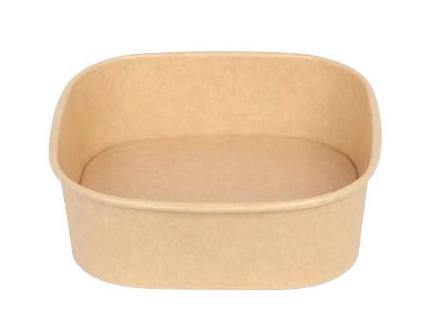
DAILYECO Solution

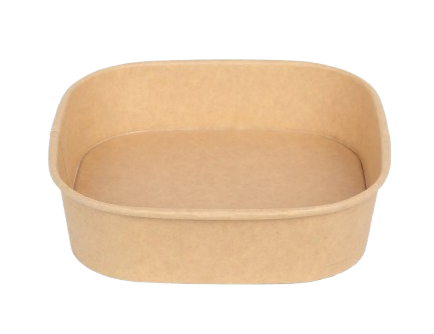
DAILYECO selected three catalogue-listed square paper bowl formats:

  • 16 oz / 500 ml square paper bowl:420,000 pieces, packed in 1,400 cartons
  • 24 oz / 700 ml square paper bowl:300,000 pieces, packed in 1,000 cartons
  • 29 oz / 850 ml square paper bowl:230,400 pieces, packed in 768 cartons

Each product was packed according to the catalogue configuration of 50 pieces per bag, 6 bags per carton and 300 pieces per carton.
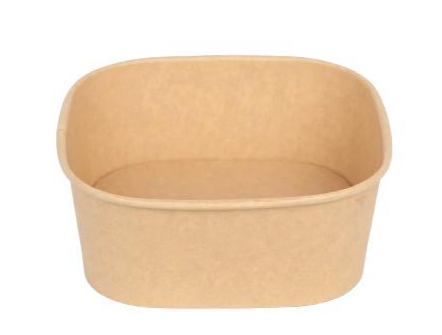
The 500 ml bowl was matched with the D130 lid family, while the 700 ml and 850 ml bowls were matched with the D151 lid family. DAILYECO completed a 5,400-piece pilot production run before mass production and applied size-specific product codes, carton labels and loading lists to separate the three SKUs.

Results

  • Total shipment quantity: 950,400 pieces
  • Total cartons: 3,168 cartons
  • Calculated carton volume: approximately 187.15 m³ before palletization
  • Three bowl sizes coordinated with two lid families
  • Pilot production and specification confirmation completed before mass production
  • Full production completed within 29 days after final sample and order approval
  • Bowl quantities, lid references and carton labels reconciled with the final shipping list before dispatch

Key Takeaways

Using catalogue-confirmed capacities, matched lid families and standardized carton quantities allowed the customer to manage a large mixed-size disposable paper bowl order without creating unnecessary lid SKUs. Pilot verification and size-specific carton identification also reduced bowl-and-lid picking risks during time-sensitive event distribution.

FAQ

How does a disposable paper bowl differ from a reusable serving bowl?

It is engineered for one foodservice cycle using formed paperboard and a functional barrier. Approval should reflect the intended food, temperature, contact period, handling and lid rather than repeated washing or reuse.

Can bowls and lids be sourced as one coordinated range?

Yes. Round, soup and square catalogue families can be paired with their designated lids and managed under one quotation. Confirm each bowl code, lid code, print route, MOQ and production schedule.

What should a brand expect when printing on natural kraft board?

Kraft provides a warm base tone that changes some printed colors. Approve the final logo printed disposable paper bowls against a physical reference or agreed production proof instead of a screen-only visual.

Which prepress assets help prevent artwork delays?

Send vector graphics where available, outlined or packaged fonts, color references, legal copy, barcode or QR specifications and the correct product dieline. The chosen print process determines the final file checks.

How can one brand system remain consistent across different capacities?

Build a master hierarchy for colors, logos and information, then adapt it to each bowl-specific dieline. Height, taper and printable area change from one capacity to another, so every SKU still requires separate approval.

Why are some products sold as bowls and others as paper food containers?

The market terms overlap, but construction is clearer than naming. Bowls are generally deep formed round or square packs; food containers may also include boxes, trays and clamshells. Use the drawing and material specification to remove ambiguity.

Which menu characteristics determine bowl suitability?

Consider liquid content, oil, serving temperature, contact time, portion volume and movement after filling. Those factors—not the menu name alone—determine whether soup, noodles, salad, dessert or another meal is a suitable application.

What should be tested when the bowl will carry soup?

Fill the paper soup bowl with the real recipe at service temperature, apply the matched lid and observe the wall, seams, rim and closure throughout the required holding and transport time.

What overall capacity span is listed in the catalogue?

Catalogue families run from 240 ml through 1500 ml in round meal, soup and square formats.

Which catalogue item corresponds to an 8 oz search?

An 8 oz / 240 ml soup bowl is listed. Confirm usable fill volume and required headspace before treating the nominal value as the served portion.

How should a 12 oz requirement be matched?

Begin with the 12 oz / 360 ml soup bowl, then verify its dimensions and practical fill line against the menu and assigned lid.

Does the range include more than one 16 oz geometry?

Yes. Buyers can evaluate a 16 oz / 480 ml soup bowl or a 16 oz / 500 ml square bowl; shape, food exposure and closure needs decide which is appropriate.

Where does the catalogue’s large-size range end?

Round formats extend to 1500 ml, while square formats extend to 1400 ml. Choose a large paper bowl by practical portion and handling needs, not maximum nominal capacity alone.

Which lid materials appear across the catalogue families?

Assigned options include paper, PP, OPS and anti-fog PET. Availability depends on the selected diameter or square-bowl family.

Why must a 150 mm bowl be checked against a specific D150 lid?

The diameter label does not describe every engagement detail. Test the exact pairing for closing force, retention, stacking and transport before it becomes an approved SKU.

Can a standard bowl be converted into a private-label printed item?

Projects may add logos, full graphics, QR content, instructions and private-label packing. Approval covers the individual dieline, proofing route and production conditions.

Is ‘leakproof’ the correct performance claim for a kraft bowl?

Leak resistant is generally more precise. The result changes with barrier, seam quality, recipe, temperature and elapsed time, so any stronger statement needs filled-product evidence.

What information should accompany a microwave-use statement?

A microwave safe paper bowl specification should identify the food load, appliance power, maximum time, temperature and whether the lid must be removed. Do not generalize one test to the entire range.

How should freezer performance be qualified?

Use the intended storage duration and freeze-thaw cycle in a dedicated test. Condensation, board stiffness and seam integrity should be checked after the pack returns to service conditions.

Can every paper-based bowl enter ordinary paper recycling?

No. Coating, residual food, local collection rules and mill capability all affect acceptance. A recyclable paper bowls claim should be based on evidence from the intended market.

Does a bio-based barrier automatically make the finished bowl compostable?

No. The complete converted product needs relevant evidence, and the customer must have access to the corresponding composting system.

How do PE and PLA barriers differ at the project-planning stage?

PE is the catalogue construction and a familiar production route. PLA is a bio-based option requiring separate verification of performance, finished-product evidence and access to the intended industrial-composting pathway.

What order quantity should be budgeted for each production SKU?

The typical MOQ is 50,000 pieces per SKU. Size, printing coverage, artwork count and packing configuration may affect the final confirmed quantity.

At what point does the 20–30-day production window begin?

The typical lead time is 20–30 days after the specification, artwork and sample are approved, subject to order volume and the confirmed factory schedule.

Which samples should be evaluated before an order is released?

Request the intended bowl, its matched lid and a printed reference where branding is involved. Reproduce filling, closing, stacking, delivery and any permitted reheating under operating conditions.

What makes a quotation request technically complete?

Include the bowl format, capacity, drawing, recipe, fill temperature, holding time, lid, graphics, quantity, case pack, destination, document list and required delivery date.

Which range decisions can lower packaging cost without weakening performance?

Consolidate rim families, remove low-value capacities, optimize case and container use, forecast orders and lock artwork before production. Compare like-for-like bowl-and-lid systems.

Can a paper bowl program be consolidated with adjacent foodservice items?

Depending on the active portfolio, DAILYECO may coordinate paper cups, paper food containers, bagasse or molded-fiber products, cutlery and related foodservice packaging. Link only to confirmed collections.

DAILYECO Industry Expert Tips: 10 Professional Insights for Sourcing Disposable Paper Bowls

A strong disposable paper bowl program connects the brief, approved sample, controlled artwork, evidence package and replenishment plan. The following ten checks address the points where bulk single-use projects most often lose time or cost.

Common Mistake: Comparing Prices Without Comparing Specifications 

A capacity label does not make two offers equivalent. A quoted 750 ml bowl may differ in top size, board weight, barrier, lids and case quantity, all of which change use performance and landed cost.

DAILYECO Recommendation: Normalize every quotation to the same signed drawing, sample, lid code and packing data before reviewing price.

Common Mistake: Selecting Paperboard Based Only on Cost

Light board can lose rigidity or form stability; excessive board adds material and freight weight without necessarily improving the application.

DAILYECO Recommendation: Define the filled-food performance target, then select grammage through forming and service trials.

Common Mistake: Choosing the Wrong Coating for Your Market

The barrier affects sealing behavior, food-use limits, documentation and the environmental language available in the sales market. A popular material route may still be operationally wrong.

DAILYECO Recommendation: Work backward from the destination rules and real waste route, then qualify the complete converted bowl.

Common Mistake: Ignoring Bowl and Lid Compatibility

Two parts with the same nominal diameter can close differently because rim profile, lid depth, material movement and manufacturing tolerances interact.

DAILYECO Recommendation: Sign off the exact pairing after closing-force, retention, stacking and transport checks.

Common Mistake: Treating Printing as a Final Step

Graphics approved only as a flat screen image may distort after the tapered wall is formed. Fine text, codes and color blocks can shift or reproduce differently at production scale.

DAILYECO Recommendation: Approve the dieline, safe zone, color control method and a suitable proof before production release.

Common Mistake: Ordering Too Many Bowl Sizes

Every extra capacity can bring another lid, carton, slow-moving stock position and training instruction. Range breadth without menu justification increases operating complexity.

DAILYECO Recommendation: Use portion and sales data to retain only the small, core-meal and large paper bowls that perform a clear role.

Common Mistake: Evaluating Only Unit Price Instead of Total Procurement Cost

The bowl price omits closure cost, carton cube, handling labor, unusable stock, urgent freight and complaints created by a weak pack system.

DAILYECO Recommendation: Calculate the landed and operating cost of the approved bowl, lid and packing combination.

Common Mistake: Waiting Until Peak Season to Place Orders

Material booking, artwork control, samples, production and shipment each consume calendar time. During seasonal peaks, factory and freight flexibility narrows further.

DAILYECO Recommendation: Maintain a rolling forecast and reserve repeat production only after the specification and artwork revision are locked.

Common Mistake: Choosing a Supplier Instead of a Long-Term Manufacturing Partner

A vendor may stop quoting the requested SKU. A manufacturing partner also challenges unnecessary sizes, validates closures, improves loading and protects repeat-order consistency.

DAILYECO Recommendation: Review technical judgment, change control and corrective-action discipline together with commercial terms.

Common Mistake: Asking Only for a Price Instead of Professional Advice

A price request without the food, fill temperature, service time and distribution route leaves the supplier to price an assumption instead of the real application.

DAILYECO Recommendation: Send an application brief and request a written construction proposal, sample sequence and risk notes.

Durable sourcing results come from a controlled specification and realistic validation, not from choosing the lowest quotation before the application is understood.

This Page Reviewed By

Lillian Guo

Food Packaging Compliance Manager

10+ Years of Experience

Specialized in:

  • Food Contact Compliance
  • Sustainable Packaging
  • Paper BowlManufacturing
  • Custom Printing and Artwork Review
  • Destination-Market Documentation
  • Material and Environmental Claim Review
  • Packaging Compliance Documentation

Explore Our Related Sustainable Packaging

Discover more sustainable beverage and food packaging solutions from DAILYECO.

Contact Our Team

Planning a wholesale disposable paper bowl program?

Our packaging team can help you define and validate:

  • The current bowl and lid catalogue
  • Application and range consultation
  • OEM and private-label program structure
  • Artwork and printed disposable paper bowlreview
  • Dielines, color targets and proofing references
  • Plain and printed sample requests
  • Bowl-to-lid matching and use-condition checks
  • Food-contact and destination document planning

Submit Your Inquiry Now