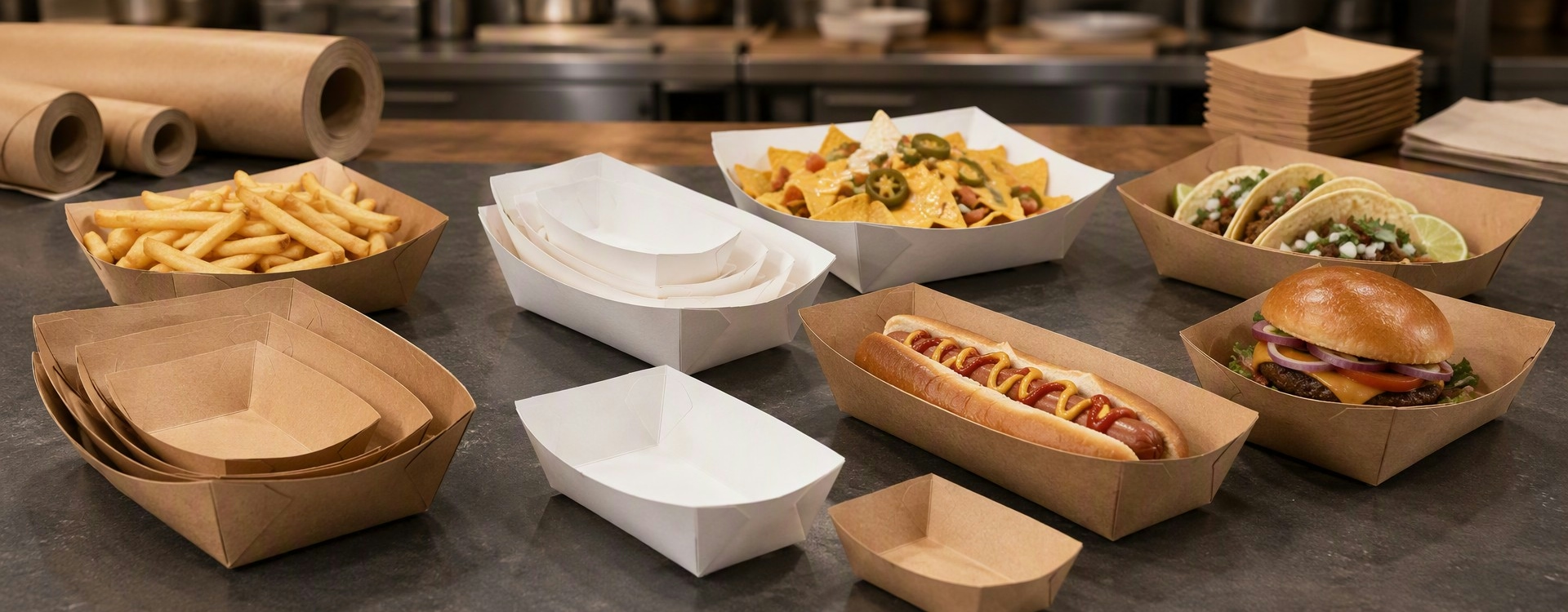
Boat Trays

DAILYECO, Your Professional Paper Boat Trays Manufacturer

Custom Paper Boat Trays for Foodservice and Takeaway

Key Facts About Paper Boat Trays 

Item

Information

Collection Keyword

Paper Boat Trays

Product Format

Open-top folded paperboard foodservice tray with sloped or tapered sidewalls

Catalog Material Structure

1#–3#: 230 gsm kraft paper + 18 gsm PE; 4#–6#: 260 gsm kraft paper + 18 gsm PE; each size is listed in unprinted kraft and kraft printed versions

Catalog Size Range

Six numbered sizes from 1# (125 × 90 × 19 mm) to 6# (255 × 178 × 50 mm)

Typical Foods

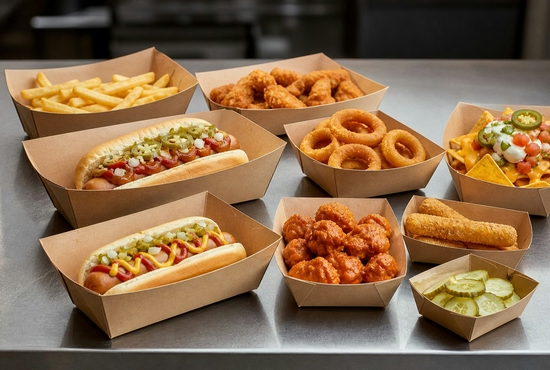
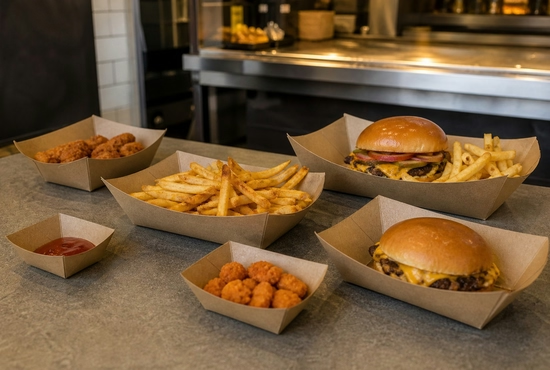
Fries, hot dogs, nachos, snacks, burgers, tacos, samples, and other low-liquid foods

Current Barrier Structure

The listed catalog SKUs use an 18 gsm PE lining; food, temperature, grease, moisture, and holding-time performance must be verified for the selected SKU

Catalog Finish Options

Unprinted kraft and kraft printed versions are listed for every size; additional custom artwork remains subject to ink, MOQ, and production feasibility

Service Model

Immediate consumption, counter service, events, concessions, food trucks, and selected takeaway

Customization

Dimensions, board, depth, structure, barrier, printing, pack count, and cartons

Supply Type

B2B wholesale, OEM/ODM development, private label, and export-order support

Critical Qualification

Food-contact, heat, barrier, recycling, composting, and certification claims are SKU- and market-specific

DAILYECO supplies Paper Boat Trays for professional foodservice buyers, including standard kraft and white formats, size selection, grease-barrier options, custom printing, private-label cartons, and export-order support.


What Are Paper Boat Trays? 

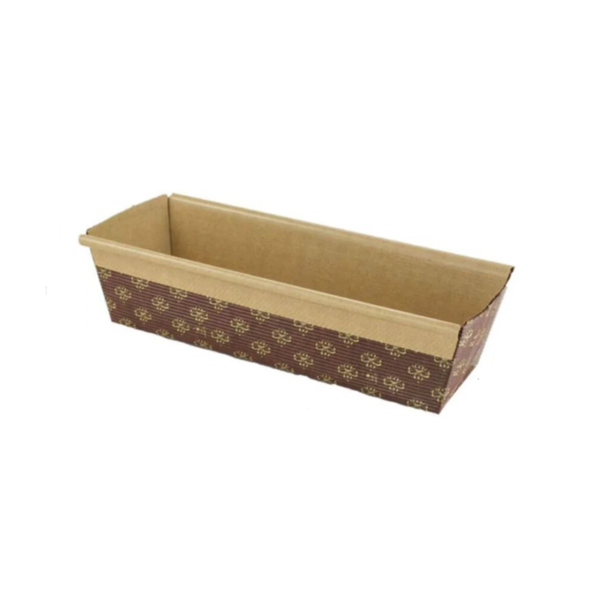
Paper Boat Trays are open-top foodservice containers made from die-cut paperboard that is folded into a shallow, boat-shaped form with tapered or sloped sides. They create an accessible serving surface for foods that are eaten soon after preparation.

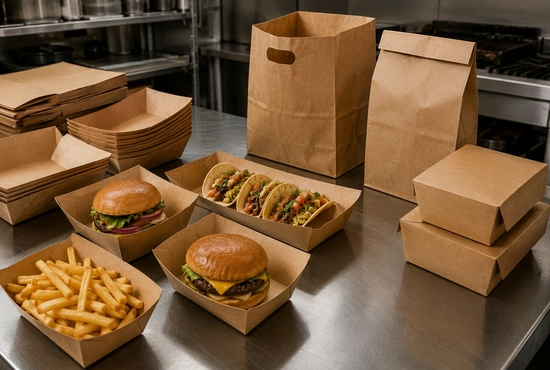
Often described as paper serving boats, cardboard food boats, or a paper boat food tray, this format is widely used for fries, hot dogs, nachos, snacks, burgers, tacos, tasting portions, and other quick-service foods.

The exact performance of a paper tray depends on the paperboard grade, board weight, dimensions, fold design, seam construction, coating or liner, ink and adhesive system, food temperature, oil or moisture level, and holding time.


What Are the Key Features of Paper Boat Trays? 

Paper Boat Trays combine fast open-top service, stack-efficient storage, a broad printable surface, and multiple size options. Professional buyers should evaluate measurable specifications and application conditions instead of relying on vague performance ratings.

Feature

Performance

Explanation

Paperboard Construction

Food-Grade Paperboard Construction

Manufactured from quality food-grade paperboard using die-cutting, creasing, folding, and forming technology.

Structural Strength

Stable Folded Structure for Food Service

Strong folded construction suitable for serving a wide range of foods.

Heat Resistance

SKU-Specific Hot-Food and Microwave Compatibility

Selected paper boat trays may be suitable for qualified microwave-heating applications, subject to product-specific time and temperature limits.

Cold Food Performance

Suitable for Chilled Food Service

Maintains stability when serving salads, desserts, fruits, and chilled dishes.

Freezer Compatibility

Selected SKUs Suitable Down to −20°C

Selected SKUs may be suitable for chilled or frozen-food applications down to −20°C, subject to product-specific verification.

Oil & Grease Resistance

Resists Oil Penetration Up to 95°C for 30 Minutes from paper

Helps prevent oil penetration during everyday meal service

Moisture Resistance

Short-Term Moisture Resistance for Foodservice

Maintains structural integrity during normal foodservice use.

Food Contact Safety

Food-Contact-Compliant Material System

Produced using food-contact-compliant paperboard, coatings, inks, and adhesives.

Product Consistency

Uniform Dimensions and Reliable Batch Quality

Uniform dimensions, stable folding structures, and reliable quality for commercial applications.

OEM Customization

Custom Sizes, Printing, and Packaging Available

Custom sizes, die-lines, paperboard options, printing, branding, and packaging solutions are available.

Product Portfolio

Multiple Sizes, Materials, and Paper Tray Formats

Available in kraft paper boat trays, paper sushi trays, paper food trays, hot dog paper trays, and multiple capacity options.

Commercial Applications

Suitable for Foodservice, Takeaway, and Retail

Suitable for restaurants, catering, concessions, food trucks, takeaway, retail, and event foodservice.

Sustainability Options

Paper-Based Packaging Material Options

Manufactured from paper-based materials, with material and coating options that can support customers’ sustainable packaging programs.


A well-specified kraft tray can simplify counter service because staff can load the food, add toppings, and hand the order to the customer without opening or closing a hinged package.

For takeaway or delivery, an open paper boat tray normally requires a bag, wrap, overbox, or another secondary package. It should not be represented as airtight, leakproof, or equivalent to a sealed container.

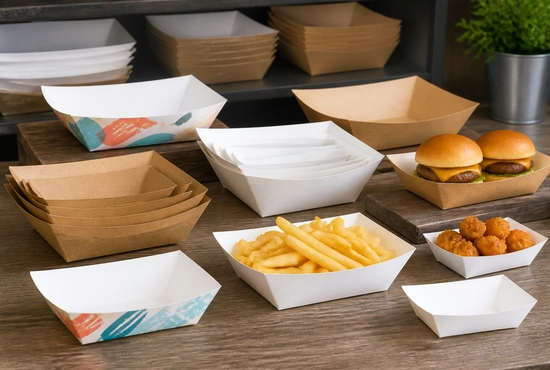
Kraft brown and white paperboard support different brand presentations, while custom printing can carry logos, menu cues, handling marks, or campaign graphics. Print coverage and ink selection should be confirmed against food-contact design requirements.
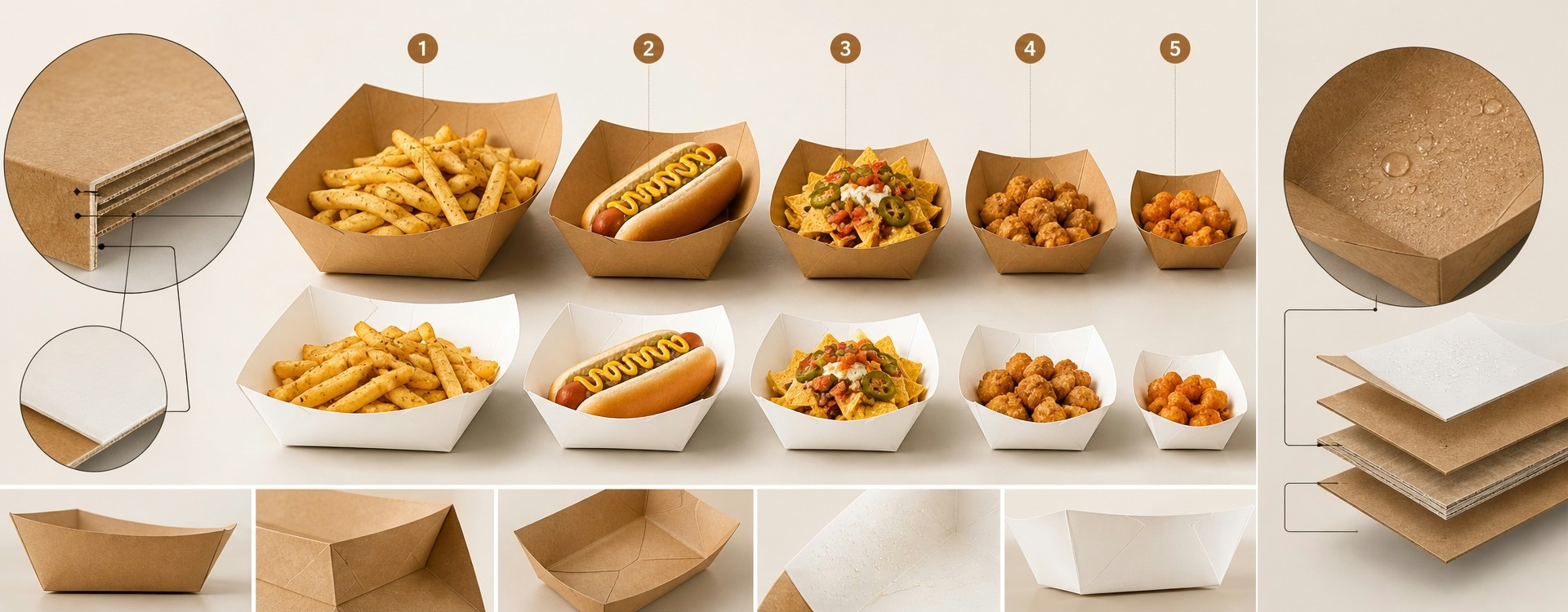
Paper Boat Tray Structure, Paperboard, and Grease-Resistant Design


Why Are Paper Boat Trays Becoming Popular Worldwide? 

Growth in takeaway, food trucks, stadium concessions, festivals, quick-service restaurants, and casual snack concepts has increased demand for packaging that is quick to load and easy to eat from.

Paperboard offers a familiar paper-based appearance and useful printability. Environmental statements, however, must match the exact fiber source, recycled content, coating, certification scope, and collection infrastructure rather than being assumed from appearance alone.


Paper Boat Trays Industry Insights and Paper Food Packaging Trends 

Foodservice packaging teams increasingly evaluate the complete operating system: food protection, preparation speed, customer use, material documentation, claim language, carton efficiency, landed cost, and end-of-use conditions.

Four purchasing trends are particularly relevant to paper food-boat programs.
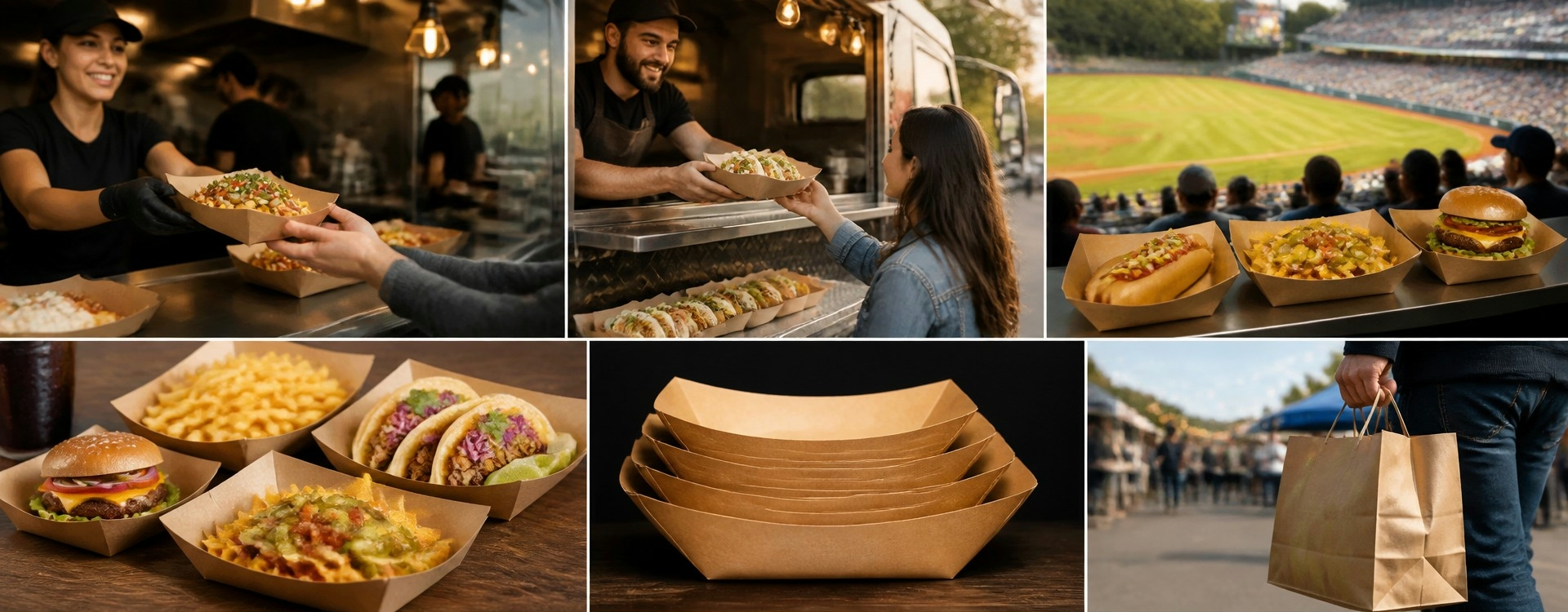
Paper Boat Trays Industry Insights & Paper Food Packaging Trends

Increasing Demand for Efficient Paper Foodservice Packaging

Operators want packaging that fits existing counters, can be nested in limited storage space, and supports fast loading during peak service periods.

Plastic trays and rigid containers remain appropriate for many uses, especially when transparency, sealing, or extended moisture resistance is required. A paper food boat is selected when open service, printable branding, and short holding periods better match the menu.

Sustainability and Claim Requirements From Global Markets 

Importers and food brands increasingly request information about fiber source, recycled content, forestry certification, food-contact compliance, coatings, inks, and the appropriate end-of-use message.

Terms such as recyclable, recycled, biodegradable, or compostable must be qualified when limitations apply. A coating that improves grease resistance may also change how the used tray should be collected or processed.

Growing Importance of Packaging Experience 

The tray influences the way food is displayed, carried, shared, and eaten. Sidewall height, top opening, base area, stiffness, and grease performance all affect the customer experience.

Demand for Customized Paper Food Packaging 

Custom printing and format development help restaurant chains, distributors, and private-label brands distinguish otherwise standardized foodservice packaging.


Which Material Is Right for Your Business?

The correct serving package depends on the food, portion, temperature, oil and moisture exposure, holding time, transport distance, presentation target, disposal route, and total landed cost.

Paper Boat Trays are appropriate when an open, lightweight, printable foodservice format matches the operating conditions. Other materials may be better when sealing, transparency, oven use, or prolonged liquid resistance is essential.

Choose Paper Boat Trays If You: 

  • Serve food for immediate consumption or a short holding period.
  • Need a nested format that uses counter and storage space efficiently.
  • Want kraft brown, white, plain, or custom-printed paper presentation.
  • Operate restaurants, concessions, food trucks, catering, festivals, or tasting events.
  • Need size classes for snacks, fries, hot dogs, burgers, tacos, nachos, or shared portions.
  • Can use secondary packaging when takeaway or delivery requires more protection.

Choose Plastic Food Trays If You: 

  • Require longer moisture contact or a more fully sealed packaging system.
  • Need clear product visibility without a separate window or lid.
  • Use an established tray-and-lid system with verified transport performance.
  • Need a rigid format for long handling cycles or automated operations.
  • Have an appropriate recovery route and documented material strategy.

Choose Molded Fiber Food Trays If You: 

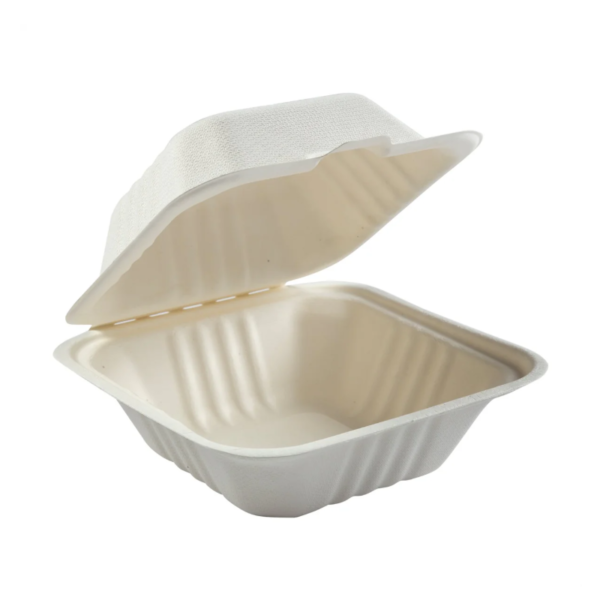
  • Need a formed cavity, compartment layout, or clamshell structure.
  • Require a different stiffness and texture profile from folded paperboard.
  • Can confirm food-contact and performance documentation for the selected SKU.
  • Have verified disposal claims and infrastructure for the exact molded-fiber product.


DAILYECO’s Complete Paper Boat Trays Categories Will Cover Your Sales and On-Site Application Needs

DAILYECO supplies Paper Boat Trays for restaurants, foodservice distributors, catering suppliers, hospitality programs, retailers, and private-label packaging buyers.

Pictures

Product

Size

Material & Basis Weight

Packing

CTN Size

1# Kraft Paper Boat Tray With PE Lined

125 × 90 × 19 mm

230 gsm Kraft Paper + 18 gsm PE

250 pcs/bag
4 bags/CTN
1,000 pcs/CTN

25 × 19 × 37 cm

2# Kraft Paper Boat Tray With PE Lined

145 × 100 × 23 mm

230 gsm Kraft Paper + 18 gsm PE

250 pcs/bag
4 bags/CTN
1,000 pcs/CTN

30 × 21 × 37 cm

3# Kraft Paper Boat Tray With PE Lined

165 × 120 × 25 mm

230 gsm Kraft Paper + 18 gsm PE

250 pcs/bag
4 bags/CTN
1,000 pcs/CTN

34 × 25 × 39 cm

4# Kraft Paper Boat Tray With PE Lined

182 × 122 × 30 mm

260 gsm Kraft Paper + 18 gsm PE

125 pcs/bag
4 bags/CTN
500 pcs/CTN

27 × 19 × 40 cm

5# Kraft Paper Boat Tray With PE Lined

227 × 153 × 35 mm

260 gsm Kraft Paper + 18 gsm PE

125 pcs/bag
4 bags/CTN
500 pcs/CTN

34.5 × 23 × 40 cm

6# Kraft Paper Boat Tray With PE Lined

255 × 178 × 50 mm

260 gsm Kraft Paper + 18 gsm PE

125 pcs/bag
4 bags/CTN
500 pcs/CTN

35.5 × 25.5 × 52.5 cm

1# Kraft Printed Paper Boat Tray With PE Lined

125 × 90 × 19 mm

230 gsm Kraft Paper + 18 gsm PE

250 pcs/bag
4 bags/CTN
1,000 pcs/CTN

25 × 19 × 37 cm

2# Kraft Printed Paper Boat Tray With PE Lined

145 × 100 × 23 mm

230 gsm Kraft Paper + 18 gsm PE

250 pcs/bag
4 bags/CTN
1,000 pcs/CTN

30 × 21 × 37 cm

3# Kraft Printed Paper Boat Tray With PE Lined

165 × 120 × 25 mm

230 gsm Kraft Paper + 18 gsm PE

250 pcs/bag
4 bags/CTN
1,000 pcs/CTN

34 × 25 × 39 cm

4# Kraft Printed Paper Boat Tray With PE Lined

182 × 122 × 30 mm

260 gsm Kraft Paper + 18 gsm PE

125 pcs/bag
4 bags/CTN
500 pcs/CTN

27 × 19 × 40 cm

5# Kraft Printed Paper Boat Tray With PE Lined

227 × 153 × 35 mm

260 gsm Kraft Paper + 18 gsm PE

125 pcs/bag
4 bags/CTN
500 pcs/CTN

34.5 × 23 × 40 cm

6# Kraft Printed Paper Boat Tray With PE Lined

255 × 178 × 50 mm

260 gsm Kraft Paper + 18 gsm PE

125 pcs/bag
4 bags/CTN
500 pcs/CTN

35.5 × 25.5 × 52.5 cm


Custom projects may adjust external dimensions, base dimensions, sidewall height, top opening, board grade, barrier system, artwork, packing quantity, and carton configuration.

Customization Options

DAILYECO supports OEM and ODM projects for custom paper serving trays and private-label foodservice packaging.

The customization discussion can cover:

  • External and internal tray dimensions
  • Base width, top opening, depth, and sidewall angle
  • Kraft brown or white paperboard and board-weight selection
  • Plain, one-color, multi-color, or full-coverage artwork feasibility
  • Grease- and moisture-barrier options for the intended food
  • Retail sleeves, labels, inner packs, and barcodes
  • Master-carton quantity, marks, palletization, and loading plans

Samples should be checked with the actual food, temperature, oil load, serving time, carrying method, and secondary package before artwork or mass production is approved.

Paper Boat Trays Size Guide

The current catalog includes six numbered sizes from 1# to 6#. Every size is listed as a kraft PE-lined tray and a kraft printed PE-lined tray, with dimensions ranging from 125 × 90 × 19 mm to 255 × 178 × 50 mm.

Use the dimensions below as a selection reference, then verify food fit, usable base area, sidewall clearance, barrier performance, and handling with an approved sample.

Product and Size

Typical Selection Reference (Confirm by Sampling)

1# Kraft / Printed PE-Lined Paper Boat Tray — 125 × 90 × 19 mm

Samples, condiments, dessert bites, and compact promotional portions

2# Kraft / Printed PE-Lined Paper Boat Tray — 145 × 100 × 23 mm

Small fries, side dishes, dumplings, and taproom snack portions

3# Kraft / Printed PE-Lined Paper Boat Tray — 165 × 120 × 25 mm

Medium fries, nuggets, tacos, sliders, and tasting combinations

4# Kraft / Printed PE-Lined Paper Boat Tray — 182 × 122 × 30 mm

Hot dogs, loaded fries, nachos, and entertainment-venue snacks

5# Kraft / Printed PE-Lined Paper Boat Tray — 227 × 153 × 35 mm

Larger individual meals, shared bar snacks, and catering portions

6# Kraft / Printed PE-Lined Paper Boat Tray — 255 × 178 × 50 mm

Large or shared meals, concession combinations, and catering service

Product size, packing, carton quantity, material, and availability remain subject to the final quotation and product specification.
Get Latest Catalog

What Is the Application of Paper Boat Trays?

Paper Boat Trays are used where operators need an open, easy-to-load serving format for food that is normally consumed soon after preparation.

Different foods create different requirements. Fries and fried snacks emphasize grease resistance; hot dogs need suitable length; tacos need side support; nachos need surface area; sauced items need stronger moisture control.

The following application guide connects each service model with the questions a buyer should verify.

Paper Boat Trays for Restaurant and Quick-Service Food Service

Restaurant and Quick-Service Food Service

Restaurants use paper trays for food when customers eat at a counter, table, patio, or nearby location and open presentation is part of the service experience.

The tray should match portion size without excess empty area, remain comfortable to hold, and resist visible grease transfer for the planned service time.

Recommended Products

1# Kraft Paper Boat Tray With PE Lined — 125 × 90 × 19 mm

2# Kraft Paper Boat Tray With PE Lined — 145 × 100 × 23 mm

3# Kraft Paper Boat Tray With PE Lined — 165 × 120 × 25 mm

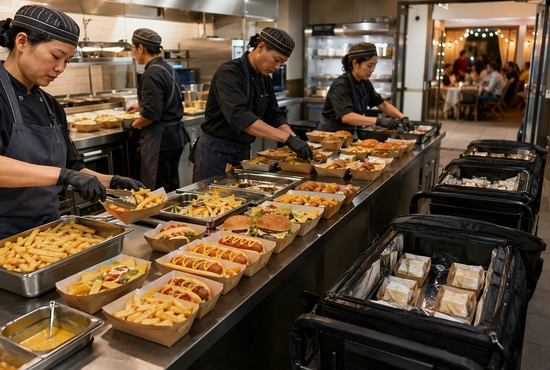
Catering, Events, and Concessions

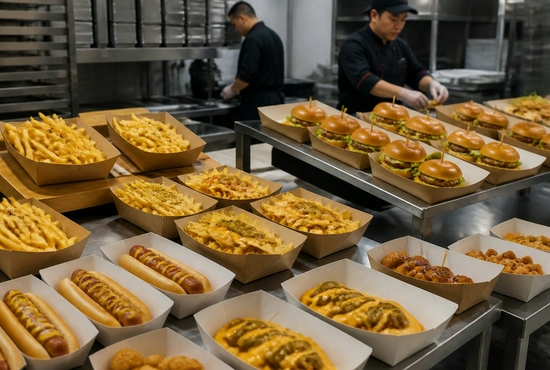
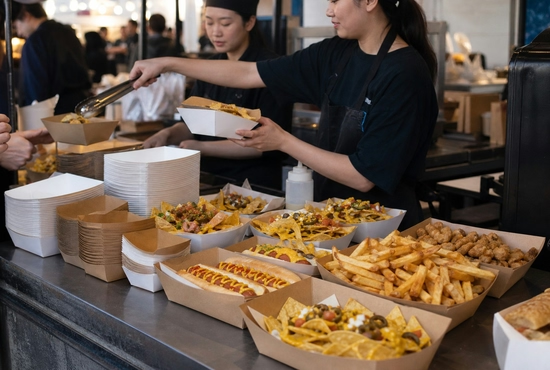
Caterers, stadium operators, festivals, and event vendors need packaging that can be staged in volume, loaded quickly, carried with one hand, and discarded through the venue’s established waste system.

Disposable paper serving trays can support controlled portions and a unified presentation across multiple service stations, but the organizer should confirm how coatings and food residue affect local collection.

Recommended Products

4# Kraft Paper Boat Tray With PE Lined — 182 × 122 × 30 mm

5# Kraft Paper Boat Tray With PE Lined — 227 × 153 × 35 mm

6# Kraft Paper Boat Tray With PE Lined — 255 × 178 × 50 mm

Paper Boat Trays for Catering, Events, and Concession Food Service
Paper Boat Trays for Hot Dogs, Fries, and Snack Packaging

Hot Dogs, Fries, and Snack Packaging

Hot dogs, fries, onion rings, fried chicken pieces, nachos, popcorn, and other snacks are core applications because they benefit from open access and visible presentation.

A kraft paper food tray for fried food should be tested for oil penetration, base softening, corner leakage, and hand comfort at the intended temperature and holding time.

For hot dogs, the usable base length and sidewall clearance matter more than a generic capacity label. For loaded fries or nachos, buyers should prioritize top opening, food area, and barrier performance.

Recommended Products

4# Kraft Paper Boat Tray With PE Lined — 182 × 122 × 30 mm

2# Kraft Paper Boat Tray With PE Lined — 145 × 100 × 23 mm

3# Kraft Paper Boat Tray With PE Lined — 165 × 120 × 25 mm

Takeaway and Short-Distance Food Service

An open tray can be used for pickup or short-distance movement when the operator adds a suitable bag, wrap, sleeve, or overbox and the food is expected to be consumed promptly.

For longer delivery, high-liquid food, or orders that may tip, buyers should compare a cardboard takeaway tray system with a closed carton, clamshell, or tray-and-lid format.

Recommended Products

3# Kraft Paper Boat Tray With PE Lined — 165 × 120 × 25 mm

4# Kraft Paper Boat Tray With PE Lined — 182 × 122 × 30 mm

5# Kraft Paper Boat Tray With PE Lined — 227 × 153 × 35 mm

Paper Boat Trays for Takeaway and Short-Distance Food Service
Paper Boat Trays for Food Trucks and Street-Food Service

Food Trucks and Street-Food Service 

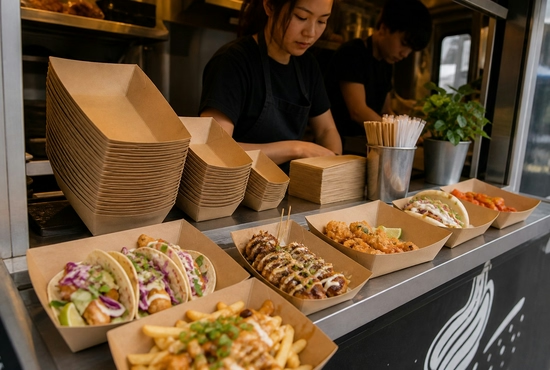
Food trucks and market stalls need compact packaging inventories that can cover several menu items without taking too much shelf or counter space.

A nested paper boat tray can serve fries, burgers, tacos, skewers, dumplings, and specialty snacks, provided each menu item has been tested for fit and barrier performance.

Recommended Products

3# Kraft Paper Boat Tray With PE Lined — 165 × 120 × 25 mm

4# Kraft Paper Boat Tray With PE Lined — 182 × 122 × 30 mm

4# Kraft Paper Boat Tray With PE Lined — 182 × 122 × 30 mm

Retail and Private-Label Food Packaging 

Retailers and packaging brands may sell plain or printed paper serving trays in foodservice cases, club packs, or consumer packs.

Retail programs require accurate counts, scannable labels, artwork control, case marks, shelf-ready packing, and claim language that matches the exact product.

Recommended Products

1# Kraft Printed Paper Boat Tray With PE Lined — 125 × 90 × 19 mm

2# Kraft Printed Paper Boat Tray With PE Lined — 145 × 100 × 23 mm

3# Kraft Printed Paper Boat Tray With PE Lined — 165 × 120 × 25 mm

Custom Paper Boat Trays for Retail and Private-Label Food Packaging
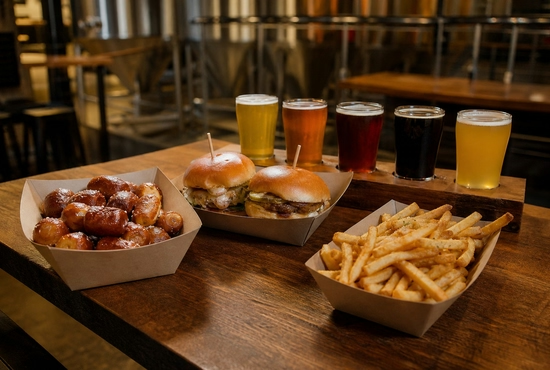
Paper Boat Trays for Brewery Taprooms and Tasting Flights

Brewery Taprooms and Tasting Flights

Taprooms can use paper boat trays to pair beverage flights with pretzel bites, fries, sliders, wings, and rotating snack menus without introducing a separate plate format for every portion.

Selection should be based on food footprint and oil load rather than drink-flight terminology. Staff should also confirm that the chosen depth remains easy to carry alongside glassware and stable on narrow tasting tables.

Recommended Products

2# Kraft Paper Boat Tray With PE Lined — 145 × 100 × 23 mm

3# Kraft Paper Boat Tray With PE Lined — 165 × 120 × 25 mm

4# Kraft Printed Paper Boat Tray With PE Lined — 182 × 122 × 30 mm

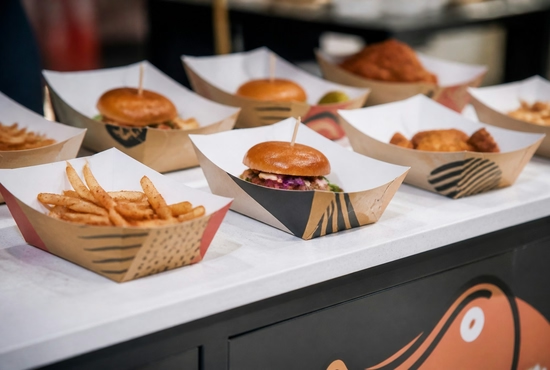
Culinary Sampling and Brand Activations

For supermarket demonstrations, trade events, launch counters, and mobile brand activations, small printed paper boat trays can combine portion control with an immediately visible brand surface.

The final format should support fast handout, single-use condiments, barcode or campaign artwork where required, and clean separation during peak sampling periods. Actual food contact, ink coverage, and serving duration still require approval.

Recommended Products

1# Kraft Printed Paper Boat Tray With PE Lined — 125 × 90 × 19 mm

2# Kraft Printed Paper Boat Tray With PE Lined — 145 × 100 × 23 mm

3# Kraft Printed Paper Boat Tray With PE Lined — 165 × 120 × 25 mm

Printed Paper Boat Trays for Culinary Sampling and Brand Activations
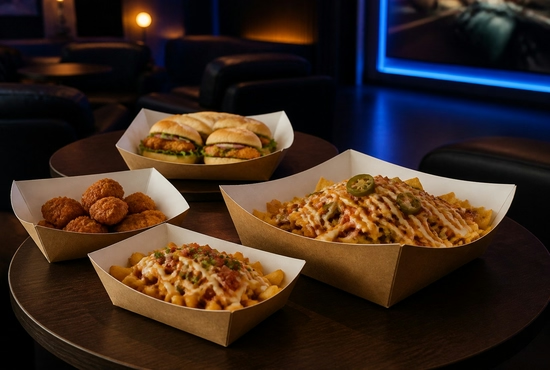
Paper Boat Trays for Cinema, Gaming, and Entertainment Lounges

Cinema, Gaming, and Entertainment Lounges

Indoor entertainment venues can use paper food boats for loaded fries, chicken bites, mini sandwiches, nachos, and shareable finger foods that guests eat from seats or compact lounge tables.

Unlike high-throughput outdoor concessions, this setting places more emphasis on quiet handling, lap stability, portion sharing, and carrying food through aisles. The operator should test tipping, grease visibility, and the longest realistic show or session time.

Recommended Products

3# Kraft Paper Boat Tray With PE Lined — 165 × 120 × 25 mm

4# Kraft Paper Boat Tray With PE Lined — 182 × 122 × 30 mm

5# Kraft Printed Paper Boat Tray With PE Lined — 227 × 153 × 35 mm

Paper Boat Trays vs Other Food Packaging Solutions 

A useful comparison begins with the service requirement rather than a material preference. Open paper food boats, closed paperboard cartons, molded-fiber trays, plastic trays, and aluminum trays solve different problems.

Paper Boat Trays favor speed, food visibility, printability, and short-term service. They provide less top protection and liquid containment than a closed container.

The following table compares typical characteristics; exact performance remains SKU-specific.

Comparison Factor

Paper Boat Trays

Closed Paperboard Cartons

Plastic Food Trays

Molded Fiber Trays

Primary Format

Open folded paperboard food boat

Folded paperboard box or clamshell

Thermoformed or molded plastic tray

Formed fiber tray or clamshell

Top Protection

Open; secondary packaging may be added

Closed or closable

Often used with lid or film

Open or hinged, depending on design

Food Visibility

Direct open presentation

Limited unless opened or windowed

Clear materials may provide visibility

Usually opaque

Grease / Moisture

Depends on board, barrier, folds, food, and time

Depends on board and barrier system

Often higher moisture resistance; SKU-specific

Depends on fiber formulation and barrier

Service Speed

Fast loading and direct access

Additional closing step

Depends on lid or film process

Depends on structure

Nesting / Storage

Normally compact and nestable

Often supplied flat or nested by design

Can nest but may use more rigid volume

Can nest; profile may be deeper

Printing

Strong visible sidewall opportunity

Broad printable panels

Printing or labels depend on material

Printing options may be more limited

Best-Fit Use

Immediate-service low-liquid foods

Takeaway requiring more enclosure

Visibility, sealing, or moisture control

Compartment, clamshell, or formed-fiber use

Key Limitation

No integral top protection

May slow open counter service

Material and recovery strategy may differ

Bulk, texture, and performance vary

Claim Review

Board, coating, fiber source, and local system

Board, coating, window, and local system

Resin, labeling, and local recovery system

Fiber, additives, certification, and local system

When the food is served immediately, an open paper tray can be an efficient choice. When the food must travel, remain sealed, or hold liquid for a long period, another format may deliver better total performance.

Buyers should test the complete package, including any bag, wrap, liner, lid, carton, label, and food-contact component used in the final application.

Who Usually Buys Paper Boat Trays?

Professional buyers evaluate food performance, price, carton efficiency, print capability, documentation, quality consistency, capacity, and communication—not appearance alone.

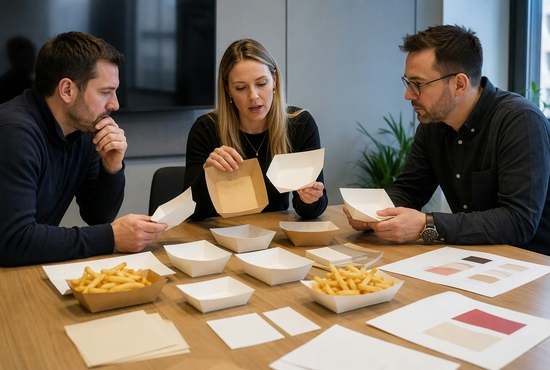
Importer Reviewing Paper Boat Tray Samples and Specifications

Importers

Importers purchase Paper Boat Trays in bulk for local foodservice, retail, and packaging channels. They need stable specifications, export-ready cartons, accurate documents, and a clear repeat-order process.

Foodservice Supply Companies

Foodservice distributors carry paper food trays for restaurants, caterers, schools, stadiums, hotels, and institutional kitchens.

Foodservice Supplier Managing Paper Boat Trays Inventory
Restaurant Chain Procurement Team Reviewing Paper Boat Trays

Restaurant Chain Procurement Teams 

Restaurant chains standardize tray dimensions, artwork, food performance, case packing, and handling instructions across multiple locations.

Catering Companies

Caterers and event operators select paper party trays and food boats that are easy to stage, carry, replenish, and dispose of within the venue’s waste program.

Catering Company Using Paper Boat Trays for Event Food Service
Food Brand Developing Custom Paper Boat Trays Packaging

Food Brands and Private Label Companies

Private-label buyers may require custom print, branded cartons, retail pack counts, barcodes, material declarations, claim review, and controlled artwork versions.

E-commerce Packaging Brands

Online packaging brands need product photographs and listings that accurately match dimensions, capacity class, pack count, material, color, coating, and intended use.

E-commerce Packaging Brand Developing Paper Boat Trays
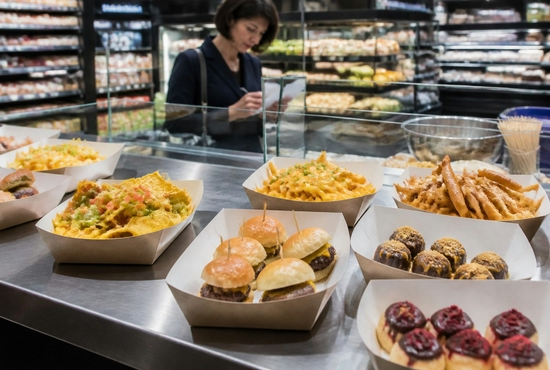
Supermarket and Retail Food Brands Using Paper Boat Trays

Supermarket & Retail Food Brands

Retail food teams may use paper food trays for samples, deli service, hot bars, or foods packed shortly before purchase.

Are Paper Boat Trays Right for Your Application?

Use the table as a screening guide: ✓ indicates a typical fit when the stated condition is verified, while ✗ indicates that a standard open paper boat tray is not the default solution.

Application

Recommended

Restaurant and quick-service counter food

Fries, hot dogs, burgers, tacos, nachos, and snacks served promptly

Food trucks, street-food stalls, concessions, and festivals

Catering and event food served within a defined holding period

Samples, tasting portions, sides, and other low-liquid foods

Custom-printed restaurant and private-label foodservice programs

Retail packs of empty paper boat trays

Pickup and short-distance takeaway with suitable secondary packaging

Sauced or oily foods within verified barrier and holding limits

Chilled food after condensation and stiffness testing

Microwave reheating only with SKU-specific instructions or evidence

Brewery taproom snacks and tasting-flight pairings within verified service limits

Culinary sampling, supermarket demonstrations, and branded food activations

Cinema, gaming, and entertainment-lounge finger foods

Soup, beverages, and prolonged liquid storage

Airtight or tamper-evident delivery without a separate validated system

Direct oven or open-flame use without product-specific verification

Applications requiring an integral lid or transparent visibility

Heavy-duty long-distance transport without a suitable rigid overpack

Very wet or acidic food requiring extended holding

Use requiring an unqualified recyclable or compostable claim

DAILYECO can review food dimensions, portion, temperature, oil and moisture exposure, holding time, service route, artwork, packing, and destination-market documentation.


Key Buyer Questions Before Purchasing Paper Boat Trays

A quotation is meaningful only when suppliers price the same specification. Buyers should define the food application, dimensions, paperboard, barrier, print, pack count, quality criteria, documentation, delivery term, and forecast.

The following questions help create a comparable and auditable purchasing brief.

What Information Is Required for an Accurate Quotation?

Provide the product drawing or target capacity class, top and bottom dimensions, depth, paperboard color and weight, coating requirement, artwork, order quantity, pack count, destination, Incoterm, food-contact documentation, and intended food conditions.

How Is MOQ Determined?

MOQ depends on whether the buyer selects a stocked plain size, custom board or coating, custom printing, a private-label pack, or a new die-cut structure.

How Long Does Custom Development Take?

The schedule can include requirement review, structural drawing, paperboard and barrier selection, die-line development, print proofing, sample making, real-food testing, revisions, approval, material booking, and mass-production planning.

Ask the supplier to separate development time, production lead time, and shipping time.

Should Buyers Approve Samples Before Mass Production?

Yes. Test the sample with the actual food, portion, temperature, oil or sauce load, holding time, carrying method, secondary package, and expected disposal message.

How Should Buyers Plan Carton Packing and Container Loading?

Compare pieces per carton, carton dimensions, gross and net weight, pallet pattern, container quantity, freight per thousand trays, warehouse space, and replenishment frequency.

What Should Be Included in the Purchase Contract?

Identify the SKU, drawing revision, approved sample, paperboard and coating, artwork version, color standard, tolerances, pack count, carton marks, inspection method, applicable documents, lead time, delivery term, change-control procedure, and remedy for nonconforming goods.
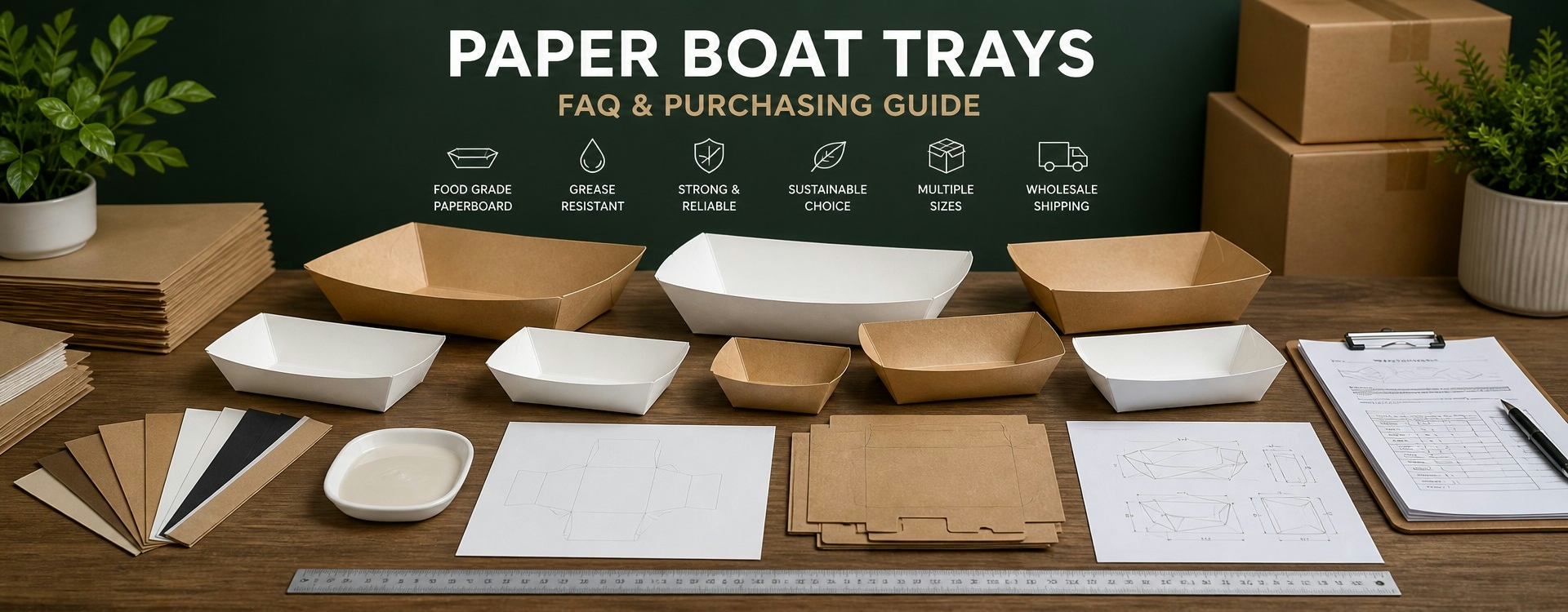
Frequently Asked Questions About Paper Boat Trays


When Paper Boat Trays May Not Be the Best Choice

An open folded paper boat tray is useful for many short-service foods, but it does not provide every barrier, closure, or mechanical function.

Evaluate the conditions below before standardizing the format.

Applications Requiring Fully Enclosed Product Protection 

If the food must be protected from contact, stacking pressure, wind, dust, or tampering, a clamshell, carton, tray-and-lid system, or overbox may be more suitable.

Transparent visibility can be achieved with a suitable window or clear component, but each added material should be evaluated for food contact, separation, and disposal instructions.

Products Requiring Extended Liquid or Moisture Storage

Paper Boat Trays are primarily intended for solid and semi-solid foods over a defined service period. Soup, beverages, and prolonged liquid contact generally require another format.

Even with a barrier, hot sauces, acidic foods, steam, and condensation can affect stiffness, seams, corners, printing, and grease appearance.

Test the maximum realistic contact time instead of relying on a short demonstration.

Applications With Extreme Heat or Mechanical Requirements

Direct oven use, open-flame exposure, unusually heavy food, automated lidding, long-distance transport, or high stacking loads may exceed the intended use of a standard paper food boat.

Select a package with verified performance for the actual equipment and distribution cycle.

The supplier’s written use limits should form part of staff instructions and product documentation.

Projects Requiring the Lowest Unit Price Above All Else

A standard commodity format in another material may have a lower initial price in some markets. However, unit price alone does not capture cartons, freight, storage, waste, service speed, or customer experience.

Compare the total landed and operating cost of equivalent, tested specifications.

Applications With Fully Compostable Requirement for PE Lined Paper Boat Tray

A buyer planning to use fully compostable wording must confirm the lined materials, for different market have the different requirement on “Compostable”, but customize lined material is possible from DAILYECO

Approve the final marketing statement alongside the technical specification before printing.

How to Decide Whether Paper Boat Trays Are Suitable?

Make the decision from the complete application, not from a single keyword or material preference.

Confirm at least:
  • Food dimensions, portion, oil, moisture, acidity, and temperature
  • Loading, holding, carrying, takeaway, and delivery conditions
  • Required protection, presentation, and customer handling
  • Paperboard, coating, print, and secondary-packaging compatibility
  • Destination-market food-contact and environmental-claim requirements
  • Forecast, minimum order, packing, freight, warehousing, and reorder plan

What Is the Process for Manufacturing Paper Boat Trays? 

Production normally combines paperboard specification, printing, die cutting, creasing, folding, seam forming or gluing, inspection, packing, and export preparation.

The process must control dimensions, crease position, fold angle, seam integrity, print registration, odor, nested separation, and carton count.

For foodservice packaging, raw material and converting records also support traceability and product-specific documentation.

A typical workflow includes five connected stages.

Paperboard Specification and Incoming Inspection for Paper Boat Trays

Step 1 – Paperboard Specification and Incoming Control 

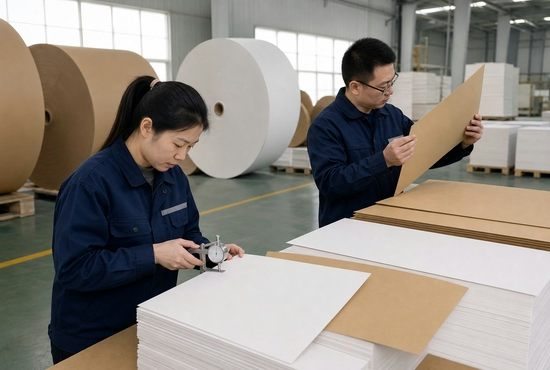
The manufacturer confirms the paperboard type, kraft or white appearance, basis weight, caliper, stiffness, fiber-source information, coating or liner, and intended food contact.

Incoming material should be checked against the approved specification because changes in board moisture, thickness, stiffness, or surface treatment can affect forming and performance.

Step 2 – Printing and Surface Preparation 

Plain trays may proceed directly to converting, while printed trays require approved artwork, color targets, print method, ink system, registration tolerance, and rub or odor checks.

The design should keep food-contact restrictions, crease lines, glue areas, trim, barcode quiet zones, and visible brand panels in view.

Printing and Surface Preparation for Paper Boat Trays
Die Cutting and Creasing Process for Paper Boat Trays

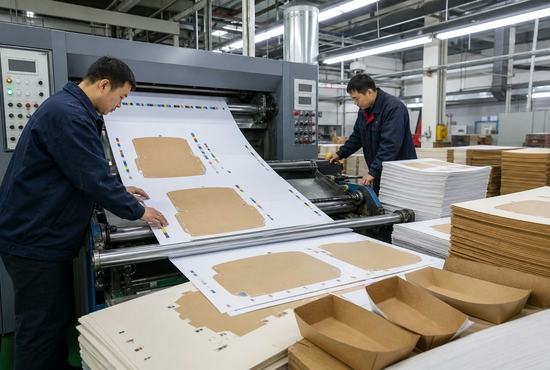
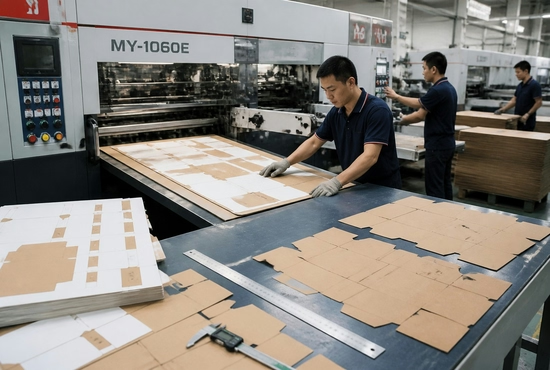
Step 3 – Die Cutting and Creasing

Printed or plain paperboard sheets are die cut into the required blank shape. Precise crease lines are added to define the base, sidewalls, corners, and folding positions of the paper boat tray. The blanks are inspected for dimensional accuracy, clean edges, and consistent crease alignment before forming.

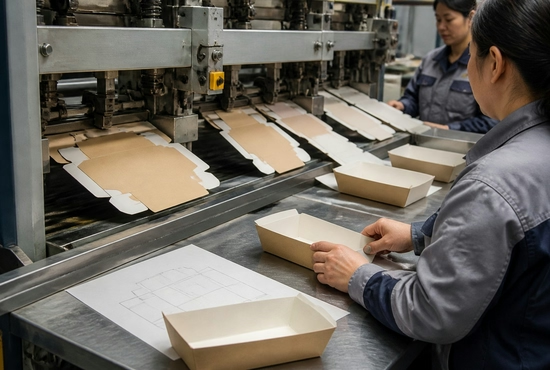
Step 4 – Tray Forming and Assembly 

The die-cut blanks are folded and formed into the required boat profile. Corners and seams are secured using the approved mechanical-locking or adhesive method to maintain tray stability and consistent dimensions.

For a custom structure, the supplier should provide an approved drawing and physical formed sample before production tooling and mass production are authorized.

Tray Forming and Assembly Process for Paper Boat Trays
Quality Inspection of Paper Boat Trays

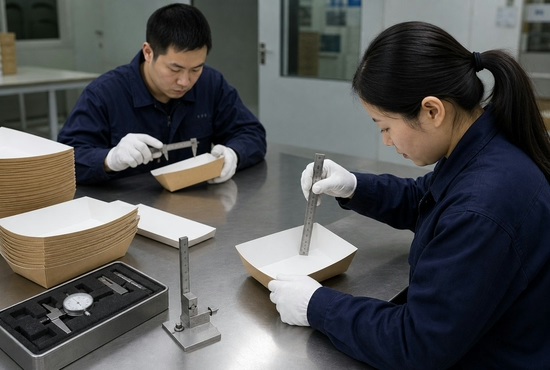
Step 5 – Quality Inspection

Inspection may cover material identity, dimensions, tray depth, visual appearance, print registration, folds, seams, nested separation, pack count, and carton condition.

Application testing should use the agreed food simulant or actual food condition, including temperature, grease or moisture level, contact time, and carrying method.

The inspection plan should define sampling level, acceptance criteria, records, and disposition of nonconforming goods.

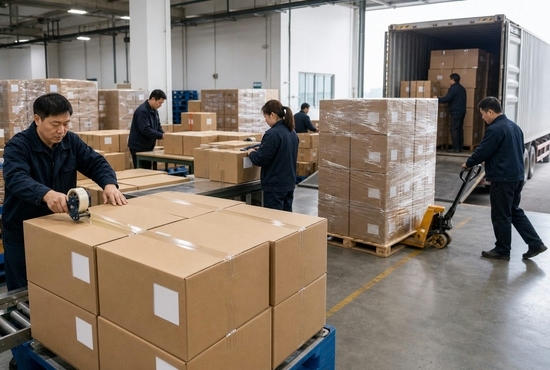
Step 6 – Packing and Export Preparation 

Approved trays are counted, nested, bagged or sleeved as specified, placed in master cartons, marked, and prepared for pallet or floor loading.

Packing design must balance tray protection, easy case opening, warehouse efficiency, carton strength, container utilization, and the buyer’s replenishment process.

Export orders should reference carton dimensions, weights, quantities, pallet pattern when used, shipping marks, document requirements, and the agreed delivery term.

Packing and Export Preparation of Paper Boat Trays

How to Choose the Right Paper Boat Trays Manufacturer?

A suitable manufacturer should understand paperboard converting, foodservice applications, custom printing, material documentation, quality control, packing optimization, and export execution.

Evaluate the following capabilities before approving a partner.

Paperboard Converting Experience

Experience with kraft paper tray and white paperboard formats affects crease design, forming, seam quality, nesting, print registration, and application recommendations.

Ask for examples of comparable food-boat structures, the normal board and barrier options, and the controls used when a paperboard specification changes.

Production Capacity and Planning

Capacity should be evaluated by the ordered SKU, printing method, material availability, season, maintenance plan, and current workload.

For multi-SKU programs, confirm whether colors and materials can be scheduled without increasing changeover risk.

Product Range and Customization Capability

Different foods and channels require different sizes, sidewalls, barriers, artwork, and packs.

A professional supplier should support standard paper boat trays and explain when a new die line, board grade, barrier, or print specification is commercially justified.

Relevant customization capabilities include:

  • External and usable food dimensions
  • New die-line and forming development
  • Paperboard grade and barrier selection
  • Custom printing and private-label cartons
  • Retail or foodservice packing configurations

A documented approval path keeps structure, artwork, material, and packing decisions aligned.

Die-Line and Forming Development Capability

For a unique food or brand format, die-line development determines top opening, base area, sidewall angle, depth, folds, seams, and printable panels.

The supplier should be able to convert buyer requirements into a dimensioned drawing and testable sample.

Quality Management System

Commercial food packaging requires consistent material, converting, inspection, and traceability controls.

The supplier should control the approved board, coating, ink, adhesive, die-line revision, dimensions, appearance, print, pack count, and carton condition.

Typical checks include:

  • Incoming paperboard identity and condition
  • Top, bottom, and depth measurements
  • Board weight, stiffness, and tray stability where specified
  • Fold, seam, print, odor, and appearance inspection
  • Pack count, carton strength, labels, and shipping marks

Agree on sampling and acceptance criteria before production.

Export Experience

International buyers benefit from suppliers that understand export cartons, pallet and container loading, commercial documents, destination labels, and delivery-term responsibilities.

Confirm who controls freight booking, documents, origin information, inspection, and shipment updates.

The quotation should state product, packing, Incoterm, port, validity, and exclusions clearly.

Technical Support and Communication

Good communication converts an informal request into a controlled, comparable specification.

A supplier should explain tradeoffs among size, board weight, barrier, print coverage, packing, MOQ, lead time, performance, and cost.

Meeting notes, drawing revisions, samples, artwork, and approvals should be stored under clear version control.


Pre-Purchasing Checklist for Buyers of Paper Boat Trays 

Before ordering Paper Boat Trays, buyers should complete the following checklist so the quotation, sample, approval, contract, and inspection all refer to the same product.

□ Food Type, Portion, Temperature, Oil / Moisture Level, and Holding Time
□ Service Channel (Dine-In / Takeaway / Delivery / Event / Retail / Wholesale)
□ Selected Product Name or Target Paper Boat Tray Format
□ Capacity Class and Top / Bottom / Depth Dimensions
□ Kraft or White Paperboard, Basis Weight, Stiffness, Coating, Ink, and Adhesive
□ Grease, Moisture, Chilled-Food, Freezer, or Microwave Requirements
□ Food-Contact Documents for the Exact SKU and Destination Market
□ Evidence and Qualified Wording for Environmental or Certification Claims
□ Plain, Stock-Printed, or Custom-Printed Artwork and Color Standard
□ Approved Drawing, Physical Sample, and Product Tolerances
□ Pack Count, Inner Packing, Carton Dimensions, Pallet, and Container Plan
□ MOQ, Annual Forecast, Development Schedule, and Production Lead Time
□ Inspection Method, Acceptance Criteria, and Change-Control Procedure
□ Incoterm, Payment Terms, Shipping Marks, and Required Export Documents

This sequence prevents technical requirements from being separated from artwork, claims, packing, and logistics.

When each item is confirmed in writing, suppliers can quote more accurately and buyers can compare complete systems rather than unlike products.
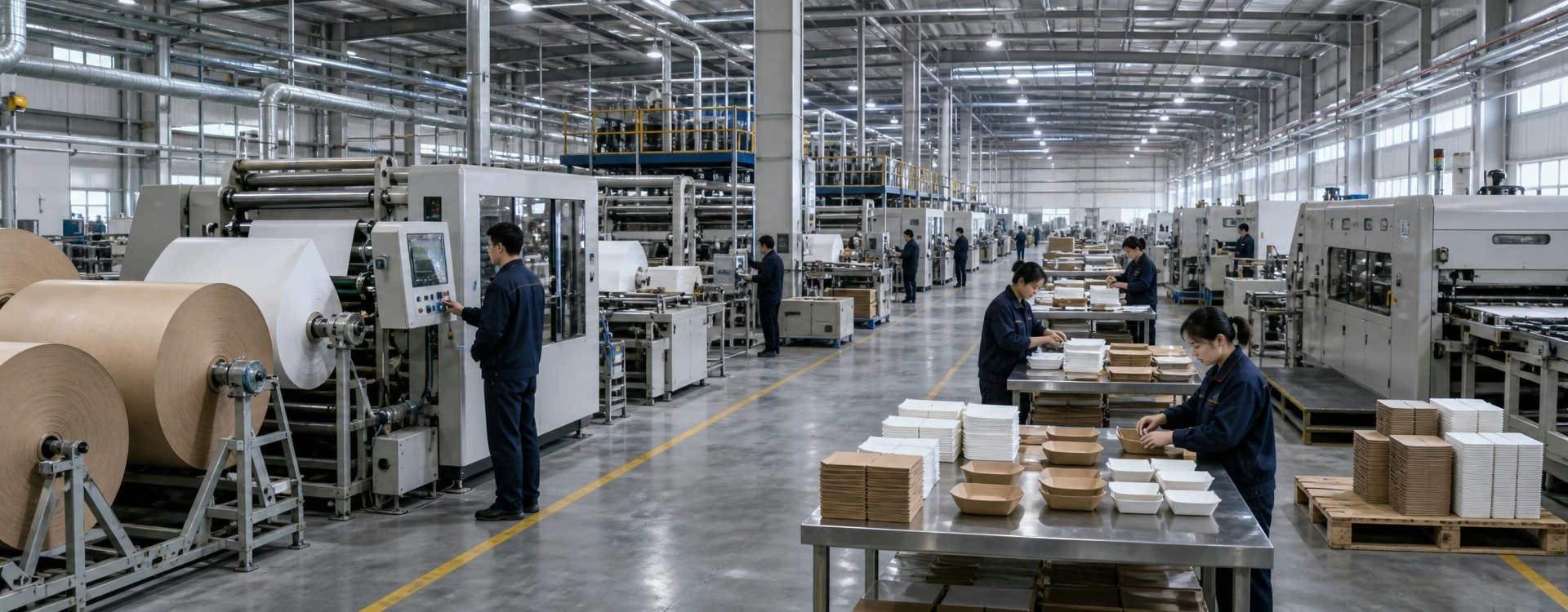
 

Choose DAILYECO as Your Professional Paper Boat Trays Manufacturer

DAILYECO Paper Boat Trays Manufacturing Facility

DAILYECO supports restaurants, packaging distributors, importers, foodservice companies, event suppliers, and private-label brands sourcing Paper Boat Trays.

Our project workflow can cover application review, standard-size selection, custom structure and artwork development, sample coordination, specification confirmation, production follow-up, packing review, and export-order communication.

DAILYECO Manufacturing Facility 

Item

Description

Manufacturing Facility

Professional paper food packaging production facility specializing in paperboard converting, printing, die cutting, creasing, folding, and tray forming

Employees

More than 1,000 employees

Production Capability

Standard and custom paper boat trays in multiple sizes, paperboard options, barrier specifications, printing designs, and packing configurations

Monthly Supply Capacity

Monthly production capacity of up to 15 million pieces, supporting stable large-volume export orders

Product Range

Paper boat trays, paper sushi trays, paper food trays, hot dog paper trays, and customized paperboard food-packaging trays

Material Capability

Kraft and white paperboard with product-specific basis weights, stiffness levels, food-contact specifications, and grease- or moisture-barrier options

Product Development

Custom tray dimensions, structural design, die-line development, barrier selection, printing development, and packaging optimization

Manufacturing Process

Paperboard preparation, printing, die cutting, creasing, folding, tray forming, quality inspection, counting, and carton packing

OEM

Custom logos, printing, artwork, labels, retail packs, inner packaging, master cartons, and private-label solutions

ODM

Paper boat tray structure development, dimension optimization, paperboard and barrier selection, and customized food-packaging development

Technical Support

Professional support for product selection, food-application evaluation, sample testing, specification confirmation, and packaging development

Production MOQ

Flexible according to product size, paperboard specification, printing, packing, and customization requirements

Typical Lead Time

Approximately 25–35 days for customized orders

Compliance & Documentation Support

International buyers should request documentation that matches the exact material, coating, ink, adhesive, product, and destination-market use.

DAILYECO can coordinate available food-contact, material, testing, and sustainability-related information according to the selected SKU and customer requirements.

Compliance support can cover food-contact documentation, paperboard and coating information, available product testing reports, sustainability-related documentation, and factory-audit coordination.

Documentation must be reviewed for scope, product identity, conditions of use, validity, and destination-market requirements before claims are printed or published.

View Our Compliance & Certification Support Page

Customization Services

Different foods, brands, and channels require different paper tray specifications.

DAILYECO supports custom paper serving boats and private-label packaging projects subject to technical and commercial feasibility.

Customization services can include size and depth adjustment, die-line development, kraft or white board options, barrier selection, custom printing, private-label packs, and carton optimization.

The process links structure, food testing, artwork, packing, and written approval before mass production.

Export Experience

For export orders, DAILYECO can support carton specification, loading review, shipping marks, commercial-document coordination, and production updates.

Buyers should confirm the product scope, destination, Incoterm, port, timeline, and document list at quotation stage.

Export support can include export-carton review, pallet or floor-loading planning, shipping-mark confirmation, document coordination, and repeat-order supply planning.

Customer Service

Support begins with requirement clarification and continues through sample, approval, production, and shipment.

Customer service can include product consultation, sample coordination, specification and artwork confirmation, production updates, shipping coordination, and after-sales follow-up.

Clear written records help both sides manage revisions and repeat orders consistently.

Quality Control Management

Quality consistency matters when large quantities of paper trays are used across customers or locations.

Quality control can include material and appearance checks, dimension and fold inspection, print and seam review, pack-count verification, and carton and shipping-mark inspection.

The final inspection scope and acceptance criteria should be agreed before production.

Continuous Product Development

Paper foodservice requirements evolve with menu changes, coating technology, printing, regulation, collection systems, and customer expectations.

DAILYECO works with buyers to review product feedback and identify practical improvements to structure, material, print, packing, and supply planning.
REQUEST A QUOTE

Industry Case Study

Catalog-Based Sourcing Case: Standardizing Paper Boat Trays for a Concession Foodservice Program 

Scenario Background

A regional concession foodservice group required a standardized range of paper boat trays for fries, loaded snacks, nachos, burgers, and other prepared foods served at seasonal venues. The program needed to cover different portion sizes while limiting the number of SKUs stored at each service location.

The following sourcing case uses product dimensions, packing quantities, and carton sizes from DAILYECO’s current paper boat tray catalog. Order quantities and logistics calculations are provided as an application reference rather than a verified customer-performance claim.

Industry Challenge

The foodservice group previously purchased five tray sizes from multiple local sources. Differences in usable dimensions, paperboard stiffness, carton quantities, and product identification made portion control and inventory management difficult.

Some trays were too narrow for loaded snacks, while others created unnecessary empty space around smaller portions. Inconsistent carton markings also increased the time required for warehouse receiving, stock counting, and distribution to individual venues.

The sourcing program therefore needed to:

  • Reduce the number of paper boat tray SKUs.
  • Assign a clearly defined food application to each size.
  • Use catalog dimensions and full-carton quantities for purchasing.
  • Establish consistent carton labels and shipping marks.
  • Complete sample and food-application testing before order approval.

Selected Paper Boat Tray Program

After comparing portion requirements and usable tray dimensions, the range was consolidated from five sizes to three standard paper boat trays.

The 2# Kraft Paper Boat Tray With PE Lined was selected for fries, side dishes, and smaller snack portions. The 4# Kraft Paper Boat Tray With PE Lined was assigned to loaded fries, nachos, hot dogs, and medium portions. The 6# Kraft Paper Boat Tray With PE Lined was selected for burgers, combination meals, and larger or shared servings.

Product

Size

Recommended Application

Order Quantity

Packing

Cartons

CTN Size

Estimated Carton Volume

2# Kraft Paper Boat Tray With PE Lined

145 × 100 × 23 mm

Fries, sides, and smaller snack portions

120,000 pcs

1,000 pcs/CTN

120 CTNs

30 × 21 × 37 cm

Approx. 2.80 m³

4# Kraft Paper Boat Tray With PE Lined

182 × 122 × 30 mm

Loaded fries, nachos, hot dogs, and medium portions

180,000 pcs

500 pcs/CTN

360 CTNs

27 × 19 × 40 cm

Approx. 7.39 m³

6# Kraft Paper Boat Tray With PE Lined

255 × 178 × 50 mm

Burgers, combination meals, and larger or shared servings

100,000 pcs

500 pcs/CTN

200 CTNs

35.5 × 25.5 × 52.5 cm

Approx. 9.51 m³

Total

Three catalog-based foodservice applications

400,000 pcs

680 CTNs

Approx. 19.69 m³

Estimated volume is calculated from catalog carton dimensions and does not include pallets, loading gaps, protective materials, or container-loading allowances.

Product and Supply-Chain Solution

DAILYECO organized the program around three controlled product specifications. Each specification identified the tray dimensions, intended menu application, paperboard and barrier requirements, packing quantity, carton dimensions, carton label, and inspection criteria.

Samples were assigned to the corresponding foods and evaluated under the intended serving conditions. The review covered food fit, loading speed, tray stability, grease appearance, carrying comfort, and the expected holding period.

The cartons were differentiated through product codes, size information, quantities, and application references. This allowed warehouse staff and venue operators to identify the correct tray without opening multiple cartons.

The planned production lead time was approximately 30 days after the product specifications, samples, packing requirements, and shipping marks had been approved. This falls within DAILYECO’s typical 25–35-day lead time for customized orders.

Measurable Program Results

Consolidating the range from five tray sizes to three reduced the number of active SKUs by 40%. The first catalog-based procurement plan contained 400,000 paper boat trays, packed in 680 master cartons, with an estimated total carton volume of approximately 19.69 m³ before pallet and loading allowances.

The three-size structure created a clearer connection between tray size and menu application:

  • 2# for smaller portions and side dishes.
  • 4# for medium portions, hot dogs, and loaded snacks.
  • 6# for burgers, combination meals, and larger or shared portions.

Using fixed catalog packing quantities also enabled the buyer to calculate purchasing requirements by full carton instead of estimating mixed pack counts. Standardized carton information supported more consistent receiving, warehouse allocation, venue replenishment, and repeat-order planning.

Actual food performance, transport efficiency, and operating results remain dependent on the approved paperboard, barrier system, food conditions, packing method, and final loading plan.

Key Takeaways

A paper boat tray program becomes easier to manage when every SKU has a defined food application, verified dimensions, controlled packing quantity, and consistent carton identification.

In this catalog-based case, three standard sizes covered small, medium, and larger food portions while reducing the number of active SKUs. Linking food testing, specifications, carton data, and order quantities created a clearer sourcing system for both procurement teams and foodservice operators.


FAQ

What Are Paper Boat Trays Made From?

Paper Boat Trays are generally manufactured from kraft or white paperboard through printing, die cutting, creasing, folding, and forming. Some products include a coating or liner to improve grease and moisture resistance. The paperboard grade, basis weight, stiffness, fiber content, coating, ink, and adhesive should be confirmed for the selected SKU.

Are Paper Boat Trays Food-Contact Safe?

Yes, paper boat trays can be manufactured for food-contact applications. However, suitability must be verified for the exact product, material system, food type, temperature, and contact time. Buyers should request documentation identifying the applicable SKU, paperboard, coating, ink, adhesive, test method, conditions of use, report validity, and destination-market requirements.

Are Paper Boat Trays Suitable for Hot Food?

Selected paper food trays are suitable for hot fries, hot dogs, burgers, tacos, nachos, and other prepared foods when used within verified product limits. Performance depends on food temperature, holding time, oil and moisture exposure, paperboard weight, fold structure, seams, and barrier treatment. The actual food should be tested under the longest realistic service conditions before commercial use.

Can Paper Boat Trays Be Used in a Microwave?

Microwave compatibility is SKU-specific. Use a paper boat tray in a microwave only when the exact paperboard, coating, ink, adhesive, and forming structure have suitable instructions or supporting evidence. Follow the specified food, heating time, power, and temperature limits, and remove any incompatible film, label, liner, wrap, or accessory before heating.

Are Paper Boat Trays Oil- and Moisture-Resistant?

Selected grease-resistant paper trays can help prevent oil penetration during everyday meal service at temperatures up to 95°C for 30 minutes. This performance does not mean the tray is completely waterproof or suitable for indefinite liquid storage. Oil quantity, sauce, steam, acidity, holding time, carrying pressure, folds, seams, and coating specification can all affect performance.

Can Paper Boat Trays Be Used for Chilled or Frozen Food?

Selected SKUs may be suitable for chilled or frozen-food applications down to −20°C, subject to product-specific verification. Buyers should test the complete freezing, storage, thawing, and serving cycle because condensation and temperature changes can affect stiffness, folds, labels, stacking strength, and moisture resistance. Any wrap, bag, label, or overbox should be evaluated together with the tray.

Are Lids Available for Paper Boat Trays?

Standard paper boat trays are open-top serving formats and normally do not include fitted lids. When additional protection is required, buyers can consider wraps, sleeves, bags, overboxes, closed paperboard cartons, or a separately validated tray-and-lid system. The complete package should be tested for food clearance, ventilation, condensation, stacking, carrying, transport, and material compatibility.

Are Paper Boat Trays Recyclable or Compostable?

Recyclability and compostability depend on the exact paperboard, coating, ink, adhesive, food residue, certification scope, and local processing infrastructure. A general claim should not be applied to every paper boat tray. Buyers should confirm product-specific evidence, disposal conditions, labeling requirements, and destination-market wording before publishing an environmental claim.

What Sizes and Types of Paper Boat Trays Are Available?

The current catalog contains six numbered paper boat tray formats: 1# at 125 × 90 × 19 mm, 2# at 145 × 100 × 23 mm, 3# at 165 × 120 × 25 mm, 4# at 182 × 122 × 30 mm, 5# at 227 × 153 × 35 mm, and 6# at 255 × 178 × 50 mm. Each size is listed in both unprinted kraft and kraft printed PE-lined versions. Buyers should confirm usable base dimensions, material, print, packing, carton data, and approved samples for the exact SKU.

Can Paper Boat Trays Be Customized?

Yes. DAILYECO can support standard modifications and custom paper boat trays subject to technical and commercial feasibility. Customization may cover tray dimensions, depth, sidewall angle, paperboard grade, basis weight, barrier treatment, fold and seam structure, printing, artwork, labels, barcodes, private-label cartons, inner packing, and container-loading arrangements. Development should begin with the food application, annual forecast, required documentation, artwork, and packing plan.


DAILYECO Industry Expert Tips for Sourcing Paper Boat Trays

Professional sourcing begins with an application specification, not a search phrase or a single price. The same capacity label can hide important differences in usable dimensions, board weight, barrier, fold design, printing, and carton quantity.

Use them alongside real-food testing and the destination market’s current regulatory and waste-management requirements.

Select the Tray From the Actual Food and Service Cycle

Measure the food and observe the complete workflow. A tray that looks correct when empty may be too narrow for a hot dog, too shallow for loaded fries, or too large for a sample portion.

Test filling speed, handoff, carrying, eating, grease appearance, tipping, and the planned holding time. Add any bag, wrap, or overbox used in the final service.

Compare Structure, Barrier, and Supply Capability Together

Top size, base area, depth, sidewall angle, board stiffness, seams, and coating work as one system. Increasing one feature can change nesting, carton count, printing, cost, or customer handling.

Ask the supplier to explain each tradeoff and to provide a dimensioned drawing, material specification, sample, and packing data for the exact product quoted.

A good sample without repeatable supply controls is not enough for a long-term program.

Evaluate Environmental Claims at SKU Level

Paper appearance does not prove recycled content, responsible forestry certification, recyclability, biodegradability, or compostability.

Confirm the exact product, certification or evidence, coating, print, food-residue condition, local infrastructure, and wording limitations before placing a claim on packaging or a website.

When conditions differ by market, use qualified instructions rather than one global statement.

Work With an Experienced Paper Boat Trays Manufacturer

An experienced supplier can help translate food, service, branding, compliance, and logistics requirements into a controlled paperboard specification.

This discipline reduces avoidable revisions and supports consistent repeat orders.

Final Recommendation

Select Paper Boat Trays only after comparing like-for-like specifications and testing the actual food under the longest realistic service conditions.

DAILYECO can support standard and custom paper food-boat projects with product consultation, sample coordination, specification control, custom printing, packing review, and export-order communication.


This Page Reviewed By 

Lillian Guo | Food Packaging Compliance Manager

10+ Years of Experience

Specialized in:

  • Food Contact Compliance
  • Paper Food Packaging
  • Foodservice Packaging Applications
  • Packaging Compliance Documentation
  • International Market Requirements

Explore Our Related Sustainable Packaging

Discover more sustainable beverage and food packaging solutions from DAILYECO.

Contact Our Team

Looking for a reliable Paper Boat Trays Manufacturer?

Our packaging specialists can support your project with:

✓ Product Catalog
✓ Free Product Consultation
✓ OEM & ODM Development
✓ Custom Packaging Solutions
✓ Sample Requests
✓ Compliance Guidance
✓ Packaging Optimization
✓ Global Export Support

Whether you source for a restaurant chain, foodservice distributor, importer, event supplier, hospitality group, e-commerce brand, or private-label program, our team can help you evaluate the most suitable paper boat trays for your food, market, and supply plan.

Submit Your Inquiry Now