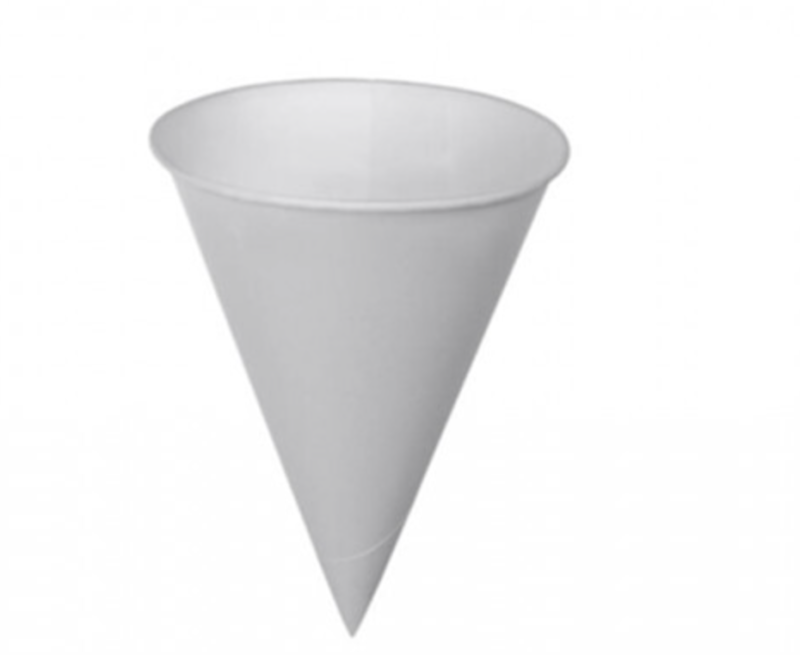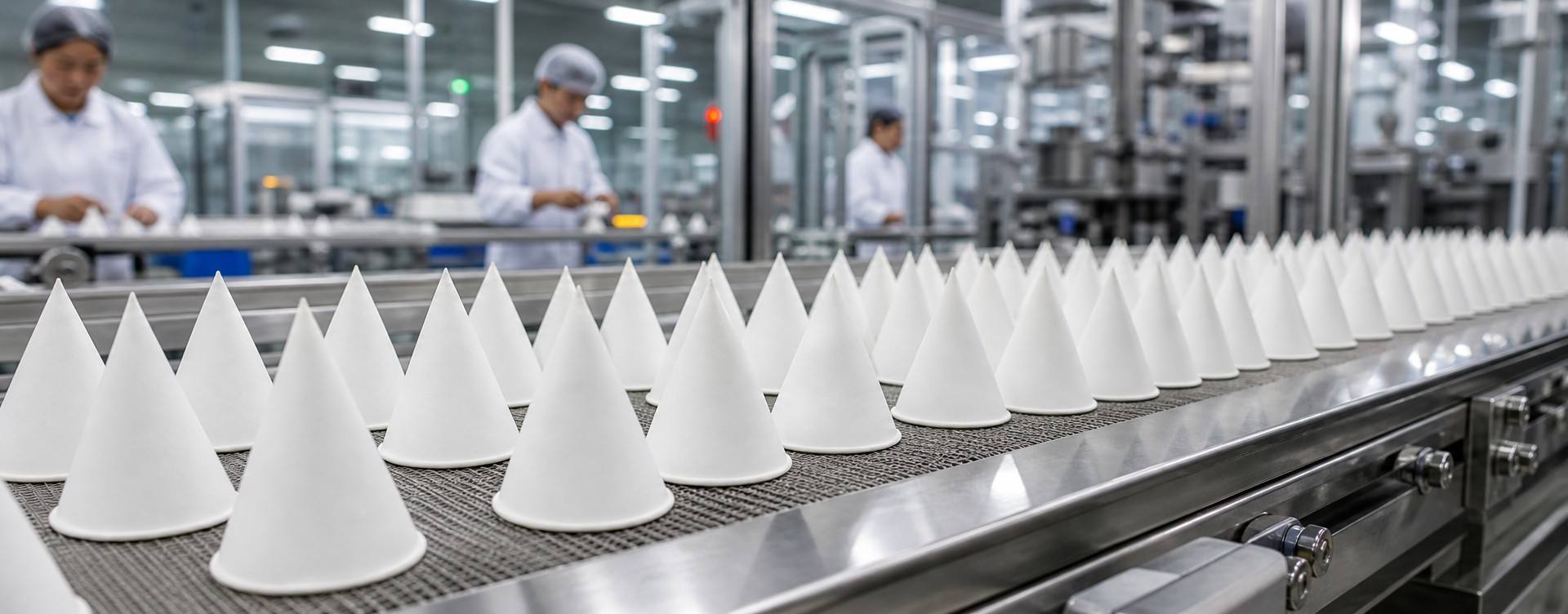
Item | Information |
Product Name | Paper Cone Cups |
Material | Food-Grade Paperboard |
Product Type | Disposable Paper Cone Cup |
Typical Sizes | 3.7oz, 4.5oz, (Custom sizes available) |
Applications | Offices, Schools, Hospitals, Factories, Water Dispensers, Drinking Fountains, Government Buildings, Public Facilities |
Beverage Types | Drinking Water |
Cup Structure | Conical Disposable Paper Cup |
Coating Options | PE, PLA, Water-Based Barrier |
Customization | OEM & ODM Available |
Printing | CMYK, Pantone, Full Surface Printing |
Compatible Equipment | Cone Cup Dispensers & Water Dispensers |
Supply Type | Manufacturer & Supply Chain Partner |
Export Markets | North America, Europe, Australia, Middle East, Asia, South America |
Professional buyers select paper cone cups because they solve a very specific operational challenge—providing hygienic drinking water in shared environments while minimizing waste, maintenance, and operating costs. Their conical structure naturally encourages single-use consumption, making them particularly suitable for locations where hundreds or thousands of people access drinking water every day.
Compared with conventional disposable drinking cups, cone cups require less paper, occupy less storage space, and work efficiently with automatic cone cup dispensers. These practical advantages make them a preferred choice for institutional procurement programs, office supply distributors, healthcare suppliers, and facility management companies worldwide.
Quick Answer
Paper cone cups are disposable conical paper drinking cups designed for water dispensers and drinking fountains. They are primarily used in offices, schools, hospitals, factories, and public facilities because they encourage single-use drinking, improve hygiene, reduce material consumption, and fit standard cone cup dispensers.
Paper Cone Cups are disposable conical drinking cups designed for serving cold drinking water through cone cup dispensers and drinking fountains. Their pointed-bottom design encourages immediate consumption, helping reduce cup reuse and maintain better hygiene in shared environments.
Manufactured from food-grade paperboard with PE, PLA, or water-based barrier coatings, paper cone cups provide reliable leak resistance while remaining lightweight and cost-effective. They are widely used in offices, schools, hospitals, factories, government buildings, and other public facilities where convenient, single-use drinking solutions are required.
Compared with flat-bottom paper cups, paper cone cups use less material, require less storage space, and offer excellent compatibility with standard cone cup dispensers, making them a practical choice for large-scale commercial and institutional applications.
Professional buyers typically evaluate paper cone cups based on dispenser compatibility, dimensional consistency, manufacturing quality, food-contact compliance, operational efficiency, and long-term supply capability rather than product descriptions alone.
The following table summarizes the key characteristics buyers commonly consider when sourcing paper cone cups for commercial and institutional drinking water programs.
Feature | Procurement Information | Buyer Notes |
Cup Structure | Conical disposable cup designed specifically for drinking water applications and cone cup dispensers. | The pointed-bottom design encourages immediate use and is not intended for self-standing beverage service. |
Dispenser Compatibility | Manufactured to match standard commercial cone cup dispenser dimensions. | Buyers should verify rim diameter, cup height, and dispenser model before placing bulk orders, especially for replacement projects. |
Dimensional Consistency | Produced with controlled dimensional tolerances to support smooth dispensing and stable product performance. | Dimensional consistency is particularly important for institutional buyers operating multiple dispenser systems. |
Material Construction | Manufactured from food-grade paperboard with PE, PLA, or water-based barrier coating options. | Material selection should be based on destination-market regulations, sustainability objectives, and customer requirements. |
Water Resistance | Designed for short-term drinking water service under normal commercial operating conditions. | Product performance should be evaluated according to intended application and storage conditions. |
Storage Efficiency | The conical nesting structure helps reduce storage space and improves container loading efficiency. | High nesting efficiency can reduce warehousing and transportation costs for large-volume buyers. |
Operational Efficiency | Supports fast dispensing, easy replenishment, and efficient waste collection in high-traffic drinking areas. | Suitable for offices, schools, hospitals, factories, transportation hubs, and other public facilities. |
Food Contact Documentation | Food-contact documentation may be available according to destination-market requirements. | Buyers should confirm the required compliance documents before production and shipment. |
Customization Capability | OEM and ODM services include logo printing, private-label packaging, custom carton design, and multiple coating options. | Commercial feasibility depends on order quantity, artwork requirements, and production specifications. |
Manufacturing Consistency | Manufactured under standardized production and quality-control procedures to support stable long-term supply. | Sample approval is recommended before mass production, particularly when dispenser compatibility is critical. |
Sustainability Options | PE-coated, PLA-coated, and water-based barrier solutions are available for different market requirements. | Buyers should select materials according to local recycling systems, environmental regulations, and project objectives. |
Supply Capability | Suitable for recurring institutional purchasing programs and large-volume commercial distribution. | Stable production capacity and consistent specifications help reduce long-term procurement risks and inventory complexity. |
When sourcing paper cone cups, experienced buyers generally focus on dispenser compatibility, dimensional consistency, and supply stability rather than paper weight alone. Even small variations in rim diameter, cone angle, or cup height may affect dispensing performance and user experience.
For long-term procurement programs, standardizing one or two cone cup specifications across multiple customer locations can simplify inventory management, improve replenishment efficiency, reduce logistics costs, and ensure consistent compatibility with installed dispenser systems.

As organizations place greater emphasis on workplace hygiene, operational efficiency, and sustainable disposable packaging, paper cone cups have become an increasingly popular choice for drinking water service around the world.
Unlike traditional flat-bottom paper cups, paper cone cups are designed for immediate use. Their pointed-bottom structure prevents users from placing the cup on surfaces after filling, helping reduce cup reuse, improve sanitation around water dispensers, and minimize litter in shared environments.
The widespread installation of drinking water dispensers in offices, schools, hospitals, factories, transportation hubs, and public facilities has also driven steady demand for water cone cups. Their compatibility with standard cone cup dispensers allows for fast, convenient, and hygienic access to drinking water while reducing maintenance requirements.
At the same time, businesses and institutions are increasingly adopting recyclable and renewable paper-based products to support environmental initiatives. Modern paper cone cups are available with PE, PLA, and water-based barrier coatings, enabling buyers to select solutions that align with local regulations and sustainability objectives.
For importers, distributors, wholesalers, and private-label brands, paper cone cups remain a practical and cost-effective disposable drinking solution, combining hygiene, operational convenience, and reliable manufacturing for a wide range of commercial applications.
The global demand for Paper Cone Cups continues to grow alongside the broader disposable paper cup industry. According to recent market research, the global paper cups market is expected to increase from approximately USD 11.7 billion in 2026 to nearly USD 14.0 billion by 2034, reflecting steady long-term demand from foodservice, workplace, and institutional applications. North America accounted for nearly 49% of global market revenue in 2025, highlighting the region’s strong consumption of disposable paper cups.
For Paper Cone Cups, demand is primarily driven by offices, hospitals, schools, factories, and public facilities where water dispensers are widely installed. Industry research estimates the global Paper Cone Cup market will reach approximately USD 4.22 billion by 2036, supported by increasing hygiene awareness, expanding workplace infrastructure, and the transition toward paper-based alternatives in many regions.
Beyond market growth, procurement priorities are also evolving. Buyers are placing greater emphasis on dispenser compatibility, manufacturing consistency, food-contact compliance, and supply reliability rather than comparing suppliers solely on price. Manufacturers that can deliver stable quality, flexible OEM services, and dependable lead times are becoming preferred long-term partners.
Market growth creates new opportunities, but long-term supplier selection is increasingly determined by product consistency, reliable delivery, and procurement efficiency rather than the lowest quotation.
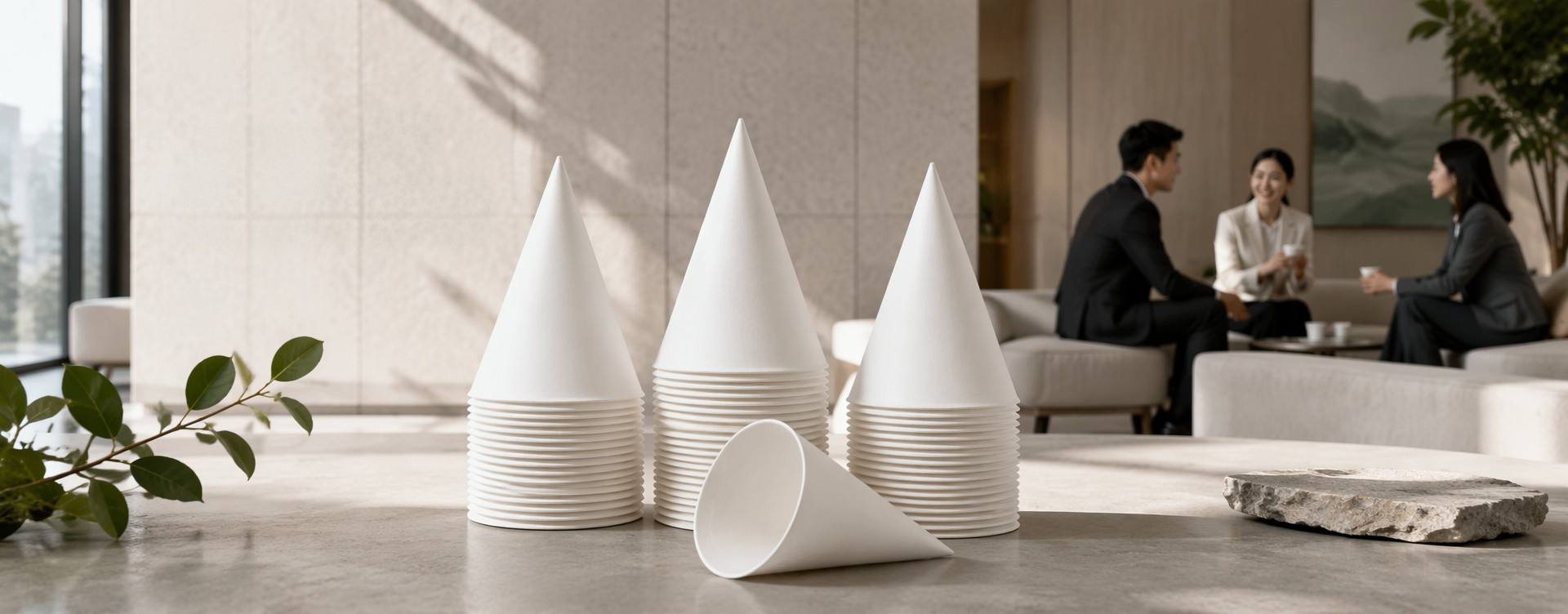
Demand for Paper Cone Cups remains strong across both developed and emerging markets as drinking water dispensers become standard equipment in commercial and institutional environments. At the same time, distributors and institutional buyers are placing greater importance on production capacity, export experience, and supply chain stability when selecting manufacturing partners.
Growing Demand for Hygienic Drinking Solutions
Disposable Paper Cone Cups help improve hygiene around shared water dispensers by encouraging single-use consumption and reducing cup reuse in public environments.
Increasing Interest in Sustainable Materials
More buyers are evaluating PLA-coated and water-based barrier Paper Cone Cups alongside traditional PE-coated options to better align with regional regulations and sustainability goals.
Expansion of Private-Label Programs
OEM manufacturing, custom printing, and branded packaging continue to grow as distributors and packaging brands expand their private-label product portfolios.
Supply Reliability Becomes a Key Purchasing Factor
Commercial buyers increasingly prefer manufacturers with stable production capacity, predictable lead times, and consistent product quality to reduce long-term procurement risks.
Region | Typical Purchasing Priorities |
North America | Product quality, dispenser compatibility, operational efficiency |
Europe | Sustainability, regulatory compliance, recyclable materials |
Australia & New Zealand | Environmental performance, renewable materials |
Middle East | Reliable supply, institutional applications |
Asia | Cost efficiency, stable production, fast delivery |
Understanding regional purchasing priorities helps buyers select Paper Cone Cups that better meet local market expectations and procurement requirements.
When sourcing Paper Cone Cups, buyers should evaluate suppliers based on overall procurement value rather than unit price alone. Manufacturing capability, quality management, compliance support, and delivery reliability all have a direct impact on long-term purchasing efficiency.
Procurement Recommendation
Standardizing cup specifications and partnering with an experienced manufacturer can simplify inventory management, improve dispenser compatibility, and reduce overall procurement costs
Different businesses have different purchasing priorities, so there is no single material that fits every application. The ideal Paper Cone Cup should balance product performance, regulatory compliance, sustainability goals, and procurement budget. Understanding your market requirements before placing an order can help reduce sourcing risks and improve long-term purchasing efficiency.
Your Business Needs | Recommended Material | Why It Fits |
Cost-effective daily use | PE-Coated Paper Cone Cups | Reliable water resistance, competitive pricing, and broad market acceptance. |
Sustainability-focused projects | PLA-Coated Paper Cone Cups | Made with a plant-based coating and suitable for markets requiring industrial compostable packaging. |
Premium eco-friendly packaging | Water-Based Barrier Paper Cone Cups | Reduced plastic content with strong recycling potential in many paper recycling systems. |
Government & institutional procurement | Depends on local regulations | Buyers should select materials that meet regional food-contact and environmental requirements. |
Private-label & export programs | Customized according to destination market | Material selection should align with customer expectations, certification requirements, and budget. |
Rather than selecting a material based on environmental claims alone, professional buyers should consider the destination market, local regulations, recycling infrastructure, and customer expectations. A coating that performs well in one country may not be the most suitable option in another.
For long-term purchasing programs, discussing your target market and application with an experienced manufacturer before production can help ensure the selected material delivers the right balance of performance, compliance, and overall procurement value.
Expert Tip
The best material is not always the most expensive or the most sustainable—it is the one that best matches your market requirements, operational needs, and long-term business goals.
DAILYECO offers a comprehensive range of cone cups designed for offices, schools, hospitals, factories, government institutions, public facilities, and commercial water dispenser programs.
Our product portfolio includes the most commonly used paper cone cup sizes for drinking water applications. Each product is manufactured using food-grade paperboard to ensure reliable dispenser compatibility, leak resistance, and consistent quality for high-volume commercial use.
Product Name | picture | Material | Size(mm) | Packing Specification | Inner Box Dimension (mm) | Carton Outer Dimension (mm) |
3.7oz Paper cone Cups |
| 110g Food Grade White Cardboard | ⌀66×89.5h | 200pcs/box *25 boxes, 5000pcs/carton | 70*70*430 | 365*365*450 |
4.5oz Paper cone Cups |
| 110g Food Grade White Cardboard | ⌀73.5×98h | 200pcs/box *25 boxes, 5000pcs/carton | 74*74*433 | 395*385*450 |
All specifications can be customized according to your target market, dispenser system, branding requirements, and purchasing volume.
DAILYECO provides comprehensive OEM and private-label manufacturing services for distributors, wholesalers, office supply companies, and packaging brands worldwide.
Customization services include:
Our engineering and printing teams work closely with customers to ensure every cone cup project combines professional branding with stable manufacturing quality.
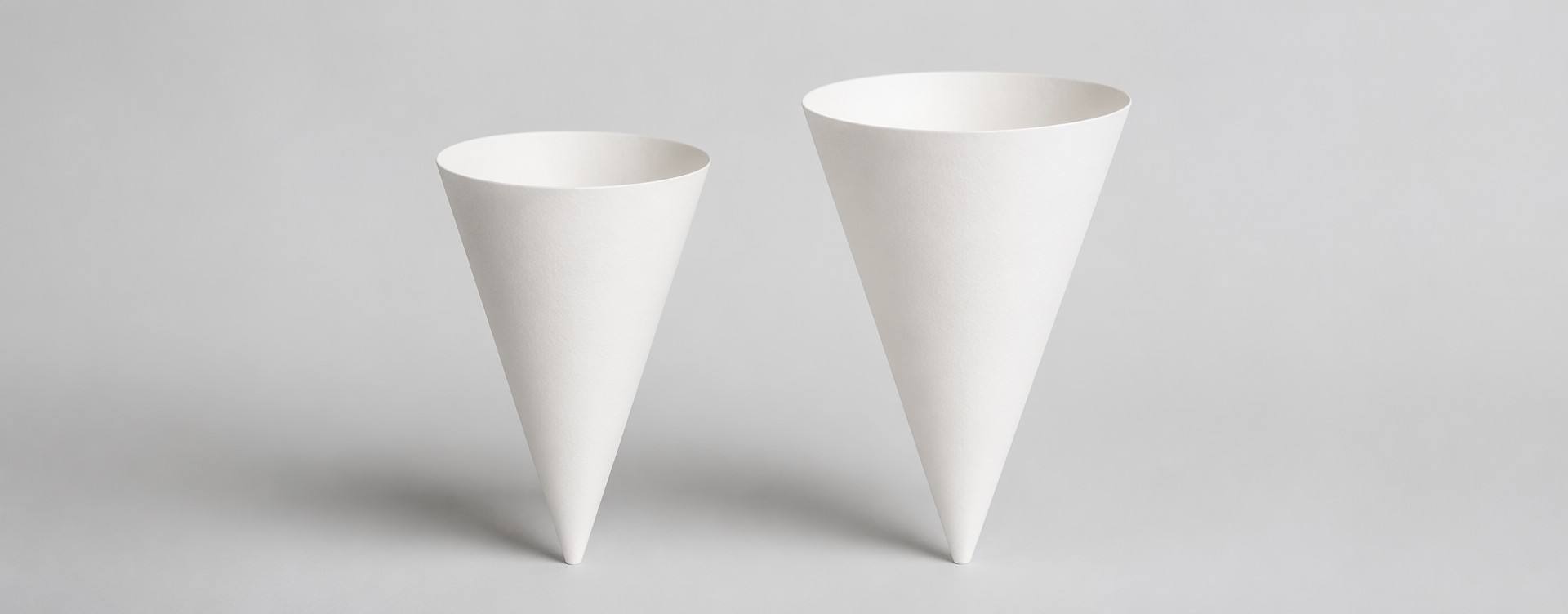
Selecting the appropriate cone cup size helps improve dispenser compatibility, reduce material waste, and enhance user convenience.
Size | Typical Application |
4oz | Offices, Schools, Water Dispensers |
4.25oz | Hospitals, Healthcare Facilities, Public Drinking Stations |
Different markets may use different specifications and dispenser standards. DAILYECO can recommend the most suitable paper cone cup size according to your application and destination market.
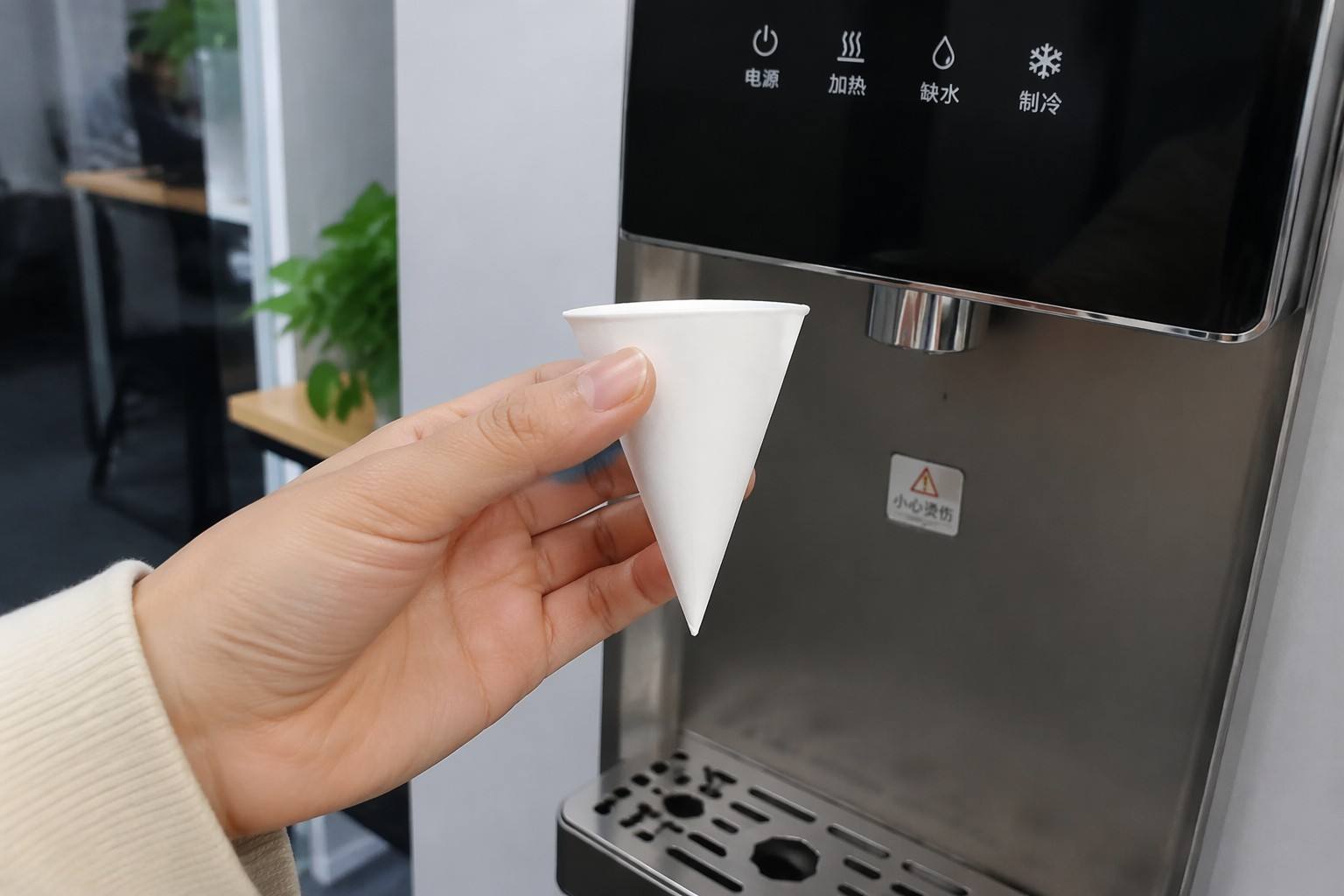
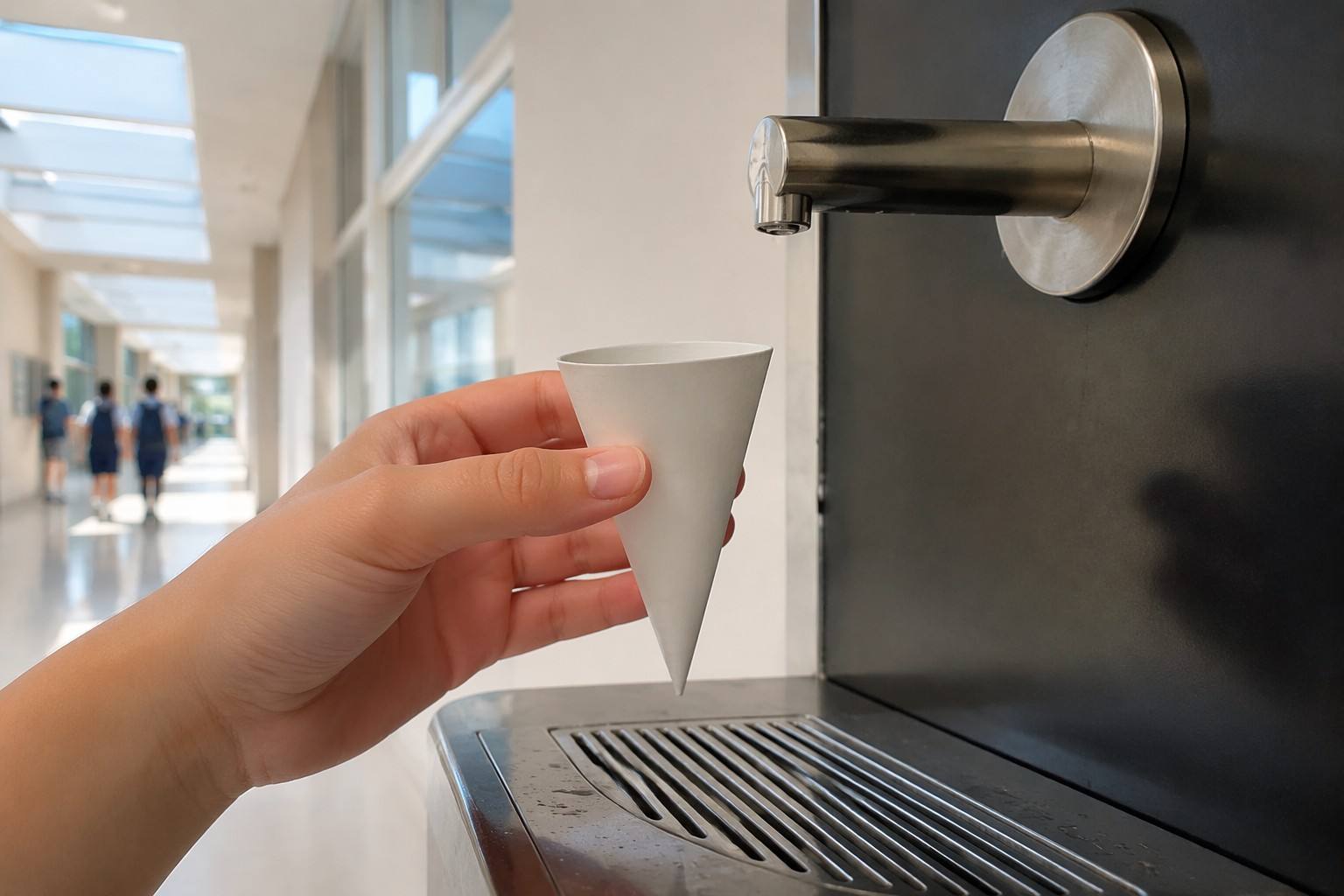
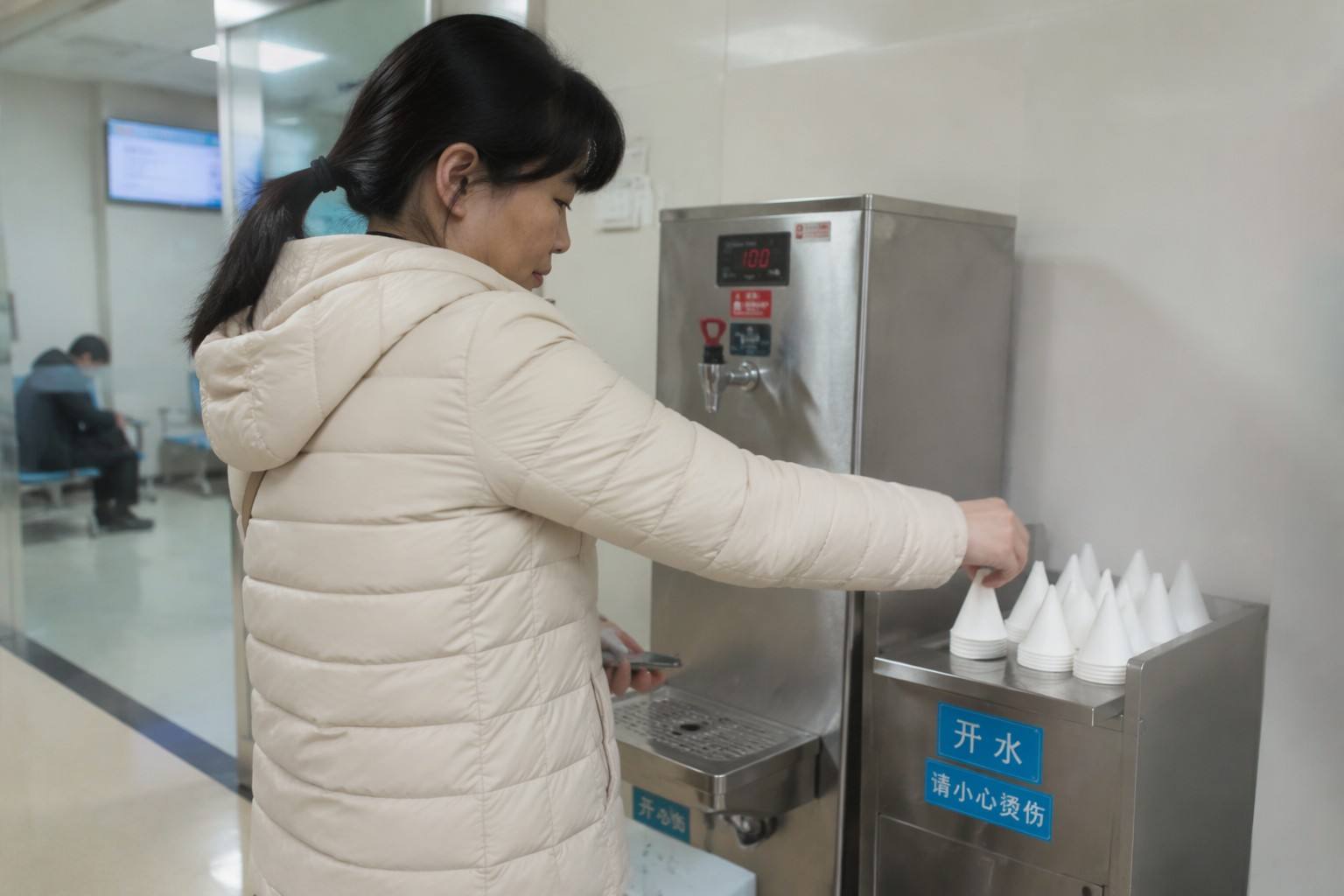
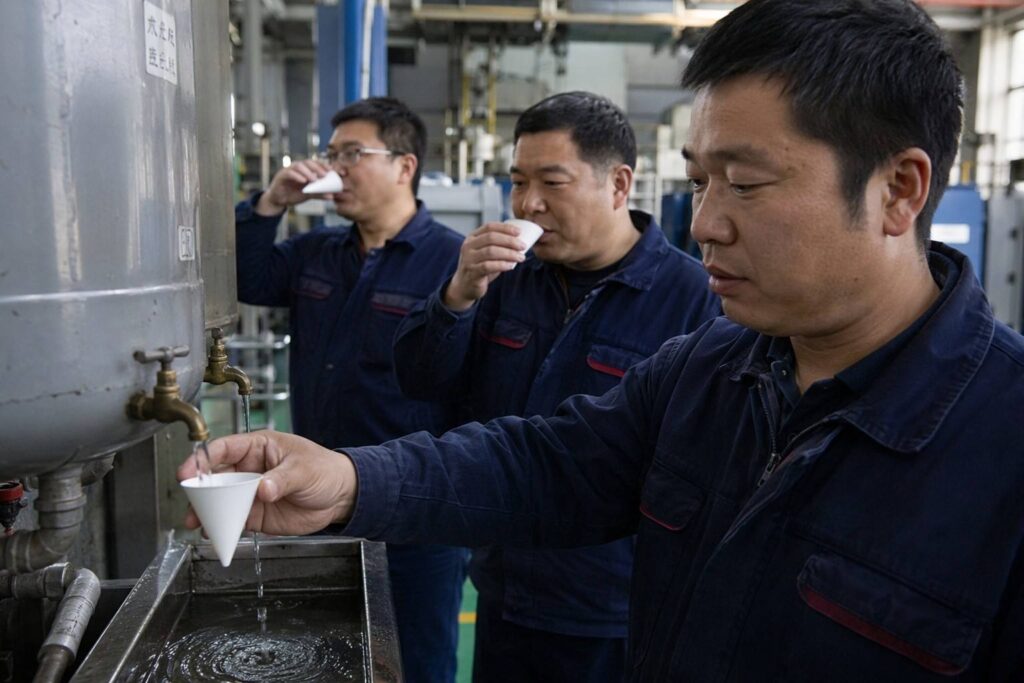
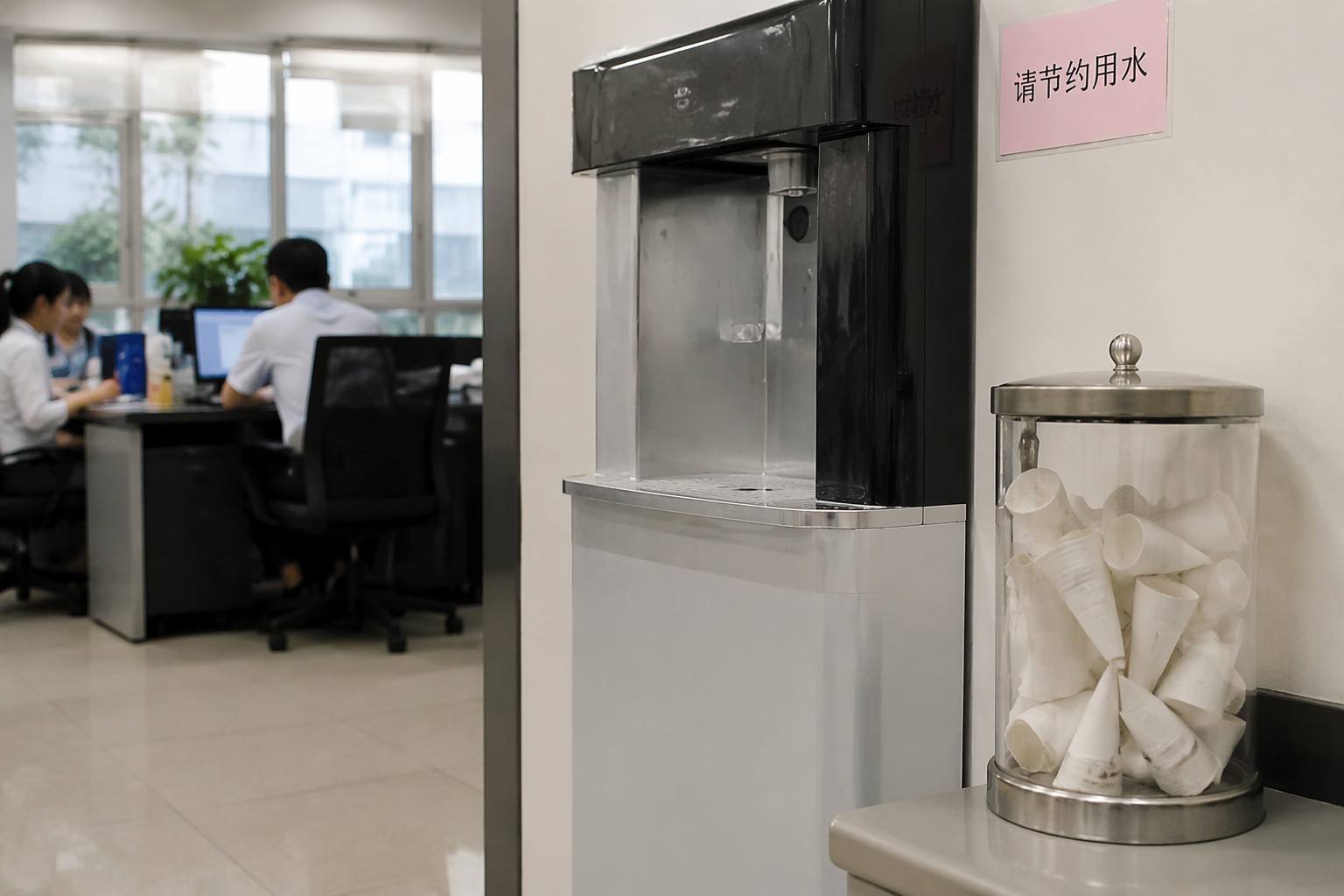
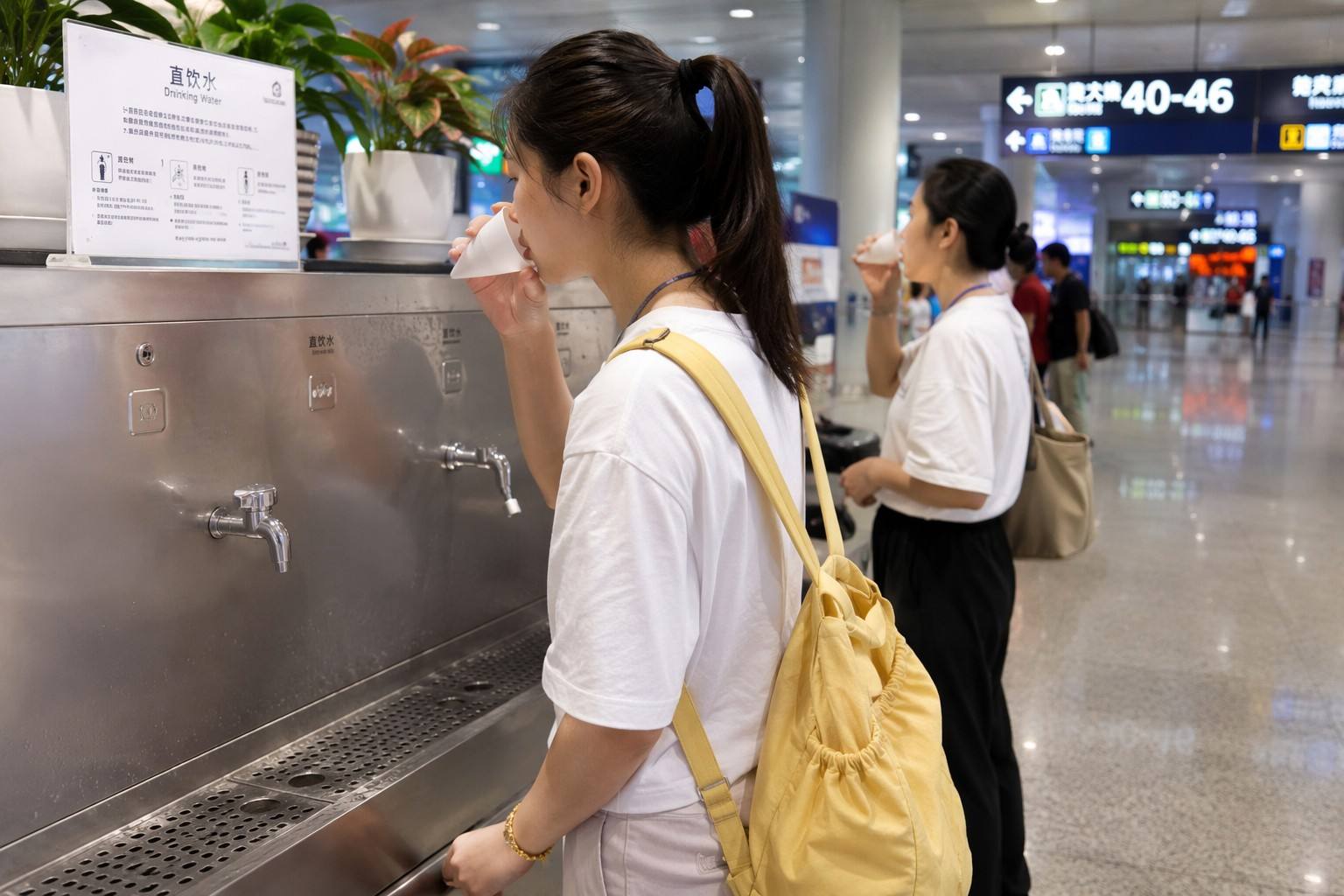
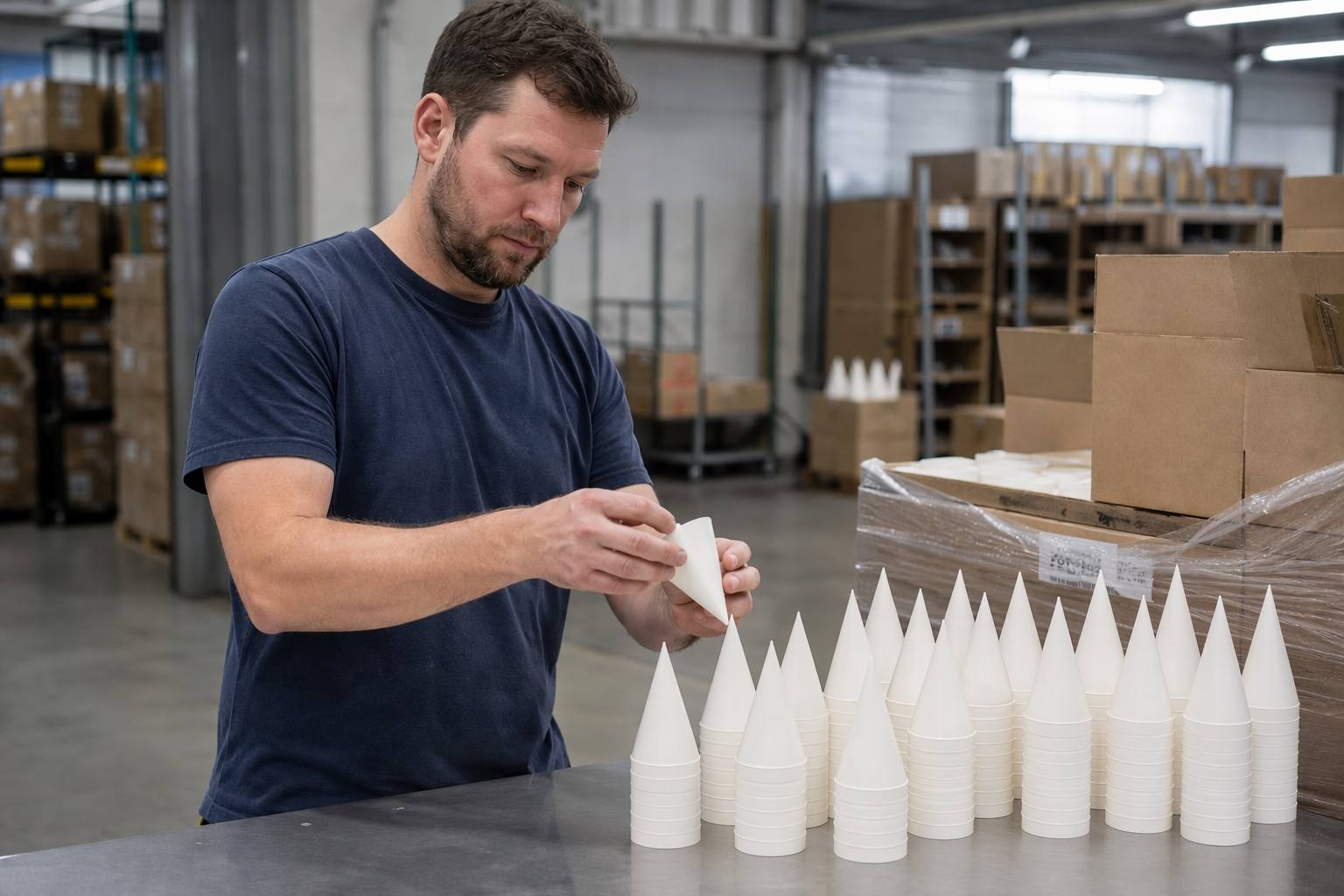
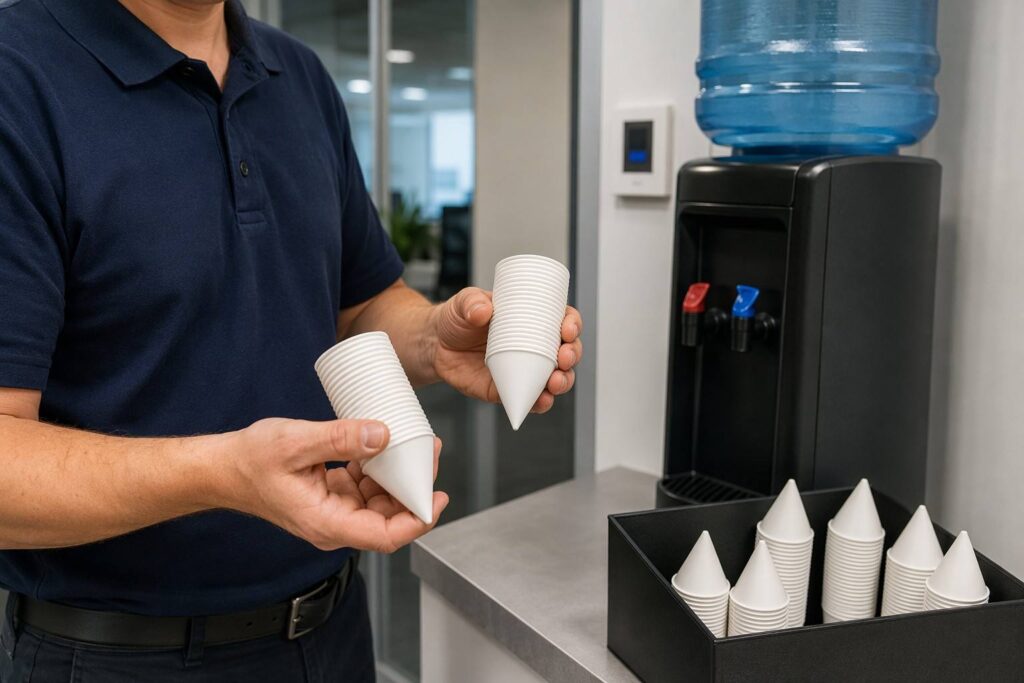
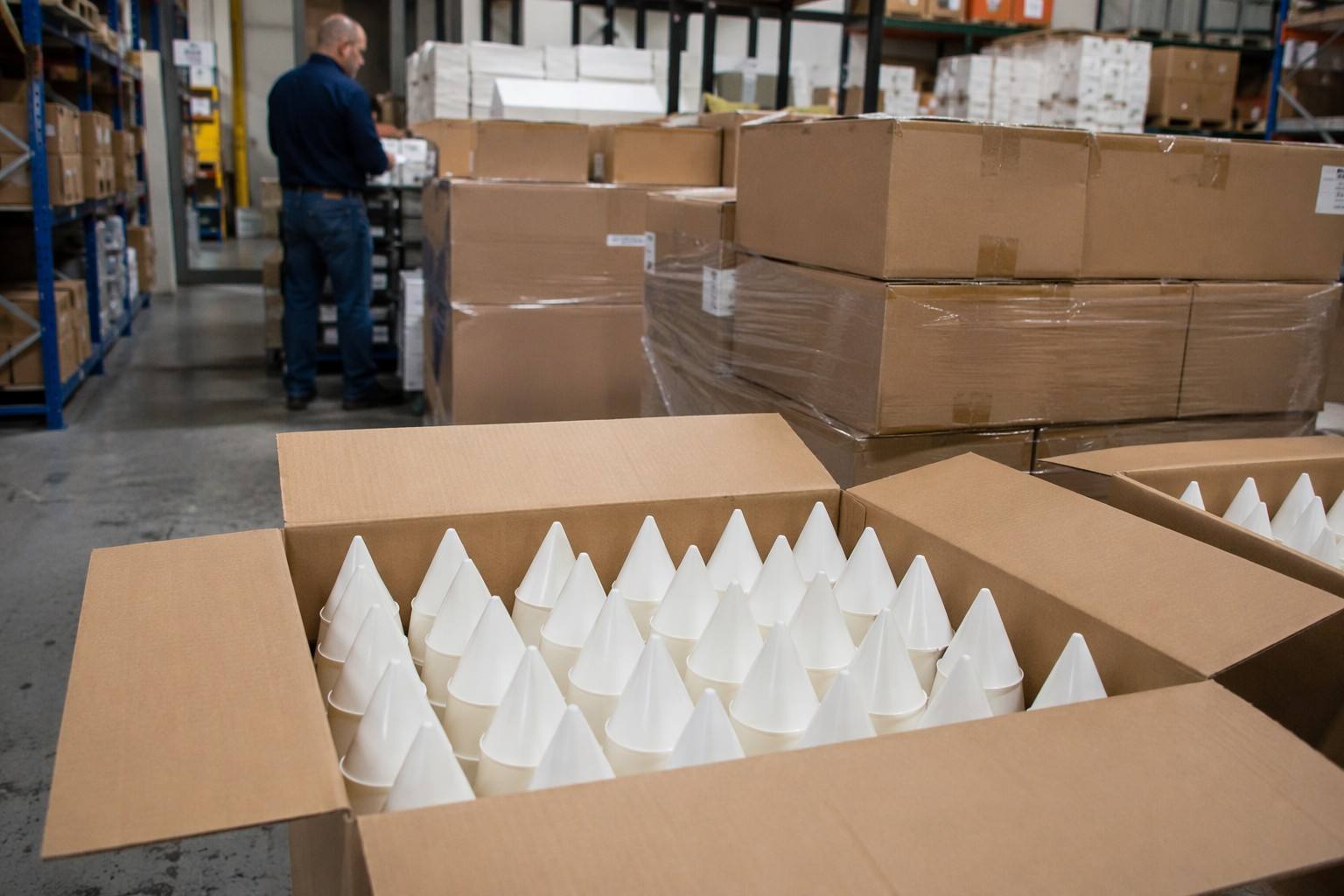

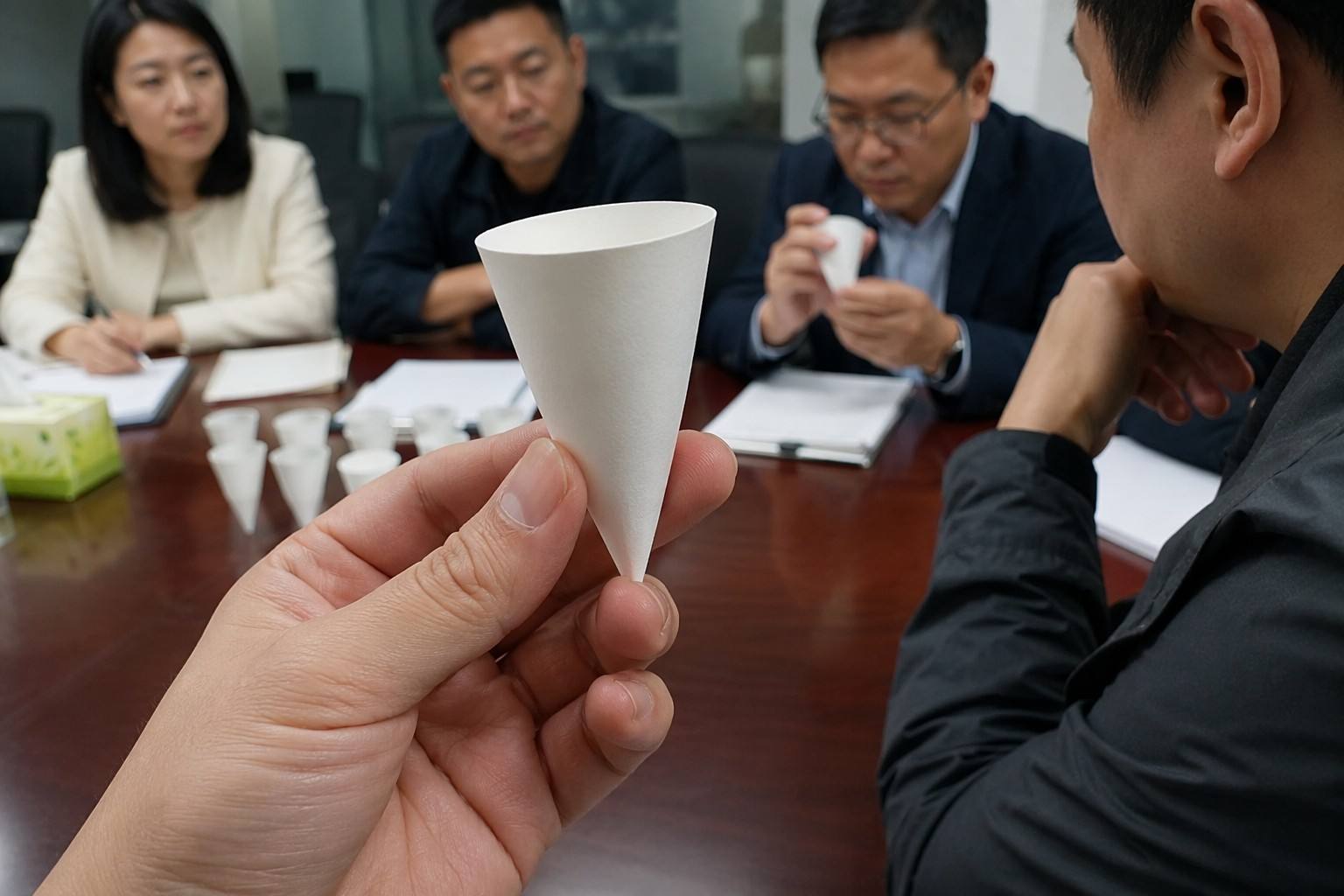

The following guide helps buyers determine whether cone cups are suitable for different commercial drinking water applications.
Application | Recommended |
Office Water Dispensers | ✓ |
Schools & Universities | ✓ |
Hospitals & Healthcare Facilities | ✓ |
Factories & Manufacturing Plants | ✓ |
Government Buildings | ✓ |
Commercial Offices | ✓ |
Airports & Transportation Hubs | ✓ |
Public Drinking Stations | ✓ |
Conference & Exhibition Venues | ✓ |
Sports & Recreation Facilities | ✓ |
Waiting Areas & Reception Centers | ✓ |
Water Cooler Programs | ✓ |
Hot Coffee Service | ✗ |
Tea Service | ✗ |
Soft Drinks & Juice | ✗ |
Long-Term Liquid Storage | ✗ |
Carbonated Beverages | ✗ |
Takeaway Beverage Service | ✗ |
Paper cone cups are specifically designed for short-term drinking water consumption in commercial and institutional environments. Their unique conical shape promotes immediate use, improves hygiene around water dispensers, and reduces unnecessary cup waste. Combined with their lightweight construction and compatibility with standard cone cup dispensers, they provide a practical and economical solution for high-volume hydration programs.
For applications involving hot beverages, takeaway drinks, carbonated beverages, or situations where cups need to stand independently for extended periods, other disposable cup designs—such as flat-bottom paper cups or insulated beverage cups—may provide a more suitable solution. Selecting the right product according to the intended application helps improve customer satisfaction while optimizing procurement efficiency and operational performance.
Purchasing cone cups involves more than comparing prices. Professional buyers should evaluate product quality, material specifications, manufacturing capability, customization options, and supply reliability to ensure the products meet both operational requirements and customer expectations.
The following questions can help buyers make more informed sourcing decisions before placing an order.
Buyer Question | Why It Matters |
What material is used for the cone cups? | Determines product performance, sustainability, and regulatory compliance. |
Are the cone cups compatible with standard cone cup dispensers? | Ensures smooth dispensing and reduces operational issues. |
What cup sizes are available? | Different markets require different capacities and dispenser compatibility. |
Can customized printing and packaging be provided? | Enhances brand visibility and retail presentation. |
Can the manufacturer provide OEM or private label services? | Supports brand development and product differentiation. |
What certifications are available? | Helps meet local food-contact and regulatory requirements. |
What is the production lead time? | Supports inventory planning and supply chain management. |
The cost of paper cone cups depends on the cup size, paper weight, coating material, printing requirements, order quantity, and shipping destination. Standard white cone cups are generally the most economical option, while custom-printed and specialty-coated cups typically have higher production costs.
For large-volume wholesale orders, manufacturers usually provide more competitive pricing based on annual purchasing volume and container quantities. To receive an accurate quotation, buyers should provide the cup size, printing artwork, packaging requirements, estimated order quantity, and delivery destination.
Paper cone cups are typically packed in hygienic plastic sleeves inside export-grade corrugated cartons to protect the products during transportation and storage. Standard packaging quantities vary depending on the cup size and customer requirements.
Manufacturers can also provide customized packaging solutions, including private-label cartons, barcode labels, retail packaging, palletized shipments, and mixed-container loading to support different distribution channels. Proper packaging helps reduce transportation damage while improving warehouse efficiency.
The number of paper cone cups that fit into a 40HQ container depends on the cup size, carton dimensions, and packing configuration. Smaller cone cups allow significantly higher loading quantities than larger sizes.
For most export orders, a 40HQ container can accommodate several million paper cone cups. The exact loading quantity should be calculated according to the selected specifications and packaging method. An experienced manufacturer can provide a detailed container loading plan to maximize shipping efficiency and reduce logistics costs.
Yes. Most paper cone cups are manufactured according to industry-standard dimensions and are compatible with the majority of commercial cone cup dispensers used in offices, schools, hospitals, factories, and public facilities.
Before placing a bulk order, buyers should confirm the dispenser’s compatible cup size and rim diameter. If special dimensions are required, manufacturers can also develop customized cone cups to ensure proper dispenser compatibility. Sample testing before mass production is recommended for new projects or customized specifications.
Professional buyers often compare multiple suppliers before making a final decision. Evaluating these key factors helps reduce sourcing risks while ensuring consistent product quality and dependable long-term supply.
Working with an experienced cone cup manufacturer that offers technical support, flexible customization, and stable manufacturing capacity can further improve procurement efficiency and customer satisfaction.
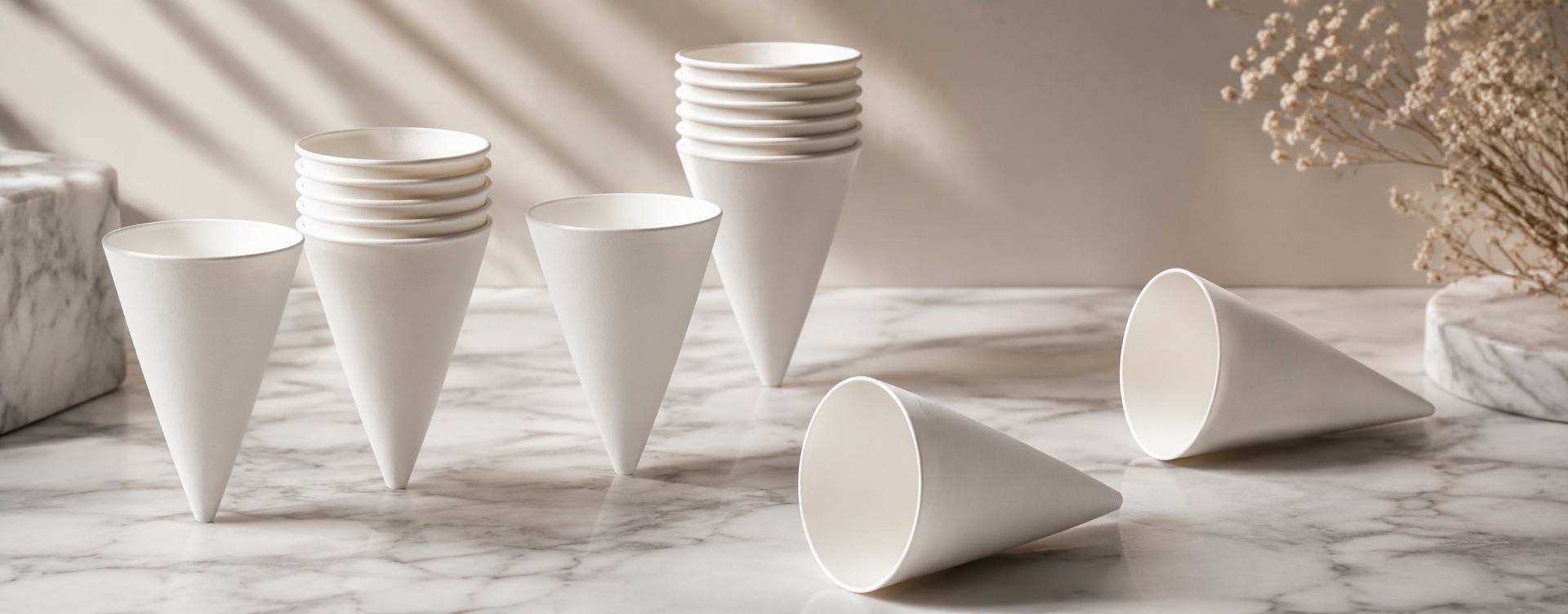
Although cone cups are an excellent solution for drinking water dispensers and shared hydration stations, they may not be the most suitable option for every beverage application. Selecting the appropriate disposable cup according to its intended use helps improve customer satisfaction, operational efficiency, and overall purchasing value.
The following situations may require alternative disposable packaging solutions.
Application | Recommended |
Hot Coffee Service | ✗ |
Tea Service | ✗ |
Carbonated Beverages | ✗ |
Soft Drinks | ✗ |
Juice & Smoothies | ✗ |
Takeaway Beverage Service | ✗ |
Beverages Requiring Lids | ✗ |
Long-Term Beverage Holding | ✗ |
Premium Café Presentation | ✗ |
Restaurant Table Service | ✗ |
Office Water Dispensers | ✓ |
Public Drinking Stations | ✓ |
Hospitals & Healthcare Facilities | ✓ |
Schools & Universities | ✓ |
Factories & Industrial Workplaces | ✓ |
Because paper cone cups feature a pointed bottom, they are specifically designed for immediate water consumption rather than prolonged beverage storage. They cannot stand independently and are not compatible with lids, making them unsuitable for takeaway beverages, café service, or applications where drinks need to be carried or placed on tables.
For hot beverages, specialty coffee, soft drinks, or foodservice operations, businesses may achieve better results by selecting flat-bottom paper cups, insulated paper cups, or plastic cups designed specifically for those applications.
By choosing the right product for the intended end use, buyers can improve customer experience, reduce unnecessary procurement costs, and ensure their packaging solution delivers the best overall performance.
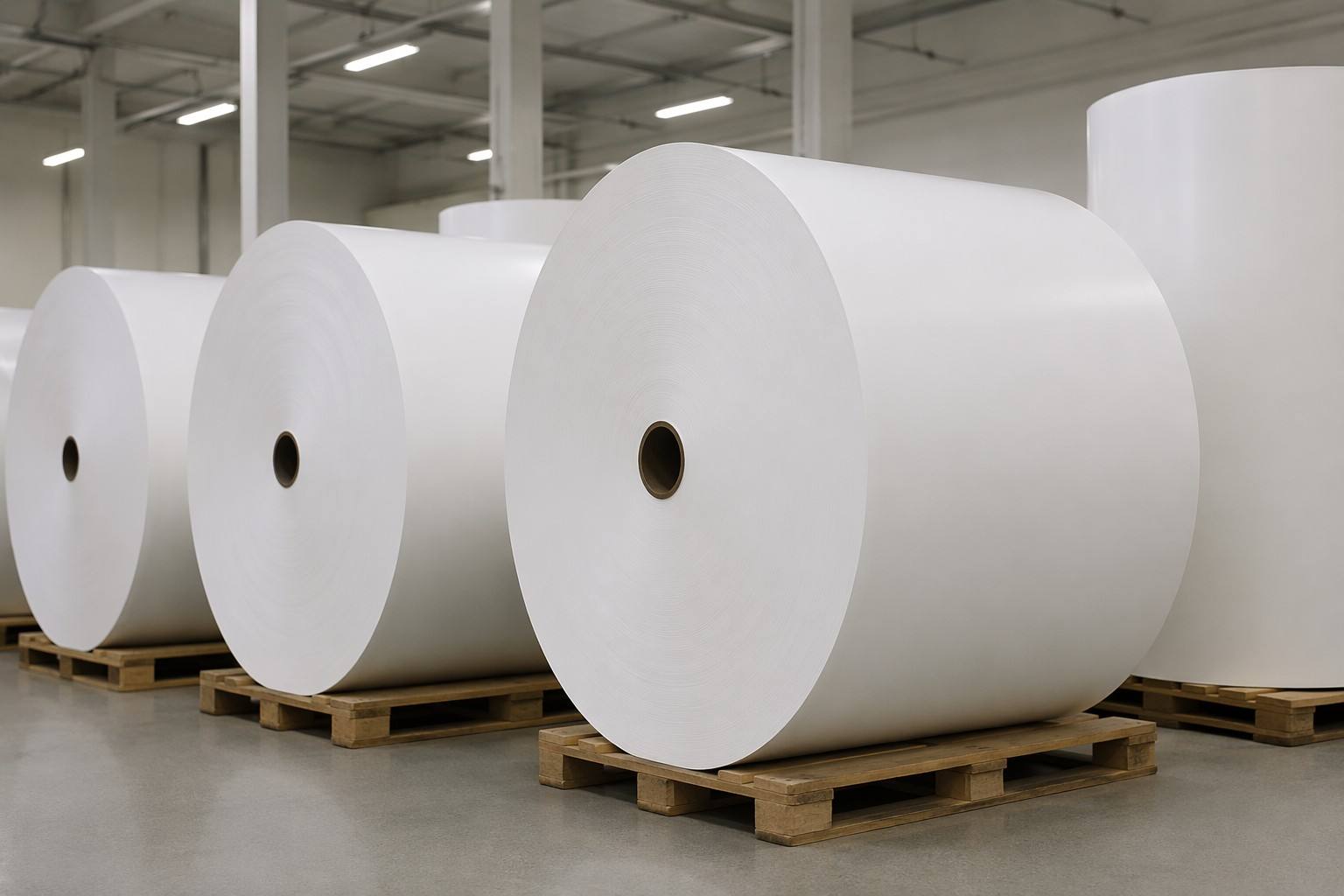
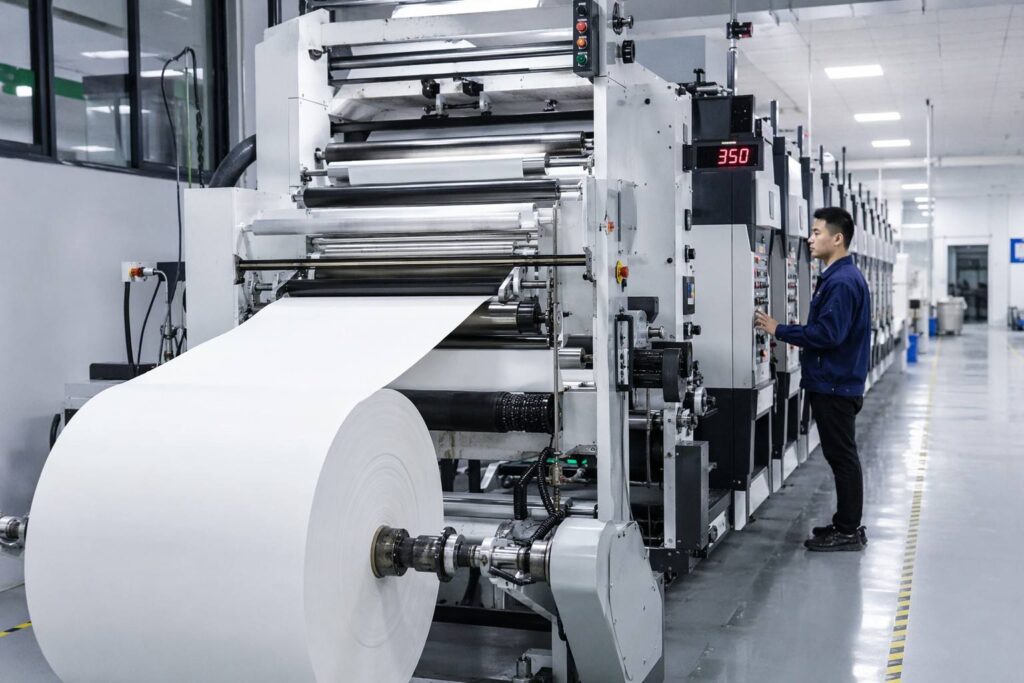
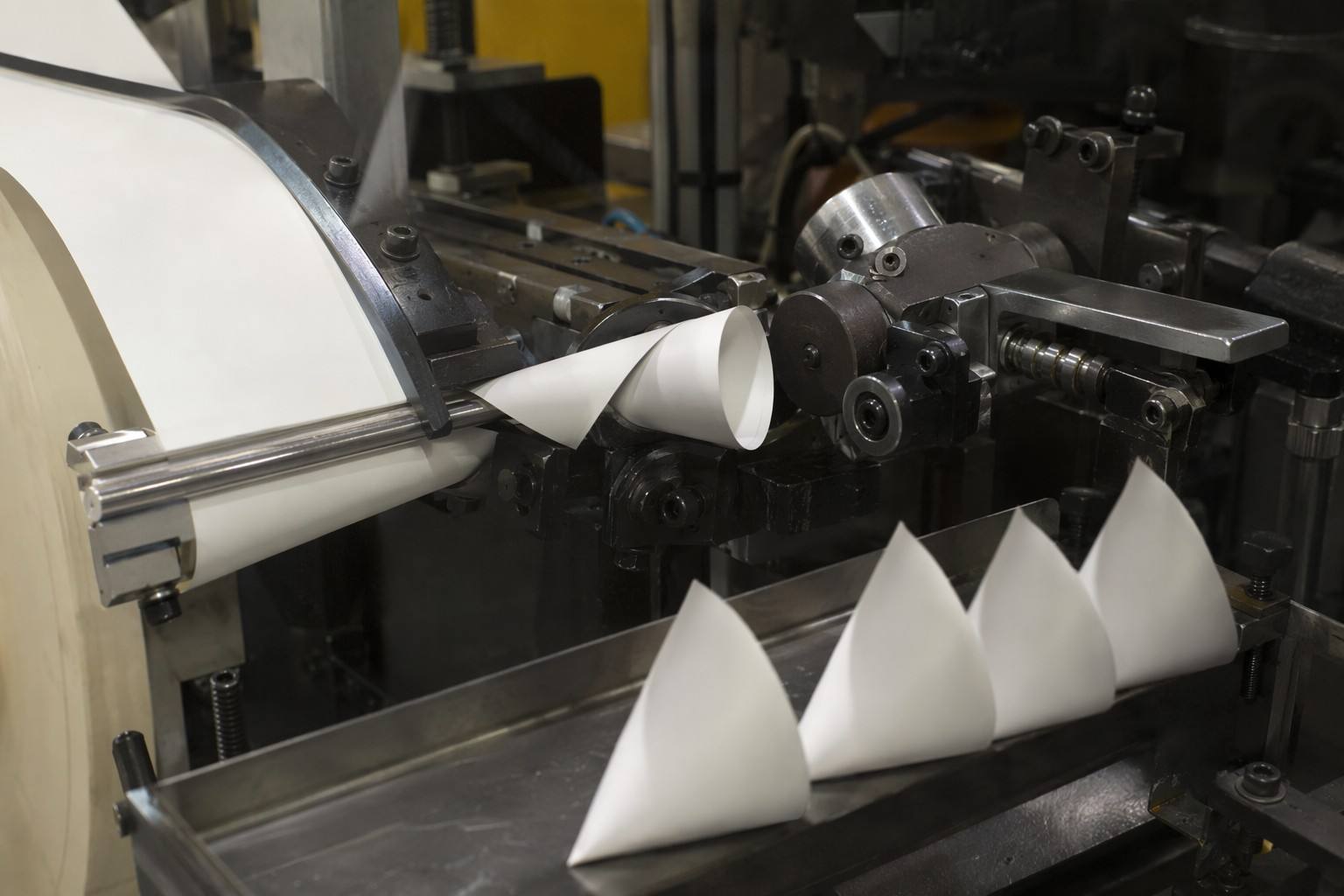
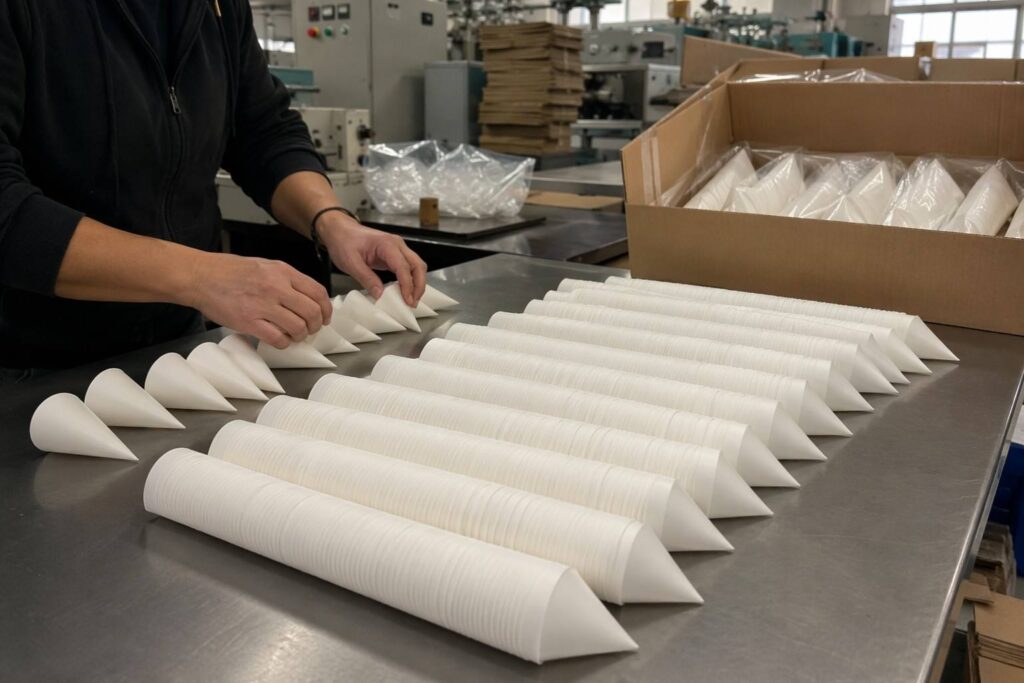
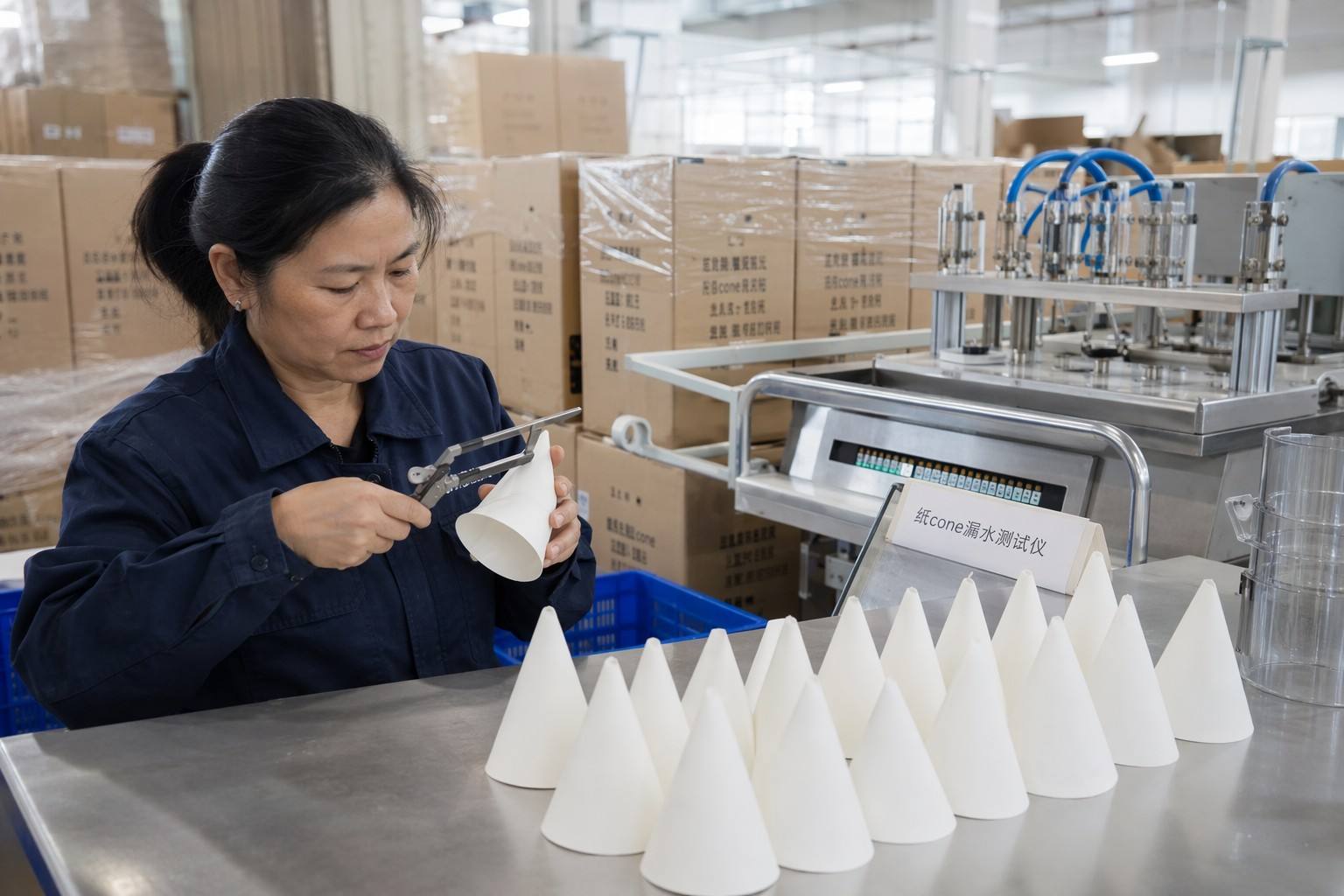
Choosing the right cone cup manufacturer is an important decision that affects product quality, supply stability, customization capabilities, and long-term business success. While pricing is always an important consideration, professional buyers should also evaluate manufacturing experience, quality management, production capacity, and after-sales support before selecting a supplier.
The following factors can help buyers identify a reliable manufacturing partner for long-term cooperation.
An experienced manufacturer is more likely to understand international market requirements, production standards, and export procedures. Years of manufacturing expertise also contribute to stable product quality and efficient problem-solving throughout the production process.
When evaluating suppliers, buyers should consider:
Consistent quality is essential for commercial buyers, especially those purchasing cone cups in large quantities. A reliable manufacturer should implement quality control throughout every stage of production, from raw material inspection to finished product testing.
These procedures help ensure consistent product performance across every shipment.
For distributors and private-label brands, customization is often just as important as product quality. A capable manufacturer should be able to support custom printing, branded packaging, and flexible production solutions that meet different market requirements.
Common customization services include custom logo printing, private-label packaging, carton design, and multiple coating options, allowing buyers to create products that strengthen their brand identity and market competitiveness.
Stable production capacity plays a critical role in maintaining inventory levels and meeting customer delivery schedules. Buyers should evaluate whether the manufacturer can support both regular orders and seasonal demand without compromising quality or lead time.
A dependable supplier should also provide clear production schedules, efficient order management, and reliable export logistics to support international customers.
Different countries have different regulatory requirements for food-contact packaging. Before placing an order, buyers should confirm that the manufacturer can provide the certifications and documentation required for their destination market.
Depending on customer needs, manufacturers may provide certifications or support related to food-contact compliance, quality management systems, sustainable sourcing, and social responsibility.
Verifying these documents in advance helps reduce compliance risks and simplifies the import process.
The best cone cup manufacturer is not simply the supplier offering the lowest price, but the one that consistently delivers reliable quality, responsive communication, flexible customization, and dependable international supply.
By selecting a manufacturing partner with proven production capabilities and export experience, buyers can strengthen their supply chain, improve customer satisfaction, and support sustainable long-term business growth.
Before ordering cone cups, buyers should confirm the key product specifications and commercial details with their supplier. A simple pre-purchase review helps avoid production delays, reduces procurement risks, and ensures the products meet your market requirements.
☐ Confirm the required cone cup size.
☐ Select the appropriate material and coating.
☐ Verify compatibility with your cone cup dispensers.
☐ Confirm plain or custom printed products.
☐ Approve logo artwork and printing colors.
☐ Confirm packaging requirements.
☐ Review production samples before mass production.
☐ Verify food-grade raw materials.
☐ Confirm available certifications if required.
☐ Review the manufacturer’s quality control process.
☐ Confirm MOQ, pricing, and lead time.
☐ Agree on payment terms and shipping method.
☐ Verify carton specifications and delivery schedule.
Completing this checklist before production begins helps buyers communicate more efficiently with suppliers while ensuring a smoother purchasing process and more reliable product quality.

DAILYECO provides integrated cone cup manufacturing and disposable drinking water packaging solutions for importers, distributors, office supply companies, facility management providers, healthcare suppliers, and global packaging brands.
As a trusted manufacturing partner, we focus on delivering consistent product quality, flexible customization, and reliable international supply to support customers seeking long-term business cooperation.
DAILYECO Manufacturing Facility | Description |
Employees | More than 1,000 employees |
Production Lines | 10 paper cone cup machines |
Monthly Supply Capacity | 9-10 × 40HQ containers |
Product Sizes | Multiple standard cone cup sizes available |
Printing Capability | Flexographic & Offset Printing |
OEM | Custom logo, printing, packaging, and carton customization |
ODM | Material selection, artwork optimization, and product development |
Technical Support | Available |
Production MOQ | 50,000 pcs per size for standard orders (special MOQ available based on customization) |
Typical Lead Time | Approximately 30–35 days for customized orders |
DAILYECO supports international food packaging compliance by providing documentation based on the regulatory requirements of different export markets. Our team assists customers in preparing the necessary compliance files to facilitate product approval, customs clearance, and buyer audits.
Available documentation may include:
For detailed information about our certifications, testing capabilities, and compliance standards, please visit our Certification & Compliance page.
View Our Compliance & Certification Support Page
DAILYECO offers comprehensive customization services for paper cone cups, including:
DAILYECO exports cone cups to customers throughout North America, Europe, Australia, the Middle East, Asia, and other international markets.
With extensive export experience and an established global supply chain, we help customers maintain stable inventory, shorten procurement cycles, and reduce international sourcing risks.
Our experienced international sales team provides professional support throughout every stage of your project, including product consultation, sample preparation, artwork confirmation, production follow-up, shipping coordination, and after-sales service.
As market demand continues to evolve, DAILYECO continuously develops new cone cup specifications, sustainable material options, and customized packaging solutions to help customers remain competitive in their local markets.