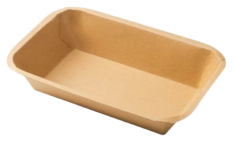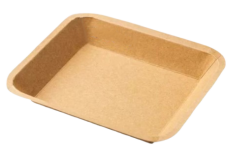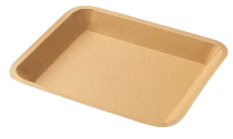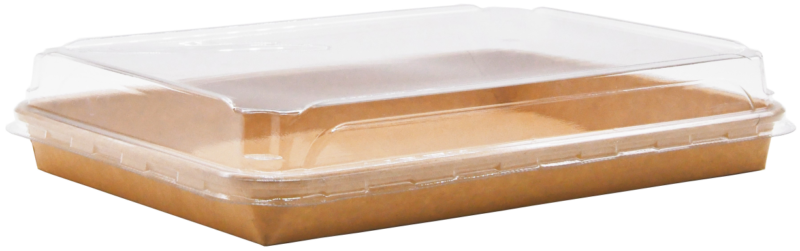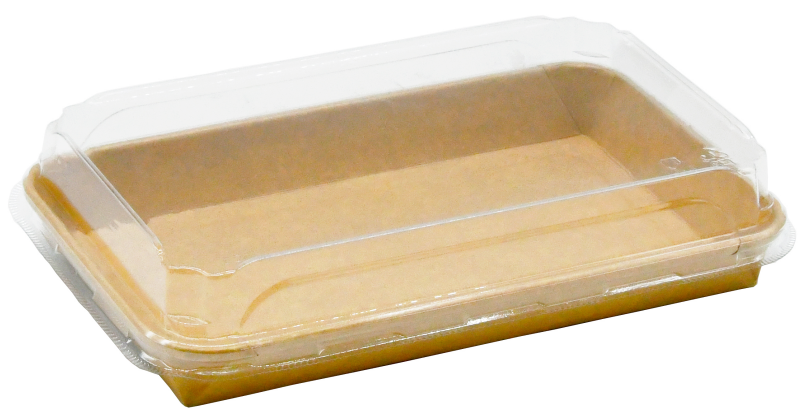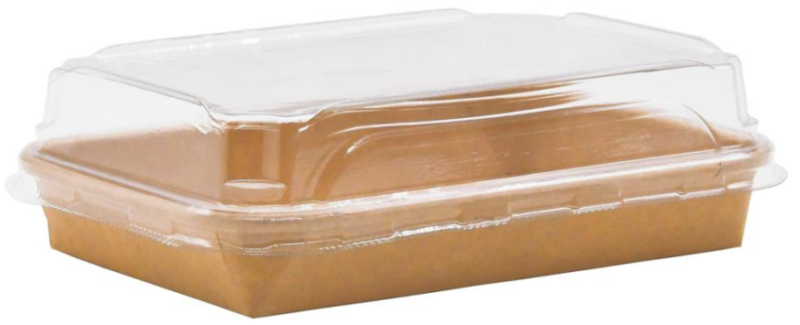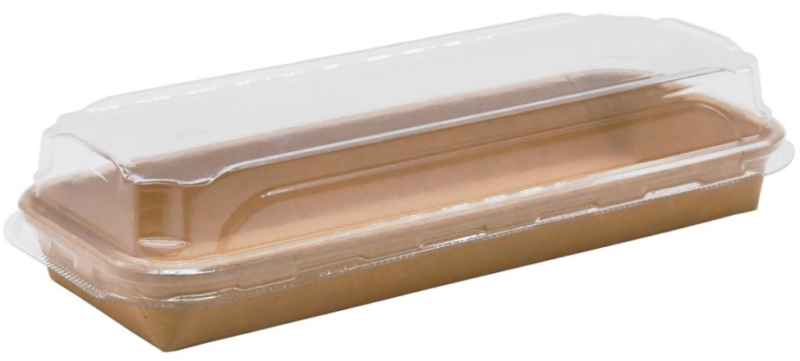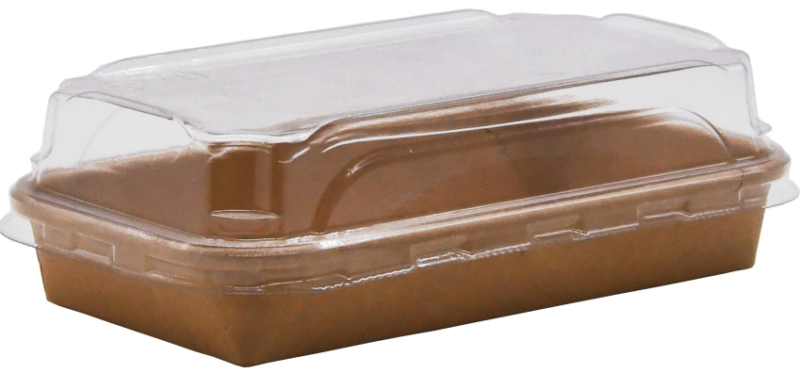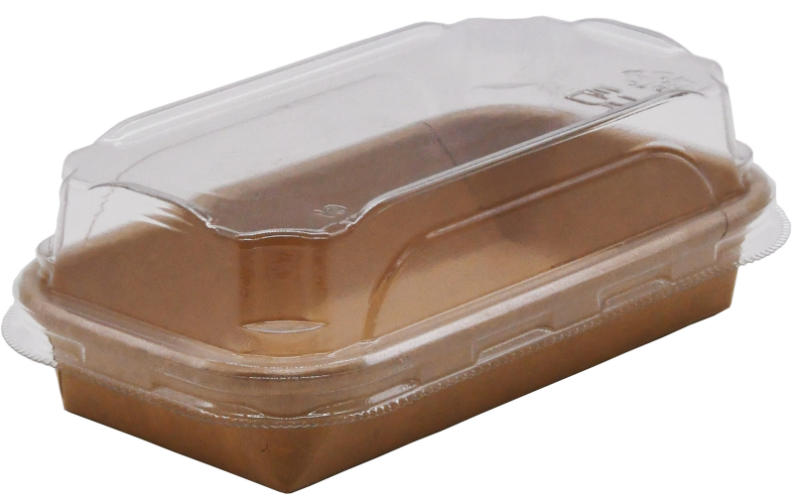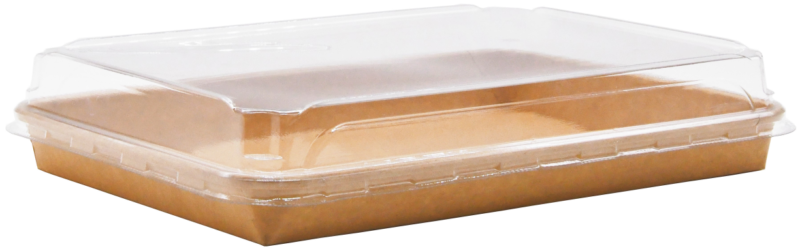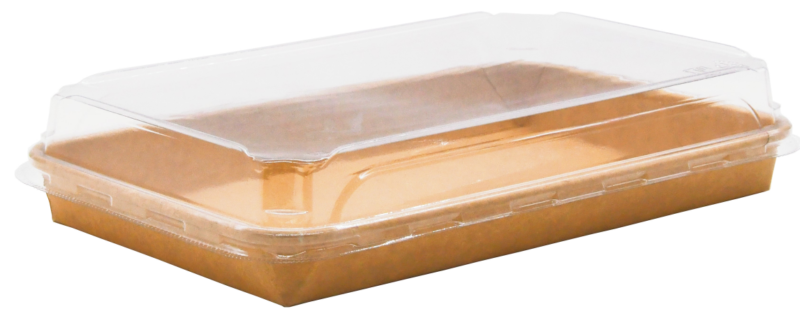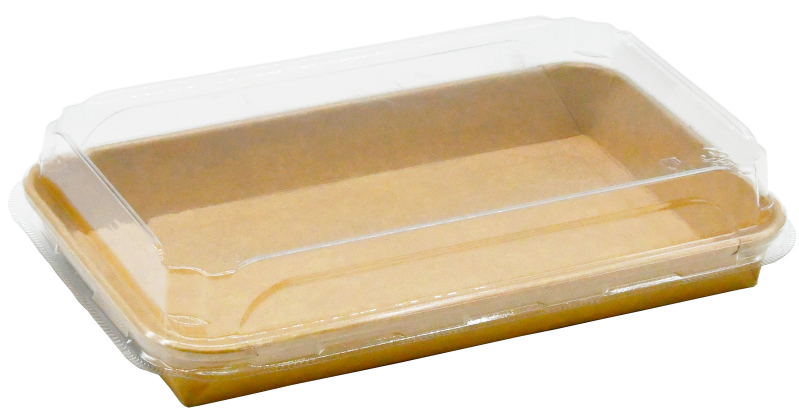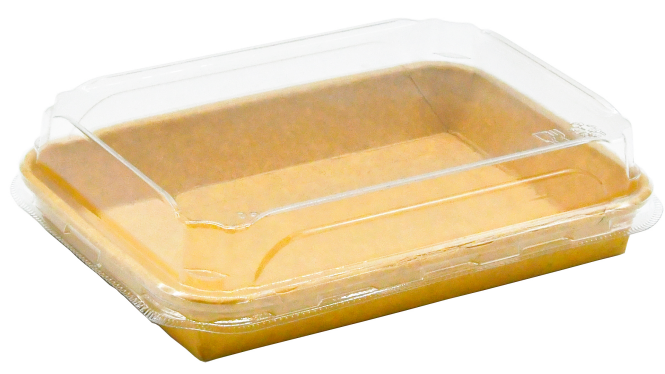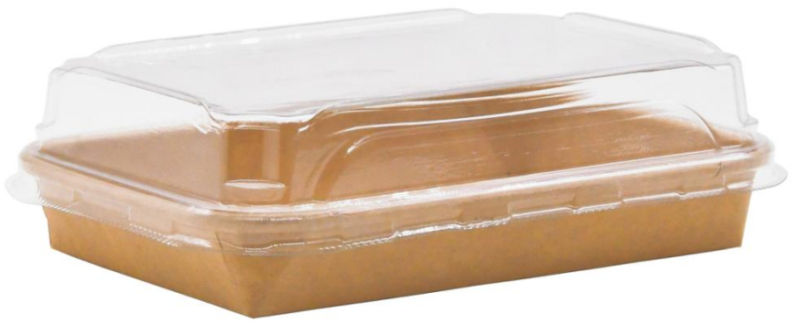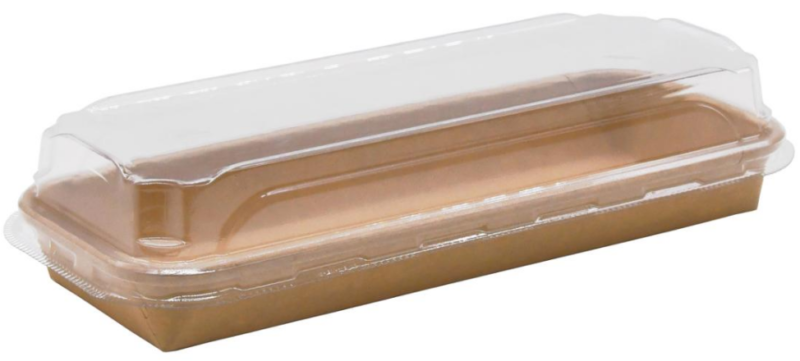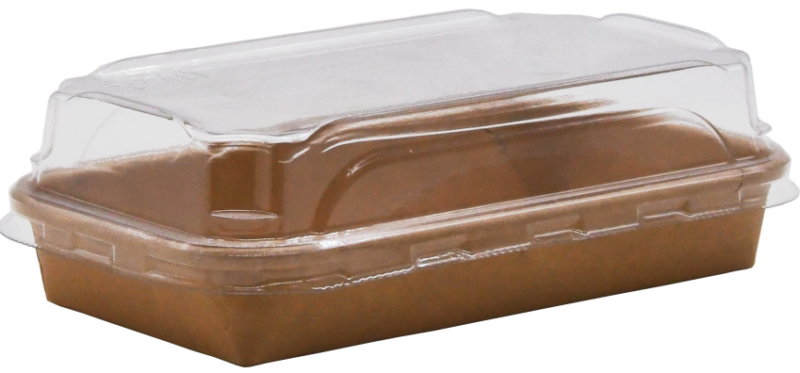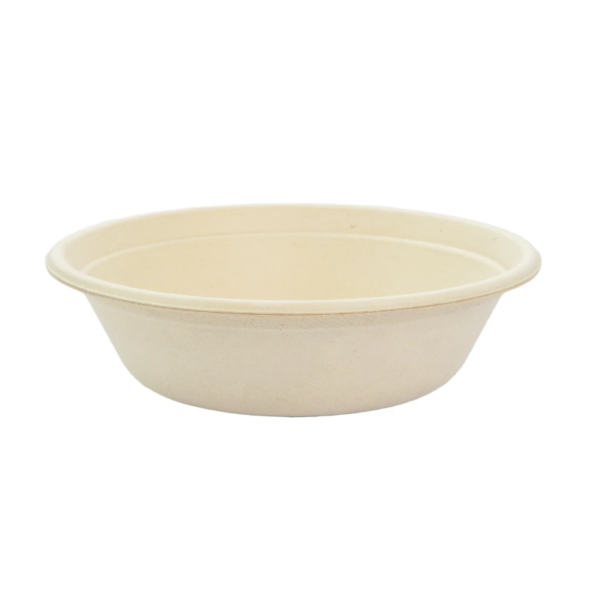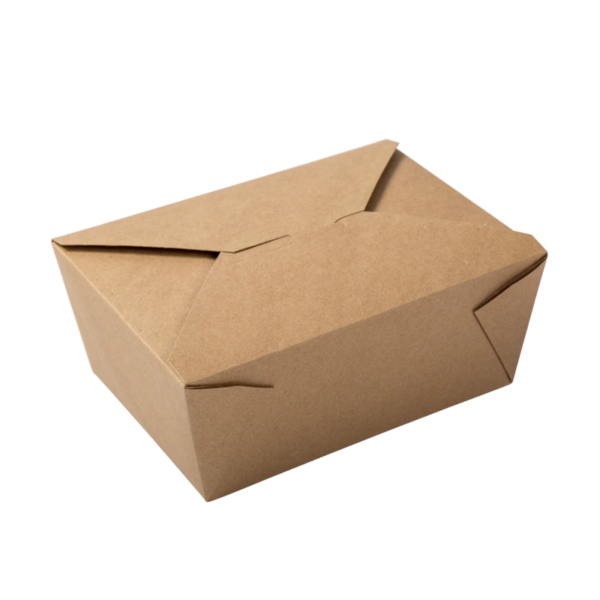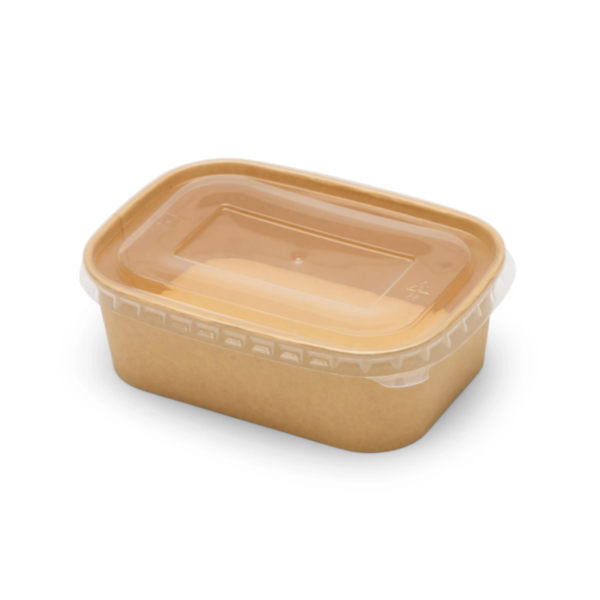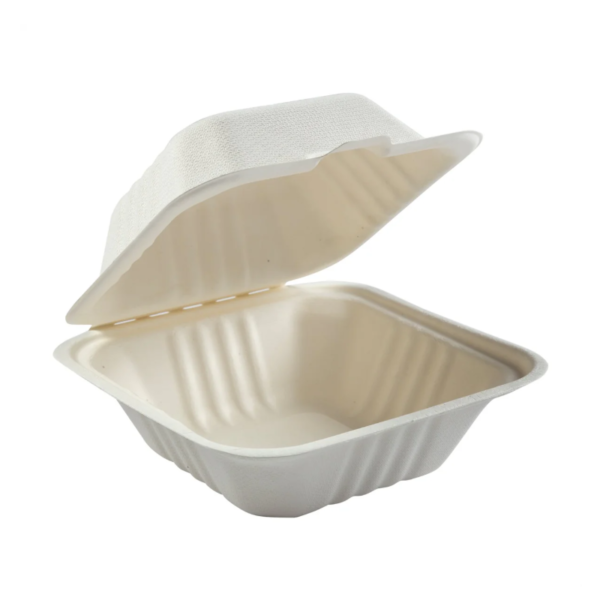
Food Tray

DAILYECO, Your Professional Paper Food Tray Manufacturer

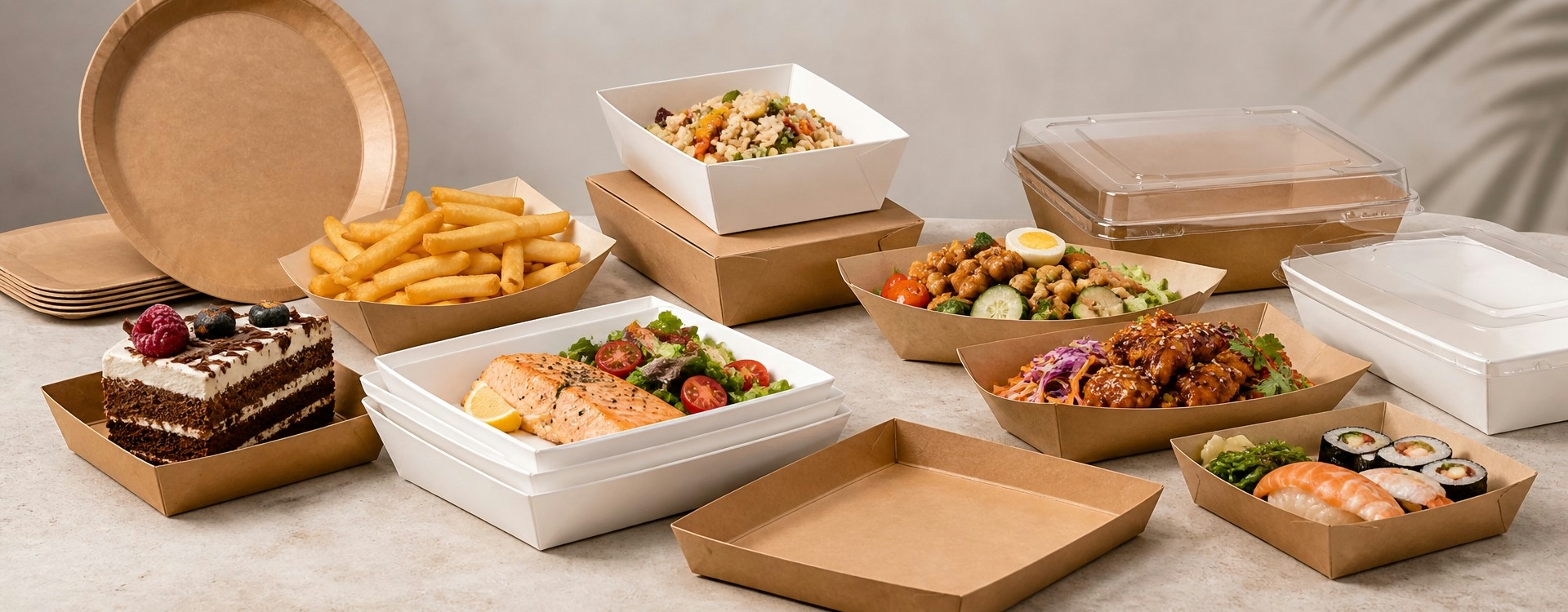
Custom Paper Food Tray for Takeaway, Catering, Retail, and Foodservice

Key Facts About Paper Food Tray

Item

Information

Product Name

Paper Food Tray

Primary Materials

230 gsm, 260 gsm, 280 gsm, or 300 gsm kraft paperboard with 18 gsm PE lining for tray bases; PET for compatible lids

Product Type

Converted paperboard foodservice tray

Common Formats

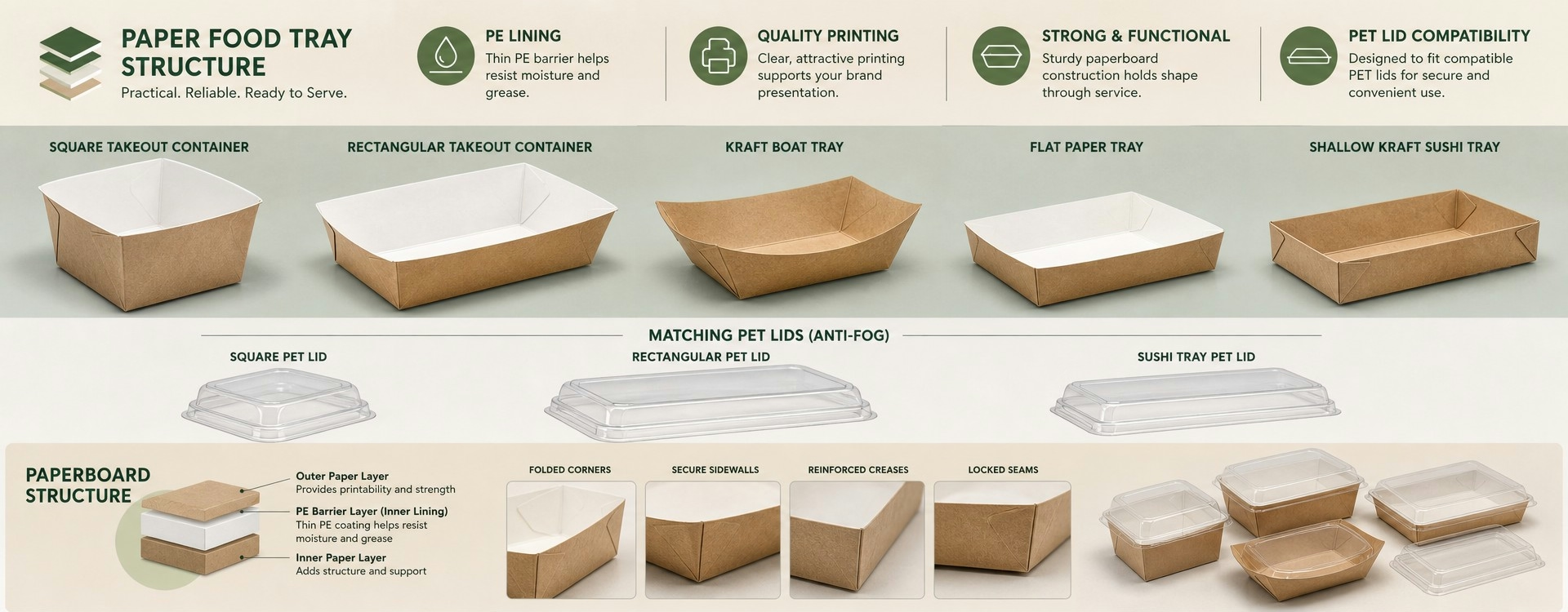
Square and rectangular PE-lined takeout containers, kraft paper boat trays, flat plate and tray formats, paper sushi trays, and compatible PET lids

Applications

Restaurants, takeaway, delivery, catering, concessions, bakery, retail, hospitality, and institutional dining

Food Types

Prepared meals, snacks, fries, street food, bakery, desserts, sushi, chilled foods, fruit, catering food, and application-qualified foods

Barrier Options

18 gsm PE lining on the listed paper tray bases; any alternative barrier must be confirmed for the exact SKU and application

Customization

Dimensions, depth, sidewalls, compartments, paperboard, barrier, printing, lids, labels, packs, and cartons

Printing

Plain kraft, white, stock print, or custom print subject to food-contact design and project feasibility

Compatible Components

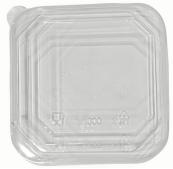
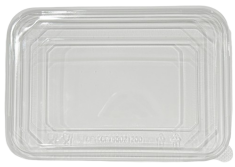
Square and rectangular PET takeout-container lids and anti-fog PET sushi-tray lids in matched catalog sizes

Supply Type

Manufacturer supply, OEM/ODM, wholesale, private label, and export orders

Export Markets

North America, Europe, Australia, Middle East, Asia, and global foodservice markets

Paper food tray products are converted paperboard formats developed for serving, presenting, carrying, or displaying food in restaurants, takeaway, delivery, catering, concessions, retail, and institutional foodservice.

Depending on the SKU, a paper food tray may use kraft or white paperboard, corrugated board, a food-contact barrier, printed surfaces, folded sidewalls, or a compatible lid. Performance must be confirmed for the exact material, food, temperature, oil or moisture level, holding time, and transport cycle.


What Is a Paper Food Tray? 

A paper food tray is a shallow foodservice package made primarily from converted paperboard. Depending on the approved structure, it may be die cut, creased, folded, glued, nested, corrugated, pressed, or supplied with a separate lid, sleeve, liner, or overbox.

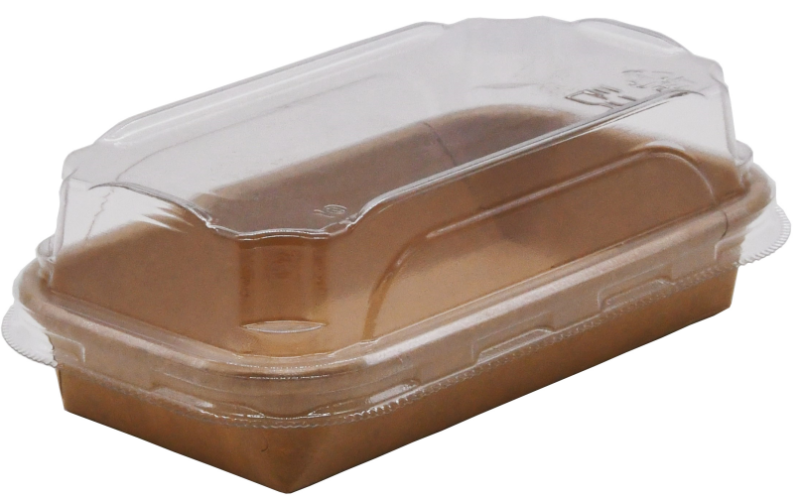
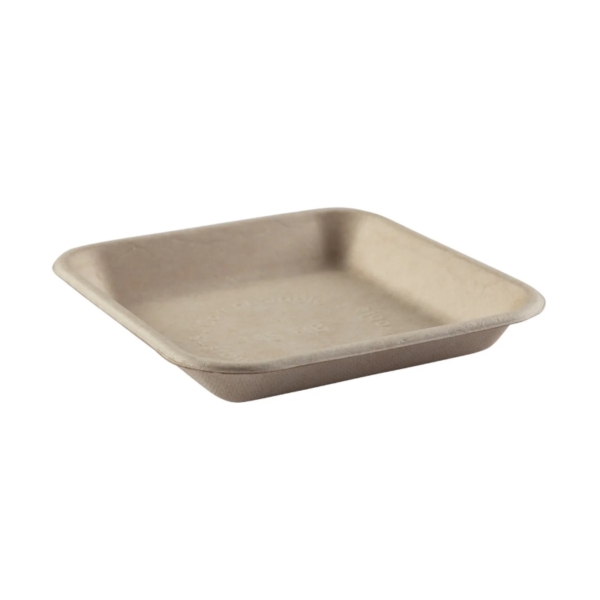
The current product catalog includes PE-lined square and rectangular takeout food containers, kraft paper boat trays, kraft paper flat plate and tray formats, paper kraft sushi trays, and compatible PET lids. These products are not interchangeable: paperboard grade, PE lining, dimensions, geometry, lid pairing, and intended use determine performance.

A typical converting and approval workflow includes:

  • Paperboard and barrier specification
  • Printing and surface preparation
  • Die cutting and creasing
  • Folding, forming, and seam control
  • Quality inspection and application testing
  • Packing, labeling, and shipment

For professional buyers, paper trays for food can provide practical advantages:

  • Kraft, white, corrugated, or printed presentation options
  • Lightweight and nestable structures
  • Efficient counter service and portion presentation
  • Multiple shapes, depths, and compartment layouts
  • Custom printing, sleeves, labels, and cartons
  • Paper-based packaging options for qualified sustainability programs

As a professional Paper Food Tray manufacturer, DAILYECO supports standard and custom projects for foodservice distributors, restaurant groups, caterers, retail brands, wholesalers, importers, and private-label packaging companies.


What Are the Key Features of a Paper Food Tray?

Paper food tray performance is created by the complete specification rather than the word “paper.” Buyers should evaluate board construction, usable dimensions, stiffness, barrier, seams, printing, food contact, stacking, packing, and the conditions under which the tray will be filled, held, transported, or heated.

Feature

Performance

Explanation

Paperboard Construction

Food-Grade Paperboard Construction

Manufactured from quality food-grade paperboard using die-cutting, creasing, folding, and forming technology.

Structural Strength

Stable Folded Structure for Food Service

Strong folded construction suitable for serving a wide range of foods.

Heat Resistance

SKU-Specific Hot-Food and Microwave Compatibility

Selected paper food tray SKUs may be suitable for qualified microwave-heating applications, subject to product-specific time and temperature limits.

Cold Food Performance

Suitable for Chilled Food Service

Maintains stability when serving salads, desserts, fruits, and chilled dishes.

Freezer Compatibility

Selected SKUs Suitable Down to −20°C

Selected SKUs may be suitable for chilled or frozen-food applications down to −20°C, subject to product-specific verification.

Oil & Grease Resistance

Resists Oil Penetration Up to 95°C for 30 Minutes from paper

Helps prevent oil penetration during everyday meal service

Moisture Resistance

Short-Term Moisture Resistance for Foodservice

Maintains structural integrity during normal foodservice use.

Food Contact Safety

Food-Contact-Compliant Material System

Produced using food-contact-compliant paperboard, coatings, inks, and adhesives.

Product Consistency

Uniform Dimensions and Reliable Batch Quality

Uniform dimensions, stable folding structures, and reliable quality for commercial applications.

OEM Customization

Custom Sizes, Printing, and Packaging Available

Custom sizes, die-lines, paperboard options, printing, branding, and packaging solutions are available.

Product Portfolio

Multiple Sizes, Materials, and Paper Tray Formats

Available in PE-lined takeout food containers, kraft paper boat trays, flat plate and tray formats, paper kraft sushi trays, and compatible PET lids.

Commercial Applications

Suitable for Foodservice, Takeaway, and Retail

Suitable for restaurants, catering, concessions, food trucks, takeaway, retail, and event foodservice.

Sustainability Options

Paper-Based Packaging Material Options

Manufactured from paper-based materials, with material and coating options that can support customers’ sustainable packaging programs.

Paper Food Tray Features Including Paperboard Structure, Barrier, Printing, and Foodservice Performance


Why Is Paper Food Tray Packaging Becoming Popular Worldwide? 

Demand is growing as foodservice companies reassess disposable packaging in response to plastic-waste concerns, sustainability goals, and changing market expectations.

Paper food tray packaging combines familiar paper-based presentation with efficient printing, nesting, portion organization, and category flexibility. Its suitability still depends on the selected paperboard, coating or lamination, food-contact system, and verified service conditions.


Industry Insights & Market Trends

Food packaging procurement is increasingly shaped by sustainability, performance, regulatory requirements, and supply reliability.

As restaurants, catering companies, food brands, and foodservice distributors continue to expand their takeaway and delivery operations, packaging is becoming more than a basic food container. It has become an important part of brand positioning, customer experience, and sustainability strategy.

For manufacturers, distributors, and brand owners, understanding these market changes helps create more effective packaging strategies and make better sourcing decisions.
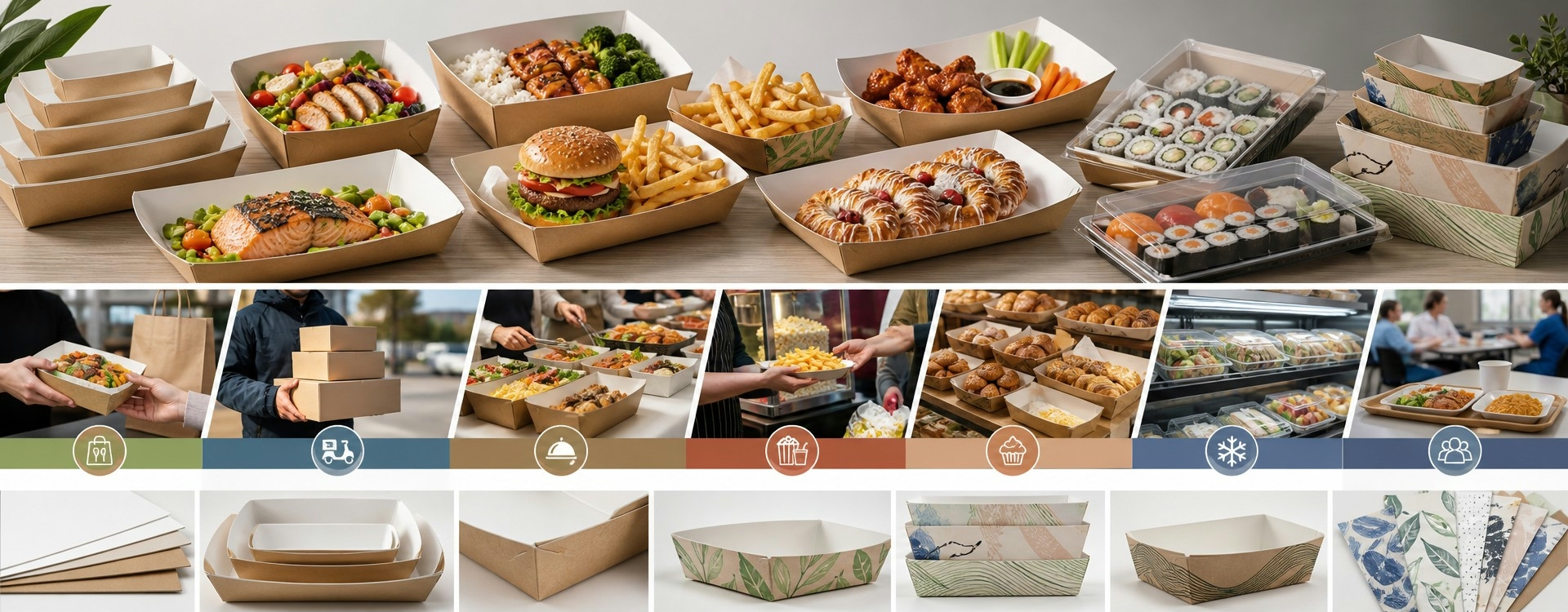
Paper Food Tray Industry Insights and Foodservice Packaging Trends

Global Market Overview

Growth in takeaway, delivery, catering, and ready-to-eat food is increasing demand for packaging that combines reliable handling with renewable material options.

At the same time, businesses and consumers are paying increasing attention to the environmental impact of disposable packaging. Traditional plastic trays, although widely used due to their durability and low cost, are facing growing pressure from sustainability expectations and regulatory changes.

Paperboard formats offer strong printability and broad structural choice, but buyers must distinguish an uncoated kraft tray from a polycoated paper food tray, corrugated food boat, baking tray, or lid-compatible retail system.

Key Industry Trends

Growth of Sustainable Food Packaging

Foodservice buyers increasingly consider renewable material sources, environmental positioning, and compliance requirements alongside purchasing cost.

Expansion of Takeaway and Food Delivery Applications

Takeaway and delivery growth creates demand for trays that maintain structure during transport across hot meals, prepared dishes, snacks, and ready-to-eat food.

Sustainability Is Becoming a Purchasing Requirement

Many buyers now evaluate packaging suppliers based on a combination of product performance, material sourcing, documentation support, and long-term sustainability capabilities.

Customized Packaging Supports Brand Development

Custom sizes, compartments, structures, and packaging help food businesses align practical requirements with brand presentation.

Customized paper food tray products allow companies to specify dimensions, board color, caliper, barrier, die line, print area, lid interface, pack count, labels, and cartons according to the food and distribution cycle.

Brand Differentiation Through Packaging

Custom structures and packaging formats can strengthen brand consistency while meeting the operational needs of restaurants, caterers, and food brands.

Regional Market Focus

Different regions prioritize different aspects of sustainable food packaging according to local regulations, consumer expectations, and business requirements.

Region

Recommended Verification Focus

North America

Food-contact requirements, labeling, material declarations, and local recovery conditions

Europe

Applicable food-contact rules, packaging requirements, environmental claims, and destination-country systems

Australia & New Zealand

Food-contact documentation, labeling, and local collection requirements

Middle East

Destination-market food-contact documents, labeling, climate and transport conditions

Asia

Market-specific food-contact, labeling, packing, and supply requirements

Understanding regional priorities helps buyers select paper food tray structures, documentation, and claim language that match local food-contact, labeling, packaging, and waste-management requirements.

What This Means for Buyers

Professional buyers increasingly evaluate suppliers based on:

  • Consistent product quality
  • Manufacturing capability
  • Flexible customization
  • Food-contact compliance support
  • Stable supply capacity
  • Sustainability documentation
  • Technical support

As the food packaging industry continues to evolve, successful sourcing depends on selecting products and suppliers that can support both current operational requirements and future market development.


Which Material Is Right for Your Business? 

Choose the material that best matches the food, operating environment, customer expectations, compliance needs, and long-term supply plan.

Choose Paper Food Tray Products If You: 

  • Need a printable, paper-based serving or presentation format.
  • Want kraft, white, printed, corrugated, or barrier-coated options.
  • Serve restaurants, takeaway, catering, concessions, retail, or institutional dining.
  • Require a square or rectangular takeout container, boat tray, flat tray, sushi tray, compatible PET lid, or a custom structure.
  • Can verify food fit, barrier, temperature, holding time, packing, and end-of-use claims by SKU.

Choose Plastic Food Trays If You: 

  • Require maximum moisture protection or long-term liquid containment.
  • Need transparent packaging for product visibility.
  • Operate applications where plastic packaging systems are already standardized.
  • Prioritize specific mechanical performance requirements.

Choose Molded Fiber Food Trays If You: 

  • Prefer a formed cavity, deeper compartment structure, or molded-fiber appearance.
  • Need stiffness and nesting characteristics provided by a verified molded-fiber SKU.
  • Can qualify its material formulation, barrier, lid, and destination-market documentation.

Choose PLA Food Trays If You: 

  • Need plant-based plastic alternatives.
  • Require transparent packaging appearance.
  • Operate in markets with suitable composting infrastructure and certification requirements.

Choose Aluminum Food Trays If You: 

  • Need verified oven performance or high heat transfer.
  • Require rigid formed trays for baking, reheating, or food processing.
  • Can manage metal compatibility, lids, labeling, and the relevant recovery route.


DAILYECO’s Complete Paper Food Tray Categories Will Cover All Your Sales and On-Site Application Needs

DAILYECO supplies PE-lined takeout food containers, kraft paper boat trays, kraft paper flat plate and tray formats, paper kraft sushi trays, square and rectangular PET takeout lids, anti-fog PET sushi tray lids, and custom paper food packaging.

Product selection begins with the food, portion, temperature, oil and moisture level, holding time, service channel, required lid, and packing plan. Final dimensions, paperboard, PE lining, lid pairing, printing, packing, MOQ, and availability are confirmed on the selected SKU specification. The current portfolio covers disposable paper trays for food across takeaway, events, catering, chilled retail display, and grab-and-go service, but each description must be connected to an approved product rather than treated as a universal format.

Paper Food Tray Product Catalog

Pictures

Product

Size

Material / Weight

Packing

CTN Size

CBM

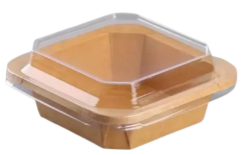
10oz/300ml Takeout Food Container With PE Lined

107 × 107 × 36 mm

280 gsm Kraft Paper + 18 gsm PE

50 pcs/bag; 6 bags/CTN; 300 pcs/CTN

41 × 28 × 32 cm

0.037 m³

33oz/400ml Takeout Food Container With PE Lined

123 × 123 × 36 mm

300 gsm Kraft Paper + 18 gsm PE

50 pcs/bag; 6 bags/CTN; 300 pcs/CTN

45.5 × 31 × 31 cm

0.044 m³

17oz/500ml Takeout Food Container With PE Lined

123 × 123 × 45 mm

300 gsm Kraft Paper + 18 gsm PE

50 pcs/bag; 6 bags/CTN; 300 pcs/CTN

45.5 × 31 × 31 cm

0.044 m³

22oz/650ml Takeout Food Container With PE Lined

134 × 134 × 47 mm

300 gsm Kraft Paper + 18 gsm PE

50 pcs/bag; 6 bags/CTN; 300 pcs/CTN

48.5 × 33 × 34.5 cm

0.055 m³

26oz/750ml Takeout Food Container With PE Lined

134 × 134 × 55 mm

300 gsm Kraft Paper + 18 gsm PE

50 pcs/bag; 6 bags/CTN; 300 pcs/CTN

48.5 × 33 × 36 cm

0.058 m³

34oz/1000ml Takeout Food Container With PE Lined

160 × 160 × 50 mm

300 gsm Kraft Paper + 18 gsm PE

50 pcs/bag; 6 bags/CTN; 300 pcs/CTN

56 × 38 × 35 cm

0.074 m³

40oz/1200ml Takeout Food Container With PE Lined

160 × 160 × 62 mm

300 gsm Kraft Paper + 18 gsm PE

50 pcs/bag; 6 bags/CTN; 300 pcs/CTN

56 × 38 × 39 cm

0.083 m³

40oz/1200ml Takeout Food Container With PE Lined

200 × 137 × 52 mm

300 gsm Kraft Paper + 18 gsm PE

50 pcs/bag; 6 bags/CTN; 300 pcs/CTN

50 × 46 × 31 cm

0.071 m³

Square PET Takeout Food Container Lid for 300ml

107 × 107 mm

6.5 g

50 pcs/bag; 6 bags/CTN; 300 pcs/CTN

39.5 × 30 × 28 cm

0.033 m³

Square PET Takeout Food Container Lid for 400ml/500ml

123 × 123 mm

9.5 g

50 pcs/bag; 6 bags/CTN; 300 pcs/CTN

46 × 28 × 31.5 cm

0.041 m³

Square PET Takeout Food Container Lid for 650ml/750ml

134 × 134 mm

10 g

50 pcs/bag; 6 bags/CTN; 300 pcs/CTN

48 × 25 × 32 cm

0.038 m³

Square PET Takeout Food Container Lid for 1000ml/1200ml

160 × 160 mm

14 g

50 pcs/bag; 6 bags/CTN; 300 pcs/CTN

55.5 × 24 × 38 cm

0.051 m³

Rectangle PET Takeout Food Container Lid for 1200ml

200 × 137 mm

16 g

50 pcs/bag; 6 bags/CTN; 300 pcs/CTN

46 × 21 × 39 cm

0.038 m³

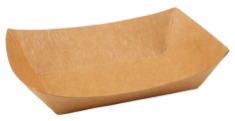
Kraft Paper Boat Tray With PE Lined

125 × 90 × 19 mm

230 gsm Kraft Paper + 18 gsm PE

250 pcs/bag; 4 bags/CTN; 1000 pcs/CTN

25 × 19 × 37 cm

0.018 m³

Kraft Paper Boat Tray With PE Lined

145 × 100 × 23 mm

230 gsm Kraft Paper + 18 gsm PE

250 pcs/bag; 4 bags/CTN; 1000 pcs/CTN

30 × 21 × 37 cm

0.023 m³

Kraft Paper Boat Tray With PE Lined

165 × 120 × 25 mm

230 gsm Kraft Paper + 18 gsm PE

250 pcs/bag; 4 bags/CTN; 1000 pcs/CTN

34 × 25 × 39 cm

0.033 m³

Kraft Paper Boat Tray With PE Lined

182 × 122 × 30 mm

260 gsm Kraft Paper + 18 gsm PE

125 pcs/bag; 4 bags/CTN; 500 pcs/CTN

27 × 19 × 40 cm

0.021 m³

Kraft Paper Boat Tray With PE Lined

227 × 153 × 35 mm

260 gsm Kraft Paper + 18 gsm PE

125 pcs/bag; 4 bags/CTN; 500 pcs/CTN

34.5 × 23 × 40 cm

0.032 m³

Kraft Paper Boat Tray With PE Lined

255 × 178 × 50 mm

260 gsm Kraft Paper + 18 gsm PE

125 pcs/bag; 4 bags/CTN; 500 pcs/CTN

35.5 × 25.5 × 52.5 cm

0.048 m³

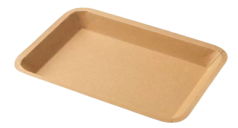
Kraft Paper Flat Plate and Tray With PE Lined

250 × 175 × 23 mm

300 gsm Kraft Paper + 18 gsm PE

150 pcs/bag; 4 bags/CTN; 600 pcs/CTN

52 × 36 × 22 cm

0.041 m³

Kraft Paper Flat Plate and Tray With PE Lined

205 × 167 × 23 mm

300 gsm Kraft Paper + 18 gsm PE

150 pcs/bag; 4 bags/CTN; 600 pcs/CTN

44 × 34 × 22 cm

0.033 m³

Kraft Paper Flat Plate and Tray With PE Lined

210 × 140 × 44 mm

300 gsm Kraft Paper + 18 gsm PE

150 pcs/bag; 4 bags/CTN; 600 pcs/CTN

44 × 30 × 33 cm

0.044 m³

Kraft Paper Flat Plate and Tray With PE Lined

175 × 148 × 25 mm

300 gsm Kraft Paper + 18 gsm PE

150 pcs/bag; 4 bags/CTN; 600 pcs/CTN

37 × 31 × 25 cm

0.029 m³

Kraft Paper Flat Plate and Tray With PE Lined

170 × 120 × 16 mm

300 gsm Kraft Paper + 18 gsm PE

150 pcs/bag; 4 bags/CTN; 600 pcs/CTN

37 × 27 × 20 cm

0.020 m³

Paper Kraft Sushi Tray With PE Lined

Top: 251 × 178 mm; Bottom: 231 × 158 mm; Height: 24 mm

300 gsm Kraft Paper + 18 gsm PE

100 pcs/bag; 2 bags/CTN; 200 pcs/CTN

49 × 28 × 38.5 cm

0.053 m³

Paper Kraft Sushi Tray With PE Lined

Top: 237 × 148 mm; Bottom: 217 × 128 mm; Height: 24 mm

300 gsm Kraft Paper + 18 gsm PE

100 pcs/bag; 4 bags/CTN; 400 pcs/CTN

65 × 26 × 47.5 cm

0.080 m³

Paper Kraft Sushi Tray With PE Lined

Top: 217 × 134 mm; Bottom: 197 × 114 mm; Height: 24 mm

300 gsm Kraft Paper + 18 gsm PE

100 pcs/bag; 4 bags/CTN; 400 pcs/CTN

50 × 31 × 46.5 cm

0.072 m³

Paper Kraft Sushi Tray With PE Lined

Top: 180 × 125 mm; Bottom: 160 × 105 mm; Height: 24 mm

300 gsm Kraft Paper + 18 gsm PE

150 pcs/bag; 4 bags/CTN; 600 pcs/CTN

48 × 38.5 × 40 cm

0.074 m³

Paper Kraft Sushi Tray With PE Lined

Top: 161 × 111 mm; Bottom: 141 × 91 mm; Height: 24 mm

300 gsm Kraft Paper + 18 gsm PE

150 pcs/bag; 4 bags/CTN; 600 pcs/CTN

48 × 36 × 36.5 cm

0.063 m³

Paper Kraft Sushi Tray With PE Lined

Top: 217 × 87 mm; Bottom: 197 × 67 mm; Height: 24 mm

300 gsm Kraft Paper + 18 gsm PE

150 pcs/bag; 4 bags/CTN; 600 pcs/CTN

48 × 29 × 45.5 cm

0.063 m³

Paper Kraft Sushi Tray With PE Lined

Top: 156 × 87 mm; Bottom: 136 × 67 mm; Height: 24 mm

300 gsm Kraft Paper + 18 gsm PE

100 pcs/bag; 8 bags/CTN; 800 pcs/CTN

47.5 × 33.5 × 39 cm

0.062 m³

Paper Kraft Sushi Tray With PE Lined

Top: 135 × 75 mm; Bottom: 115 × 55 mm; Height: 24 mm

300 gsm Kraft Paper + 18 gsm PE

100 pcs/bag; 8 bags/CTN; 800 pcs/CTN

49 × 29 × 33.5 cm

0.048 m³

Anti-Fog PET Sushi Tray Lid

Top: 251 × 178 mm; Height: 32 mm

PET

100 pcs/bag; 2 bags/CTN; 200 pcs/CTN

53 × 28 × 38.5 cm

0.057 m³

Anti-Fog PET Sushi Tray Lid

Top: 237 × 148 mm; Height: 32 mm

PET

100 pcs/bag; 4 bags/CTN; 400 pcs/CTN

64 × 29 × 50 cm

0.093 m³

Anti-Fog PET Sushi Tray Lid

Top: 217 × 134 mm; Height: 32 mm

PET

100 pcs/bag; 4 bags/CTN; 400 pcs/CTN

59 × 38 × 47.5 cm

0.106 m³

Anti-Fog PET Sushi Tray Lid

Top: 180 × 125 mm; Height: 32 mm

PET

150 pcs/bag; 4 bags/CTN; 600 pcs/CTN

55 × 32 × 58.5 cm

0.103 m³

Anti-Fog PET Sushi Tray Lid

Top: 161 × 111 mm; Height: 32 mm

PET

150 pcs/bag; 4 bags/CTN; 600 pcs/CTN

51 × 38 × 52 cm

0.101 m³

Anti-Fog PET Sushi Tray Lid

Top: 217 × 87 mm; Height: 32 mm

PET

150 pcs/bag; 4 bags/CTN; 600 pcs/CTN

57.5 × 34.5 × 46 cm

0.091 m³

Anti-Fog PET Sushi Tray Lid

Top: 156 × 87 mm; Height: 32 mm

PET

100 pcs/bag; 8 bags/CTN; 800 pcs/CTN

66.5 × 34.5 × 38.5 cm

0.088 m³

Anti-Fog PET Sushi Tray Lid

Top: 135 × 75 mm; Height: 32 mm

PET

100 pcs/bag; 8 bags/CTN; 800 pcs/CTN

58 × 36.5 × 35.5 cm

0.075 m³


Customization Options

OEM and ODM options can cover custom dimensions, depth, sidewall profile, compartments, paperboard grade, barrier, die line, printing, lid interface, packing, labels, and private-label cartons.

Customization Option

Description

Tray Size Customization

Custom dimensions can be developed according to food volume, serving requirements, and packaging specifications

Tray Structure Design

Supports different structures, including flat trays, deep trays, compartment trays, and specialty food trays

Compartment Design

Multi-compartment structures can be customized for separated meals, combination foods, and catering applications

Die-Line and Tooling Development

New die lines and forming tools can be developed for customers requiring unique tray shapes or product designs

Surface Requirements

Different surface finishes can be developed according to application requirements

Packaging Design

Customized packing methods and carton solutions are available for different markets

Branding Support

Supports private label and customized packaging projects for food brands and distributors

DAILYECO helps food brands and packaging buyers turn an application brief into a controlled drawing, material specification, sample, artwork file, packing standard, and repeat-order reference.

Paper Food Tray Size Guide 

A paper food tray is selected by usable food area, top and bottom dimensions, depth, portion weight, food height, barrier, rim or sidewall design, nesting, and any lid or secondary package. Confirm actual dimensions and tolerances from the approved drawing rather than relying on names such as small, medium, or large.

Product Category

Selection Reference

Recommended Applications

Square PE-Lined Takeout Food Containers

300–1200 ml; 107 × 107 × 36 mm to 160 × 160 × 62 mm

Prepared meals, restaurant takeaway, delivery, and grab-and-go service

Rectangular PE-Lined Takeout Food Container

1200 ml; 200 × 137 × 52 mm

Large ready meals, combination foods, and delivery orders

Kraft Paper Boat Trays

125 × 90 × 19 mm to 255 × 178 × 50 mm

Snacks, sides, street food, concessions, events, and takeaway

Kraft Paper Flat Plate and Trays

170 × 120 × 16 mm to 250 × 175 × 23 mm

Catering, bakery, dessert, sampling, and food presentation

Paper Kraft Sushi Trays

Top: 135 × 75 mm to 251 × 178 mm; Height: 24 mm

Sushi, chilled foods, supermarket display, and retail grab-and-go

Square and Rectangular PET Takeout Lids

107 × 107 mm to 200 × 137 mm

Compatible takeout containers; verify the exact base-and-lid pairing

Anti-Fog PET Sushi Tray Lids

Top: 135 × 75 mm to 251 × 178 mm; Height: 32 mm

Compatible sushi trays for chilled retail display and transport

Get Latest Catalog

What Is the Application of Paper Food Tray? 

Paper trays for food support different service channels, from restaurant takeaway and bistro service to delivery, event catering, snack bars, exhibitions, bakery production, supermarket display, concessions, and institutional dining. The correct structure changes with the food and operating cycle.

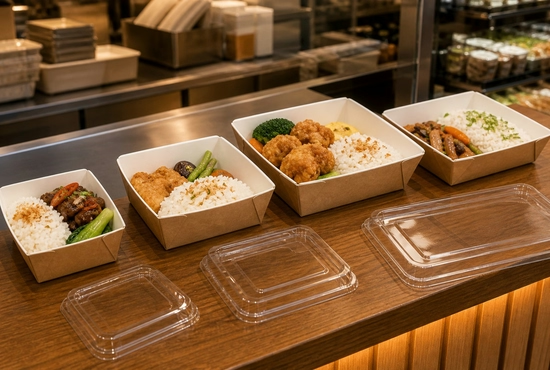
Application-led selection helps buyers distinguish PE-lined takeout food containers for prepared meals from paper boat trays for snacks and concessions, flat paper trays for catering or presentation, and paper sushi trays with compatible anti-fog PET lids for chilled retail display.

Paper Food Tray for Restaurant Takeaway Food Packaging

Restaurant Takeaway Food Service 

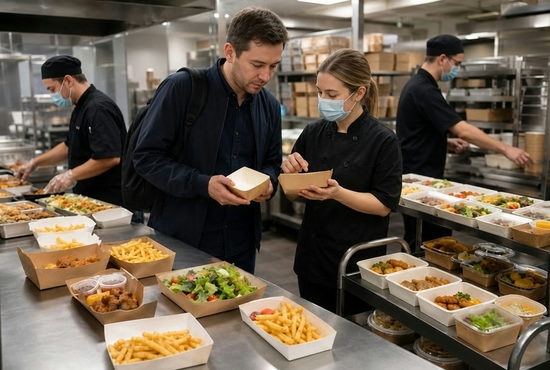
Takeaway operators need stackable trays that support the selected meal and remain stable during handling and transportation.

Paper food tray products can support daily restaurant meals, combination dishes, and takeaway food by providing stable structures and a natural paper-based presentation, subject to verification for the selected food and service conditions.

Typical Requirements

  • Suitable food capacity
  • Stable structure during transportation
  • Easy stacking and storage
  • Professional food presentation

Recommended Products

  • 34oz/1000ml PE-Lined Takeout Food Container– 160 × 160 × 50 mm
  • 40oz/1200ml PE-Lined Takeout Food Container– 160 × 160 × 62 mm
  • 40oz/1200ml PE-Lined Rectangular Takeout Food Container – 200 × 137 × 52 mm

Catering and Event Food Service

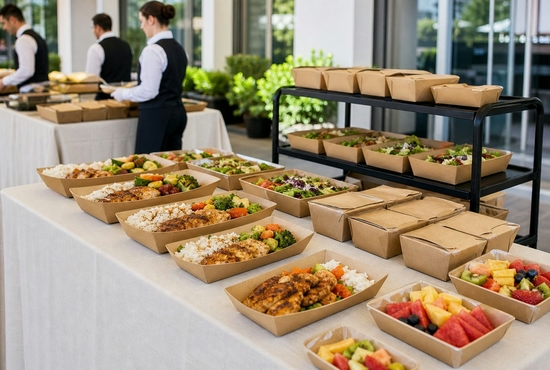
Catering operators can select deep kraft paper boat trays, flat paper trays, or large-capacity PE-lined takeout food containers according to the menu, portion, serving sequence, and transport method.

For catered events, the selected paper food tray should balance usable area, depth, grease resistance, stacking, carrying stability, and pack efficiency. Final suitability depends on the food, holding time, and service conditions.

Typical Requirements

  • Large-capacity or deep tray formats
  • Large serving capacity
  • Efficient meal organization
  • Easy transportation

Recommended Products

  • PE-Lined Kraft Paper Boat Tray– 255 × 178 × 50 mm
  • PE-Lined Kraft Paper Flat Plate and Tray– 250 × 175 × 23 mm
  • 40oz/1200ml PE-Lined Rectangular Takeout Food Container – 200 × 137 × 52 mm
Paper Food Tray for Catering and Event Food Service
PE-Lined Paper Food Tray for Ready-to-Eat Meal Packaging

Ready-to-Eat Meal Packaging

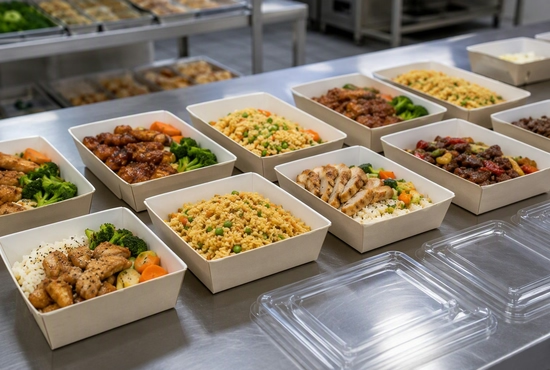
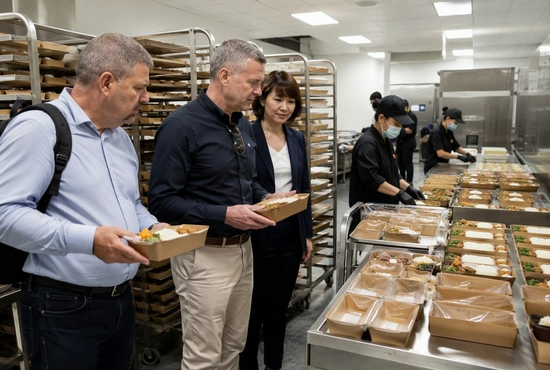
Prepared-meal producers use consistent tray formats to support portion control, storage efficiency, and large-volume packing.

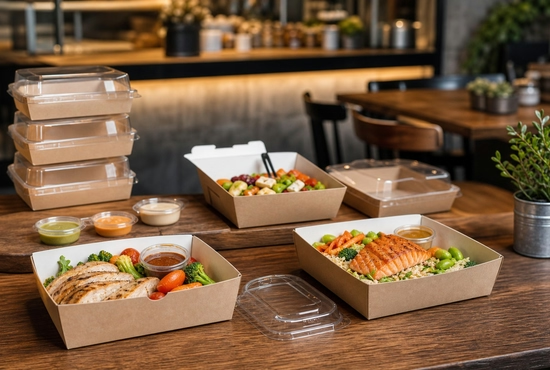
PE-lined takeout food containers support prepared meals for central kitchens, workplace dining, university foodservice, and recurring grab-and-go programs. Select the capacity, base dimensions, lid pairing, barrier, stacking, and holding time for the approved menu.

Typical Requirements
•  Consistent product dimensions
•  Suitable capacity for individual meals
•  Organized portion presentation
•  Compatibility with the selected PET lid
•  Stable stacking and transportation performance

Recommended Products

  • 22oz/650ml PE-Lined Takeout Food Container– 134 × 134 × 47 mm
  • 26oz/750ml PE-Lined Takeout Food Container– 134 × 134 × 55 mm
  • 34oz/1000ml PE-Lined Takeout Food Container– 160 × 160 × 50 mm

Bakery and Dessert Packaging 

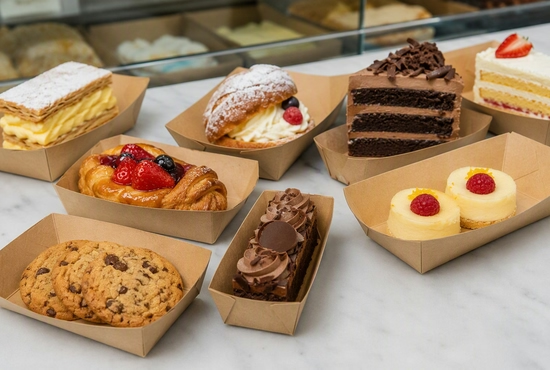
Small paperboard formats provide lightweight presentation for cakes, pastries, desserts, and other bakery products.

Select the tray size and depth according to the product footprint, portion weight, oil or moisture level, display method, and required holding time.

Typical Requirements

  • Clean product presentation
  • Lightweight structure
  • Suitable size options
  • Retail display compatibility

Recommended Products

  • PE-Lined Kraft Paper Flat Plate and Tray– 170 × 120 × 16 mm
  • PE-Lined Kraft Paper Boat Tray– 145 × 100 × 23 mm
  • PE-Lined Paper Kraft Sushi Tray– Top: 161 × 111 mm; Bottom: 141 × 91 mm; Height: 24 mm
Paper Food Tray for Bakery and Dessert Packaging
Paper Sushi Trays with PET Lids for Retail Food Packaging

Retail Food Packaging

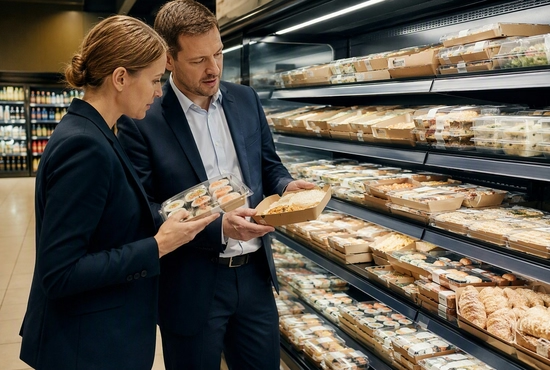
Retail users prioritize consistent dimensions, dependable supply, shelf presentation, and suitable structures for prepared and specialty foods.

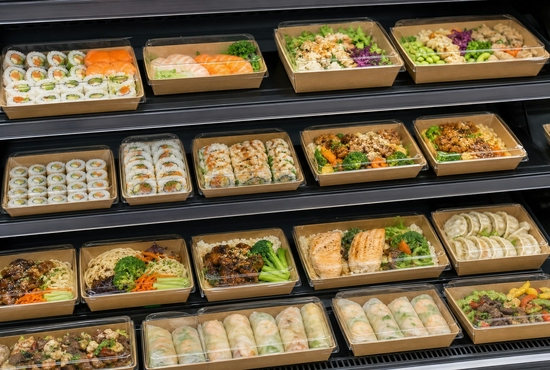
Paper kraft sushi trays with matching anti-fog PET lids support consistent dimensions and clear presentation for chilled prepared food, fresh food, and specialty retail displays.

Typical Requirements

  • Stable supply capability
  • Professional product appearance
  • Suitable retail presentation
  • Consistent product quality

Recommended Products

  • PE-Lined Paper Kraft Sushi Tray+ Anti-Fog PET Lid – Top: 251 × 178 mm
  • PE-Lined Paper Kraft Sushi Tray+ Anti-Fog PET Lid – Top: 237 × 148 mm
  • PE-Lined Paper Kraft Sushi Tray+ Anti-Fog PET Lid – Top: 217 × 134 mm

Snack Bar and Quick-Service Counter

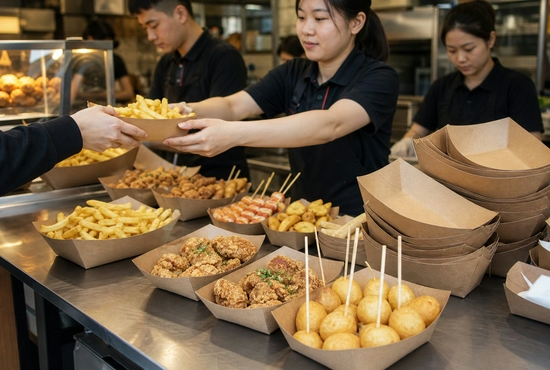
Snack bars need lightweight and easy-to-handle packaging for serving fries, fried snacks, pastries, desserts, and other small portions. Open paper food tray formats allow staff to fill and serve food efficiently during busy service periods.

The selected tray should match the food portion, oil level, holding time, and customer-handling requirements.

Typical Requirements

  • Fast filling and serving
  • Suitable capacity for snacks and side dishes
  • Oil and grease resistance
  • Easy stacking and storage
  • Convenient customer handling

Recommended Products

  • PE-Lined Kraft Paper Boat Tray– 125 × 90 × 19 mm
  • PE-Lined Kraft Paper Boat Tray– 145 × 100 × 23 mm
  • PE-Lined Kraft Paper Boat Tray– 165 × 120 × 25 mm
Paper Food Tray for Snack Bars and Quick-Service Counters
PE-Lined Paper Food Tray for Bistro Dining and Takeaway

Bistro Dining and Takeaway

Bistros often require packaging that supports both casual dine-in presentation and takeaway service. The selected paper food tray should match the portion, food temperature, sauce or moisture level, holding time, and transportation method.

PE-lined formats can help maintain structural stability during normal meal service, subject to verification for the selected food and operating conditions.

Typical Requirements

  • Suitable capacity for individual meals
  • Stable structure for dine-in and takeaway service
  • Compatibility with the selected lid
  • Resistance to oil, sauce, and short-term moisture exposure
  • Consistent presentation across different menu items

Recommended Products

  • 17oz/500ml PE-Lined Takeout Food Container– 123 × 123 × 45 mm
  • 22oz/650ml PE-Lined Takeout Food Container– 134 × 134 × 47 mm
  • 26oz/750ml PE-Lined Takeout Food Container– 134 × 134 × 55 mm

Exhibition and Trade Show Catering 

Exhibitions and trade shows require food packaging that supports rapid distribution, controlled portions, convenient carrying, and efficient waste collection. Open paper food tray formats are suitable for samples and snacks, while deeper formats can accommodate larger portions served at catering stations.

Tray dimensions, depth, grease resistance, stacking, and pack quantity should be selected according to expected visitor traffic and the event menu.

Typical Requirements

  • Efficient service during periods of high visitor traffic
  • Convenient one-hand carrying
  • Suitable formats for samples, snacks, and individual portions
  • Compact nesting and storage before use
  • Consistent appearance for branded event catering

Recommended Products

  • PE-Lined Kraft Paper Boat Tray– 182 × 122 × 30 mm
  • PE-Lined Kraft Paper Boat Tray– 227 × 153 × 35 mm
  • PE-Lined Kraft Paper Flat Plate and Tray– 175 × 148 × 25 mm
Paper Food Tray for Exhibitions and Trade Show Catering

Paper Food Tray vs Other Food Packaging Materials

Compare materials according to food protection, heat and moisture requirements, sustainability goals, presentation, and total procurement cost.

Paper Food Tray vs Plastic Food Tray

Factor

Paper Food Tray

Plastic Food Tray

Primary Material

Kraft, white, corrugated, coated, laminated, or other specified paperboard

PET, PP, PS, or other specified polymer

Environmental Review

Assess fiber source, recycled content, barrier, food residue, and local paper recovery

Assess resin, recycled content, component design, labeling, and local plastic recovery

Structural Performance

Depends on board, geometry, folds, seams, food load, and handling

Depends on polymer, thickness, geometry, temperature, and handling

Heat Performance

Use only within SKU-specific written temperature and time limits

Depends on resin and product-specific temperature limits

Food Presentation

Kraft, white, printed, corrugated, or specialty paper appearance

Opaque, colored, or transparent appearance depending on resin

Oil & Grease Resistance

Depends on barrier, edges, seams, food, temperature, and time

Often strong but still product- and condition-specific

Customization

Die line, board, barrier, printing, compartments, lids, and packs

Tooling, resin, color, geometry, lids, labels, and packs

Best-Fit Use

Printable paper-based presentation for qualified service conditions

Moisture resistance, visibility, closure, or rigid handling where verified

Key Limitation

Barrier, seams, heat, and end-of-use claims require validation

Material strategy, heat limits, and recovery route require validation

Plastic trays often provide strong moisture resistance and integrated transparent systems, while a paper food tray offers kraft, white, printed, or corrugated presentation. Compare the complete base, lid, barrier, food, use time, recovery route, and landed cost rather than material names alone.

Paper Food Tray vs Molded Fiber Food Tray

Factor

Paper Food Tray

Molded Fiber Food Tray

Primary Structure

Die-cut, folded, formed, or corrugated paperboard

Formed fiber cavity or clamshell

Surface & Printing

Broad kraft, white, and printed surfaces

Usually opaque with more limited direct printing

Structural Stability

Depends on board, geometry, folds, seams, and load

Depends on fiber formulation, wall profile, and product design

Moisture Resistance

Depends on barrier, edges, seams, food, and time

Depends on fiber formulation, barrier, food, and time

Oil Resistance

Barrier-dependent and application-specific

Formulation- and barrier-dependent

Presentation

Strong printability and multiple folded formats

Natural formed-fiber texture and cavity design

Customization

Die line, printing, board, barrier, components, and packs

Mold, fiber formulation, cavities, and components

Typical Applications

Snacks, hot dogs, bakery items, takeaway meals, catering, concessions, and retail food presentation

Prepared meals, compartment meals, clamshell packaging, produce, and institutional foodservice

Best-Fit Use

Lightweight and printable food packaging requiring flexible die-cut structures, multiple sizes, and custom branding

Formed food packaging requiring molded cavities, compartment structures, or a natural fiber appearance

Molded fiber can provide a formed cavity or compartment structure; converted paperboard is often selected for lightweight formats, printability, folded geometry, and efficient customization. Both require product-specific performance and food-contact confirmation.

Paper Food Tray vs PLA Food Tray

Factor

Paper Food Tray

PLA Food Tray

Primary Material

Specified paperboard with optional coating or lamination

PLA or a specified PLA-based material system

Appearance

Usually opaque; kraft, white, colored, corrugated, or printed

Can provide a transparent or plastic-like appearance

Environmental Review

Evaluate board, barrier, food residue, certification, and local system

Evaluate bio-based content, certification, heat limits, and composting infrastructure

Heat Performance

Varies by board, barrier, adhesive, ink, and SKU instructions

Often temperature-sensitive; confirm exact product limits

Transparency

Opaque unless paired with a window or separate clear component

Transparent options may be available

Printing & Branding

Broad direct-print, sleeve, label, and carton opportunities

Printing and labels depend on the product and process

Compostability

Not universal; requires product-specific evidence and appropriate processing

Not universal; requires certification and appropriate processing

Best-Fit Use

Printed serving, takeaway, bakery, concession, and retail formats

Qualified cold-food display or programs needing a clear bio-based component

Paperboard is generally opaque and printable, while PLA can provide a transparent plastic-like appearance. Heat limits, compostability claims, component separation, and local infrastructure must be verified for the selected product.

Paper Food Tray vs Aluminum Food Tray

Factor

Paper Food Tray

Aluminum Food Tray

Primary Material

Specified paperboard with optional barrier or components

Formed aluminum

Material Review

Board source, barrier, ink, adhesive, food residue, and paper recovery

Alloy, coating, food compatibility, contamination, and metal recovery

Appearance

Kraft, white, corrugated, colored, or printed paperboard

Metallic formed surface

Microwave Compatibility

Only when the exact complete SKU has suitable written instructions

Generally not used in a microwave unless explicitly approved by the appliance and packaging instructions

Heat Performance

Varies widely; some baking formats have qualified limits

Often selected for heat transfer and oven uses, subject to product instructions

Weight & Handling

Lightweight; rigidity depends on board and structure

Lightweight metal; may deform depending on gauge and load

Environmental Review

Assess fiber, barrier, food residue, and local collection

Assess contamination, collection, and local aluminum recycling

Brand Presentation

Strong printing and natural or premium paper appearance

Functional metallic presentation with lids or labels

Best-Fit Use

Serving, takeaway, bakery, concessions, catering, and retail

Baking, reheating, processing, storage, and high-heat programs where verified

Aluminum suits high-heat processing, while paperboard is positioned for renewable takeaway and foodservice programs.

Paper Food Tray vs Foam Food Tray

Factor

Paper Food Tray

Foam Food Tray

Primary Material

Specified paperboard with optional barrier

Expanded polystyrene or another specified foam material

Environmental Review

Assess board, barrier, food residue, labeling, and local recovery

Assess resin, restrictions, litter risk, and local recovery options

Customer Presentation

Kraft, white, colored, corrugated, or printed paper appearance

Lightweight foam appearance

Structural Performance

Depends on board, folds, seams, geometry, and load

Lightweight cushioning; performance depends on density and geometry

Heat Performance

Use within SKU-specific conditions and instructions

Temperature limits and food compatibility must be verified

Branding

Strong direct-print, sleeve, label, and carton options

Branding normally relies on labels or secondary packaging

Market Considerations

Subject to paper sourcing, coating, and recovery requirements

Subject to local restrictions and material-management policies

Best-Fit Use

Qualified takeaway, concessions, bakery, catering, and retail

Cost- and cushioning-focused applications where the material is permitted

Paperboard formats provide stronger printing and paper-based presentation opportunities, while foam may remain suitable for lightweight applications where the material is permitted. Environmental suitability must be evaluated against the complete product and local recovery system.

Who Usually Buys Paper Food Tray?

The main buyers are distributors, restaurant groups, caterers, retail food brands, private-label companies, and hospitality procurement teams, each with different priorities for performance, supply, and customization.

Foodservice Distributor Managing Paper Food Tray Inventory

Foodservice Distributors

Foodservice distributors buy in bulk and prioritize broad product coverage, competitive pricing, consistent quality, and reliable replenishment for downstream customers.

Restaurant Chains and Food Brands 

Restaurant groups and food brands need repeatable appearance and performance across locations, supported by customization and dependable long-term supply.

Restaurant Brand Team Evaluating Paper Food Tray Packaging
Catering Company Using Paper Food Tray for Event Food Service

Catering Companies and Event Service Providers

Catering companies prioritize meal separation, high-volume preparation, transport efficiency, and organized presentation.

Retail Food Brands and Supermarkets

Retail food brands and supermarkets evaluate shelf presentation, product consistency, sustainability positioning, and large-scale supply.

Retail Food Brand Using Paper Food Tray Packaging
Private Label Company Developing Custom Paper Food Tray

Private Label Packaging Companies

Private-label buyers require flexible development, confidential production support, consistent quality, and dependable manufacturing.

Hospitality Procurement Companies 

Hospitality groups prioritize professional presentation, food-contact documentation, sustainability requirements, and reliable service.

Hospitality Procurement Team Evaluating Paper Food Tray Solutions

Is Paper Food Tray Right for Your Application? 

Use the following application guide to match food type, transport requirements, serving environment, and sustainability objectives with the appropriate tray.

Application

Recommended

Restaurant Takeaway Food

Catering Service

Event Food Packaging

Food Delivery

Ready-to-Eat Meals

Meal Preparation Services

Retail Prepared Food

Bakery and Dessert Packaging

Sustainable Food Brands

Private Label Food Packaging

Long-Term Liquid Storage

Industrial Chemical Packaging

Non-Food Industrial Applications

A standard open paper tray is not intended for every requirement. Long-term liquid storage, airtight sealing, extreme heat, extended condensation, heavy industrial loads, or universal recycling and composting claims require a purpose-designed and verified packaging system.


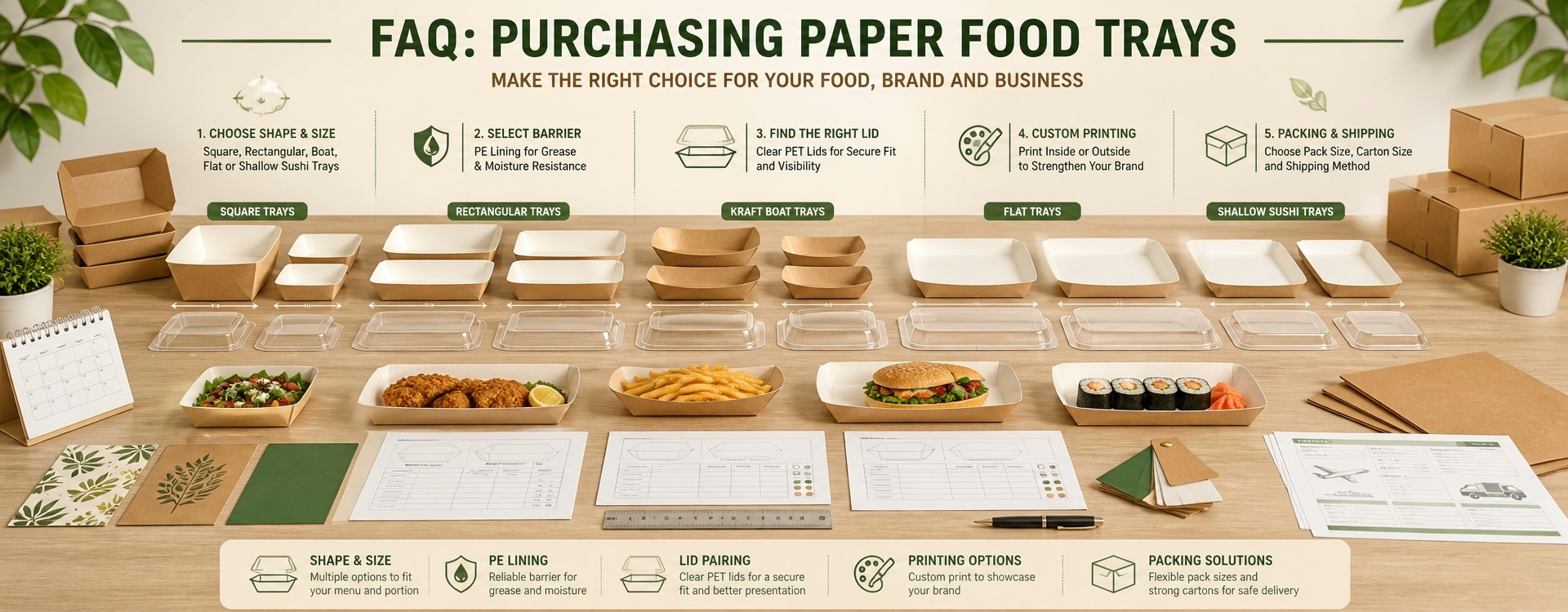
Key Buyer Questions Before Purchasing Paper Food Tray

Before ordering, evaluate application fit, performance, customization, documentation, MOQ, and supply reliability.

What Types of Food Can Be Used with a Paper Food Tray?

Depending on the SKU, applications can include prepared meals, snacks, fries, street food, bakery items, desserts, sushi, chilled foods, fruit, catering food, and grab-and-go products. The exact tray and lid must be selected for the food’s temperature, oil, moisture, acidity, weight, contact time, display, and transport conditions.

Is a Paper Food Tray Suitable for Hot Food?

Selected trays may be suitable for defined hot-food conditions, but paperboard, barrier, adhesive, ink, food type, temperature, and holding time vary. Microwave, oven, or hot-holding suitability must never be assumed without SKU-specific written instructions or supporting evidence.

Can a Paper Food Tray Be Customized?

Yes. Subject to feasibility and MOQ, buyers can customize dimensions, depth, paperboard, barrier, die line, sidewalls, compartments, printing, lids, packing, labels, and private-label cartons.

Customization options may include:

  • Tray dimensions and usable food area
  • Compartment, rim, sidewall, and fold structures
  • Paperboard, barrier, die-line, printing, and artwork
  • Lid, liner, sleeve, label, packing, and carton solutions
  • Private-label identification and change-control requirements

What Certifications or Documents Are Available for Paper Food Tray?

Available documents depend on the exact paperboard, coating or lamination, ink, adhesive, lid, food type, temperature, contact time, SKU, and destination market. Use the separate Compliance & Certification Support page to request documentation that matches the selected product and intended claim.

What Is the Minimum Order Quantity for Paper Food Tray?

MOQ varies by product, tooling, packaging, customization, and order volume; confirm the requirement for the selected standard or custom SKU.

How Can Buyers Ensure Stable Supply?

Assess production capacity, quality controls, scheduling, communication, and delivery performance before establishing a repeat-order program.
Frequently Asked Questions About Paper Food Tray


When May Paper Food Tray Not Be the Best Choice?

These trays suit many short-term foodservice uses but are not ideal for every packaging requirement.

Applications Requiring Long-Term Liquid Storage

For extended liquid containment, use a packaging format specifically designed and verified for long-term moisture resistance.

Applications Requiring Transparent Packaging

Where full visibility is essential, a transparent plastic or qualified PLA base-and-lid system may be more suitable than an opaque paperboard tray.

Applications Requiring Extremely High Mechanical Strength

Applications involving exceptional impact, heavy loads, or specialized industrial handling require application-specific performance verification.

Applications Without Suitable Disposal Infrastructure

Environmental outcomes depend on the board, barrier, food residue, component separation, certification or evidence, and collection or processing infrastructure available in the destination market.

Highly Cost-Sensitive Applications Without Sustainability Requirements

Where the lowest initial price is the only priority, conventional materials may cost less upfront; buyers should also consider performance, brand, and market requirements.
How Is Paper Food Tray Manufactured? 

Production converts approved paperboard into finished food trays through material specification, printing or surface preparation, die cutting, creasing, forming, inspection, packing, and export preparation.

Manufacturing Process Overview 

The process must control paperboard identity, caliper, barrier, artwork, die-line revision, crease position, folds, seams, dimensions, nesting, food-contact surfaces, pack count, and carton condition.

Paperboard and Barrier Specification for Paper Food Tray Manufacturing

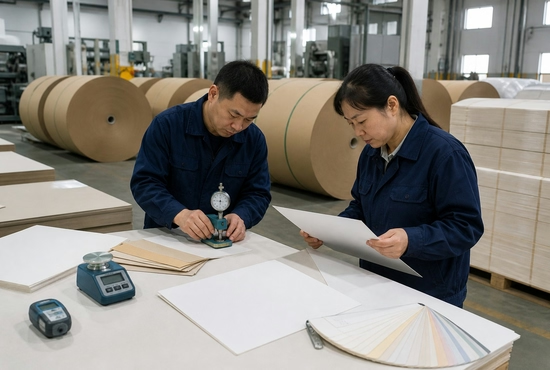
Step 1: Paperboard and Barrier Specification

The manufacturer confirms the kraft or white paperboard grade, basis weight or caliper, stiffness, fiber-source information, food-contact surface, coating or lamination, and intended food and service conditions.

Key controlled inputs include:

  • Paperboard grade, color, basis weight, and stiffness
  • Coating, lamination, ink, adhesive, and food-contact scope
  • Supplier records, batch identity, and change control
  • Destination-market and application requirements

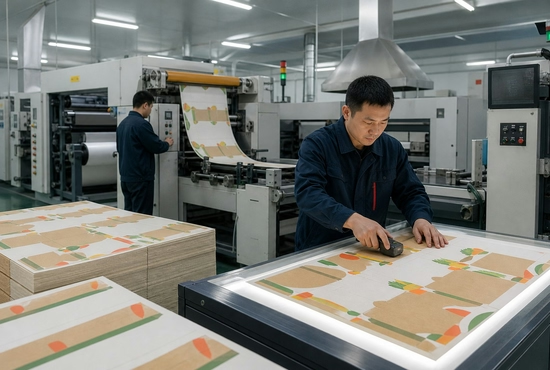
Step 2: Printing and Surface Preparation

Plain stock may proceed directly to converting, while printed trays require approved artwork, print method, color target, registration tolerance, rub resistance, odor control, and verification of the intended food-contact design.

Printing and surface controls may include:

  • Artwork version, color target, and print registration
  • Ink, coating, odor, rub resistance, and cure condition
  • Food-contact and non-food-contact print areas
  • Surface appearance and repeat-order consistency
Printing and Surface Preparation for Paper Food Tray
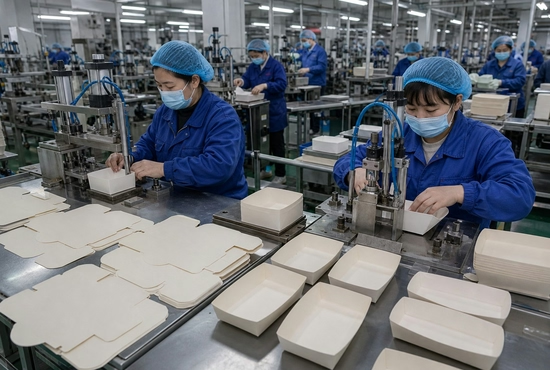
Die Cutting and Creasing Process for Paper Food Tray

Step 3: Die Cutting and Creasing

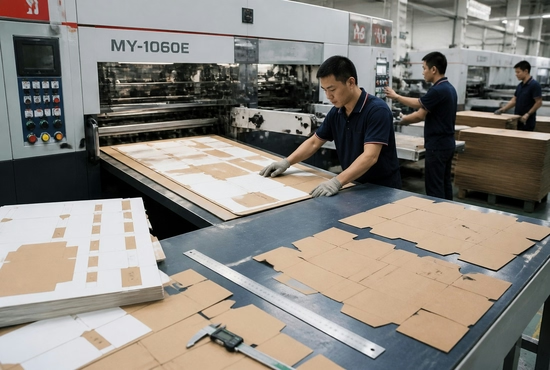
Approved printed or plain paperboard sheets are die cut according to the controlled product drawing and die line. Creasing creates accurate folding positions for the sidewalls, corners, rims, and seams while maintaining consistent blank dimensions. Cutting edges, crease depth, slot positions, and dimensional tolerances are inspected before the blanks proceed to forming.

For customized paper food tray products, the die line and physical sample should be approved before commercial tooling and mass production.

Step 4: Tray Forming and Structure Assembly

Die-cut and creased blanks are transferred to the forming equipment, where they are folded into the approved tray structure. Depending on the specified design, the corners and seams are folded, locked, glued, or otherwise secured using the approved production method.

Forming parameters are controlled to maintain consistent dimensions, depth, sidewall angles, rim profiles, nesting performance, and structural stability. Finished trays are then checked before being transferred to the quality inspection stage.

Forming and Structure Assembly Process for Paper Food Tray
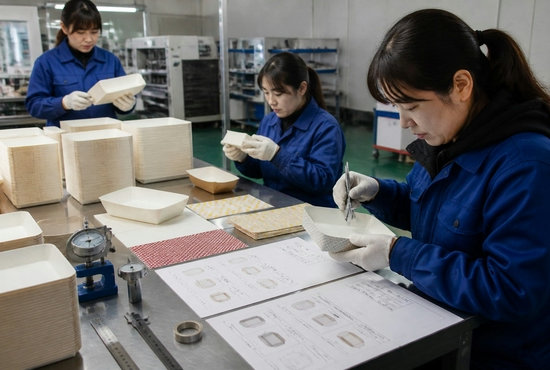
Quality Inspection of Paper Food Tray Products

Step 5: Quality Inspection

Finished trays are checked against the approved drawing, material specification, artwork, physical sample, packing standard, and agreed acceptance criteria.

Typical inspection items include:

  • Top, bottom, usable-area, depth, and nesting dimensions
  • Folds, seams, corners, rims, compartments, and structural condition
  • Print registration, color, surface appearance, odor, and cleanliness
  • Barrier, food-contact surface, and application checks where specified
  • Pack count, labels, shipping marks, and carton condition

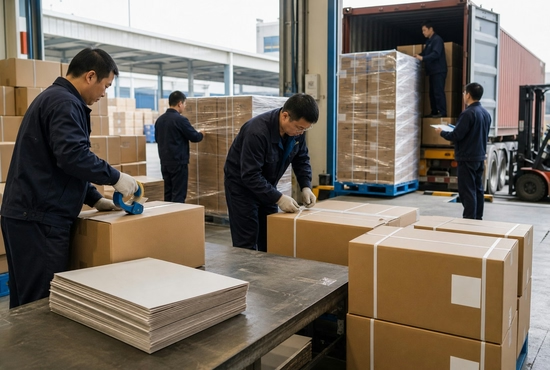
Step 6: Packaging and Delivery

Approved products are nested or packed as specified and protected in master cartons. Packing must balance product protection, separation during service, warehouse handling, freight efficiency, labeling, and container utilization.

Professional manufacturers consider:

  • Carton protection
  • Warehouse handling
  • Container loading efficiency
  • International transportation requirements
Export Packaging and Delivery of Paper Food Tray Products

How to Choose the Right Paper Food Tray Manufacturer?

Evaluate a supplier by its production experience, product range, customization, technical capability, documentation support, communication, and long-term supply reliability.

A professional manufacturer should provide not only products but also stable production capability, customization support, quality management, and reliable communication throughout the cooperation process.

When evaluating a supplier, buyers should consider manufacturing experience, product range, technical capability, compliance support, and long-term supply reliability.

Manufacturing Capability 

Confirm that the manufacturer has suitable paperboard equipment, quality controls, export experience, and capacity for the required order volume.

Buyers should evaluate:

  • Production equipment
  • Manufacturing experience
  • Quality control systems
  • Export capability
  • Supply stability

A reliable production foundation helps ensure consistent product quality for long-term business cooperation.

Product Range and Customization Services

A capable supplier should offer multiple sizes, shapes, compartments, die lines and forming tools, packaging options, and private-label support.

Customization capability may include:

  • New die-line and tooling development
  • Size adjustment
  • Structure optimization
  • Packaging customization
  • Private label support

Compliance & Documentation Support

Confirm that the supplier can provide material information, product specifications, food-contact documentation, and applicable test reports for the destination market.

This may include:

  • Material information
  • Food-contact documentation
  • Test reports for applicable products
  • Product specifications

Supply Reliability and Communication

Repeat purchasing depends on clear schedules, order management, quality feedback, export coordination, and responsive after-sales communication.

Professional manufacturers should support:

  • Clear production schedules
  • Order management
  • Quality feedback handling
  • Export coordination
  • After-sales communication


Pre-Purchasing Checklist for Buyers of Paper Food Tray 

Before placing an order for paper food tray products, buyers should review the following checklist to ensure the selected packaging solution meets product requirements, market expectations, and supply-chain needs.

□ Selected Paper Food Tray Category and Target SKU
□ Food Type, Portion, Temperature, Oil / Moisture Level, and Holding Time
□ Service Channel (Dine-In / Takeaway / Delivery / Catering / Retail / Institutional)
□ Top, Bottom, Usable-Area, Depth, and Food-Clearance Dimensions
□ Kraft or White Paperboard, Basis Weight / Caliper, Stiffness, and Fiber Information
□ Coating, Lamination, Liner, Ink, Adhesive, and Food-Contact Surface
□ Heat, Chilled, Freezer, Grease, Moisture, or Baking Requirements
□ Lid, Sleeve, Liner, Label, Bag, or Overbox Compatibility
□ Food-Contact Documents for the Exact SKU and Destination Market
□ Evidence and Qualified Wording for Environmental or Certification Claims
□ Approved Drawing, Physical Sample, Artwork, Color Standard, and Tolerances
□ Pack Count, Carton Dimensions, Shipping Marks, Pallet, and Container Plan
□ MOQ, Annual Forecast, Tooling, Development Schedule, and Production Lead Time
□ Inspection Method, Acceptance Criteria, Change Control, and Contract Terms

Completing this checklist before production begins helps reduce communication errors and procurement risks.

For businesses sourcing paper food tray solutions, confirming product specifications, application requirements, customization needs, and market expectations in advance allows manufacturers to provide more accurate recommendations and develop suitable packaging solutions.


Choose DAILYECO to Be Your Professional Paper Food Tray Manufacturer 

DAILYECO supplies standard and custom paperboard food trays with product development, manufacturing, quality management, documentation, and export support.

With experience in paperboard packaging production, DAILYECO focuses on developing practical and sustainable packaging solutions that meet different market requirements.

From standard paper food tray products to customized paperboard packaging projects, DAILYECO supports customers with product development, manufacturing, quality management, and export supply services.
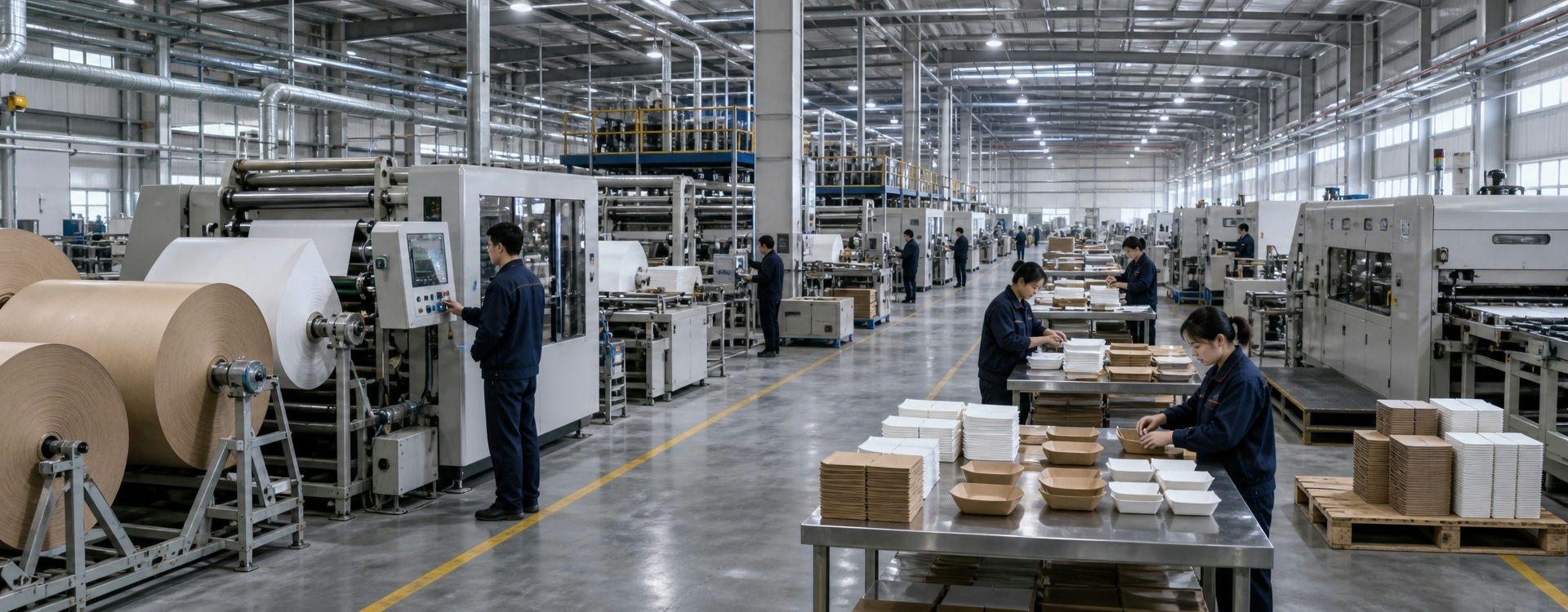
DAILYECO Paper Food Tray Manufacturing Facility and Custom Food Packaging Solutions

Factory Capability

DAILYECO Manufacturing Facility

Description

Employees

More than 1,000 employees

Production Lines

Paper food tray converting, printing, die cutting, forming, packing, and coordinated sustainable food packaging production

Monthly Supply Capacity

Monthly production capacity of up to 15 million pieces, supporting stable large-volume export orders

Product Categories

PE-lined takeout food containers, kraft paper boat trays, flat plate and tray formats, paper kraft sushi trays, compatible PET lids, and custom paper food packaging

Printing Capability

Flexographic & Offset Printing

OEM

Logo, printing, packaging, carton customization

ODM

Material, structure, artwork optimization

Technical Support

Professional engineering and product development assistance

Production MOQ

Flexible according to product specifications and customization requirements

Typical Lead Time

Approximately 25–35 days for new customized orders

Export Experience

North America, Europe, Middle East, Australia, Asia and Latin America

Complete Product Development Support

Development support covers product selection, structure optimization, custom dimensions and compartments, packaging, and private-label requirements.

Our OEM and ODM capabilities allow customers to develop:

  • Custom tray dimensions
  • Special compartment structures
  • Application-specific designs
  • Private label packaging solutions

This flexibility enables food brands, distributors, and packaging companies to develop products that better match their market requirements.

Compliance & Documentation Support

Documentation support is matched to the selected product and customer requirements, including specifications, materials, food-contact information, quality records, and applicable testing.

Support may include:

  • Product specifications
  • Material information
  • Food-contact related documents
  • Quality management information
  • Applicable testing documentation

View Our Compliance & Certification Support Page

Reliable Supply & Global Partnership

International projects are supported through production management, responsive communication, export coordination, and repeat-order planning.

DAILYECO supports global customers through:
  • Stable manufacturing processes
  • Professional project communication
  • Export experience
  • Order management support
  • Long-term cooperation approach

REQUEST A QUOTE

Case Study: Paper Food Tray Solutions for Foodservice Buyers

The following illustrative sourcing scenarios show how specification control and application testing can address common paper food tray purchasing challenges. They are process examples rather than quantified customer claims.

Case 1

Illustrative Case 1: A Multi-Location Foodservice Brand Standardizes Its Paper Food Tray Portfolio 

Customer Background

A multi-location foodservice brand wanted a controlled family of paper food tray products for takeaway meals, snacks, and prepared-food service.

The company was using multiple food tray suppliers with different product specifications, which created challenges in packaging management, inventory planning, and operational consistency.

The buyer needed a supplier capable of coordinating standard products, custom printing, packing, documentation, and repeat-order control.

Challenge

Variations in tray dimensions, structures, and packing increased inventory complexity, procurement work, and presentation inconsistency across locations.

Different suppliers provided variations in tray dimensions, structures, and packaging standards, resulting in:

  • Increased inventory complexity
  • Difficulty maintaining consistent food presentation
  • Higher procurement management costs
  • Challenges in coordinating packaging supply across different locations

The company needed to simplify the portfolio while ensuring each selected tray matched the intended food, portion, service time, and distribution route.

DAILYECO Solution

DAILYECO reviewed the food categories and operating requirements, then reduced unnecessary variants and standardized tray specifications by meal type.

DAILYECO optimized the product selection by reducing unnecessary tray variations and developing suitable specifications for different food applications.

The solution included:

  • Standardizing tray sizes for different meal categories
  • Optimizing tray structures for takeaway and prepared food
  • Improving packaging consistency across multiple locations
  • Providing stable production and supply management support

DAILYECO linked the approved drawing, paperboard, barrier, artwork, sample, pack count, and reorder reference for each selected format.

Results

Standardization simplified purchasing and inventory management while improving consistency across the customer’s locations.

A controlled product family can reduce avoidable variation and improve purchasing, staff identification, stock planning, and presentation consistency. Actual results depend on implementation and operating conditions.

Environmental messaging remained limited to the exact materials, evidence, and destination-market conditions applicable to each approved SKU.

Key Takeaways

For multi-location operators, an approved specification and stable supply plan can create more value than choosing only by unit price.

For multi-location food businesses, a reliable packaging partner can help improve supply efficiency, reduce management complexity, and build a more consistent sustainable packaging strategy.

Case 2

Illustrative Case 2: A Catering Company Standardizes PE-Lined Paper Takeout Containers

Customer Background

A catering company serving corporate events, educational institutions, and large gatherings needed a clearer way to organize meal components.

The buyer handled recurring prepared-meal programs and wanted a paper-based tray structure that could simplify packing and menu identification.

The project required an approved family of 650 ml, 750 ml, 1000 ml, and 1200 ml PE-lined takeout food containers with verified dimensions, lid pairing, barrier, stacking, packing, and transport performance.

Challenge

The catering company was using multiple unstandardized containers, which complicated portion assignment, lid control, packing, and inventory planning across varied menus.

  • Different meal portions required a controlled capacity range
  • Base-and-lid compatibility needed to be standardized
  • Large-scale meal preparation required simpler SKU identification
  • Packing and recurring supply had to match the operating schedule

The buyer required an application-specific paper food tray system that could support portion control and repeatable daily operations.

DAILYECO Solution

DAILYECO coordinated the 650 ml, 750 ml, 1000 ml, and 1200 ml capacity mix, usable dimensions, kraft paperboard with PE lining, compatible PET lids, sample testing, stacking review, artwork, packing, and regular bulk-supply planning.

  • Approved capacity-based container family
  • Verified base-and-lid compatibility
  • Improved stacking and SKU identification
  • Stable production for regular bulk supply

The approved product family provided practical formats for defined catering menus, subject to final food, temperature, holding, transport, and compliance validation.

Results

An approved capacity-based container family can simplify portion assignment, base-and-lid identification, packing, and presentation in recurring catering workflows.

The standardized PE-lined takeout container range helped simplify meal preparation, inventory planning, and large-scale catering operations.

Any sustainability statement must remain specific to the selected paperboard, PE lining, certification or evidence, food residue, and local processing route.

Key Takeaways

For catering programs, verified capacity, lid compatibility, and supply consistency are as important as material selection.

Selecting the right container size and compatible lid is often as important as selecting the material itself, especially for businesses managing varied portions and recurring food applications.

DAILYECO Industry Expert Tips: 10 Professional Insights for Sourcing Paper Food Tray

Sourcing a paper food tray requires more than comparing dimensions and unit price. Professional buyers should evaluate food fit, paperboard, barrier, structure, printing, documentation, packing, landed cost, and supply control as one system.

The following insights focus on the factors that most directly affect product suitability, purchasing efficiency, and long-term supply reliability.

Tip 1: Evaluate the Manufacturer’s Real Production Capability

A supplier should have the manufacturing equipment, production capacity, quality-control system, and export experience required to support the project. Buyers should evaluate whether the factory can maintain consistent specifications and delivery schedules across both initial and repeat orders, particularly for customized or large-volume programs.

Tip 2: Select Tray Structures Based on Food Applications

The correct structure depends on the food rather than the external dimensions alone. Tray depth, compartment layout, wall strength, rim design, and food capacity should match the intended portion, serving method, holding period, and transportation conditions. A tray designed for dry snacks may not provide the same performance for oily meals, wet dishes, or delivery applications.

Tip 3: Confirm Material Quality and Product Consistency

Paper food tray products can differ in board grade, basis weight, caliper, stiffness, barrier, fold quality, seam construction, surface finish, odor, nesting, and structural performance. Approve measurable specifications and tolerances before production, then control changes across repeat orders.

Tip 4: Consider Customization Capability Before Ordering

Standard products may not match the food area, depth, compartment layout, lid, printing, or retail presentation. Confirm die-line development, tooling, board, barrier, artwork, labels, pack count, carton, MOQ, and schedule before approval.

Tip 5: Review Food-Contact Documentation Requirements Early

Food-contact and testing requirements vary according to the destination market, food type, temperature, and contact time. Buyers should inform the supplier of the intended market before sampling or production begins. Any report or declaration should correspond to the selected SKU, material formulation, and intended conditions of use rather than being applied broadly to an entire material category.

Tip 6: Test Samples Under Real Application Conditions

Test samples with the actual food, portion weight, temperature, oil, moisture, acidity, holding time, lid or liner, stacking load, carrying method, display, and delivery route. The complete use cycle provides better evidence than an empty tray.

Tip 7: Balance Sustainability Goals with Practical Performance

Paper-based positioning must not replace performance testing. Recyclable, recycled, biodegradable, or compostable wording requires evidence for the exact board, barrier, inks, adhesives, food-residue condition, components, and destination market.

Descriptions such as “compostable paper food tray products,” “recycled paper trays,” or “green paper tray products” should only be used when the exact product and claim are supported. A paper appearance alone does not establish recycled content, recyclability, biodegradability, or compostability.

Tip 8: Confirm Repeat-Order Supply Management

Repeat purchasing programs depend on more than production capacity. A suitable supplier should coordinate raw-material planning, production schedules, quality inspection, packing, shipment, and communication throughout the order. Stable supply management helps buyers maintain inventory levels and consistent product specifications across different deliveries.

Tip 9: Consider Long-Term Cooperation Instead of Short-Term Pricing

The lowest quotation may not provide the lowest total purchasing cost. Differences in product weight, packing quantity, carton dimensions, customization support, quality consistency, lead time, and delivery reliability can affect the final result. Buyers should compare equivalent specifications and consider the supplier’s ability to support samples, production changes, documentation, and repeat orders.

Tip 10: Select a Supplier That Understands Your Market

A manufacturer familiar with the target market can give more relevant guidance on tray structure, board and barrier selection, foodservice application, artwork, compliance communication, packing, and export preparation.

This Page Reviewed By

Lillian Guo

Food Packaging Compliance Manager

10+ Years of Experience

Specialized in:

  • Food Contact Compliance
  • Sustainable Packaging
  • Paper Food Tray Manufacturing
  • FDA
  • EU Food Contact Regulations
  • Packaging Compliance Documentation

Explore Our Related Sustainable Packaging

Discover more sustainable beverage and food packaging solutions from DAILYECO.

Contact Our Team

Looking for a reliable Paper Food Tray Manufacturer?

Our packaging specialists are ready to support your project with:

✓ Product Catalog

✓ Free Product Consultation

✓ OEM & ODM Development

✓ Custom Printing Solutions

✓ Sample Requests

✓ Compliance Guidance

✓ Packaging Optimization

✓ Global Export Support

Our team can recommend a suitable tray structure, packing plan, and development route for restaurant groups, distributors, importers, hospitality buyers, and private-label brands.

Submit Your Inquiry Now