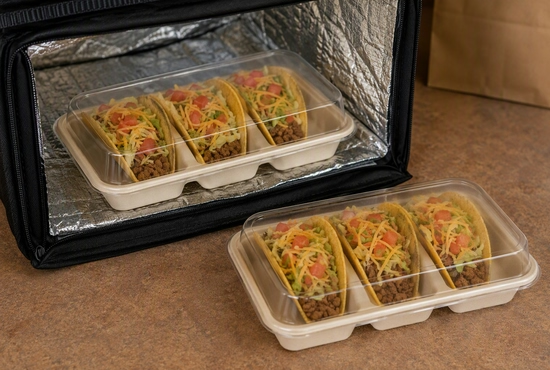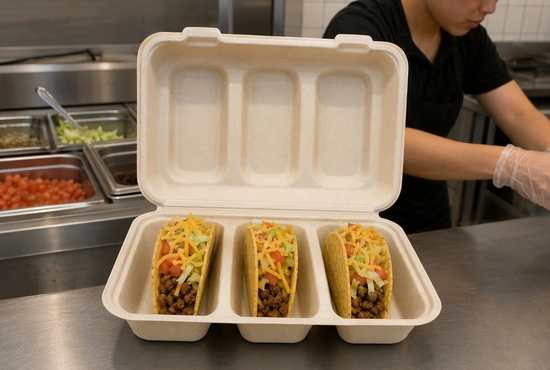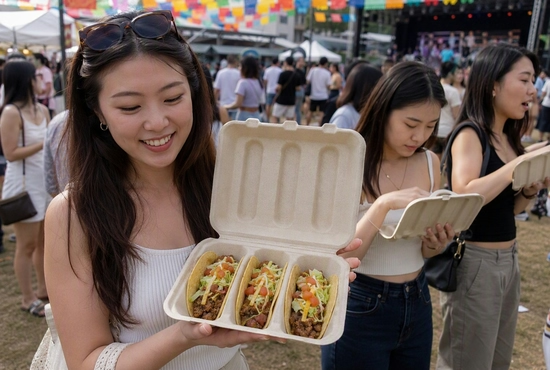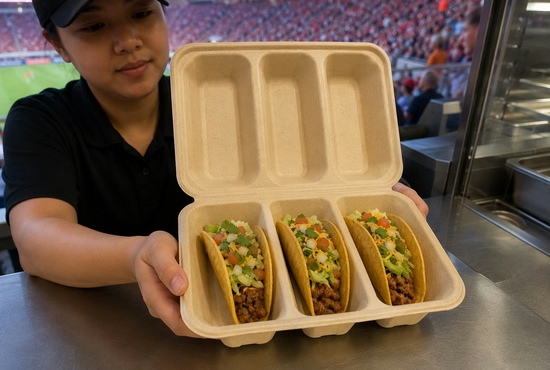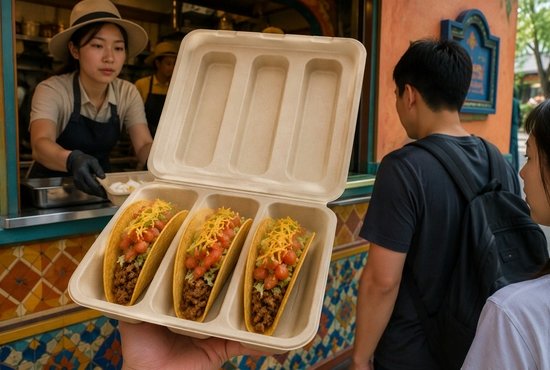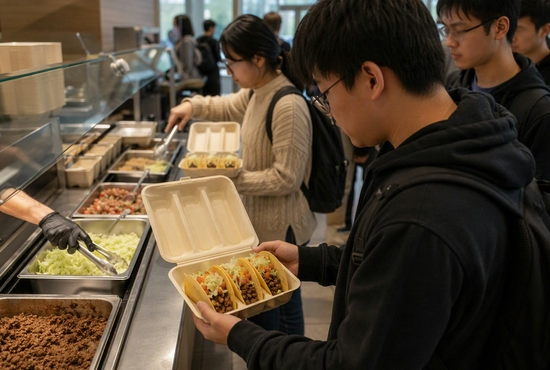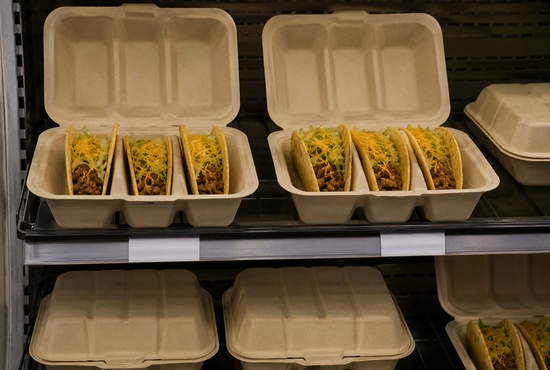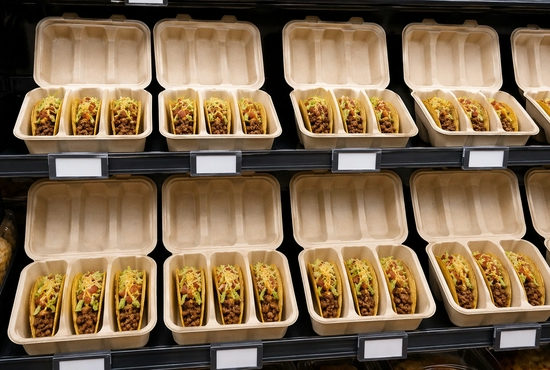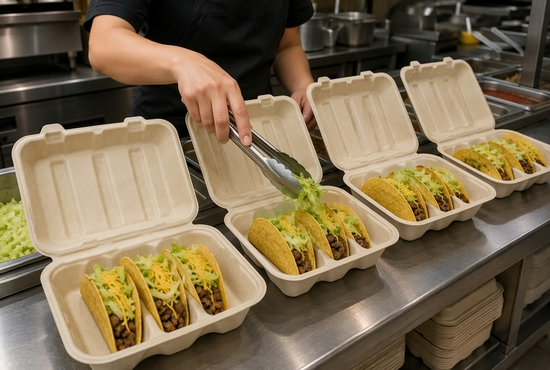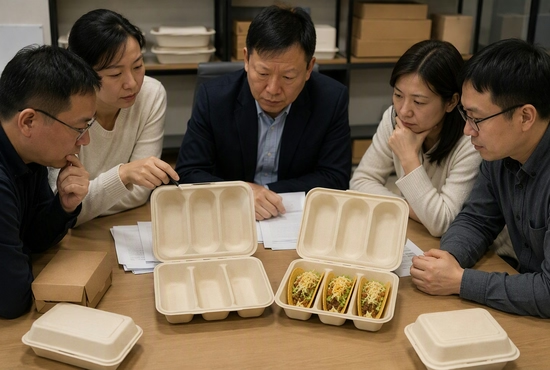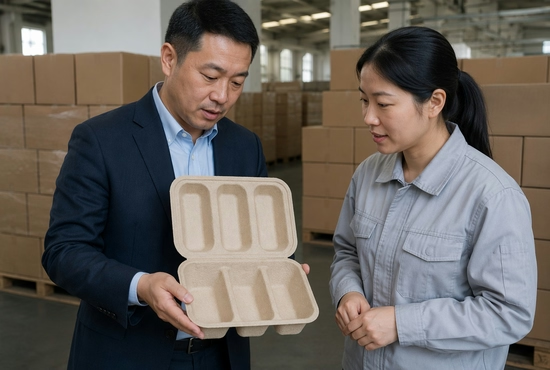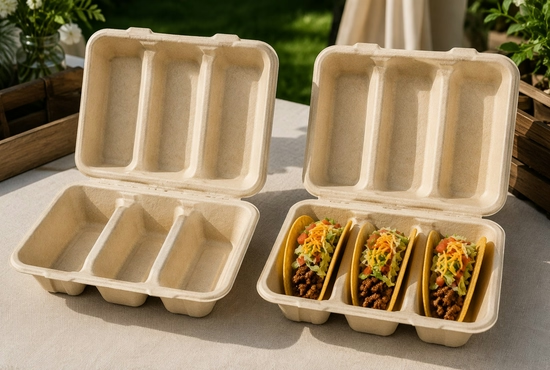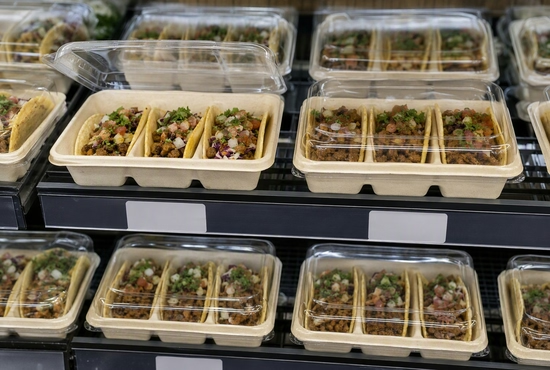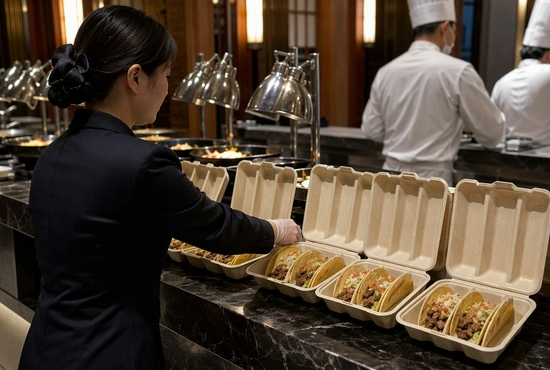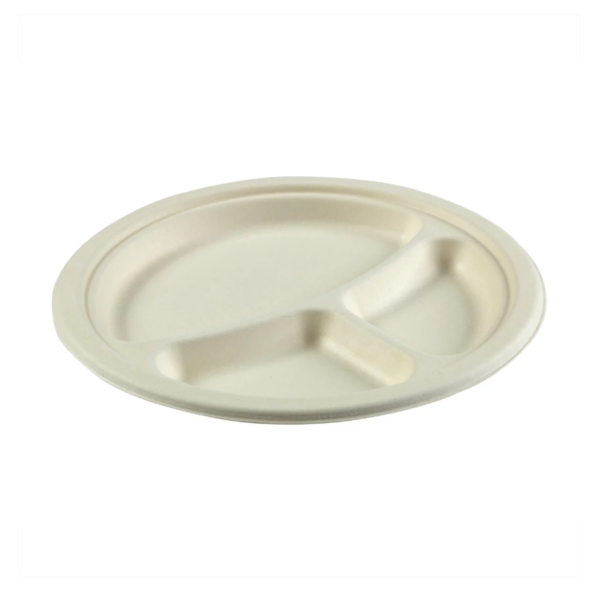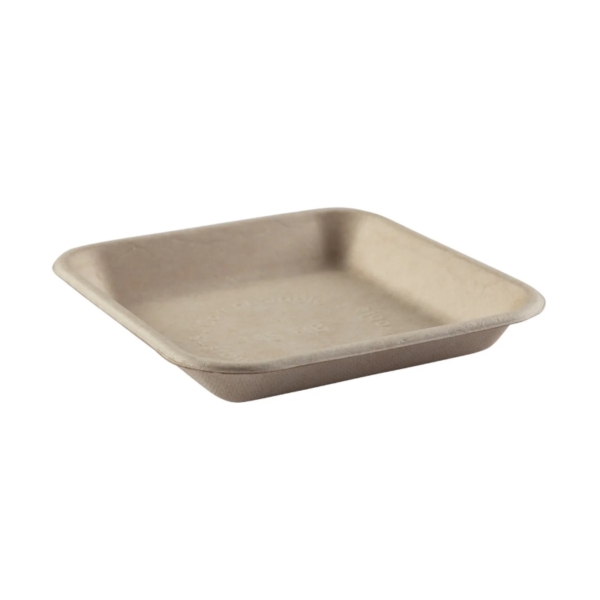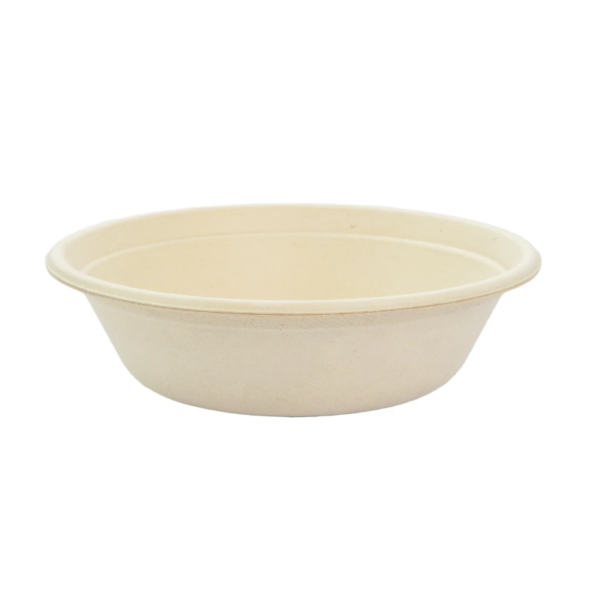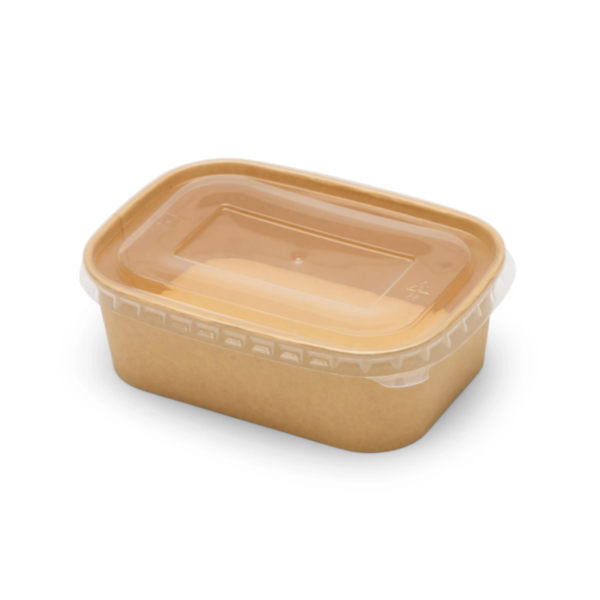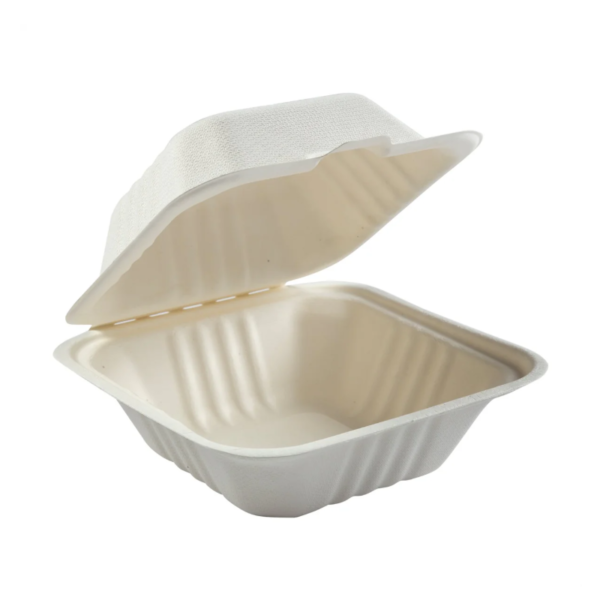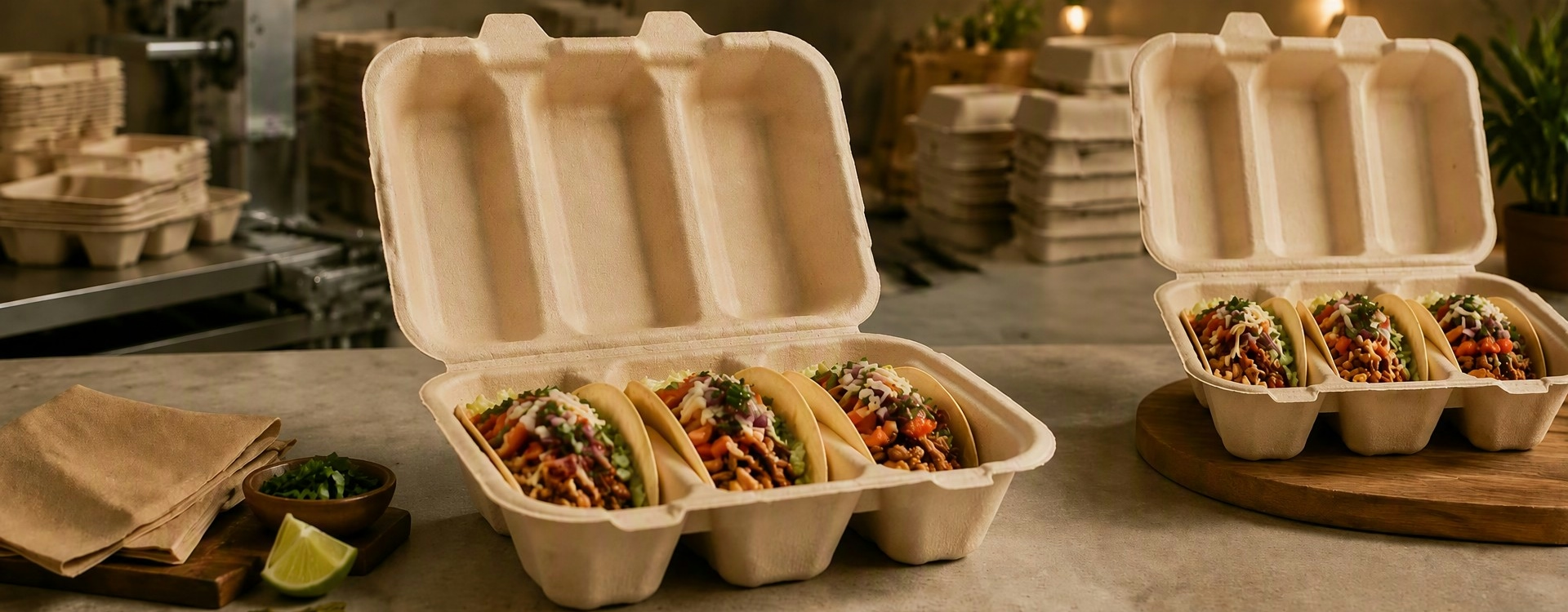
DAILYECO manufactures molded bagasse taco to go containers for restaurants, food trucks, caterers, distributors, and ready-to-eat food programs. Choose from three tray sizes, including one tray compatible with a clear PET lid, or develop a custom support structure, carton, and packing configuration. Compare dimensions, product weights, packing details, MOQ, and available documentation below.
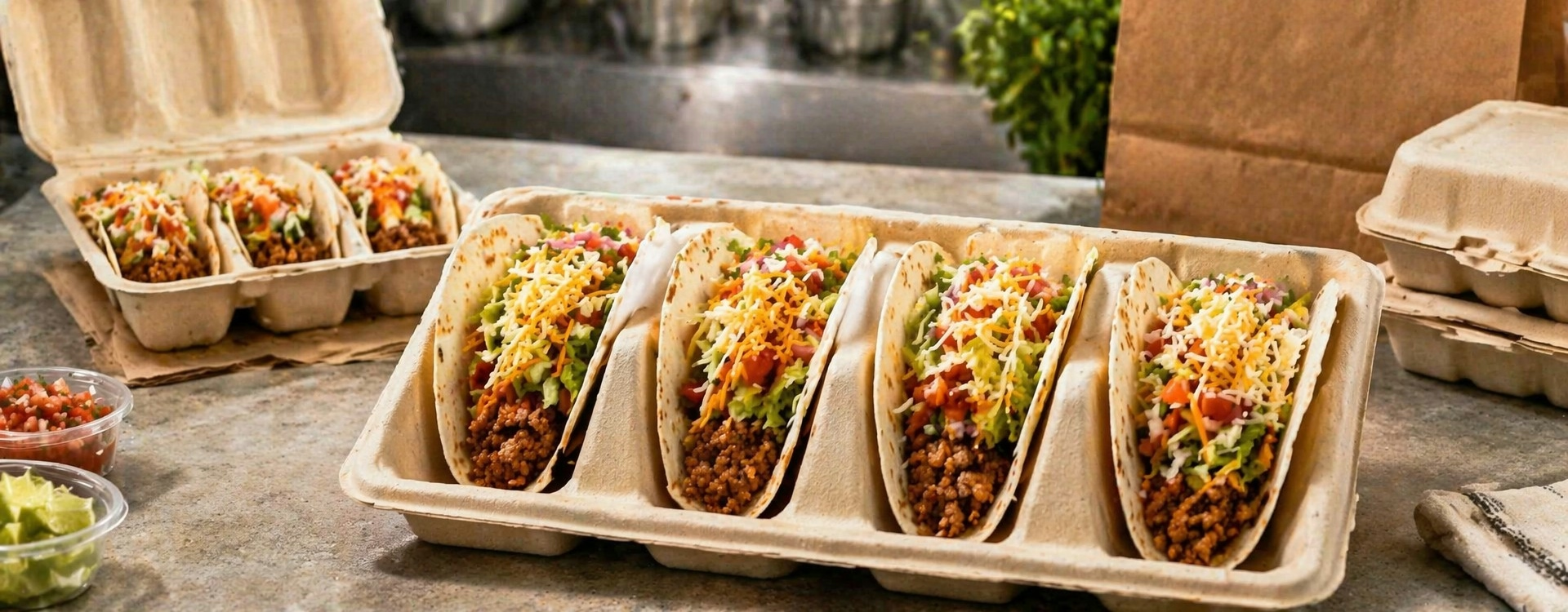
Our Taco to Go Containers are specialized molded fiber packages designed for commercial taco service. Unlike a general bagasse tray or flat sugarcane tray, the molded support structure is shaped to organize tacos and reduce tipping during serving, handling, and short-distance transportation.
DAILYECO’s primary range uses renewable sugarcane bagasse fiber and includes open taco holders, larger tray formats, and selected tray-and-lid systems for restaurants, food trucks, catering, delivery, and prepared-food retail.
Item | Information |
Product Name | Taco to Go Container |
Primary Material | Food-grade sugarcane bagasse fiber |
Product Type | Molded fiber taco takeaway container |
Standard Sizes | 210 × 180 × 40/80 mm; 209 × 180 × 40/80 mm; 244.7 × 186 × 53 mm |
Compatible Accessory | 255 × 195 × 40 mm PET lid for the compatible 244.7 × 186 × 53 mm tray |
Applications | Taquerias, restaurant chains, food trucks, takeaway, delivery, catering, events, and retail prepared food |
Food Types | Hard-shell tacos, soft tacos, folded flatbreads, selected street-food portions, and taco combo meals |
Structure | Molded taco-positioning support with one-piece fiber construction |
Customization | OEM dimensions, support geometry, molds, cartons, labels, barcodes, and packing configurations |
Supply Type | Manufacturer-direct wholesale supply and OEM/ODM project support |
Export Markets | North America, Europe, Australia, the Middle East, Asia, and other foodservice markets |
Taco to Go Containers are foodservice packages engineered around the shape of tacos. Their molded ridges, channels, or supporting sections help hard- and soft-shell tacos stay upright while leaving space for fillings, sauces, and toppings.
A general flat food tray supports food from underneath, but it does not control taco position. A purpose-built taco takeout container can improve portion organization, food visibility, counter presentation, and the condition of the order when it reaches the customer.
DAILYECO’s range is centered on molded sugarcane bagasse tray structures. This places the product within the broader bagasse food tray and sugarcane food tray family while giving it a taco-specific commercial function.
Taco to Go Containers combine a taco-positioning structure with the practical characteristics of molded sugarcane fiber. Buyers should evaluate each SKU by its dimensions, internal geometry, product weight, food temperature, holding time, lid fit, and intended transportation conditions.
Feature | Procurement Information | Buyer Notes |
Molded Fiber Construction | Produced from sugarcane bagasse pulp through molded fiber forming. | Confirm material composition and applicable documentation for the selected SKU. |
Taco Positioning Structure | Molded support areas are designed to help tacos remain upright and separated. | Test actual shell width, taco height, filling volume, and serving quantity. |
Structural Performance | One-piece construction is designed for commercial taco service and short-term takeaway. | Performance depends on dimensions, wall thickness, food weight, stacking, and transport conditions. |
Heat Performance | Suitable for hot-food service within verified product limits. | Confirm serving temperature, holding time, and microwave instructions for the selected product. |
Cold Food Applications | Suitable for chilled prepared tacos and selected ready-to-eat applications. | Evaluate storage temperature, condensation, duration, and lid fit. |
Freezer Compatibility | Selected SKUs may support chilled or frozen-food use down to −20°C. | Use is subject to product-specific verification across freezing, storage, thawing, and serving. |
Oil & Grease Resistance | Designed for normal taco service involving meat, cheese, sauces, and oily fillings. | Helps prevent oil penetration during everyday meal service, up to 95°C for 30 minutes. |
Moisture Resistance | Suitable for typical dine-in, takeaway, and short-distance delivery periods. | The open tray is not airtight or fully leakproof; high-liquid foods may need other packaging. |
Food Contact Documentation | Product-specific food-contact documentation may be available for applicable SKUs. | Confirm destination-market requirements and ensure reports match the ordered SKU. |
Product Consistency | Manufactured under standardized forming, inspection, and packing controls. | Record approved dimensions, weight, tolerances, appearance, and packing in the purchase specification. |
PET Lid Compatibility | A clear PET lid is available for the compatible 244.7 × 186 × 53 mm bagasse taco tray. | Test rim fit, locking force, taco clearance, stacking, chilled storage, and delivery vibration. |
OEM Customization | Custom dimensions, taco-support geometry, molds, cartons, labels, and packing are available. | Commercial feasibility depends on tooling, MOQ, annual demand, and development schedule. |
PFAS-Related Documentation | PFAS-related test information may be available for applicable product lines. | Verify that the report covers the exact SKU and target-market requirement. |
Compostability | Selected product lines may support industrial compostability when covered by applicable certification. | Do not apply a general compostable claim to an uncertified SKU or to the separate PET lid. |
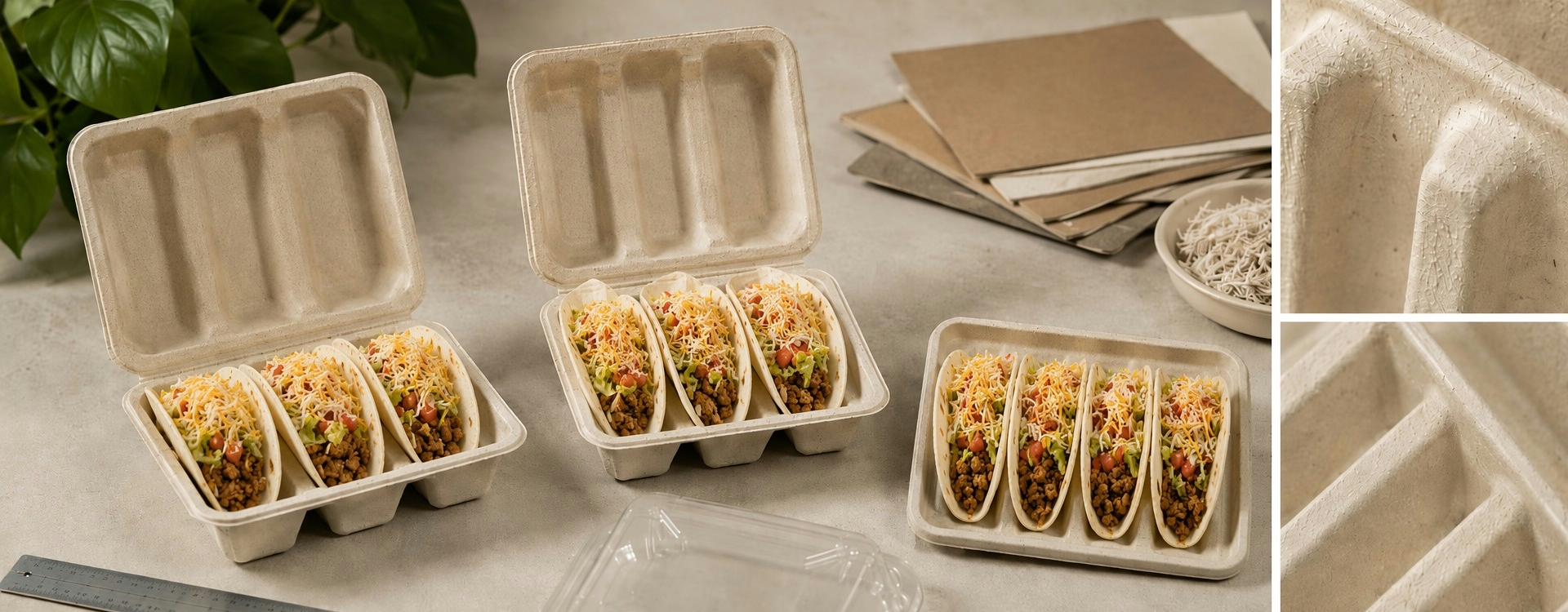
Growth in Mexican-inspired foodservice, fast-casual dining, street-food concepts, takeaway, and app-based delivery is increasing demand for packaging designed around tacos rather than generic meals.
Flat trays and conventional boxes can allow tacos to tip, overlap, or lose their arrangement. A molded fiber taco holder creates dedicated support areas, helping kitchen teams prepare consistent portions and helping customers receive a more organized order.
For takeaway, delivery, and prepared-food display, selected Taco to Go Containers can be paired with a compatible clear PET lid. The complete tray-and-lid system should be tested for rim fit, food height, closing force, stacking, condensation, and transport vibration.
Foodservice buyers increasingly evaluate taco packaging as an operating system rather than a disposable item. Internal geometry, lid fit, carton efficiency, destination-market documentation, and repeat-order consistency now influence sourcing decisions alongside unit cost.
Operational Demand and Delivery Requirements
Takeaway and delivery programs need packaging that supports fast assembly and helps preserve taco arrangement during handling. Purpose-built bagasse taco trays are especially relevant where flat trays do not provide enough lateral support or where a fitted lid is required.
Renewable Fiber and Custom Packaging Programs
Restaurants and distributors are adding molded fiber formats to selected foodservice portfolios. For taco applications, buyers often request custom support spacing, tray depth, packing quantities, and PET lid compatibility to match actual portions and distribution requirements.
Multi-Location Standardization
Restaurant chains can simplify purchasing, staff training, and inventory planning by approving one tray specification for multiple locations. The approved standard should record dimensions, weight tolerance, taco fit, packing, lid compatibility, and quality criteria.
Packaging influences both presentation and handling. Natural molded fiber provides a distinct appearance, while custom cartons, labels, and retail packs can support brand consistency. The most effective programs balance appearance with practical requirements such as closing force, stacking, storage, and service speed.
Each taco packaging material provides different advantages depending on the service model, food application, customer expectations, and target market.
Choose Bagasse Taco to Go Containers If You:
Choose Reusable Plastic Taco Holders If You:
Choose Paperboard Taco Trays If You:
Choose Aluminum Food Trays If You:
DAILYECO supplies Taco to Go Containers within a broader molded fiber product portfolio. Related commercial categories include bagasse food trays, a bagasse meal tray, sugarcane meal trays, and custom sugarcane tray structures for restaurants, distributors, and private-label programs.
Our product portfolio helps buyers select suitable solutions for different foodservice scenarios.
Pictures | Product | Size | Typical Product Weight | Packing | CTN Size |
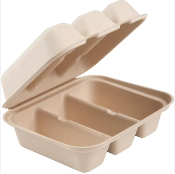
![]() | Taco Bagasse Holder | 210 × 180 × 40/80 mm | 42 g | 50 pcs/bag, 6 bags/CTN, 300 pcs/CTN | 37.5 × 43 × 42 cm |
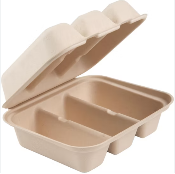
![]() | Taco Bagasse Holder | 209 × 180 × 40/80 mm | 53 g | 50 pcs/bag, 6 bags/CTN, 300 pcs/CTN | 37.5 × 43 × 42 cm |
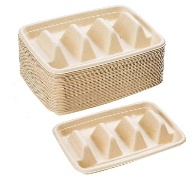
![]() | Taco Bagasse Holder | 244.7 × 186 × 53 mm | 30 g | 50 pcs/bag, 8 bags/CTN, 400 pcs/CTN | 50 × 38 × 32 cm |
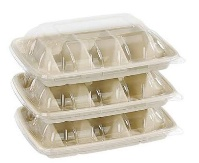
![]() | PET Lid for Bagasse Taco Tray Holder | 255 × 195 × 40 mm | 18 g | 50 pcs/bag, 8 bags/CTN, 400 pcs/CTN | 78.5 × 51.5 × 32 cm |
DAILYECO provides OEM and ODM support for restaurants, distributors, food brands, and private-label packaging companies sourcing custom taco to go containers.
Customization services include:
For restaurant chains and foodservice distributors, standardized custom specifications can improve packaging consistency, inventory planning, and customer presentation across different locations.
Selecting the right product size depends on taco dimensions, the number of tacos in each serving, food height, takeaway requirements, and lid compatibility.
Product Size | Product Characteristics | Recommended Applications |
210 × 180 × 40/80 mm | Molded taco-support structure with deeper and shallower profile areas. | Taquerias, fast-casual service, takeaway orders, and catering. |
209 × 180 × 40/80 mm | Similar external dimensions with a different product weight and structural specification. | Restaurant chains, event service, and standardized foodservice programs. |
244.7 × 186 × 53 mm | Larger rectangular bagasse taco tray format with a compatible clear PET lid. | Delivery, catering, ready-to-eat tacos, and selected retail display. |
255 × 195 × 40 mm PET Lid | Clear lid for the compatible 244.7 × 186 × 53 mm tray. | Takeaway protection, delivery handling, visibility, and retail presentation. |
Restaurants should test the selected Bagasse taco tray with actual taco shells, fillings, sauces, serving quantities, holding time, and transport conditions before approving a bulk order.
Hard-shell tacos may require stable slot support to reduce tipping, while soft tacos may require additional space to avoid compression. For delivery and retail applications, the complete tray-and-lid system should be tested under realistic transportation conditions.
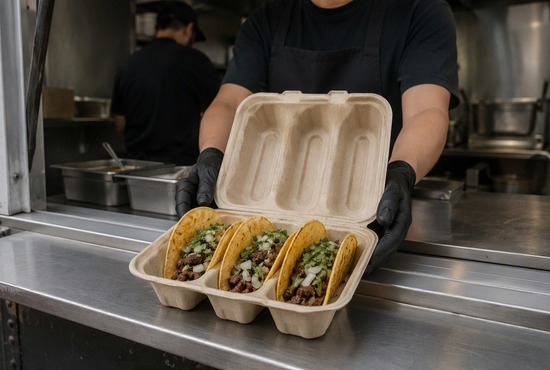
Bagasse taco trays are used in taquerias, restaurant chains, food trucks, catering, delivery, festivals, hospitality, and selected ready-to-eat retail programs.
Each setting has different priorities: mobile operators value compact storage and fast service, delivery programs need stable tray-and-lid systems, and retail buyers focus on visibility, labeling, chilled storage, and consistent dimensions.
Food trucks need lightweight, stackable taco holders that support rapid assembly in limited workspaces. The tray should organize portions without adding unnecessary handling steps.
Typical Requirements
Recommended Products
Delivery packaging should limit movement while protecting fillings and presentation. Use the compatible PET lid or suitable secondary packaging, then test the complete pack under the intended route and holding time.
Typical Requirements
Recommended Products
Restaurant chains need an approved taco packaging specification that can be repeated across stores. Consistent dimensions, packing, supply planning, and private-label cartons reduce operational variation.
Typical Requirements
Recommended Products
Catering and event operators prioritize rapid distribution, easy stacking, and predictable portion presentation. Standard carton quantities also make temporary storage and replenishment easier during high-volume service.
Typical Requirements
Recommended Products
Stadium concession teams need taco packaging that supports rapid assembly, high-volume handoff, compact counter storage, and easy carrying in crowded seating areas. The selected tray should keep tacos upright while remaining simple for staff and guests to handle.
Typical Requirements
Fast assembly and high-volume distribution
Compact stacking at concession counters
Stable one-hand carrying for seated guests
Recommended Products
210 × 180 × 40/80 mm bagasse taco tray
209 × 180 × 40/80 mm molded fiber taco holder
244.7 × 186 × 53 mm taco packaging tray
Theme parks and entertainment venues require portable taco packaging for guests moving between attractions, shows, and dining areas. Stackability, portion organization, grease performance, and comfortable carrying should be evaluated under the venue’s actual service conditions.
Typical Requirements
Portable packaging for mobile guests
Fast service during peak visitor periods
Reliable portion support and grease performance
Recommended Products
210 × 180 × 40/80 mm bagasse taco tray
209 × 180 × 40/80 mm molded fiber taco holder
244.7 × 186 × 53 mm taco packaging tray
University dining programs serve tacos through cafeterias, food courts, campus events, and takeaway counters. Buyers need repeatable portion formats, efficient carton planning, easy staff handling, and packaging suitable for both immediate service and short-distance campus takeaway.
Typical Requirements
Consistent portions across campus outlets
Efficient storage and replenishment
Easy handling for dine-in and campus takeaway
Recommended Products
210 × 180 × 40/80 mm bagasse taco tray
209 × 180 × 40/80 mm molded fiber taco holder
244.7 × 186 × 53 mm taco packaging tray
Convenience stores need taco packaging that works with prepared-food displays, labeling, short holding periods, customer transport, and limited shelf space. For covered products, the tray and PET lid must be approved together for fit, clearance, stacking, and presentation.
Typical Requirements
Compact prepared-food display and storage
Clear labeling and product visibility
Verified tray-and-lid fit for takeaway
Recommended Products
244.7 × 186 × 53 mm bagasse taco tray
255 × 195 × 40 mm PET lid for the compatible tray
210 × 180 × 40/80 mm molded fiber taco holder
Supermarket grab-and-go programs require consistent presentation, label space, product visibility, stacking, and controlled holding conditions. Buyers should test the complete tray-and-lid system with the intended tacos, fillings, sauces, display period, and customer transport route.
Typical Requirements
Attractive ready-to-eat product presentation
Label space and clear product visibility
Validated holding, stacking, and transport performance
Recommended Products
244.7 × 186 × 53 mm bagasse taco tray
255 × 195 × 40 mm PET lid for the compatible tray
210 × 180 × 40/80 mm bagasse taco tray
Mexican chain franchises need standardized taco packaging that can be repeated across locations while supporting approved portions, service speed, brand presentation, and centralized purchasing. Specifications should link tray dimensions, tolerances, packing, artwork, and replenishment requirements.
Typical Requirements
Standardized packaging across franchise locations
Approved dimensions, quality tolerances, and packing
Private-label cartons and coordinated replenishment
Recommended Products
210 × 180 × 40/80 mm bagasse taco tray
209 × 180 × 40/80 mm molded fiber taco holder
Custom taco packaging solution
Selecting the right taco packaging solution requires evaluating food presentation, transportation performance, sustainability goals, serving environment, and overall packaging cost.
General food trays and containers can provide basic food support, but they are not specifically designed to maintain tacos in an upright position. A dedicated taco to go container uses molded support structures to improve taco organization and create a more consistent serving experience.
The following comparisons explain how sugarcane taco packaging trays differ from other common food packaging solutions.
Comparison Factor | Taco to Go Container | Flat Food Tray |
Taco Stability | Designed to help keep tacos upright during serving and handling | Provides general food support but does not prevent tacos from tipping |
Food Presentation | Supports organized taco presentation and consistent portion display | Suitable for general food presentation without taco-specific positioning |
Taco Organization | Molded supporting areas help separate and arrange tacos | Tacos share a flat surface and may shift or overlap |
Transportation Performance | Can reduce taco movement when paired with suitable outer packaging | Provides basic support, but tacos may move more easily |
Customer Experience | Creates a structured, taco-focused serving experience | Provides a standard foodservice experience |
Food Visibility | Keeps tacos upright and visible during serving or retail display | Food remains visible but may lose its original arrangement |
Lid Compatibility | Selected designs can be paired with compatible PET lids | Depends on the specific tray and lid system |
Best-Suited Applications | Taco restaurants, food trucks, catering, takeaway, and delivery | General takeaway food, snacks, bakery items, and mixed meals |
Flat food trays remain suitable for businesses serving multiple food categories. However, restaurants specializing in tacos can achieve better portion organization and presentation by using a dedicated taco to go container.
Comparison Factor | Taco to Go Container | Plastic Taco Stand |
Primary Material | Renewable sugarcane bagasse fiber | Petroleum-based plastic |
Intended Use | Primarily disposable foodservice packaging | Commonly designed for repeated dine-in use |
Taco Positioning | Purpose-built molded support | Purpose-built reusable support |
Natural Appearance | Natural molded fiber texture | Colored or smooth plastic finish |
Sustainability Positioning | Supports renewable fiber packaging programs | Limited due to fossil-based material |
Cleaning Requirement | No washing required after use | Requires cleaning and sanitation for reuse |
Takeaway Suitability | Designed for disposable takeaway | Usually limited |
OEM Packaging Support | Available | Depends on manufacturer |
Typical Applications | Takeaway, catering, delivery, festivals, restaurant service | Reusable dine-in presentation |
Plastic taco stands can be suitable for restaurants requiring durable and reusable serving equipment. Taco to Go Containers are generally more appropriate for disposable takeaway, catering, and delivery programs where renewable material positioning is important.
Comparison Factor | Taco to Go Container | Clamshell Packaging |
Taco Presentation | Upright taco-focused presentation | Tacos may lie flat or shift inside the container |
Food Protection | Open tray; improved with a compatible lid or outer packaging | Enclosed food protection |
Food Visibility | Open service or clear PET lid | Depends on clamshell material and design |
Taco Organization | Taco-specific molded support | General enclosed food space |
Delivery Performance | Suitable when matched with the correct lid or secondary packaging | Strong protection for mixed takeaway foods |
Serving Convenience | Can be placed directly on tables or counters | Lid usually needs to be opened before serving |
Best-Suited Applications | Taco-focused dine-in, takeaway, catering, and retail display | Mixed meals, long-distance delivery, enclosed takeaway |
Clamshell containers provide stronger enclosed protection for food delivery. However, they do not always maintain tacos in an upright arrangement. Businesses may use a molded fiber taco holder with PET lid or place the holder inside suitable secondary packaging when both presentation and delivery protection are required.
The main buyers are restaurant groups, foodservice distributors, importers, caterers, ready-to-eat suppliers, and hospitality operators.
Restaurants emphasize food fit and daily handling, while distribution buyers also assess documentation, carton efficiency, production continuity, and export coordination.
Restaurant chains typically use centralized procurement and need repeatable tray dimensions, approved samples, predictable lead times, and branded carton options across multiple locations.
Importers buy molded fiber taco packaging in commercial quantities for local distribution. Their evaluation normally covers factory capability, export documents, carton configuration, container utilization, and communication reliability.
Catering and event suppliers value large-volume availability, easy transport, fast portion assembly, and consistent presentation for festivals, stadiums, corporate events, and private functions.
Supermarkets and prepared-food suppliers need a tray-and-lid combination that supports visibility, labeling, chilled storage, shelf stacking, and consistent retail presentation.
Hotels and hospitality groups use disposable taco holders for buffets, room service, outdoor events, and themed catering. They commonly prioritize food-contact documentation, dependable supply, and professional presentation.
The following guide helps buyers determine whether taco takeaway containers are suitable for different foodservice, takeaway, catering, delivery, and retail applications.
Application | Recommended |
Mexican Restaurant Taco Service | ✓ |
Taco Shop Takeaway | ✓ |
Fast-Casual Restaurant Service | ✓ |
Food Truck Taco Sales | ✓ |
Catering and Corporate Events | ✓ |
Food Festivals and Outdoor Markets | ✓ |
Short-Distance Taco Delivery | ✓ |
Restaurant-Chain Packaging Programs | ✓ |
Selected Supermarket Ready-to-Eat Tacos | ✓ |
Private-Label Taco Packaging | ✓ |
General Flat Food Packaging | ✗ |
Long-Term Food Storage | ✗ |
Airtight Long-Distance Transportation | ✗ |
Industrial Food Transportation | ✗ |
Reusable Dine-In Serving Equipment | ✗ |
Taco to Go Containers are most suitable for businesses that need taco-specific presentation, disposable foodservice convenience, and renewable molded fiber packaging.
For delivery or retail applications, the tray should be tested with a compatible PET lid or suitable outer packaging. For long-term storage, fully sealed transportation, or repeated reuse, alternative packaging solutions may provide better performance.
Bulk purchasing requires a confirmed product specification, not only a size and unit price.
Before quotation and production, buyers should align taco dimensions, order volume, customization, sample approval, packing, lead time, documentation, and trade terms.
What Information Is Required for an Accurate Quotation?
Provide enough application and commercial information for the supplier to quote the correct standard tray or evaluate a custom structure.
Include:
For custom projects, drawings, reference packs, or physical food samples help the manufacturer assess feasibility and reduce later specification changes.
How Is MOQ Determined?
MOQ depends on whether the product uses an existing mold, requires new tooling, or includes custom cartons and labels.
Custom projects may require higher quantities because of:
DAILYECO’s typical production MOQ is approximately 50,000 pieces per size, although lower quantities may be available for selected ready-stock products. Final MOQ should be confirmed according to the specific project.
How Long Does Customized Product Development Take?
A custom molded fiber project normally follows five stages:
Timing varies with structural complexity, tooling, sample revisions, printed packaging, and approval speed.
Mass production is typically approximately 25–35 days after final approval; mold development, sampling, and transit require additional time.
Should Buyers Approve Samples Before Mass Production?
Yes. Taco fit, filling height, moisture, grease, and lid clearance cannot be confirmed from an empty tray alone.
Confirm with actual food:
Record the approved sample, drawing, tolerance, and packing specification before bulk production.
How Should Buyers Plan Packaging and Container Loading?
Export packing affects freight cost, warehouse use, product protection, and local distribution efficiency.
Confirm:
Current standard packing configurations include:
Product | Standard Packing |
210 × 180 × 40/80 mm Taco to Go Container | 50 pcs/bag, 6 bags/CTN, 300 pcs/CTN |
209 × 180 × 40/80 mm Taco to Go Container | 50 pcs/bag, 6 bags/CTN, 300 pcs/CTN |
244.7 × 186 × 53 mm Taco to Go Container | 50 pcs/bag, 8 bags/CTN, 400 pcs/CTN |
255 × 195 × 40 mm PET Lid | 50 pcs/bag, 8 bags/CTN, 400 pcs/CTN |
For large-volume orders, carton optimization can help improve container utilization and reduce landed cost per unit.
What Should Be Included in a Purchase Contract?
The purchase contract should identify the approved product and the commercial conditions used for production and inspection.
Include:
A complete written specification gives production, quality control, and future repeat orders the same reference point.
Although taco to go containers provide effective taco positioning, renewable material advantages, and professional food presentation, they are not suitable for every packaging application.
The right packaging choice depends on food type, storage period, transportation distance, required sealing performance, reuse expectations, temperature conditions, and budget.
An open taco packaging tray is primarily designed for taco positioning and presentation.
It may not provide sufficient protection for:
In these situations, a compatible lid, sealed clamshell, or secondary food container may be required.
Bagasse taco holders are generally designed as disposable foodservice products.
Restaurants requiring a product that can be washed and reused repeatedly may prefer rigid plastic, stainless steel, ceramic, or other durable taco stands.
Bagasse products may be suitable for selected hot-food and microwave applications, subject to product-specific limits.
However, businesses requiring direct oven baking, prolonged high-temperature heating, or intensive cooking may need aluminum or other oven-compatible packaging.
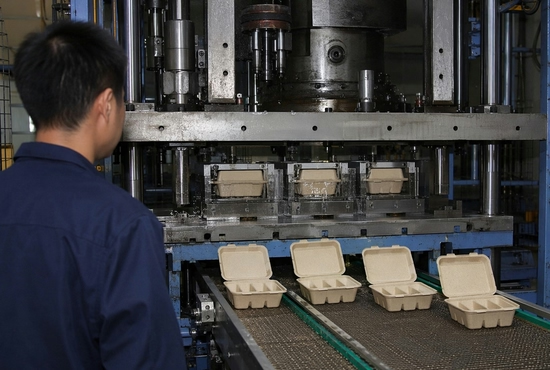
Manufacturing a high-quality taco to go container requires controlled raw-material preparation, pulping, molded forming, product finishing, inspection, and export packaging.
Each production stage affects the final tray’s dimensions, taco-support structure, surface appearance, weight consistency, and commercial performance.
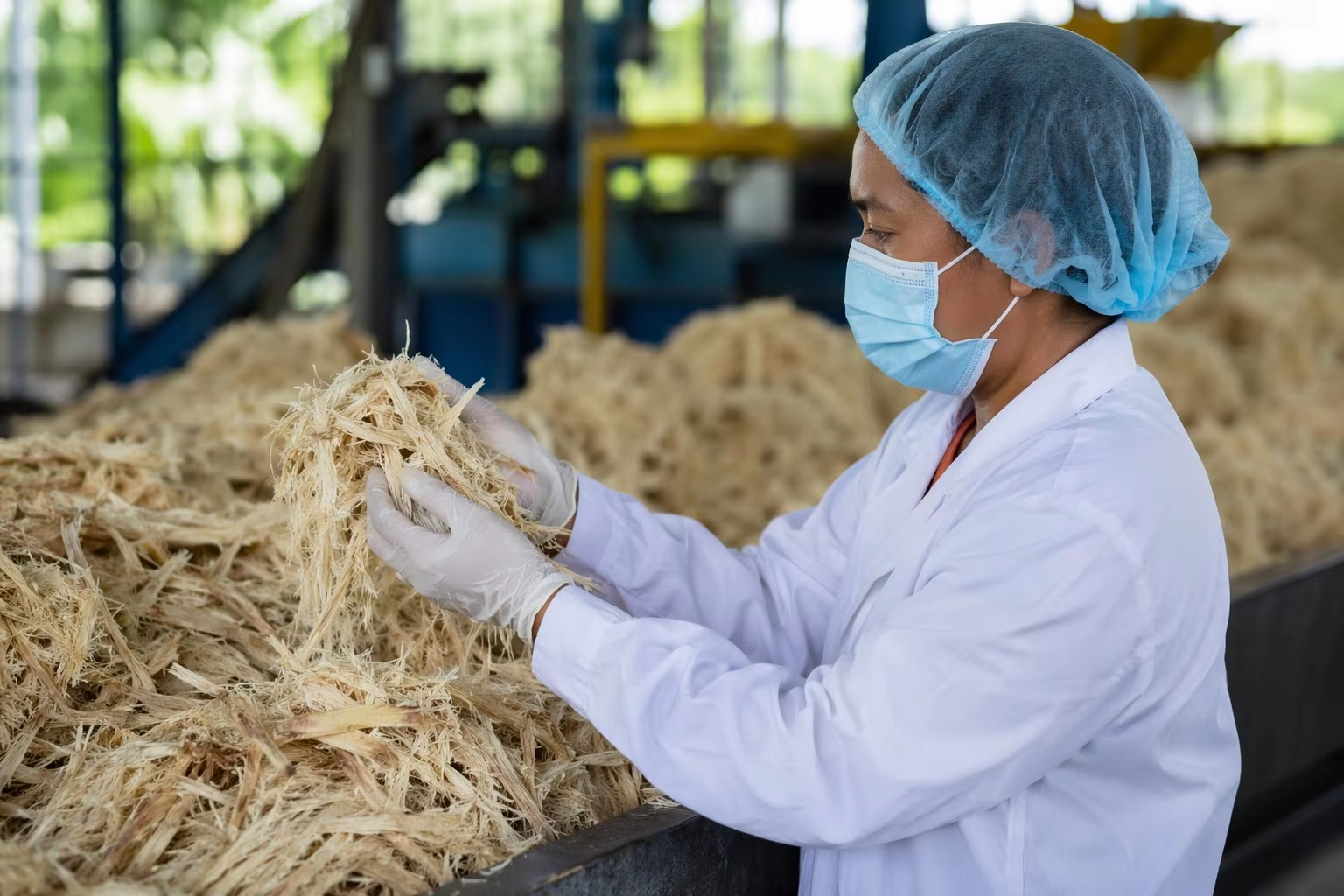
Production begins with the selection and preparation of sugarcane bagasse fiber.
The raw material is cleaned and processed to remove unsuitable impurities before pulping.
Consistent fiber preparation influences:
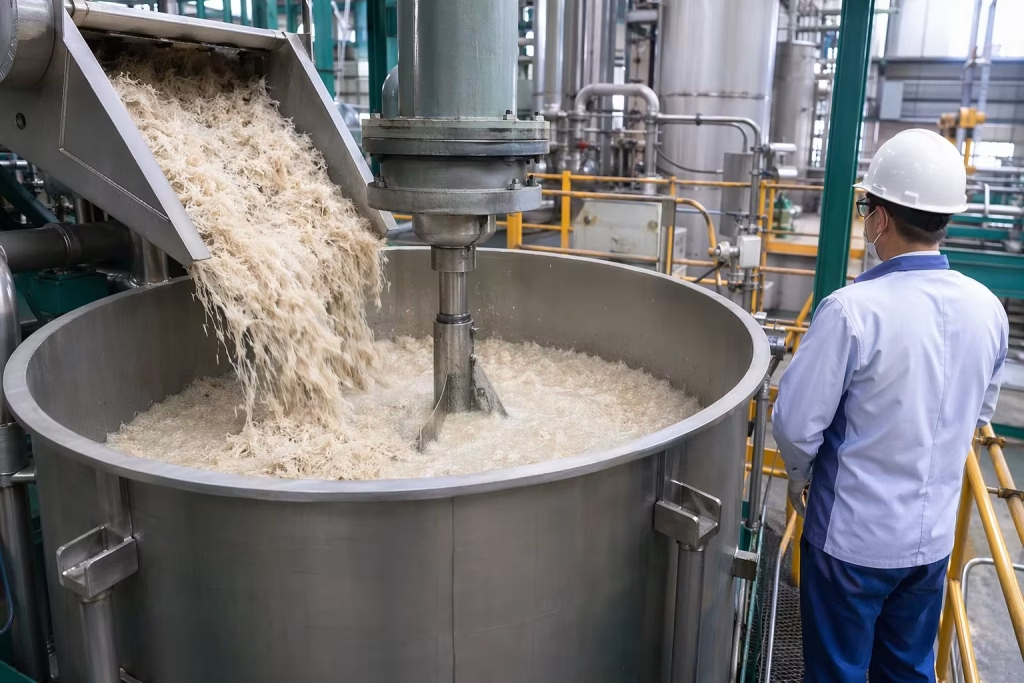
The prepared fiber is processed into a controlled pulp mixture.
During this stage, manufacturers manage fiber concentration, water content, and formulation consistency to create suitable molded fiber material.
Stable pulp formulation helps produce taco to go containers with consistent dimensions, wall thickness, and structural performance.
The prepared pulp is transferred into a product mold that defines the final tray dimensions and taco-support structure.
Manufacturers control:
For customized projects, mold design should be based on the customer’s taco size, serving quantity, filling height, and packaging requirements.
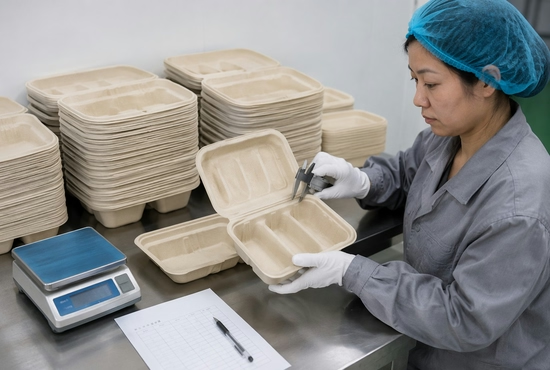
Finished products are inspected for appearance, dimensions, weight, structural consistency, and packing requirements.
Quality checks may include:
Product-specific performance testing can also be arranged according to buyer requirements and destination-market expectations.
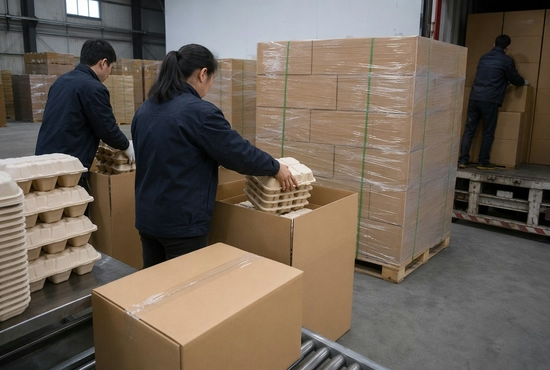
Approved products are counted, bagged, packed into cartons, and prepared for shipment.
Export preparation may include:
Efficient packing helps protect the products during transportation and improves container utilization for international buyers.
Choosing a reliable manufacturer affects product consistency, delivery schedules, customization efficiency, and long-term purchasing costs.
Buyers should evaluate the supplier’s actual molded fiber capability rather than relying only on samples or quotations.
The manufacturer should understand sugarcane bagasse pulping, mold forming, dimensional control, and taco-specific structural design.
Experience with molded fiber food packaging reduces development risks and improves production consistency.
For takeaway and retail applications, the manufacturer should be able to test the tray, PET lid, taco height, and rim structure as one packaging system.
Physical sample confirmation is essential before bulk production.
A capable manufacturer should support:
This is particularly important for restaurant chains and private-label programs.
Buyers should confirm how the supplier controls dimensions, weight, appearance, structural integrity, and packing quantity.
Quality standards and acceptable tolerances should be agreed upon before mass production.
A professional supplier should provide product-specific material information, food-contact documentation, and available testing reports according to destination-market requirements.
Environmental claims should only be made when supported by relevant product documentation.
International buyers should evaluate carton configuration, container loading, export documentation, shipment coordination, and production scheduling.
Reliable delivery performance is especially important for recurring wholesale orders.
The manufacturer should provide clear updates during sampling, production, inspection, and shipment.
Responsive communication reduces delays and simplifies repeat purchasing.
Before ordering taco to go containers, confirm the following information:
Completing this checklist helps manufacturers prepare accurate quotations and reduces specification changes after production begins.
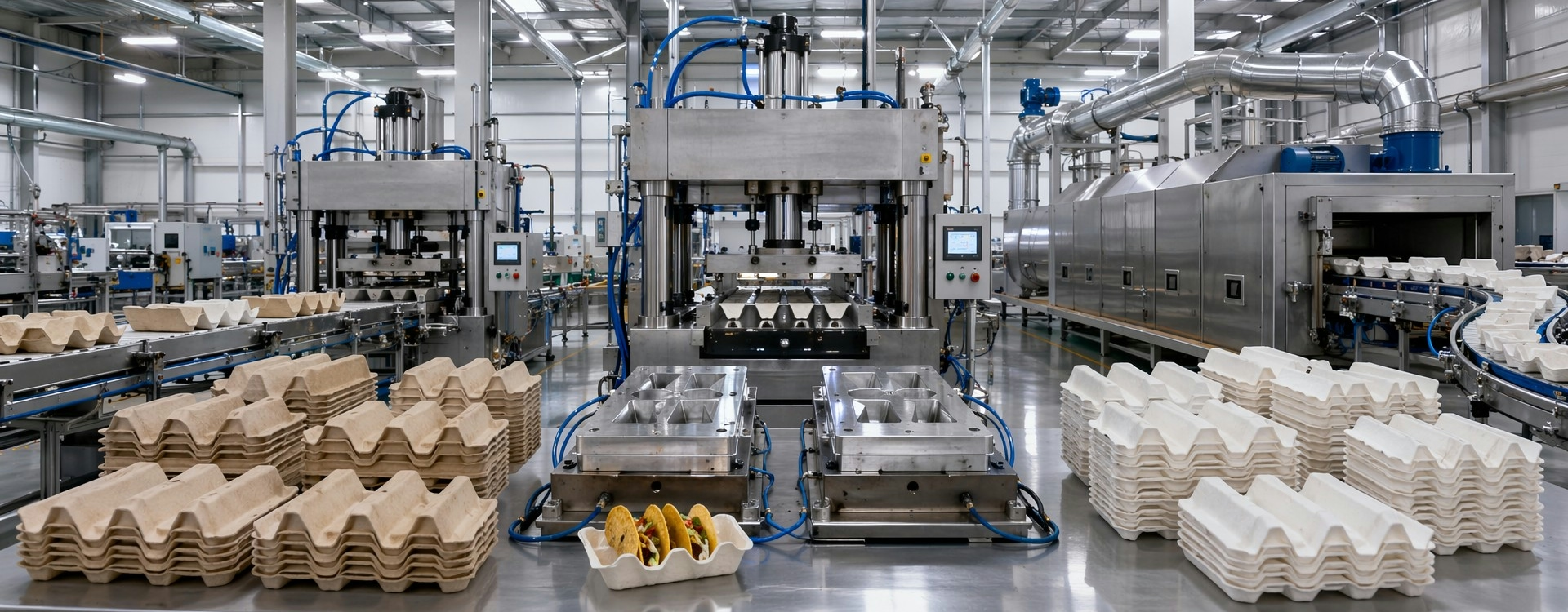
DAILYECO provides molded fiber taco packaging for restaurants, foodservice distributors, importers, and private-label brands.
Our services cover standard product supply, custom mold development, PET lid matching, packaging customization, production management, and international export support.
Item | Capability |
Manufacturing Facility | Professional molded fiber food-packaging production facility |
Employees | More than 1,000 employees |
Production Capability | Bagasse trays, taco holders, plates, bowls, clamshells, food containers, and custom molded fiber packaging |
Monthly Supply Capability | Up to 60 × 40HQ containers across supported product categories |
Materials | Renewable sugarcane bagasse fiber and other supported food-packaging materials |
Product Development | Custom structure design, mold development, lid matching, and packaging optimization |
OEM/ODM | Cartons, labels, barcodes, private label, product structure, and packing configuration |
Production MOQ | Typically 50,000 pieces per size; final MOQ depends on the selected project |
Typical Lead Time | Approximately 25–35 days for new customized orders after final approval; development time may be additional |
Final capacity, MOQ, and delivery schedules depend on the selected product, customization scope, order volume, and current production plan.
DAILYECO can provide product-specific material declarations, food-contact documentation, and available testing support according to destination-market requirements.
View Our Compliance & Certification Support Page
Customization options include:
DAILYECO supports overseas customers with quotation preparation, production coordination, carton marking, documentation, container loading, and shipment arrangements.
This integrated service helps importers and distributors simplify international purchasing.
Customers receive support throughout product selection, sampling, order confirmation, production, inspection, and shipment.
For repeat orders, the team can also assist with purchasing forecasts and supply planning.
DAILYECO continues to develop molded fiber structures for restaurant, takeaway, catering, delivery, and retail food applications.
New projects can be evaluated according to taco size, serving format, packaging system, and target-market requirements.

Scenario Background
The following illustrative scenario reflects common requirements raised by multi-location taco brands; it is not presented as a quantified customer claim.
The buyer needs one molded fiber Taco to Go Container specification that can support takeaway and delivery while simplifying purchasing across locations.
Typical Challenge
The existing flat trays allow tacos to move during transportation, while differences among suppliers create inconsistent dimensions, lid fit, packing, and presentation.
The procurement team therefore needs to standardize taco capacity, internal support geometry, tray dimensions, lid compatibility, carton configuration, and sample-approval criteria.
Recommended DAILYECO Approach
DAILYECO reviews the buyer’s taco dimensions, shell type, serving quantity, fill height, sauces, holding time, delivery route, and secondary packaging before recommending a standard SKU or custom mold.
The project workflow covers real-food sample testing, tray-and-lid fit checks, packing confirmation, written tolerances, documentation review, and repeat-order planning before mass production.
Expected Operational Outcome
A confirmed specification can improve consistency across kitchens and make purchasing, staff training, inventory control, and customer presentation easier to manage.
Because the result depends on actual food and transport conditions, buyers should validate the selected packaging in their own operating environment instead of relying on a generic performance promise.
Repeat orders should reference the approved sample, product drawing, tolerance range, packing specification, and applicable documentation.
Key Takeaways
Successful taco packaging standardization begins with the internal structure and real-food testing, not only the external tray size.
For delivery-focused brands, tray geometry, lid compatibility, carton efficiency, and repeat-order consistency can create more operational value than selecting a product only by unit price.
What Is a Taco to Go Container?
A taco to go container is a molded fiber food packaging product designed to keep tacos upright, separated, and organized during serving, takeaway, catering, and delivery.
Unlike a general flat food tray, it contains molded ridges or supporting sections that help reduce taco movement and maintain a more consistent food presentation.
It is commonly used by taco restaurants, Mexican food businesses, food trucks, catering companies, fast-casual brands, and ready-to-eat food suppliers.
What Are Taco to Go Containers Made From?
Taco packaging trays are primarily made from sugarcane bagasse fiber.
Bagasse is the fibrous material remaining after sugarcane juice extraction. The recovered fiber is processed into pulp and formed into taco-specific packaging through molded fiber manufacturing.
The finished product has a natural fiber appearance and provides an alternative to conventional petroleum-based plastic taco holders.
How Many Tacos Can a Taco to Go Container Hold?
Taco capacity depends on the internal structure of the tray and the size of the tacos.
Compact products may be suitable for standard restaurant portions, while larger designs can support broader serving arrangements, takeaway meals, or retail-ready taco packaging.
The number of tacos should be confirmed according to:
Are Taco to Go Containers Suitable for Hard-Shell Tacos?
Yes.
The molded support structure is especially useful for hard-shell tacos because it helps keep the shells upright and reduces tipping during serving.
A properly matched structure can also prevent tacos from pressing against one another, helping reduce shell damage and filling movement.
The support section should not be too narrow or too wide. A narrow structure may compress the shell, while an oversized structure may provide insufficient support.
Are Taco to Go Containers Suitable for Hot Food?
Taco to Go Containers are suitable for many normal hot-food service applications.
They can be used with freshly prepared tacos, grilled meats, vegetables, cheese, and other warm fillings.
Actual performance depends on the food temperature, holding time, oil content, moisture level, and selected SKU. Product-specific limits should be confirmed for unusually high temperatures or extended hot holding.
Can Taco to Go Containers Be Used in a Microwave?
Selected bagasse products may be suitable for limited microwave reheating.
Microwave suitability depends on the exact product specification, food type, heating time, and temperature. Users should follow product-specific instructions and avoid assuming that every molded fiber tray has identical microwave performance.
A PET lid should be evaluated separately and should not automatically be microwaved together with the bagasse tray.
Are Taco to Go Containers Oil- and Grease-Resistant?
Taco to Go Containers are designed to provide suitable oil and grease resistance during normal taco service.
They can generally accommodate meat, cheese, sauces, and other oily ingredients for typical dine-in, takeaway, and delivery periods.
Performance may vary according to:
Real-food testing is recommended for highly oily foods or extended holding periods.
Are Taco to Go Containers Moisture-Resistant?
Yes. They are designed to maintain their structure during typical foodservice use.
The molded fiber tray can handle normal moisture from vegetables, sauces, fillings, and food steam. However, it is not intended to function as a completely leakproof or airtight container.
Foods containing large quantities of liquid may require a stronger barrier, a sealed container, or additional secondary packaging.
Are Clear Lids Available for Taco to Go Containers?
Yes.
DAILYECO provides a 255 × 195 × 40 mm PET lid for the compatible 244.7 × 186 × 53 mm taco to go container.
A clear lid can improve food visibility, takeaway protection, retail presentation, stacking, and handling convenience.
Before commercial use, the tray and lid should be tested together to confirm rim fit, locking performance, taco height, filling clearance, and transportation stability.
Are Taco to Go Containers Suitable for Retail Display?
Selected tray-and-lid combinations may be used for ready-to-eat taco display in supermarkets, convenience stores, and prepared-food sections.
The molded fiber base provides a natural presentation, while the clear PET lid allows customers to view the food.
Retail users should also evaluate:
Retail suitability should be confirmed under actual storage and display conditions.
Are Taco to Go Containers Compostable?
Selected molded fiber taco holders may be compostable under specified conditions when supported by product-specific certification.
Compostability depends on the product formulation, certification scope, processing temperature, composting duration, and available local infrastructure.
The term “compostable” should only be used for the exact SKU covered by the relevant certification.
A PET lid is made from a different material and must be evaluated separately.
Can Taco to Go Containers Be Used for Chilled or Frozen Food?
Selected products may be suitable for chilled or frozen-food applications, subject to product-specific verification.
Testing should consider:
The complete storage and serving cycle should be tested rather than evaluating only the initial freezing stage.
Can Taco to Go Containers Be Used for Foods Other Than Tacos?
Yes, depending on the food shape and tray structure.
Possible applications include:
However, these products are primarily designed for taco-shaped foods. Rice dishes, salads, soups, and foods containing large amounts of liquid are generally better suited to bowls, compartment trays, clamshells, or general food containers.
Can Taco to Go Containers Be Customized?
Yes.
The product structure can be adjusted according to taco dimensions, serving quantity, food height, and packaging requirements.
Product-level customization may include:
Customized structures should be confirmed through mold evaluation and physical sample testing before mass production.
These five sourcing principles focus on the decisions most likely to affect fit, consistency, landed cost, and repeat-order reliability.
Why It Matters
Similar product names can hide differences in dimensions, weight, support geometry, material formulation, packing, and lid compatibility. A lower unit price is not comparable until those variables are aligned.
Best Practice
Compare:
Why It Matters
External length and width do not show whether the support slots match the actual taco. Slot width, depth, spacing, filling volume, and lid clearance determine practical fit.
Best Practice
Confirm:
Why It Matters
Food weight, moisture, grease, fillings, and transport conditions can change tray stability and lid fit. Test the proposed pack using the same portions and holding period used in daily operations.
Best Practice
Test:
Why It Matters
Bagasse identifies a material category, not identical performance. Fiber formulation, wall thickness, molding pressure, finish, and barrier treatment can vary by SKU.
Best Practice
Request:
Why It Matters
A lid must match the tray rim, molded tolerance, taco height, and stacking conditions. General length and width alone do not confirm a secure fit.
Best Practice
Confirm:
Reliable sourcing begins with comparable specifications and realistic application testing.
Approve actual-food tests, tray-and-lid compatibility, SKU-specific documents, packing, and landed cost before placing a bulk order.
DAILYECO supports standard and custom bagasse taco tray development, molded fiber structures, PET lid matching, packaging optimization, quality management, and export supply for professional B2B buyers.
Lillian Guo
Food Packaging Compliance Manager
10+ Years of Experience
Responsible for:
– Food Contact Compliance
– Sustainable Packaging Testing
– Global Market Documentation
Specialized in:
Discover more sustainable beverage and food packaging solutions from DAILYECO.
Looking for a reliable Taco to Go Container Manufacturer?
Our packaging specialists are ready to support your project with:
✓ Product Catalog
✓ Free Product Consultation
✓ OEM & ODM Development
✓ Custom Design Solutions
✓ Sample Requests
✓ Compliance Guidance
✓ Packaging Optimization
✓ Global Export Support
Whether you source for a taco restaurant, foodservice distributor, importer, catering company, hospitality group, or private-label brand, our team can help you evaluate the most suitable Taco to Go Container for your food, service model, destination market, and supply plan.